atomoxetine brands
31 registered brands containing atomoxetine in South Africa.
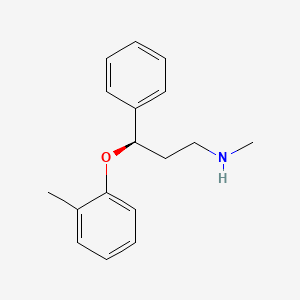
2D structure
Atomoxetine
PubChem CID 54841Molecular formula: C17H21NO
Atomoxetine is known to be a potent and selective inhibitor of the norepinephrine transporter (NET), which prevents cellular reuptake of norepinephrine throughout the brain, which is thought to improve the symptoms of ADHD. More recently, positron emission tomography (PET) imaging studies in rhesus monkeys have shown that atomoxetine also binds to the serotonin transporter (SERT), and blocks the N-methyl-d-aspartate (NMDA) receptor, indicating a role for the glutamatergic system in the pathophysiology of ADHD. The selective norepinephrine (NE) transporter inhibitor atomoxetine (formerly called tomoxetine or LY139603) has been shown to alleviate symptoms in Attention Deficit/Hyperactivity Disorder (ADHD). We investigated the mechanism of action of atomoxetine in ADHD by evaluating the interaction of atomoxetine with monoamine transporters, the effects on extracellular levels of monoamines, and the expression of the neuronal activity marker Fos in brain regions. Atomoxetine inhibited binding of radioligands to clonal cell lines transfected with human NE, serotonin (5-HT) and dopamine (DA) transporters with dissociation constants (K(i)) values of 5, 77 and 1451 nM, respectively, demonstrating selectivity for NE transporters. In microdialysis studies, atomoxetine increased extracellular (EX) levels of NE in prefrontal cortex (PFC) 3-fold, but did not alter 5-HT(EX) levels. Atomoxetine also increased DA(EX) concentrations in PFC 3-fold, but did not alter DA(EX) in striatum or nucleus accumbens. In contrast, the psychostimulant methylphenidate, which is used in ADHD therapy, increased NE(EX) and DA(EX) equally in PFC, but also increased DA(EX) in the striatum and nucleus accumbens to the same level. The expression of the neuronal activity marker Fos was increased 3.7-fold in PFC by atomoxetine administration, but was not increased in the striatum or nucleus accumbens, consistent with the regional distribution of increased DA(EX). We hypothesize that the atomoxetine-induced increase of catecholamines in PFC, a region involved in attention and memory, mediates the therapeutic effects of atomoxetine in ADHD. In contrast to methylphenidate, atomoxetine did not increase DA in striatum or nucleus accumbens, suggesting it would not have motoric or drug abuse liabilities.
Source: PubChem (NCBI) · compound 54841