atorvastatin brands
17 registered brands containing atorvastatin in Zambia.
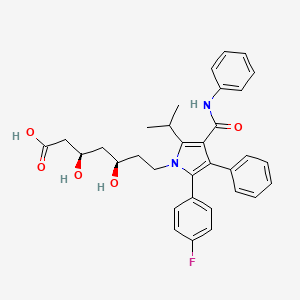
2D structure
Atorvastatin
PubChem CID 60823Molecular formula: C33H35FN2O5
Atorvastatin is a statin medication and a competitive inhibitor of the enzyme HMG-CoA (3-hydroxy-3-methylglutaryl coenzyme A) reductase, which catalyzes the conversion of HMG-CoA to mevalonate, an early rate-limiting step in cholesterol biosynthesis. Atorvastatin acts primarily in the liver, where decreased hepatic cholesterol concentrations stimulate the upregulation of hepatic low-density lipoprotein (LDL) receptors, which increases hepatic uptake of LDL. Atorvastatin also reduces Very-Low-Density Lipoprotein-Cholesterol (VLDL-C), serum triglycerides (TG) and Intermediate Density Lipoproteins (IDL), as well as the number of apolipoprotein B (apo B) containing particles, but increases High-Density Lipoprotein Cholesterol (HDL-C). _In vitro_ and _in vivo_ animal studies also demonstrate that atorvastatin exerts vasculoprotective effects independent of its lipid-lowering properties, also known as the pleiotropic effects of statins. These effects include improvement in endothelial function, enhanced stability of atherosclerotic plaques, reduced oxidative stress and inflammation, and inhibition of the thrombogenic response. Statins were also found to bind allosterically to β2 integrin function-associated antigen-1 (LFA-1), which plays an essential role in leukocyte trafficking and T cell activation. In animal models, Lipitor lowers plasma cholesterol and lipoprotein levels by inhibiting 3-hydroxy-3-methylglutaryl-coenzyme A (HMG-CoA) reductase and cholesterol synthesis in the liver and by increasing the number of hepatic low-density lipoprotein (LDL) receptors on the cell surface to enhance uptake and catabolism of LDL; Lipitor also reduces LDL production and the number of LDL particles. Lipitor reduces LDL-cholesterol (LDL-C) in some patients with homozygous familial hypercholesterolemia (FH), a population that rarely responds to other lipid-lowering medication(s). Lipitor is a selective, competitive inhibitor of 3-hydroxy-3-methylglutaryl-coenzyme A (HMG-CoA) reductase, the rate-limiting enzyme that converts 3-hydroxy-3-methylglutaryl-coenzyme A to mevalonate, a precursor of sterols, including cholesterol. Cholesterol and triglycerides circulate in the bloodstream as part of lipoprotein complexes. With ultracentrifugation, these complexes separate into HDL (high-density lipoprotein), IDL (intermediate-density lipoprotein), LDL (low-density lipoprotein), and VLDL (very-low-density lipoprotein) fractions. Triglycerides (TG) and cholesterol in the liver are incorporated into VLDL and released into the plasma for delivery to peripheral tissues. LDL is formed from VLDL and is catabolized primarily through the high-affinity LDL receptor. Clinical and pathologic studies show that elevated plasma levels of total cholesterol (total-C), LDL-cholesterol (LDL-C), and apolipoprotein B (apo B) promote human atherosclerosis and are risk factors for developing cardiovascular disease, while increased levels of HDL-C are associated with a decreased cardiovascular risk. Statins are largely used in clinics in the treatment of patients with cardiovascular diseases for their effect on lowering circulating cholesterol. Lectin-like oxidized low-density lipoprotein (LOX-1), the primary receptor for ox-LDL, plays a central role in the pathogenesis of atherosclerosis and cardiovascular disorders. We have recently shown that chronic exposure of cells to lovastatin disrupts LOX-1 receptor cluster distribution in plasma membranes, leading to a marked loss of LOX-1 function. Here we investigated the molecular mechanism of statin-mediated LOX-1 inhibition and we demonstrate that all tested statins /including atorvastatin/ are able to displace the binding of fluorescent ox-LDL to LOX-1 by a direct interaction with LOX-1 receptors in a cell-based binding assay. Molecular docking simulations confirm the interaction and indicate that statins completely fill the hydrophobic tunnel that crosses the C-type lectin-like (CTLD) recognition domain of LOX-1. Classical
Source: PubChem (NCBI) · compound 60823
| Product | Manufacturer | Status | Country |
|---|---|---|---|
| ASPAVOR 10 tablets Tablet Uncoated |
Pfizer | Registered/Compliant | Zambia |
| Atorem 10 Tablet Uncoated |
Msn Laboratories | Registered/Compliant | Zambia |
| Atorem 10 tablets Tablet, Filmcoated |
Msn Laboratories | Registered/Compliant | Zambia |
| Atorem 20 Film Coated Tablets |
Msn Laboratories | Registered/Compliant | Zambia |
| Atorfit 20 Film Coated Tablets |
Ajanta Pharma | Registered/Compliant | Zambia |
| Atorfit-10 tablets Tablet Film coated |
Ajanta Pharma | Registered/Compliant | Zambia |
| Atorlip 40 tablets Film Coated Tablets |
Cipla | Registered/Compliant | Zambia |
| Atorlip 10 tablets Film Coated Tablets |
Cipla Ltd | Registered/Compliant | Zambia |
| Atorlip-20 tablets Tablet Uncoated |
Cipla Ltd | Registered/Compliant | Zambia |
| Avastatin 10mg Film Coated Tablets Film Coated Tablets |
Cosmos | Registered/Compliant | Zambia |
| Avastatin 20mg Film Coated Tablets Film Coated Tablets |
Cosmos | Registered/Compliant | Zambia |
| Caditor 20 tablets Tablet, Filmcoated |
Cadila Pharmaceuticals | Registered/Compliant | Zambia |
| Lipitor 10mg Tablet Uncoated |
Pfizer | Registered/Compliant | Zambia |
| Lipitor 10mg Tablets | Pfizer | Registered/Compliant | Zambia |
| Lipitor 20mg Tablets Film Coated Tablets |
Pfizer | Registered/Compliant | Zambia |
| Modlip 20 Film Coated Tablets |
Torrent Pharmaceuticals | Registered/Compliant | Zambia |
| Torvast 20mg tablets Film Coated Tablets |
Macleods Pharmaceuticals | Registered/Compliant | Zambia |