azacitidine brands
1 registered brand containing azacitidine in Ghana.
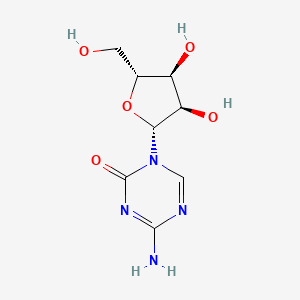
2D structure
Azacitidine
PubChem CID 9444Molecular formula: C8H12N4O5
Azacitidine (5-azacytidine) is a chemical analogue of the cytosine nucleoside present in DNA and RNA. It induces antineoplastic activity by inhibiting DNA methyltransferase at low doses and inducing cytotoxicity by incorporating itself into RNA and DNA at high doses. Covalent binding to DNA methyltransferase results in DNA hypomethylation and prevents DNA synthesis. On the other hand, the incorporation of azacitidine into RNA and DNA leads to cytotoxicity as follows: Following cellular uptake, azacitidine is phosphorylated by uridine-cytidine kinase to form 5-azacytidine monophosphate. Afterwards, pyrimidine monophosphate and diphosphate kinases phosphorylate 5-azacytidine monophosphate to form 5-azacytidine diphosphate and triphosphate, respectively. Azacitidine triphosphate is able to incorporate into RNA, disrupting RNA metabolism and protein synthesis. The reduction of azacytidine diphosphate leads to the formation of 5-aza-deoxycytidine diphosphate, which is then phosphorylated to form 5-azadeoxycitidine triphosphate, a compound able to incorporate into DNA and inhibit DNA synthesis. As a ribonucleoside, azacitidine incorporates into RNA to a larger extent than into DNA. Incorporating into RNA leads to the disassembly of polyribosomes, defective methylation and acceptor function of transfer RNA, and the inhibition of protein production, resulting in cell death. During the S-phase of the cell cycle, azacitidine exhibits the highest toxicity; however, the predominant mechanism of cytotoxicity has not been elucidated. The cytotoxic effects of azacitidine cause the death of rapidly dividing cells, including cancer cells that are no longer responsive to normal growth control mechanisms. Non-proliferating cells are relatively insensitive to azacitidine. It is believed that azacitidine exerts its antineoplastic effects through direct cytotoxicity on abnormal hematopoietic cells in the bone marrow. Telomerase activation is thought to be a critical step in cellular immortality and oncogenesis. Several reagents including differentiation-inducing and antineoplastic agents are known to inhibit telomerase activity, although the molecular mechanisms through which they inhibit telomerase activity remain unclear. Demethylating reagents have recently been used as potential antineoplastic drugs for some types of cancers including those of the prostate. In the present study, we examined the effect of the demethylating reagent 5-azacytidine (5-aza-CR) on telomerase activity using cells of two prostate cancer cell lines, DU-145 and TSU-PR1. 5-aza-CR treatment significantly reduced telomerase activity in TSU-PR1 cells, but not in DU-145 cells, although growth inhibition was observed to a similar extent in both cell lines. Reverse transcription-PCR analyses revealed that inhibition of telomerase activity was accompanied by down-regulation of telomerase catalytic subunit (hTERT) mRNA expression. Transient expression assays showed that 5-aza-CR repressed the transcriptional activity of the hTERT promoter and that the E-box within the core promoter was responsible for this down-regulation. Western blot analyses revealed that 5-aza-CR reactivated p16 expression and repressed c-Myc expression in TSU-PR1 cells but not in DU-145 cells. Overexpression of p16 in TSU-PR1 cells led to significant repression of c-Myc transcription. These findings suggest that 5-aza-CR inhibits telomerase activity via transcriptional repression of hTERT, in which p16 and c-Myc may play a key role. Cellular differentiation is controlled by a variety of factors including gene methylation, which represses particular genes as cell fate is determined. The incorporation of 5-azacytidine (5azaC) into DNA in vitro prevents methylation and thus can alter cellular differentiation pathways. Human bone marrow fibroblasts and MG63 cells treated with 5azaC were used as models of osteogenic progenitors and of a more mature osteoblast phenotype, respectively. The capacity for different
Source: PubChem (NCBI) · compound 9444
| Product | Manufacturer | Status | Country |
|---|---|---|---|
| AZADINE 100MG POWDER FOR SUSPENSION FOR INJECTION azacitidine |
Intas Pharmaceuticals | Valid | Ghana |