bedaquiline brands
4 registered brands containing bedaquiline in Zimbabwe.
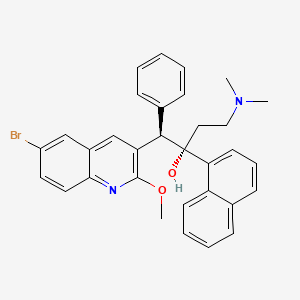
2D structure
Bedaquiline
PubChem CID 5388906Molecular formula: C32H31BrN2O2
Bedaquiline is a diarylquinoline antimycobacterial drug that inhibits mycobacterial ATP (adenosine 5'-triphosphate) synthase, by binding to subunit c of the enzyme that is essential for the generation of energy in _M. tuberculosis._. Bedaquiline (BDQ), an ATP synthase inhibitor, is the first drug to be approved for treatment of multidrug-resistant tuberculosis in decades. Though BDQ has shown excellent efficacy in clinical trials, its early bactericidal activity during the first week of chemotherapy is minimal. Here, using microfluidic devices and time-lapse microscopy of Mycobacterium tuberculosis, we confirm the absence of significant bacteriolytic activity during the first 3-4 days of exposure to BDQ. BDQ-induced inhibition of ATP synthesis leads to bacteriostasis within hours after drug addition. Transcriptional and proteomic analyses reveal that M. tuberculosis responds to BDQ by induction of the dormancy regulon and activation of ATP-generating pathways, thereby maintaining bacterial viability during initial drug exposure. BDQ-induced bacterial killing is significantly enhanced when the mycobacteria are grown on non-fermentable energy sources such as lipids (impeding ATP synthesis via glycolysis). Our results show that BDQ exposure triggers a metabolic remodelling in mycobacteria, thereby enabling transient bacterial survival. Bedaquiline is a diarylquinoline antimycobacterial drug that inhibits mycobacterial ATP (adenosine 5'-triphosphate) synthase, an enzyme that is essential for the generation of energy in Mycobacterium tuberculosis. Infections with Mycobacterium tuberculosis are substantially increasing on a worldwide scale and new antibiotics are urgently needed to combat concomitantly emerging drug-resistant mycobacterial strains. The diarylquinoline TMC207 /bedaquiline/ is a highly promising drug candidate for treatment of tuberculosis. This compound kills M. tuberculosis by binding to a new target, mycobacterial ATP synthase. In this study we used biochemical assays and binding studies to characterize the interaction between TMC207 and ATP synthase. We show that TMC207 acts independent of the proton motive force and does not compete with protons for a common binding site. The drug is active on mycobacterial ATP synthesis at neutral and acidic pH with no significant change in affinity between pH 5.25 and pH 7.5, indicating that the protonated form of TMC207 is the active drug entity. The interaction of TMC207 with ATP synthase can be explained by a one-site binding mechanism, the drug molecule thus binds to a defined binding site on ATP synthase. TMC207 affinity for its target decreases with increasing ionic strength, suggesting that electrostatic forces play a significant role in drug binding. Our results are consistent with previous docking studies and provide experimental support for a predicted function of TMC207 in mimicking key residues in the proton transfer chain and blocking rotary movement of subunit c during catalysis. Furthermore, the high affinity of TMC207 at low proton motive force and low pH values may in part explain the exceptional ability of this compound to efficiently kill mycobacteria in different microenvironments.
Source: PubChem (NCBI) · compound 5388906
| Product | Manufacturer | Status | Country |
|---|---|---|---|
| BEDAQUILINE TABLET, COATED; ORAL |
Lupin Limited | PRESCRIPTION PREPARATIONS 9TH SCHEDULE, (P.P.) | Zimbabwe |
| NONE TABLET; ORAL |
Macleods Pharmaceuticals | PRESCRIPTION PREPARATIONS 9TH SCHEDULE, (P.P.) | Zimbabwe |
| RESILIN TABLET; ORAL |
Msn Laboratories | PRESCRIPTION PREPARATIONS 9TH SCHEDULE, (P.P.) | Zimbabwe |
| SIRTURO TABLET; ORAL |
Janssen-Cilag; Recipharm | PRESCRIPTION PREPARATIONS 9TH SCHEDULE, (P.P.) | Zimbabwe |