bicalutamide brands
1 registered brand containing bicalutamide in Malawi.
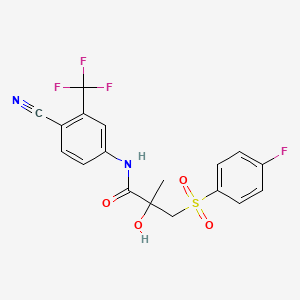
2D structure
Bicalutamide
PubChem CID 2375Molecular formula: C18H14F4N2O4S
Bicalutamide competes with androgen for the binding of androgen receptors, consequently blocking the action of androgens of adrenal and testicular origin which stimulate the growth of normal and malignant prostatic tissue. Bicalutamide is a nonsteroidal antiandrogen that is structurally and pharmacologically related to flutamide and nilutamide. Bicalutamide inhibits the action of androgens by competitively blocking nuclear androgen receptors in target tissues such as the prostate, seminal vesicles, and adrenal cortex; blockade of androgen receptors in the hormone-sensitive tumor cells may result in growth arrest or transient tumor regression through inhibition of androgen-dependent DNA and protein synthesis. Bicalutamide is a selective antiandrogen with no androgenic or progestational activity in various animal models. The relative binding affinity of bicalutamide at the androgen receptor is more than that of nilutamide and approximately 4 times that of hydroxyflutamide, the active metabolite of flutamide. Common pharmacologic therapies for prostate cancer (ie, gonadotropin-releasing hormone [GnRH] analogs, nonsteroidal antiandrogens) when used as monotherapy initially result in increased serum testosterone concentrations, which may limit the effects of the drugs. Androgen receptors in the hypothalamus are blocked by bicalutamide, which disrupts the inhibitory feedback of testosterone on luteinizing hormone (LH) release, resulting in a temporary increase in secretion of LH; the increase in LH stimulates an increase in the production of testosterone. As GnRH analogs have potent GnRH agonist properties, testicular steroidogenesis continues during the first few weeks after initiating therapy. However, the combination of orchiectomy or GnRH analog therapy to suppress testicular androgen production and an antiandrogen to block response of remaining adrenal androgens provides maximal androgen blockade. Concomitant administration of antiandrogens such as bicalutamide in patients initiating therapy with a GnRH analog can inhibit initial androgenic stimulation and potential exacerbation of symptoms (e.g., bone pain, urinary obstruction, liver pain, impending spinal cord compression) that may occur during the first month of GnRH analog therapy. Bicalutamide was developed from a series of nonsteroidal compounds related to flutamide that showed a range of pharmacologic activity from full androgen agonist to pure antiandrogen, including progestational and antiprogestational properties. Bicalutamide is a pure antiandrogen that binds to rat, dog, and human prostate; the affinity compared with the natural ligand 5 alpha-dihydrotestosterone is low, but bicalutamide has an affinity for the rat androgen receptor approximately four times higher than hydroxyflutamide, the active metabolite of flutamide. Bicalutamide also binds to androgen receptors found in the LNCaP human prostate tumor and the Shionogi S115 mouse mammary tumor cell line, as well as androgen receptors transfected into CV-1 and HeLa cells. In all cases, bicalutamide behaves as a pure antiandrogen and inhibits gene expression and cell growth stimulated by androgen. Studies with the LNCaP cell line are particularly interesting, as these cells contain a mutated androgen receptor (codon 868, Thr-->Ala), which behaves idiosyncratically with other antiandrogens (cyproterone acetate and flutamide): both these antiandrogens act as agonists in this cell line and stimulate proliferation. Studies in vivo show that bicalutamide is a potent antiandrogen in the rat. In immature, castrated male rats treated daily with testosterone propionate, bicalutamide produces a profound inhibition of accessory sex organ (ventral prostate and seminal vesicles) growth at oral doses as low as 0.25 mg/kg; it is more active in this test than flutamide or cyproterone acetate. In mature male rats, daily oral doses of bicalutamide produce a dose-related reduction in weights of the ventral prostate glands and semina
Source: PubChem (NCBI) · compound 2375
| Product | Manufacturer | Status | Country |
|---|---|---|---|
| BICATERO 50 50MG TABLET TABLET |
- | Registered | Malawi |