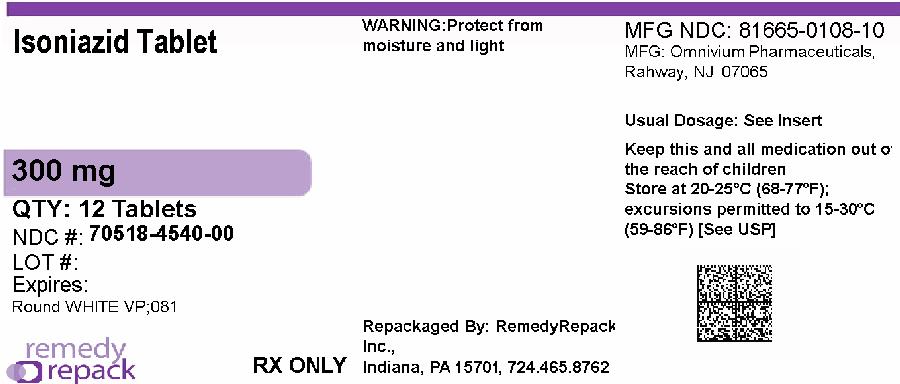
(isoniazid · DailyMed)
AKURIT
RIFAMPIN AND ISONIAZID
What it does
Isoniazid is a medication used to treat tuberculosis, a serious infection that mainly affects the lungs.
Commonly used for: tuberculosis (TB), pulmonary tuberculosis
Read more in plain English ↓Plain-language summary for general understanding - not medical advice. Always follow your pharmacist/doctor.
Ask about this medicine
Answers come only from this medicine's registration record, BNF monograph and interaction data - not medical advice.
Hard to find? We help patients in Kenya source rare medicines. We don't sell or dispense medicines - licensed pharmacies do.
Source this medicineRegistration & product details
Source: Pharmacy and Poisons Board · fetched 2026-01-28 20:40:27 · updated 2026-07-26 13:48:34
Drug Interactions
9Pharmacodynamic Warnings
Isoniazid appears in TABLE 1: Drugs that cause hepatotoxicity
Isoniazid appears in TABLE 12: Drugs that cause peripheral neuropathy
Moderate (3)
Carbamazepine - increases concentration
Isoniazid markedly increases the concentration of antiepileptics (carbamazepine) and antiepileptics (carbamazepine) increase the risk of hepatotoxicity when given with isoniazid. Monitor concentration
Carbamazepine And Carbamazepine Increases The Risk Of Hepatotoxicity When Given With Isoniazid - increases concentration
Isoniazid markedly increases the concentration of carbamazepine and carbamazepine increases the risk of hepatotoxicity when given with isoniazid. Monitor concentration and adjust dose. Also see TABLE
Isoniazid - increases risk of cnstoxicity
Cycloserine increases the risk of CNS toxicity when given with isoniazid. Monitor and adjust dose. Cyproheptadine → see antihistamines, sedating Cyproterone → see anti-androgens Cytarabine → see TABLE
Unknown (6)
Antiepileptics - increases concentration
Isoniazid increases the concentration of antiepileptics (fosphenytoin, phenytoin). Also see TABLE 12 p. 1520
Antiepilepticse - increases concentration
Isoniazid increases the concentration of antiepileptics (fosphenytoin, phenytoin). Also see TABLE 12 p. 1520
Fosphenytoin - increases concentration
Isoniazid increases the concentration of antiepileptics (fosphenytoin, phenytoin). Also see TABLE 12 p. 1520
Levodopa - decreases effects
Isoniazid decreases the effects of levodopa.
Lomitapide - increases exposure
Isoniazid is predicted to increase the exposure to lomitapide. Separate administration by 12 hours. Theoretical → Also see TABLE 1 p. 1517
Phenytoin - increases concentration
Isoniazid increases the concentration of antiepileptics (fosphenytoin, phenytoin). Also see TABLE 12 p. 1520
Data from BNF 85 (British National Formulary). This is not a substitute for professional medical advice. Matched via: exact
About isoniazid
Isoniazid is a medication used to treat tuberculosis, a serious infection that mainly affects the lungs.
What it treats
- tuberculosis (TB)
- pulmonary tuberculosis
How it works
Isoniazid works by stopping the growth of bacteria that cause tuberculosis.
Who it's for
This medicine is for individuals diagnosed with tuberculosis.
Cautions
- • Be cautious if you are taking other medications that can harm the liver.
- • Be careful if you are using drugs that can cause nerve damage.
AI-assisted summary grounded in BNF data - general information only, not medical advice. Always confirm with your pharmacist or doctor.
About rifampin
Rifampin is an antibiotic used to treat certain bacterial infections.
What it treats
- tuberculosis (TB)
- leprosy
- other serious bacterial infections
How it works
Rifampin works by stopping the growth of bacteria, helping to clear the infection from the body.
Who it's for
This medicine is for people with specific bacterial infections, especially those that are resistant to other antibiotics.
AI-assisted summary grounded in BNF data - general information only, not medical advice. Always confirm with your pharmacist or doctor.
Clinical monograph: Isoniazid
BNF-referencedIsoniazid is an antimycobacterial agent used primarily in the treatment and prevention of tuberculosis (TB). It functions as a prodrug that requires activation by bacterial catalase, leading to inhibition of mycolic acid synthesis, an essential component of the mycobacterial cell wall. Isoniazid is effective against actively dividing Mycobacterium tuberculosis and is known for its specificity towards mycobacterial infections.
Indications
- Treatment of active tuberculosis
- Prevention of tuberculosis in susceptible individuals, especially close contacts of infected persons
Dosage
Adults: 10 mg/kg daily (maximum per dose 300 mg) for 3 months, to be taken by mouth or via intramuscular or intravenous
Mechanism of action
Isoniazid is activated by the bacterial catalase-peroxidase KatG, which reduces the ferric form of the enzyme and enables it to react with oxygen to form an oxyferrous enzyme complex. The active form of isoniazid then inhibits the synthesis of mycolic acids by forming a covalent adduct with NAD, inhibiting the enoyl reductase InhA. This inhibition is crucial for the integrity of the mycobacterial cell wall, leading to the bactericidal activity of isoniazid against actively growing Mycobacterium tuberculosis.
Pharmacodynamics
Isoniazid is a bactericidal agent particularly effective against the Mycobacterium genus, including M. tuberculosis, M. bovis, and M. kansasii. It exhibits bactericidal properties during periods of rapid mycobacterial growth and becomes bacteriostatic when the bacteria are in a dormant state. Given its mechanism of action, isoniazid is highly selective, targeting mycobacteria without significant effects on other types of bacteria.
Pharmacokinetics
Isoniazid is well-absorbed following oral administration, with peak plasma concentrations occurring within 1 to 2 hours. It is widely distributed in body tissues and crosses the blood-brain barrier. The drug is metabolized in the liver primarily through acetylation, with variable metabolism rates observed in different populations due to genetic polymorphisms in acetylation. The elimination half-life ranges from 1 to 4 hours, and the drug is excreted in the urine, predominantly as metabolites.
Contra-indications
- History of hypersensitivity to isoniazid
- Acute liver disease
- Severe hepatic impairment
- Previous history of isoniazid-induced liver injury
Adverse effects
- Hepatitis
- Peripheral neuropathy
- Optic neuritis
- Gastrointestinal disturbances
- Rash
- Fever
- Agranulocytosis
- Hematological disorders
- Lupus-like syndrome
Interactions
- Carbamazepine: Increased risk of hepatotoxicity
- Cycloserine: Increased risk of CNS toxicity
- Phenytoin: Increased concentration of phenytoin
- Levodopa: Decreased effects of levodopa
- Lomitapide: Increased exposure
- Antiepileptics: Unknown interactions leading to increased concentrations
Precautions
- Monitor liver function during treatment
- Use with caution in patients with renal impairment
- Patients with diabetes or a history of peripheral neuropathy should be monitored closely
- Ocular monitoring for young children on treatment
Pregnancy
Not known to be harmful; however, prophylactic pyridoxine is recommended.
Breast-feeding
Amount too small to be harmful; monitor infant for possible toxicity.
Storage
Store in a cool, dry place away from direct sunlight. Keep out of reach of children.
Formulations
- Oral tablets
- Oral suspension
- Intramuscular injection
- Intravenous injection
AI-synthesized from BNF references - general information only, not a substitute for professional medical advice or the current BNF. Verify doses with a pharmacist.
Clinical monograph: rifampin
BNF-referencedRifampin is an antimicrobial agent that exhibits bactericidal properties, particularly against _Mycobacterium tuberculosis_. It is primarily used in the treatment of tuberculosis and other infections caused by susceptible organisms. Rifampin is known for its efficacy in both intracellular and extracellular settings, providing broad-spectrum activity as part of combination therapy for various infections.
Indications
- Tuberculosis (TB)
- Leprosy
- Other infections caused by susceptible strains of bacteria
Dosage
Children: Refer to the BNF for Children for appropriate dosing recommendations based on the child's age and weight.
Adults: Refer to the BNF for specific dosing guidelines based on the condition being treated.
Mechanism of action
Rifampin works by binding to the beta-subunit of microbial DNA-dependent RNA polymerase (RNAP), inhibiting the enzyme and thus impeding RNA synthesis. It reduces the affinity of RNAP for short RNA transcripts and forms a stable drug-enzyme complex, suppressing the initiation of RNA chain formation. Notably, rifampin has no activity against mammalian RNAP, making it selective for bacterial processes.
Pharmacodynamics
Rifampin is characterized by its broad-spectrum antimicrobial activity and is particularly effective against _Mycobacterium tuberculosis_. It demonstrates bactericidal effects, which means it kills bacteria instead of merely inhibiting their growth. This makes it a critical component in the treatment regimen for tuberculosis and other bacterial infections.
Pharmacokinetics
Rifampin is absorbed well from the gastrointestinal tract, with peak plasma concentrations typically reached within a few hours after oral administration. It is extensively metabolized in the liver, primarily via cytochrome P450 enzymes, and has a relatively long half-life. The drug is excreted mainly in bile, with a small percentage eliminated in urine. Its pharmacokinetic profile allows for once-daily dosing in many cases, aiding patient compliance.
Contra-indications
- Hypersensitivity to rifampicin or any of its components
- Concurrent use with protease inhibitors such as darunavir, indinavir, or nelfinavir
- Severe hepatic impairment
Adverse effects
- Hepatotoxicity
- Gastrointestinal disturbances (nausea, vomiting, diarrhea)
- Rash and other allergic reactions
- Discoloration of body fluids (e.g., urine, sweat, tears)
- Flu-like syndrome
- Thrombocytopenia
- Leukopenia
Interactions
- May reduce the effectiveness of oral contraceptives
- Increases metabolism of drugs metabolized by CYP450 enzymes
- May interact with anticoagulants, antiepileptics, and certain antiretrovirals
- Concomitant use with drugs such as ketoconazole and erythromycin may increase risk of liver toxicity
Precautions
- Monitor liver function tests regularly
- Use with caution in patients with a history of liver disease
- Assess for signs of hypersensitivity reactions
- Consider potential interactions with other medications
Pregnancy
Rifampin is categorized as a pregnancy category C drug. It should be used during pregnancy only if the potential benefit justifies the potential risk to the fetus.
Breast-feeding
Rifampin is excreted in breast milk; caution should be exercised when administering to nursing mothers.
Storage
Store in a cool, dry place, away from direct sunlight and moisture. Keep out of reach of children.
Formulations
- Oral capsules (150 mg, 300 mg)
- Oral suspension (10 mg/mL)
- Injectable solution (rifampicin for injection)
AI-synthesized from BNF references - general information only, not a substitute for professional medical advice or the current BNF. Verify doses with a pharmacist.
Molecular reference: Isoniazid
PubChem CID 3767Molecular formula: C6H7N3O
Mechanism of action
Isoniazid is a prodrug and must be activated by bacterial catalase. Specficially, activation is associated with reduction of the mycobacterial ferric KatG catalase-peroxidase by hydrazine and reaction with oxygen to form an oxyferrous enzyme complex. Once activated, isoniazid inhibits the synthesis of mycoloic acids, an essential component of the bacterial cell wall. At therapeutic levels isoniazid is bacteriocidal against actively growing intracellular and extracellular <i>Mycobacterium tuberculosis</i> organisms. Specifically isoniazid inhibits InhA, the enoyl reductase from <i>Mycobacterium tuberculosis</i>, by forming a covalent adduct with the NAD cofactor. It is the INH-NAD adduct that acts as a slow, tight-binding competitive inhibitor of InhA. Although the mechanism of action of isoniazid is unknown, several hypotheses have been proposed. These include effects on lipids, nucleic acid biosynthesis, and glycolysis. ... /It has been suggested that/ a primary action of isoniazid /is/ to inhibit the biosynthesis of mycolic acids, important constituents of the mycobacterial cell wall. Because mycolic acids are unique to mycobacteria, this action would explain the high degree of selectivity of the antimicrobial activity of isoniazid. Exposure to isoniazid leads to a loss of acid fastness and a decrease in the quantity of methanol-extractable lipid of the microorganisms. Isoniazid is bacteriostatic for "resting" bacilli but is bactericidal for rapidly dividing microorganisms. The minimal tuberculostatic concentration is 0.025 to 0.05 ug/ml.
Pharmacodynamics
Isoniazid is a bactericidal agent active against organisms of the genus Mycobacterium, specifically <i>M. tuberculosis</i>, <i>M. bovis</i> and <i>M. kansasii</i>. It is a highly specific agent, ineffective against other microorganisms. Isoniazid is bactericidal when mycobacteria grow rapidly and bacteriostatic when they grow slowly.
Biological pathways
Source: PubChem (NCBI) · pathways from PathBank, Reactome, WikiPathways & PharmGKB.
Molecular reference: rifampin
PubChem CID 135398735Molecular formula: C43H58N4O12
Mechanism of action
Rifampin works by binding to the beta-subunit of microbial DNA-dependent RNA polymerase (RNAP), thereby inhibiting the enzyme and impeding RNA synthesis. It reduces the affinity of RNAP for short RNA transcripts. It has no activity against the mammalian RNAP enzyme. Although rifampin is most active during cell multiplication ... /it/ appears to have some effect on resting cells. Electron microscopy has revealed changes in cytoplasm and disappearance of ribosomes in tubercle bacilli exposed to rifampin, indicating inhibition of DNA-dependent RNA polymerase. Rifampin inhibits DNA-dependent RNA polymerase of mycobacteria and other microorganisms by forming a stable drug-enzyme complex, leading to suppression of initiation of chain formation (but not chain elongation) in RNA synthesis. More specifically, the beta subunit of this complex enzyme is the site of action of the drug, although rifampin binds only to the holoenzyme. Nuclear RNA polymerase from a variety of eukaryotic cells does not bind rifampin, and RNA synthesis is correspondingly unaffected. While rifampin can inhibit RNA synthesis in mammalian mitochondria, considerably higher concentrations of the drug are required than for the inhibition of the bacterial enzyme. High concentrations of rifamycin antibiotics also inhibit viral DNA-dependent RNA polymerases and reverse transcriptases. Rifampin is bactericidal for both intracellular and extracellular microorganisms. Developmental expression of CYPlAl, CYPlA2 and CYP3A6 in the rabbit have been studied. Cytochromes P450IAl, P450IA2 and P450IIIA6 exhibited comparable patterns of developmental expression. Present at low level (less than 0.05 mnol/ng) in the new born animal up to week 3, these proteins sharply accumulated between weeks 3 and 4 to reach a maximum by week 4 (P450IAl, 0.2 nmol/mg; P450IA2, 0.8 nmol/ng; P450IIIA6, 0.12 nmol/mg) and decr in the adult (P450IAl, 0.2 nmol/mg; P450IA2, 0.4 mnol/mg; P450IIIA6, 0.09 nmol/mg). Cytochromes P450IAl and P450IA2 were not expressed in the untreated fetus. Onset of CYP3A6 gene expression occurred at day 30 of gestation and both transcription and mRNA accumulation were transplacentally inducible by rifampicin only shortly before birth, i.e. after treatment of the females between days 28 and 30 of gestation. Both long (1.85 kb) and short (1.7 kb) mRNA transcripts were expressed in untreated or rifampicin treated fetuses. CYP3A6 gene expression was also induced by rifampicin in l week old and 2 week old animals. Developmental expression of CYPlAl and CYPlA2 genes was shown to be closely related to the diet change accompanying weaning which occurs at weeks 3-4. In animals subjected to either delayed (week 6) or early (week 2) weaning, sharp accumulation of messages, proteins and related activities were delayed or anticipated accordingly with respect to normal weaning. Artificially scheduled weaning gave similar results when repeated with biological grade lucern (grown in the absence of chemical fertilizers, pesticides) ... the main constituent of commercial rabbit chow. While CYP3A6 gene expression could be brought forward by early weaning at week 2, both message and protein did not exhibit incr accumulation after delayed weaning at week 6, and remained at the low level of the new born animal. Treatment of l week old and 2 week old animals with triiodothyronine or of 3 week old animals with propylthiouracil, an antithyroid factor, did not modify the normal pattern of developmental expression of genes CYPlAl, CYPlA2 and CYP3A6. ...
Pharmacodynamics
Rifampin is an antimicrobial agent with bactericidal effects and a broad-spectrum activity. It is active against intracellular and extracellular _Mycobacterium tuberculosis_.
Biological pathways
Source: PubChem (NCBI) · pathways from PathBank, Reactome, WikiPathways & PharmGKB.
This drug in other countries
The same active ingredient registered across other registries we cover - including different brands.
- ECONEX-400 COMBINATION PRODUCT TABLET
- ETHAMBUTOL_HCL&ISONIAZID 400/150MG TABLET
- ISONIAZID 100MG TABLET
- ISONIAZID 100MG TABLET
- ISONIAZID 300MG TABLET
- ISONIAZID 300MG TABLET
- ISONIAZID · Macleods Pharmaceuticals
- ISONIAZID TABLET BP 300 MG
- Isoniazid · Cadila Pharmaceuticals
- Isoniazid · Micro Labs
- Isoniazid Dispersible Tablets 100mg · Oxalis Labs
- Isoniazid Tablet BP · Mylan Laboratories
- AKURIT-KID TABLETS · Lupin
- ISONIAZID · Macleods Pharmaceuticals
- ISONIAZID · Rosemont Pharmaceuticals
- ISONIAZID · Macleods Pharmaceuticals Ltd
- ISONIAZID/PYRIDOXINE HYDROCHLORIDE/ SULFAMETHOXAZOLE/ TRIMETHOPRIM · Mylan Laboratories Limited
- RIFAMPICIN & ISONIAZID · Macleods Pharmaceuticals
- AKURIT · Lupin
- AKURIT-3 · Lupin
- AKURIT-4 · Lupin
- ISONIAZID · Lupin
- ISONIAZID AND RIFAPENTINE COATED TABLETS 300MG/300MG · Macleods Pharmacuticals Limited
- ISONIAZID TABLETS BP 100MG · Lupin
- AFARIS FC 150/75
- AFARIS FC 300/150
- AFARIS PAED 75/50
- AFARIS PAED ODT 60/60
- AKURIT CO KID 75/50/150/ODT
- CO-AFARIS PAED 75/50/150 TABLETS
- ISONIAZID DISPERSIBLE TABLETS (Each Dispersible tablet contains Isoniazid 100mg) · Oxalis Labs
- RIFAMPICIN + ISONIAZID TABLETS · Macleods Pharmaceuticals
- RIFAMPICIN ISONIAZID PYRAZINAMIDE TABLETS · Macleods Pharmaceuticals
- RIFAMPIN / ISONIAZID/ PYRIZINAMIDE TABLETS (Each tablet contains Rifampicin/Isoniazid/Pyrizinamide 75mg / 50mg/ 150mg) · Lupin