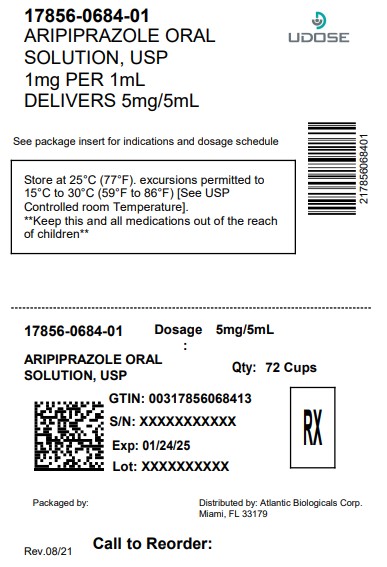
(aripiprazole · DailyMed)
ARIPITAS OD 15
ARIPIPRAZOLE
What it does
Aripiprazole is a medication used to treat certain mental health conditions by helping to balance chemicals in the brain.
Commonly used for: schizophrenia, bipolar disorder, depression (as an add-on treatment)
Read more in plain English ↓Plain-language summary for general understanding - not medical advice. Always follow your pharmacist/doctor.
Ask about this medicine
Answers come only from this medicine's registration record, BNF monograph and interaction data - not medical advice.
Medicine sourcing is available in Kenya only. We don't sell or dispense medicines - licensed pharmacies do.
Sourcing - Kenya onlyRegistration & product details
Source: Medicines Control Authority of Zimbabwe · fetched 2026-04-18 08:22:05 · updated 2026-09-20 04:30:03
Drug Interactions
7Pharmacodynamic Warnings
Aripiprazole appears in TABLE 8: Drugs that cause hypotension
Aripiprazole appears in TABLE 11: Drugs with CNS depressant effects
Unknown (7)
Antipsychotics - additive effect
Antipsychotics,secondgeneration(clozapine)cancause constipation,ascanantipsychotics,secondgeneration (olanzapine,quetiapine);concurrentusemightincreasethe riskofdevelopingintestinalobstruction.rAnecdo
Aripiprazole - increases exposure
Bupropion is predicted to moderately increase the exposure to aripiprazole. Adjust aripiprazole dose, p. 433.
Aripiprazole - increases exposure
Cinacalcet is predicted to moderately increase the exposure to aripiprazole. Adjust aripiprazole dose, p. 433.
Aripiprazole - increases exposure
Cobicistat is predicted to slightly increase the exposure to aripiprazole. Adjust aripiprazole dose, p. 433.
Aripiprazole - increases exposure
Idelalisibispredictedtoslightlyincreasetheexposureto aripiprazole.Adjustaripiprazoledose,p.433.oStudy https://www.facebook.c (Books-Courses-Medic
Aripiprazole - decreases exposure
Mitotane is predicted to moderately decrease the exposure to aripiprazole. Adjust aripiprazole dose, p. 433.
Aripiprazole - increases exposure
Clarithromycin is predicted to slightly increase the exposure to antipsychotics, second generation (aripiprazole). Adjust aripiprazole dose, p. 433.
Data from BNF 85 (British National Formulary). This is not a substitute for professional medical advice. Matched via: class
About this medicine
Aripiprazole is a medication used to treat certain mental health conditions by helping to balance chemicals in the brain.
What it treats
- schizophrenia
- bipolar disorder
- depression (as an add-on treatment)
How it works
It helps improve mood, thoughts, and behavior by affecting how the brain uses certain chemicals.
Who it's for
This medication is for adults and some children with specific mental health conditions.
Drug class
Antipsychotics
Cautions
- • Be careful if you're taking other medications that can lower blood pressure.
- • Avoid using with medications that can make you feel sleepy or dizzy.
AI-assisted summary grounded in BNF data - general information only, not medical advice. Always confirm with your pharmacist or doctor.
Clinical monograph: Aripiprazole
BNF-referencedAripiprazole is an atypical antipsychotic used primarily in the treatment of psychotic disorders such as schizophrenia and mania. It works by modulating dopamine and serotonin receptors in the brain, thereby influencing mood and behavior.
Indications
- Schizophrenia
- Bipolar disorder (mania)
- Psychotic disorders
Dosage
Children: For children aged 13-17 years: Initially 2 mg once daily for 2 days, increased to 5 mg once daily for 2 days, then can be increased to 10 mg once daily, with further increments of 5 mg if needed. Maximum treatment duration is 12 weeks, and doses above 10 mg should only be used in exceptional cases.
Adults: Initially, 10-15 mg once daily, can be adjusted based on clinical response and tolerability, with a maximum dose of 30 mg daily.
Mechanism of action
Aripiprazole acts as a partial agonist at dopamine D2 receptors and serotonin 5-HT1A receptors, while also functioning as an antagonist at 5-HT2A receptors. This unique action helps to stabilize mood and reduce psychotic symptoms.
Pharmacodynamics
Aripiprazole has a complex pharmacodynamic profile, contributing to its antipsychotic effects by balancing dopaminergic and serotonergic activity in the central nervous system. This modulation helps alleviate both positive and negative symptoms of schizophrenia.
Pharmacokinetics
Aripiprazole is well absorbed orally and has a half-life of approximately 75 hours, allowing for once-daily dosing. It is extensively metabolized in the liver, primarily by CYP3A4 and CYP2D6, with less than 1% of the drug excreted unchanged in urine. Dose adjustments may be necessary in cases of renal impairment.
Contra-indications
- CNS depression
- Comatose state
- Phaeochromocytoma
Adverse effects
- Anxiety
- Breast pain
- Hypersalivation
- Muscle rigidity
- Nausea
- Oculogyric crisis
- Hyperglycaemia
- Angioedema
- Bone disorders
- Confusion
- Dyslipidaemia
- Hyponatraemia
- Nasal congestion
- Urticaria
- Vision disorders
- Depression
- Hiccups
- Sexual dysfunction
- Aggression
- Alopecia
- Cardiac arrest
- Chest pain
- Diabetic hyperosmolar coma
- Diabetic ketoacidosis
- Diarrhoea
- Dysphagia
- Generalised tonic-clonic seizures
- Rhabdomyolysis
- Serotonin syndrome
- Speech disorder
- Suicidal tendencies
- Syncope
- Temperature regulation disorder
- Thrombocytopenia
- Urinary incontinence
- Weight decreased
Interactions
- Bupropion: Unknown (increases exposure)
- Cinacalcet: Unknown (increases exposure)
- Cobicistat: Unknown (increases exposure)
- Idelalisib: Unknown (increases exposure)
- Mitotane: Unknown (decreases exposure)
- Clarithromycin: Unknown (increases exposure)
Precautions
- Cerebrovascular disease
Pregnancy
Avoid.
Breast-feeding
Avoid-no information available.
Storage
Store in a cool, dry place away from light.
Formulations
- Oral suspension
- Oral solution
- Tablets
AI-synthesized from BNF references - general information only, not a substitute for professional medical advice or the current BNF. Verify doses with a pharmacist.
Molecular reference: Aripiprazole
PubChem CID 60795Molecular formula: C23H27Cl2N3O2
Mechanism of action
The antipsychotic action of aripiprazole is likely due to its partial agonist activity on D2 and 5-HT<sub>1A</sub> receptors as well as its antagonist activity at 5-HT<sub>2A</sub> receptors; however, the exact mechanism has not been fully elucidated. One of the mechanisms that have been proposed is that aripiprazole both stimulates and inhibits dopamine as it engages the D2 receptor. It lowers dopamine neuronal firing at high dopamine concentrations and increases dopamine firing at low concentrations. Its partial agonist activity gives aripiprazole an intermediate level of dopaminergic neuronal tone between full agonist and antagonist of the D2 receptor. In addition, some adverse effects may be due to action on other receptors. For example, orthostatic hypotension may be explained by antagonism of the adrenergic alpha-1 receptors. The exact mechanism of antipsychotic action of aripiprazole has not been fully elucidated but, like that of other atypical antipsychotic agents (e.g.,olanzipine, risperidone, ziprasidon), may involve the drug's activity at dopamine D2 and serotonin type (5-HT1A) and type 2 (5-HT2A) receptors. However, aripiprazole appears to differ from other atypical antipsychotic agents because the drug demonstrates partial agonist activity at D2 and 5-HT1A receptors and antagonist activity at 5-HT2A receptors. Antagonism at other receptors (e.g., alpha1-adrenergic receptors, histamine H1 receptors) may contribute to other therapeutic and adverse effects (e.g., orthostatic hypotension, somnolence) observed with aripiprazole. ...Aripiprazole exhibits typical antagonism at dopamine (D2) receptors in the mesolimbic pathway, as well as having unique partial agonist activity at D2 receptors in the mesocortical pathway. As exemplified by other atypical antipsychotics, it displays strong 5-HT(2a) receptor antagonism and is similar to ziprasidone in also having agonistic activity at the 5-HT(1a) receptor. Among the atypical antipsychotics, aripiprazole displays the lowest affinity for alpha(1)adrenergic (alpha(1)), histamine (H1) and muscarinic (M1) receptors. This combination of effects may be responsible for its efficacy in positive and negative symptoms of schizophrenia and in bipolar disorder. ...Other early data suggest that aripiprazole may induce reductions in plasma prolactin, as well as in plasma glucose and lipid profiles ...
Pharmacodynamics
Aripiprazole exhibits high affinity for dopamine D<sub>2</sub> and D<sub>3</sub>, serotonin 5-HT<sub>1a</sub> and 5-HT<sub>2a</sub> receptors (Ki values of 0.34 nM, 0.8 nM, 1.7 nM, and 3.4 nM, respectively), moderate affinity for dopamine D<sub>4</sub>, serotonin 5-HT<sub>2c</sub> and 5-HT<sub>7</sub>, alpha<sub>1</sub>-adrenergic and histamine H<sub>1</sub> receptors (Ki values of 44 nM, 15 nM, 39 nM, 57 nM, and 61 nM, respectively), and moderate affinity for the serotonin reuptake site (Ki=98 nM). Aripiprazole has no appreciable affinity for cholinergic muscarinic receptors (IC<sub>50</sub>>1000 nM).
Biological pathways
Source: PubChem (NCBI) · pathways from PathBank, Reactome, WikiPathways & PharmGKB.
This drug in other countries
The same active ingredient registered across other registries we cover - including different brands.
- ARIP 15 DT · Lords Healthcare
- ARIP 30 · Lords Healthcare
- ARIPITAS-10MG · Accord Healthcare
- ARIPITAS-15MG · Accord Healthcare
- ARIPITAS-30MG · Accord Healthcare
- ARIPITAS-30mg · Intas Pharmaceuticals Ltd