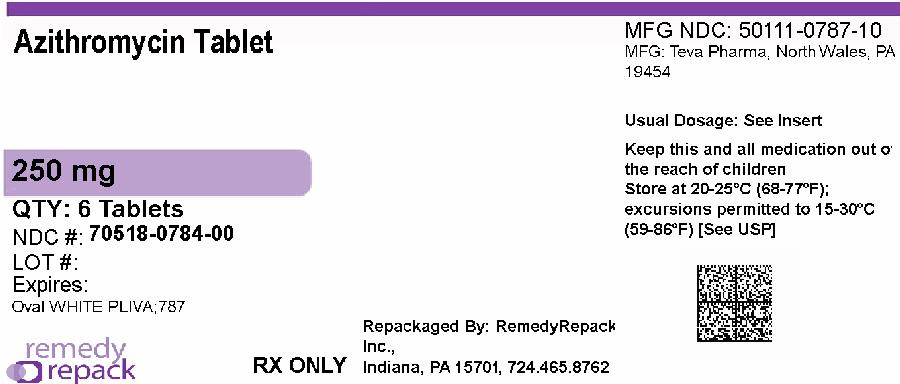
(azithromycin · DailyMed)
AZI-BIO TABLETS
AZITHROMYCIN USP
What it does
Azithromycin is an antibiotic that helps treat infections caused by bacteria.
Commonly used for: bacterial infections, chest infections (pneumonia), throat infections (pharyngitis), skin infections …
Read more in plain English ↓Plain-language summary for general understanding - not medical advice. Always follow your pharmacist/doctor.
Ask about this medicine
Answers come only from this medicine's registration record, BNF monograph and interaction data - not medical advice.
Hard to find? We help patients in Kenya source rare medicines. We don't sell or dispense medicines - licensed pharmacies do.
Source this medicineRegistration & product details
Source: Pharmacy and Poisons Board · fetched 2026-01-28 19:36:47 · updated 2026-08-03 02:23:33
Drug Interactions
43Severe (5)
Ergometrine - increases risk of ergotism
Macrolides (clarithromycin) are predicted to increase the risk of ergotism when given with ergometrine. Avoid.
Ergotamine - increases risk of ergotism
Macrolides (clarithromycin) are predicted to increase the risk of ergotism when given with ergotamine. Avoid.
Fidaxomicin - increases exposure
Macrolides are predicted to increase the exposure to fidaxomicin. Avoid.
Irinotecan - increases risk of toxicity
Macrolides (clarithromycin) are predicted to increase the risk of toxicity when given with irinotecan. Avoid.
Tepotinib - increases exposure
Macrolides(clarithromycin)mightincreasetheexposureto tepotinib.Avoid.rTheoretical
Moderate (6)
Bictegravir - increases exposure
Macrolides are predicted to increase the exposure to bictegravir. Use with caution or avoid.
Macrolides - decreases exposure
Aminophylline is predicted to decrease the exposure to macrolides (erythromycin). Adjust dose.
Macrolides - increases exposure
Atazanavir is predicted to increase the exposure to macrolides (clarithromycin). Adjust dose in renal impairment.
Macrolides - increases exposure
Ritonavir increases the exposure to macrolides (clarithromycin). Adjust dose in renal impairment.
Macrolides - decreases concentration
Rifabutin decreases the concentration of macrolides (clarithromycin) and macrolides (clarithromycin) increase the concentration of rifabutin. Monitor and adjust dose.
Ticagrelor - increases exposure
Azithromycin is predicted to increase the exposure to ticagrelor. Use with caution or avoid.
Unknown (32)
Afatinib - increases exposure
Macrolides are predicted to increase the exposure to afatinib.
Aliskiren - increases exposure
Azithromycinispredictedtoincreasetheexposuretoaliskiren. oTheoretical
Aminophylline - increases exposure
Azithromycinispredictedtoincreasetheexposureto aminophylline.oTheoretical
Antimalarials - increases risk of serious cardiovascular adverse effects
Macrolides might increase the risk of serious cardiovascular adverse effects when given with antimalarials (chloroquine).
Berotralstat - increases exposure
Macrolides are predicted to increase the exposure to berotralstat.
Data from BNF 85 (British National Formulary). This is not a substitute for professional medical advice. Matched via: class
About this medicine
Azithromycin is an antibiotic that helps treat infections caused by bacteria.
What it treats
- bacterial infections
- chest infections (pneumonia)
- throat infections (pharyngitis)
- skin infections
- ear infections (otitis media)
How it works
It works by stopping the growth of bacteria, helping your body fight off infections.
Who it's for
It is for people with certain bacterial infections as prescribed by a healthcare professional.
Drug class
Macrolides
AI-assisted summary grounded in BNF data - general information only, not medical advice. Always confirm with your pharmacist or doctor.
Clinical monograph: Azithromycin
BNF-referencedAzithromycin is a macrolide antibiotic used to treat various bacterial infections, including respiratory tract infections, skin and soft tissue infections, and certain sexually transmitted infections. It works by inhibiting bacterial protein synthesis.
Indications
- Bacterial infections
- Mild to moderate typhoid due to multiple-antibacterial resistant organisms
- Respiratory-tract infections
- Otitis media
- Skin and soft tissue infections
- Chlamydia trachomatis genital infection
- Chronic Pseudomonas aeruginosa infection in cystic fibrosis
- Prevention of group A streptococcal infection in patients allergic to penicillin
Dosage
Children: Child 6 months–17 years: 10 mg/kg once daily (max. per dose 500 mg) for 3 days, repeated after 1 week if necessary. Refer to BNF for Children for specific dosing based on age and weight.
Adults: 500 mg once daily for 3 to 5 days depending on the infection being treated. For certain cases, doses may be adjusted based on clinical judgment.
Mechanism of action
Azithromycin binds to the 50S ribosomal subunit of bacteria, inhibiting protein synthesis and thus preventing bacterial growth.
Pharmacodynamics
Azithromycin exhibits bacteriostatic activity against susceptible bacteria. It has a long half-life, allowing for once-daily dosing and effective treatment of infections.
Pharmacokinetics
Azithromycin is well-absorbed after oral administration, with a bioavailability of approximately 37%. It penetrates well into tissues, with a half-life of about 68 hours, and is primarily excreted in bile, with minimal renal excretion.
Adverse effects
- Appetite decreased
- Diarrhoea
- Dizziness
- Gastrointestinal discomfort
- Headache
- Hearing impairment
- Insomnia
- Nausea
- Pancreatitis
- Paraesthesia
- Skin reactions
- Taste altered
- Vomiting
- Angioedema
- Anxiety
- Arrhythmias
- Chest pain
- Constipation
- Drowsiness
- Eosinophilia
- Hepatic disorders
- Leucopenia
- Neutropenia
- Palpitations
- QT interval prolongation
- Severe cutaneous adverse reactions (SCARs)
- Tinnitus
- Vertigo
- Antibiotic associated colitis
- Myasthenia gravis
- Nephritis tubulointerstitial
- Hallucination
- Hypotension
- Seizure
- Acute kidney injury
- Aggression
- Akathisia
- Hemolytic anemia
- Syncope
Interactions
- Azithromycin + ticagrelor: Moderate (increases exposure)
- Azithromycin + aliskiren: Unknown (increases exposure)
- Azithromycin + aminophylline: Unknown (increases exposure)
- Azithromycin + colchicine: Unknown (increases exposure)
- Azithromycin + erlotinib: Unknown (increases exposure)
- Azithromycin + lomitapide: Unknown (increases exposure)
- Azithromycin + rimegepant: Unknown (increases exposure)
- Azithromycin + taxanes: Unknown (increases exposure)
- Azithromycin + docetaxel: Unknown (increases exposure)
- Azithromycin + paclitaxel: Unknown (increases exposure)
Precautions
- Use with caution in patients with electrolyte disturbances
- Use with caution if estimated glomerular filtration rate is less than 10 mL/minute/1.73 m2
- Predisposition to QT interval prolongation may be aggravated
AI-synthesized from BNF references - general information only, not a substitute for professional medical advice or the current BNF. Verify doses with a pharmacist.
Molecular reference: Azithromycin
PubChem CID 447043Molecular formula: C38H72N2O12
Mechanism of action
In order to replicate, bacteria require a specific process of protein synthesis, enabled by ribosomal proteins. Azithromycin binds to the 23S rRNA of the bacterial 50S ribosomal subunit. It stops bacterial protein synthesis by inhibiting the transpeptidation/translocation step of protein synthesis and by inhibiting the assembly of the 50S ribosomal subunit,. This results in the control of various bacterial infections,. The strong affinity of macrolides, including azithromycin, for bacterial ribosomes, is consistent with their broad‐spectrum antibacterial activities. Azithromycin is highly stable at a low pH, giving it a longer serum half-life and increasing its concentrations in tissues compared to erythromycin. Azithromycin usually is bacteriostatic, although the drug may be bactericidal in high concentrations against selected organisms. Bactericidal activity has been observed in vitro against Streptococcus pyogenes, S. pneumoniae, and Haemophilus influenzae. Azithromycin inhibits protein synthesis in susceptible organisms by penetrating the cell wall and binding to 50S ribosomal subunits, thereby inhibiting translocation of aminoacyl transfer-RNA and inhibiting polypeptide synthesis. The site of action of azithromycin appears to be the same as that of the macrolides (i.e., erythromycin, clarithromycin), clindamycin, lincomycin, and chloramphenicol. The antimicrobial activity of azithromycin is reduced at low pH. Azithromycin concentrates in phagocytes, including polymorphonuclear leukocytes, monocytes, macrophages, and fibroblasts. Penetration of the drug into phagocytic cells is necessary for activity against intracellular pathogens (e.g., Staphylococcus aureus, Legionella pneumophila, Chlamydia trachomatis, Salmonella typhi).
Pharmacodynamics
Macrolides stop bacterial growth by inhibiting protein synthesis and translation, treating bacterial infections. Azithromycin has additional immunomodulatory effects and has been used in chronic respiratory inflammatory diseases for this purpose.
Biological pathways
Source: PubChem (NCBI) · pathways from PathBank, Reactome, WikiPathways & PharmGKB.
This drug in other countries
The same active ingredient registered across other registries we cover - including different brands.
- AGYCIN 250 TABLETS (Each tablet contains Azithromycin Dihydrate 250mg) · Bliss Gvs Pharma
- AGYCIN 500 TABLETS (Each tablet contains Azithromycin Dihydrate 500mg) · Bliss Gvs Pharma
- APZITHRO 500 TABLETS (Each film coated tablet contains Azithromycin 500mg · Asian Pharma
- AZEX TABLETS · Expert Pharmaceuticals
- AZICIN 500MG TABLETS · Biomatrix Healthcare
- AZIDRIVE 250 TABLETS ( Azithromycin Dihydrate 250mg) · Addii Biotech