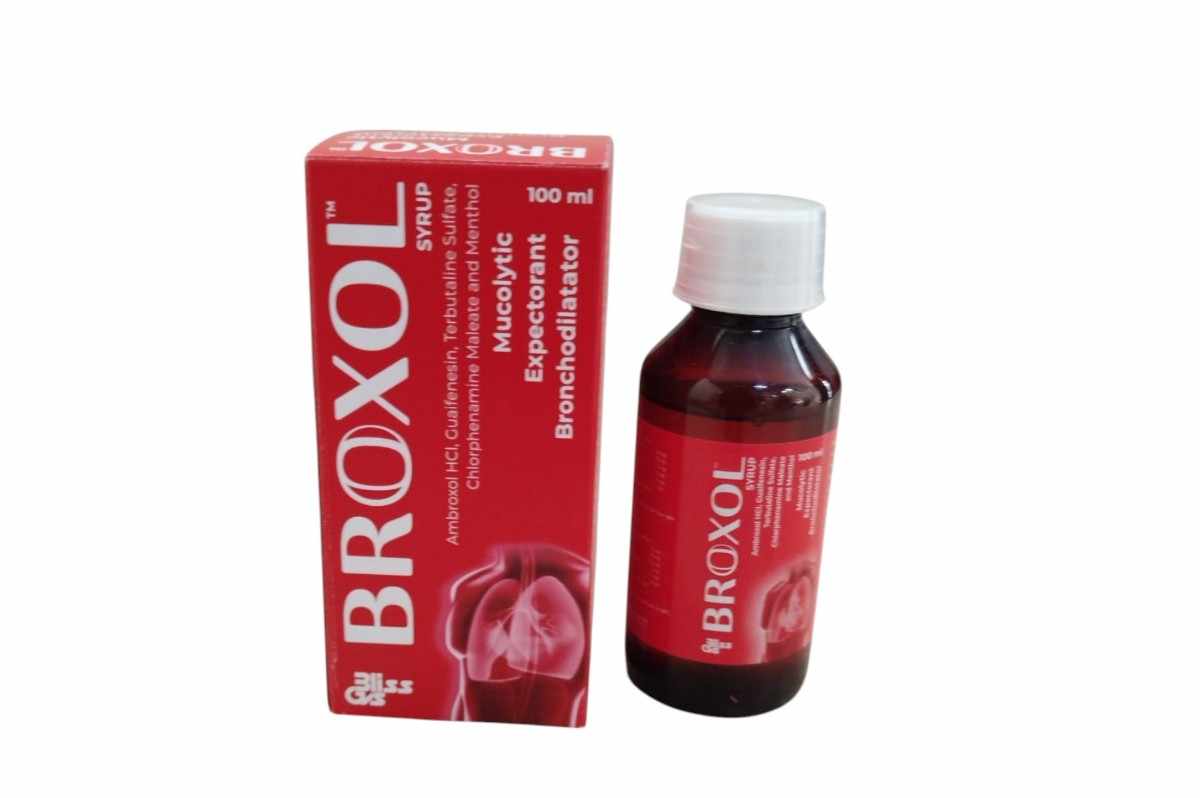
BROXOL SYRUP
AMBROXOL HYDROCHLORIDEGUAIPHENSINTERBUTALINE SULPHATEMENTHOL
What it does
Ambroxol is a medication that helps relieve cough and improve breathing by making mucus thinner and easier to clear from the airways.
Commonly used for: cough due to respiratory conditions, chronic bronchitis, asthma
Read more in plain English ↓Plain-language summary for general understanding - not medical advice. Always follow your pharmacist/doctor.
Ask about this medicine
Answers come only from this medicine's registration record, BNF monograph and interaction data - not medical advice.
Hard to find? We help patients in Kenya source rare medicines. We don't sell or dispense medicines - licensed pharmacies do.
Source this medicineRegistration & product details
Source: Pharmacy and Poisons Board · fetched 2026-01-28 22:10:27 · updated 2026-03-23 04:55:38
About ambroxol
Ambroxol is a medication that helps relieve cough and improve breathing by making mucus thinner and easier to clear from the airways.
What it treats
- cough due to respiratory conditions
- chronic bronchitis
- asthma
How it works
It works by breaking down mucus in the lungs, making it easier to cough up and clear from the airways.
Who it's for
Ambroxol is suitable for adults and children over a certain age who have a productive cough or difficulty breathing due to mucus.
AI-assisted summary grounded in BNF data - general information only, not medical advice. Always confirm with your pharmacist or doctor.
About hydrochlorideguaiphensinterbutaline
This medication is used to help relieve symptoms caused by certain breathing problems.
What it treats
- chest tightness
- cough
- wheezing
- shortness of breath
How it works
It helps to relax and open the airways in the lungs, making it easier to breathe.
Who it's for
It is commonly prescribed for people with asthma or chronic obstructive pulmonary disease (COPD).
AI-assisted summary grounded in BNF data - general information only, not medical advice. Always confirm with your pharmacist or doctor.
About sulphatementhol
Sulphatementhol is often used to relieve minor pain and reduce inflammation.
What it treats
- coughs (cough relief)
- muscle pain (myalgia)
- joint pain (arthritis)
How it works
It helps to soothe irritation and reduce swelling in the affected areas.
Who it's for
This medication is suitable for adults and children who need relief from minor pain or irritation.
AI-assisted summary grounded in BNF data - general information only, not medical advice. Always confirm with your pharmacist or doctor.
Clinical monograph: ambroxol
BNF-referencedAmbroxol is a mucolytic agent that facilitates the clearance of mucus from the respiratory tract. It is primarily used to treat respiratory disorders associated with excessive mucus production, such as chronic obstructive pulmonary disease (COPD), asthma, and bronchitis. Ambroxol is known for its ability to thin and loosen mucus, making it easier to expel from the lungs.
Indications
- Chronic obstructive pulmonary disease (COPD)
- Asthma
- Bronchitis
- Respiratory infections with excessive mucus production
Dosage
Children: For children aged 2 to 5 years, the recommended dose is 15 mg to 30 mg daily, divided into two or three doses. For children aged 6 to 12 years, the recommended dose is 30 mg to 60 mg daily, divided into two or three doses.
Adults: The usual adult dose is 30 mg to 120 mg daily, divided into two or three doses.
Mechanism of action
Ambroxol acts by stimulating the secretion of serous mucus in the respiratory tract, which helps to reduce the viscosity of sputum. This mucolytic action enhances the clearance of mucus, facilitating expectoration. It may also influence the production of surfactant in the lungs, contributing to improved lung function.
Pharmacodynamics
Ambroxol exhibits a dose-dependent effect on mucus viscosity and secretion. By enhancing mucociliary clearance, it aids in reducing airway obstruction and improving respiratory function. The onset of action typically occurs within a few hours after administration, with peak effects observed within 1 to 2 days of treatment.
Pharmacokinetics
Ambroxol is well absorbed after oral administration, with a bioavailability of approximately 70%. It is metabolized primarily in the liver through conjugation and oxidation, resulting in active metabolites. The elimination half-life is about 10 hours, and the drug is excreted predominantly via urine, both as unchanged drug and metabolites.
Contra-indications
- Hypersensitivity to ambroxol or any of the excipients
- Severe hepatic impairment
- Severe renal impairment
Adverse effects
- Gastrointestinal disturbances (nausea, vomiting, diarrhea)
- Skin reactions (rash, urticaria)
- Headache
- Dizziness
- Dry mouth
- Anaphylactic reactions (rare)
Interactions
- Ambroxol may enhance the absorption of other drugs due to its mucolytic properties
- Caution should be exercised when used with other cough suppressants
Precautions
- Use with caution in patients with a history of peptic ulcer disease
- Avoid use in patients with asthma unless prescribed by a healthcare professional
- Monitor renal and hepatic function in patients with pre-existing conditions
Pregnancy
Ambroxol should be used during pregnancy only if the potential benefit justifies the potential risk to the fetus. Data on human pregnancy are limited.
Breast-feeding
Ambroxol is excreted in breast milk. Caution is advised when administering to nursing mothers.
Storage
Store in a cool, dry place, away from light. Keep out of reach of children.
Formulations
- Oral solution
- Syrup
- Tablets
- Effervescent tablets
AI-synthesized from BNF references - general information only, not a substitute for professional medical advice or the current BNF. Verify doses with a pharmacist.
Clinical monograph: hydrochlorideguaiphensinterbutaline
Hydrochloride guaifenesin butaline is a combination medication that includes guaifenesin, an expectorant, and butaline, a bronchodilator. It is primarily used to alleviate symptoms associated with respiratory conditions such as asthma and chronic obstructive pulmonary disease (COPD) by helping to clear mucus and dilate the airways. The formulation aims to improve breathing by reducing airway resistance and facilitating mucus clearance.
Indications
- Asthma
- Chronic obstructive pulmonary disease (COPD)
- Bronchitis
- Respiratory tract infections with productive cough
Dosage
Children: Refer to the BNF for Children for appropriate dosing information.
Adults: Refer to prescribing guidelines for specific dosing recommendations.
Mechanism of action
Guaifenesin works by increasing the volume and reducing the viscosity of secretions in the tracheobronchial passages, thereby promoting the expulsion of mucus. Butaline, on the other hand, is a β2-adrenergic agonist that relaxes bronchial smooth muscle, leading to bronchodilation. This dual action helps to alleviate cough and improve airflow in patients with obstructive airway diseases.
Pharmacodynamics
The pharmacodynamic effects of hydrochloride guaifenesin butaline involve a combination of enhanced mucus clearance due to guaifenesin and bronchodilation from butaline. The bronchodilatory effect is characterized by a rapid onset of action, typically within minutes, and can last for several hours, improving respiratory function and reducing symptoms of bronchoconstriction.
Pharmacokinetics
Guaifenesin is rapidly absorbed from the gastrointestinal tract, reaching peak plasma concentrations within 1 to 2 hours. It is metabolized in the liver and excreted in the urine. Butaline also has a rapid onset of action and is primarily eliminated through hepatic metabolism. The half-life of butaline is approximately 2 to 6 hours, depending on individual factors. Both drugs have a wide distribution in body tissues.
Contra-indications
- Hypersensitivity to guaifenesin, hydrochloride, or terbutaline
- Severe asthma exacerbation
- Cardiac arrhythmias
- Hyperthyroidism
Adverse effects
- Tachycardia
- Nervousness
- Dizziness
- Nausea
- Headache
- Tremors
- Insomnia
Interactions
- Beta-blockers may reduce the effectiveness of terbutaline
- Caution with monoamine oxidase inhibitors (MAOIs) due to potential hypertensive crisis
- Other sympathomimetics may enhance cardiovascular effects
Precautions
- Use with caution in patients with cardiovascular disorders
- Caution in patients with diabetes mellitus
- Assess for potential drug interactions
- Monitor for worsening of respiratory condition
Pregnancy
Use only if clearly needed. Terbutaline is classified as Category C, where potential benefits might outweigh risks.
Breast-feeding
Use with caution. Guaifenesin and terbutaline are excreted in breast milk; assess risk versus benefit.
Storage
Store at room temperature, away from moisture and heat. Keep out of reach of children.
Formulations
- Oral tablets containing guaifenesin and terbutaline
- Syrup formulations with guaifenesin and terbutaline
- Inhalation solutions (for terbutaline)
AI-synthesized from BNF references - general information only, not a substitute for professional medical advice or the current BNF. Verify doses with a pharmacist.
Clinical monograph: sulphatementhol
Sulphatementhol is a compound primarily used for its analgesic and anti-inflammatory properties. It is often utilized in topical formulations to relieve minor aches and pains associated with muscle strains, sprains, and arthritis. Its menthol component provides a cooling sensation that helps to alleviate discomfort.
Indications
- Muscle strains
- Sprains
- Arthritis
- Minor aches and pains
Dosage
Children: Refer to specific product instructions, as formulations may vary.
Adults: Refer to specific product instructions, as formulations may vary.
Mechanism of action
Sulphatementhol acts by activating TRPM8 receptors, which are responsible for the sensation of coolness. This activation leads to the opening of cation channels, resulting in depolarization of sensory neurons and the perception of a cooling effect. Additionally, it may inhibit the synthesis of pro-inflammatory mediators, contributing to its analgesic effect.
Pharmacodynamics
The pharmacodynamic profile of sulphatementhol includes anti-inflammatory and analgesic properties, making it effective for topical pain relief. Its ability to induce a cooling sensation can distract from pain, while its potential effects on inflammatory pathways help reduce swelling and discomfort in affected areas.
Pharmacokinetics
Sulphatementhol is generally applied topically, where it is absorbed through the skin. The systemic absorption is minimal, leading to localized effects with a reduced risk of systemic side effects. The onset of action is typically rapid due to its direct application to the site of pain, and the duration of effect can vary depending on the formulation and specific concentration used.
Pregnancy
There is limited data on the use of sulphatementhol during pregnancy. Caution is advised and it should only be used if the potential benefits outweigh the risks.
Breast-feeding
It is not known whether sulphatementhol is excreted in human milk. Caution is advised when administering to nursing mothers.
Storage
Store in a cool, dry place away from direct sunlight. Keep out of reach of children.
AI-synthesized from BNF references - general information only, not a substitute for professional medical advice or the current BNF. Verify doses with a pharmacist.
Molecular reference: ambroxol
PubChem CID 2132Molecular formula: C13H18Br2N2O
Source: PubChem (NCBI) · pathways from PathBank, Reactome, WikiPathways & PharmGKB.
This drug in other countries
The same active ingredient registered across other registries we cover - including different brands.
- AMBRODIL DROPS
- AMBROXOL HYDROCHRORIDE · Sanprash Healthcare
- AOXOL · Coral Laboratories
- Ambrodil
- Ambrox · Square Pharmaceuticals
- Ambrox Paediatric · Square Pharmaceuticals
- ANTI-COUGH SYRUP · Sangeeta Pharma
- BROZELIN · Madras Pharmaceuticals
- EASCOF-LS SYRUP · Cachet Pharmaceuticals
- MUCOLEX · S Kant Healthcare
- RESPIMAX · West Coast Pharmaceutical Works
- SEKROL SYRUP ADULT
- AMBCET 30/5MG SYRUP
- AMBRODIL 30MG TABLET
- AMBRODIL 30MG/5ML SYRUP
- KOFAREST COMBINATION PRODUCT SYRUP
- KOFSIL COMBINATION PRODUCT SYRUP
- LIBITUS_LS 1MG/30MG/50MG SYRUP
- Ambrolite syrup · Til Healthcare
- Ascoril-LS Solution · Glenmark Pharmaceutical Ltd
- BROXOL · Bliss Gvs Pharma
- Cofsy syrup · Mmc Healthcare
- EASCOF-LS · Cachet Pharmaceuticals Pvt Ltd
- Libitus LS Syrup · Leben Laboratories
- BROZELIN SYRUP (Each 5ml contains Ambroxol/Salbutamol/Guaifenesin 30mg/2mg/50mg) · Madras Pharmaceuticals
- COSOREX EXPECTORANT SYRUP (Each 5ml syrup contains Ambroxol Hydrochloride 15mg) · Incepta Pharmaceuticals
- EMGIKOF-S · M&g Pharmaceuticals
- RESPIREX LIQUID (Each 5ml contains Ambroxol Hydrochloride/Salbutamol Sulphate/Guaifenesin 15mg/1mg/50mg) · Geno Pharmaceuticals
- RONFIT COLD-W · Baader Schulz
- XALAPA 125MG/5ML ORAL SUSPENSION · Trident Lifeline