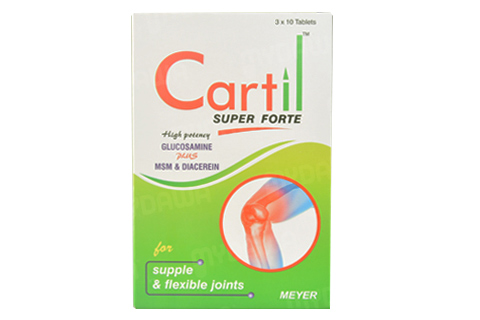
CARTIL SUPER FORTE TABLETS
GLUCOSAMINE SULFATE POTTASIUM CHLORIDE USP METHYLSULFONYL METHANE (MSM) USP DIACEREIN
What it does
Diacerein is a medication used to help relieve joint pain and improve movement.
Commonly used for: osteoarthritis, degenerative joint disease
Read more in plain English ↓Plain-language summary for general understanding - not medical advice. Always follow your pharmacist/doctor.
Ask about this medicine
Answers come only from this medicine's registration record, BNF monograph and interaction data - not medical advice.
Hard to find? We help patients in Kenya source rare medicines. We don't sell or dispense medicines - licensed pharmacies do.
Source this medicineRegistration & product details
Source: Pharmacy and Poisons Board · fetched 2026-01-28 21:46:00 · updated 2026-03-23 04:31:05
Drug Interactions
4Severe (2)
Coumarins - increases anticoagulant effect
Glucosamine potentially increases the anticoagulant effect of coumarins (warfarin). Avoid. Anecdotal Glycerol phenylbutyrate
Warfarin - increases anticoagulant effect
Glucosamine potentially increases the anticoagulant effect of warfarin. Avoid.
Unknown (2)
Acenocoumarol - decreases anticoagulant effect
Glucosamine potentially decreases the anticoagulant effect of acenocoumarol.
Coumarins - decreases anticoagulant effect
Glucosamine potentially decreases the anticoagulant effect of coumarins (acenocoumarol).
Data from BNF 85 (British National Formulary). This is not a substitute for professional medical advice. Matched via: exact
About diacerein
Diacerein is a medication used to help relieve joint pain and improve movement.
What it treats
- osteoarthritis
- degenerative joint disease
How it works
Diacerein works by reducing inflammation in the joints and slowing down the breakdown of cartilage.
Who it's for
Diacerein is for adults suffering from joint pain due to osteoarthritis.
AI-assisted summary grounded in BNF data - general information only, not medical advice. Always confirm with your pharmacist or doctor.
About glucosamine
Glucosamine is a supplement often used to support joint health and relieve discomfort.
What it treats
- osteoarthritis
- joint pain
How it works
Glucosamine is thought to help maintain cartilage and support joint function.
Who it's for
It is typically used by people suffering from joint issues, especially older adults or those with osteoarthritis.
AI-assisted summary grounded in BNF data - general information only, not medical advice. Always confirm with your pharmacist or doctor.
About methane
Methane is a colorless gas that can be found in various natural settings. It is not commonly used as a medication.
How it works
Methane does not have a specific medicinal action and is primarily known as a gas found in the environment.
Who it's for
Methane is not intended for medical use and does not have specific patient groups.
AI-assisted summary grounded in BNF data - general information only, not medical advice. Always confirm with your pharmacist or doctor.
About methylsulfonyl
Methylsulfonyl is a compound often used in dietary supplements for joint health and to reduce inflammation.
What it treats
- joint pain
- osteoarthritis
- muscle soreness
How it works
Methylsulfonyl is believed to help reduce inflammation and improve joint function.
Who it's for
It is suitable for adults looking for support with joint health and inflammation.
AI-assisted summary grounded in BNF data - general information only, not medical advice. Always confirm with your pharmacist or doctor.
About pottasium
Potassium is an essential mineral that helps maintain proper body function, especially for heart and muscle health.
What it treats
- low potassium levels (hypokalemia)
- heart conditions
- muscle cramps
How it works
Potassium helps regulate fluid balance, nerve signals, and muscle contractions in the body.
Who it's for
Potassium is for people who have low levels of potassium or conditions that affect potassium balance in the body.
AI-assisted summary grounded in BNF data - general information only, not medical advice. Always confirm with your pharmacist or doctor.
Clinical monograph: Glucosamine
BNF-referencedGlucosamine is a naturally occurring substance found in mucopolysaccharides, mucoproteins, and chitin. It serves as a precursor for glycosaminoglycans, which are crucial components of joint cartilage. Glucosamine is primarily used for the symptomatic relief of mild to moderate osteoarthritis of the knee. While it is thought to aid in rebuilding cartilage and reducing joint pain, the clinical evidence supporting its efficacy remains inconclusive.
Indications
- Symptomatic relief of mild to moderate osteoarthritis of the knee
Dosage
Children: Refer to the BNF for Children for
Adults: 200–400 mg daily, maximum 6.5 mg/kg per day, or 1250 mg once daily, or 1500 mg once daily dissolved in at least 250 mL of water; review treatment if no benefit after 2–3 months.
Mechanism of action
The mechanism of action of glucosamine in joint health is not entirely clear, but it is believed to involve several pathways. Glucosamine is a precursor for glycosaminoglycans, which are essential for cartilage integrity. It may also reduce inflammation by inhibiting interferon gamma and Nuclear factor kappa B subunit 65 (NF-κB p65), which could improve symptoms of arthritis and joint pain. Upon uptake by living cells, glucosamine reacts with ATP to form glucosamine-6-phosphate, further contributing to glycosaminoglycan synthesis.
Pharmacodynamics
Glucosamine is theorized to provide essential building blocks for the synthesis of glycosaminoglycans, potentially slowing the progression of osteoarthritis and alleviating joint pain. Although some studies have indicated modest improvements in joint pain and function among users, the overall evidence remains inconclusive. Glycosaminoglycans are critical for maintaining cartilage elasticity, strength, and flexibility, which are vital for joint health.
Pharmacokinetics
After oral administration, glucosamine is absorbed in the gastrointestinal tract and transported into the bloodstream, where it is metabolized into various forms, including glucosamine-6-phosphate. The exact pharmacokinetics, such as absorption rate and half-life, remain largely undefined, and much of the data is derived from animal studies. Further research is required to clarify its pharmacokinetic profiles in humans.
Adverse effects
- Constipation
- Diarrhoea
- Fatigue
- Gastrointestinal discomfort
- Headache
- Nausea
- Flushing
- Skin reactions
Interactions
- Glucosamine + warfarin: Severe (increases anticoagulant effect)
- Glucosamine + coumarins: Severe (increases anticoagulant effect)
- Glucosamine + acenocoumarol: Unknown (decreases anticoagulant effect)
- Glucosamine + coumarins: Unknown (decreases anticoagulant effect)
Precautions
- Asthma
- Impaired glucose tolerance
- Predisposition to cardiovascular disease
Pregnancy
Safety during pregnancy has not been established; consult with a healthcare provider.
Breast-feeding
Safety during breastfeeding has not been established; consult with a healthcare provider.
Storage
Store in a cool, dry place away from direct sunlight.
Formulations
- Alateris®
- Dolenio®
- Glusartel®
AI-synthesized from BNF references - general information only, not a substitute for professional medical advice or the current BNF. Verify doses with a pharmacist.
Clinical monograph: diacerein
BNF-referencedDiacerein is an anti-inflammatory drug primarily used in the management of osteoarthritis. It functions as a slow-acting agent that helps to alleviate symptoms and improve joint function by modifying the disease process. Diacerein is a precursor to its active metabolite, rhein, which exerts its therapeutic effects through various mechanisms that influence cartilage metabolism and inflammatory pathways.
Indications
- Osteoarthritis
- Degenerative joint disease
Dosage
Children: Paediatric dosing guidelines for diacerein are not well established, and it is generally not recommended for children. Refer to the BNF for Children for specific information.
Adults: The usual adult dosage is 50 mg taken orally once or twice daily, as directed by a healthcare professional. It is recommended to take diacerein with food to minimize gastrointestinal side effects.
Mechanism of action
Diacerein's active metabolite rhein reduces cartilage destruction by decreasing expression of matrix metalloproteinase (MMP)-1 and -3, while upregulating tissue inhibitor of matrix metalloproteinases. This action helps to mitigate the activity of several MMPs. Additionally, rhein has anti-inflammatory properties that lower the activity of interleukin-1 beta, a cytokine that contributes to inflammation and cartilage degradation. Furthermore, rhein reduces abnormal osteoblast synthetic activity through an unknown mechanism.
Pharmacodynamics
Diacerein decreases inflammation and cartilage destruction, correcting altered osteoblast activity. Its effects are particularly beneficial in the treatment of osteoarthritis, where it helps to slow the progression of joint damage and improve mobility.
Pharmacokinetics
Diacerein is absorbed from the gastrointestinal tract and is metabolized to rhein, which is responsible for its therapeutic effects. The onset of action may take several weeks, reflecting its role as a slow-acting drug in osteoarthritis therapy. The elimination half-life and specific pharmacokinetic parameters can vary based on individual patient factors, but detailed pharmacokinetic data should be referenced in specific clinical guidelines or drug literature.
Contra-indications
- Hypersensitivity to diacerein or any of its components
- Severe liver impairment
- Pregnancy
Adverse effects
- Diarrhea
- Abdominal pain
- Nausea
- Vomiting
- Rash
- Dyspepsia
Interactions
- May enhance the effects of other anti-inflammatory medications
- Caution is advised when taken with other drugs that affect liver metabolism
Precautions
- Use with caution in patients with a history of gastrointestinal disorders
- Monitor liver function tests periodically during therapy
- Not recommended for use in children
Pregnancy
Diacerein is contraindicated in pregnancy due to potential risks to the fetus.
Breast-feeding
It is not known whether diacerein is excreted in human breast milk; caution is advised.
Storage
Store in a cool, dry place, away from light and moisture.
Formulations
- Capsules: 50 mg
AI-synthesized from BNF references - general information only, not a substitute for professional medical advice or the current BNF. Verify doses with a pharmacist.
Clinical monograph: methane
BNF-referencedMethane is a simple aliphatic hydrocarbon with the molecular formula CH4. It is the primary component of natural gas and is utilized in various industrial applications. Methane is a colorless, odorless gas under standard conditions and is known for its role as a significant energy source. It is also a major contributor to greenhouse gas emissions and is involved in various environmental processes.
Dosage
Children: As with adult dosing, methane is not used therapeutically in paediatrics, and thus no specific paediatric doses are provided. Refer to clinical guidelines for any relevant applications.
Adults: Methane is not typically administered as a drug in therapeutic contexts. Therefore, specific dosage recommendations for adults do not apply. Consult relevant guidelines or literature for any potential applications.
Mechanism of action
Methane serves as a carbon source in various metabolic processes, particularly in methanogenic archaea and certain bacteria. It participates in biochemical pathways such as methylphosphonate degradation and the oxidation of methane to methanol, facilitating energy production and carbon cycling in anaerobic environments.
Pharmacodynamics
In the context of environmental and biological systems, methane acts as a substrate for methanogenic organisms. These organisms utilize methane to produce energy through anaerobic respiration. The dynamics of methane in the environment are influenced by factors such as temperature, pH, and the presence of other substrates or microorganisms.
Pharmacokinetics
Methane is generally not absorbed in a conventional pharmacokinetic sense as it is primarily a gas. Its distribution and metabolism occur in the environment rather than within a biological system. Methane's clearance from the atmosphere occurs through various processes, including oxidation to carbon dioxide and assimilation by methanotrophic bacteria.
Pregnancy
Methane is not recommended during pregnancy due to potential risks associated with exposure to flammable gases.
Breast-feeding
There is limited information regarding the effects of methane during breastfeeding, exercise caution.
Storage
Store in a cool, dry place away from sources of ignition and incompatible materials.
AI-synthesized from BNF references - general information only, not a substitute for professional medical advice or the current BNF. Verify doses with a pharmacist.
Clinical monograph: methylsulfonyl
Methylsulfonyl (often referred to as MSM) is a naturally occurring sulfur compound that is commonly used as a dietary supplement. It is known for its anti-inflammatory properties and is often utilized in the management of joint pain, osteoarthritis, and other inflammatory conditions. MSM is believed to contribute to the maintenance of healthy connective tissues and may also support immune function.
Indications
- Osteoarthritis
- Joint pain
- Inflammatory conditions
- Musculoskeletal disorders
- Allergic rhinitis
Dosage
Children: Consult specific product guidelines or a healthcare provider for appropriate dosing in children.
Adults: Refer to specific product guidelines for dosing; typically, doses range from 1,500 mg to 6,000 mg per day, divided into multiple doses.
Mechanism of action
MSM is thought to exert its effects primarily through its role as a source of sulfur, which is vital for the synthesis of certain amino acids and proteins, including collagen. This compound has been shown to inhibit the production of pro-inflammatory cytokines and may reduce oxidative stress in tissues. Additionally, MSM may improve joint mobility and reduce pain by modulating inflammation and enhancing the repair processes of damaged tissues.
Pharmacodynamics
The pharmacodynamic properties of MSM are characterized by its anti-inflammatory and analgesic effects. It has been reported to reduce pain and improve function in individuals with osteoarthritis and other musculoskeletal disorders. MSM's ability to decrease inflammation may also extend to various other conditions associated with chronic inflammatory processes.
Pharmacokinetics
MSM is rapidly absorbed in the gastrointestinal tract, with peak plasma concentrations typically achieved within a few hours after administration. It is metabolized primarily in the liver, and its elimination occurs through renal pathways. The half-life of MSM in the body has not been extensively studied, but it is generally considered to have a relatively short duration of action, necessitating multiple doses throughout the day to maintain therapeutic levels.
Pregnancy
There is insufficient data on the safety of methylsulfonyl during pregnancy. Consultation with a healthcare provider is recommended.
Breast-feeding
Limited information is available on the excretion of methylsulfonyl in breast milk. Caution is advised when used during breastfeeding.
Storage
Store in a cool, dry place away from direct sunlight and moisture.
AI-synthesized from BNF references - general information only, not a substitute for professional medical advice or the current BNF. Verify doses with a pharmacist.
Clinical monograph: pottasium
Potassium is an essential mineral and electrolyte critical for various bodily functions, including the regulation of heartbeats, muscle contractions, and nerve signals. It is primarily obtained through dietary sources such as fruits, vegetables, and legumes. Potassium is vital for maintaining fluid balance, acid-base balance, and cellular function.
Indications
- Hypokalemia (low serum potassium levels)
- Hypertension (as part of dietary management)
- Heart disease (to prevent arrhythmias)
- Muscle cramps (related to low potassium levels)
Dosage
Children: Refer to guidelines for specific dosing recommendations based on age and clinical condition.
Adults: Dosage varies based on clinical condition and serum potassium levels. Refer to established guidelines for specific dosing recommendations.
Mechanism of action
Potassium ions are crucial for the generation and conduction of action potentials in neurons and muscle cells. They help to maintain the membrane potential and are involved in the repolarization phase of the action potential. Additionally, potassium plays a role in enzymatic reactions and the synthesis of proteins.
Pharmacodynamics
Potassium participates in numerous physiological processes, including muscle contraction, nerve transmission, and cardiac function. Adequate levels of potassium help to prevent arrhythmias and support overall cardiovascular health. It also influences the function of the kidneys, adrenal glands, and other organs involved in electrolyte and fluid balance.
Pharmacokinetics
Potassium is absorbed in the gastrointestinal tract, with the majority of absorption occurring in the small intestine. The distribution of potassium within the body is primarily intracellular, with most of it located within cells. The kidneys regulate potassium levels through filtration and reabsorption, with excess potassium being excreted in urine. Factors such as diet, renal function, and hormonal regulation can impact potassium homeostasis.
Contra-indications
- Hyperkalemia
- Severe renal impairment
- Untreated Addison's disease
- Acute dehydration
Adverse effects
- Hyperkalemia
- Cardiac arrhythmias
- Muscle weakness
- Nausea
- Vomiting
- Diarrhea
- Abdominal cramping
Interactions
- Angiotensin-converting enzyme (ACE) inhibitors may increase potassium levels
- Potassium-sparing diuretics can lead to hyperkalemia
- Non-steroidal anti-inflammatory drugs (NSAIDs) may reduce renal excretion of potassium
- Digoxin toxicity may occur with elevated potassium levels
Precautions
- Monitor serum potassium levels regularly
- Use with caution in patients with renal dysfunction
- Consider dietary potassium intake in patients on potassium supplements
- Be cautious in patients with cardiac disease
Pregnancy
Potassium is essential during pregnancy, but supplementation should only be done under medical supervision to avoid hyperkalemia.
Breast-feeding
Potassium is present in breast milk and is important for nursing infants, but additional supplementation should be approached with caution.
Storage
Store in a cool, dry place, away from direct sunlight. Keep out of reach of children.
Formulations
- Oral tablets
- Oral liquid
- Intravenous solution
- Effervescent tablets
AI-synthesized from BNF references - general information only, not a substitute for professional medical advice or the current BNF. Verify doses with a pharmacist.
Molecular reference: Glucosamine
PubChem CID 439213Molecular formula: C6H13NO5
Mechanism of action
The mechanism of action of glucosamine in joint health is unclear, however there are several possible mechanisms that contribute to its therapeutic effects. Because glucosamine is a precursor for glycosaminoglycans, and glycosaminoglycans are a major component of joint cartilage, glucosamine supplements may help to rebuild cartilage and treat the symptoms of arthritis. Some in vitro studies show evidence that glucosamine reduces inflammation via inhibition of interferon gamma and Nuclear factor kappa B subunit 65 (NF-κB p65), improving the symptoms of arthritis and joint pain. Clinical relevance is unknown at this time. When taken up by living cells, glucosamine reacts with ATP to form glucosamine-6-phosphate, the natural precursor of glycosaminoglycans (GAGs) that contain N-acetylglucosamine (keratan sulfate and Hyaluronan) and those that have N-acetylgalactosamine (heparan sulfate and chondroitin sulfate). These GAGs are polysaccharides composed of hexosamines and monosaccharides (e.g., galactose and glucuronic acid) arranged as a linear chain of repeating disaccharide units (such as the glucuronic acid and N-acetylgalactosamine-6-sulfate of chondroitin sulfate). With the exception of hyaluronan, GAGs do not exist alone in nature but are attached to specific "core" proteins, and the composite structures are called proteoglycans (protein-glycosaminoglycans). Both hyaluronan and many different kinds of proteoglycans (such as aggrecan, versican, and syndecan) are abundant throughout the body where they perform diverse functions.
Pharmacodynamics
The administration of glucosamine, in theory, provides a building block towards the synthesis of glycosaminoglycans, slowing the progression of osteoarthritis and relieving symptoms of joint pain. Studies to this date examining the efficacy of glucosamine sulfate have been inconclusive. Glycosaminoglycans contribute to joint cartilage elasticity, strength, and flexibility. A systematic review of various studies and guidelines determined that modest improvements were reported for joint pain and function in patients taking glucosamine. A consistent joint space narrowing was observed, but with an unclear clinical significance.
Biological pathways
Source: PubChem (NCBI) · pathways from PathBank, Reactome, WikiPathways & PharmGKB.
Molecular reference: diacerein
PubChem CID 26248Molecular formula: C19H12O8
Mechanism of action
Diacerein's active metabolite rhein [DB13174] reduces cartilage destruction by decreasing expression of matrix metalloproteinase (MMP)-1 and -3 as well as upregulating tissue inhibitor of matrix metalloproteinases which serve to reduce the activity of several MMPs. The anti-inflammatory action of rhein reduces the level of interleukin-1beta activity which plays a large role in reduction of extracellular matrix production, MMP activity, and continued inflammation. Rhein reduces abnormal osteoblast synthetic activity through an unknown mechanism.
Pharmacodynamics
Decreases inflammation and cartilage destruction and also corrects altered osteoblast acitivity.
Source: PubChem (NCBI) · pathways from PathBank, Reactome, WikiPathways & PharmGKB.
Molecular reference: methane
PubChem CID 297Molecular formula: CH4
Biological pathways
Source: PubChem (NCBI) · pathways from PathBank, Reactome, WikiPathways & PharmGKB.
This drug in other countries
The same active ingredient registered across other registries we cover - including different brands.
- ALC GLUCOSAMINE TABLETS · Unicom Chemist
- ARTHOFLEX TABLETS (Each tablet contains Collagen Peptide Type II/Hyaluronic acid/Glucosamine 250mg/40mg/200mg) · Venturo Healthcare
- ARTHROFLEX PLUS TABLETS (Each tablet contains Glucosamine 500mg/ Chondroitin 400mg/ Methyl Sulfonyl Methane 250mg/ Collagen type 2 40mg/ Hyaluronic Acid 3.3mg) · Aayansh Wellness
- ARTHROSAMINE PLUS CAPLETS · Health Products Corporation
- ARTHROSAN PLUS TABLETS ( Glucosamine sulfate/Chondroitin sulfate/ MSM/ Manganese/ Selenium/ Shitake Mushroom Powder/ Vitamin C · Peppina Sales
- Articare TABLET · Influx Healthtech