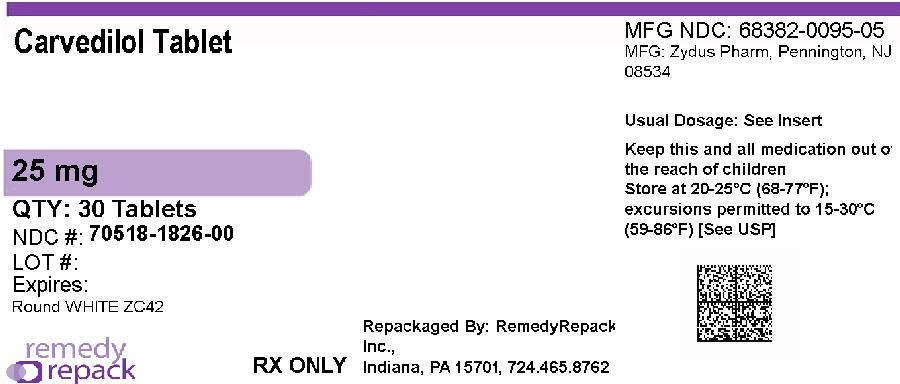
(carvedilol · DailyMed)
CARVETREND 12.5MG
Carvedilol 12.5mg
What it does
Carvedilol is a medication that helps lower blood pressure and improve heart function.
Commonly used for: high blood pressure (hypertension), heart failure
Read more in plain English ↓Plain-language summary for general understanding - not medical advice. Always follow your pharmacist/doctor.
Ask about this medicine
Answers come only from this medicine's registration record, BNF monograph and interaction data - not medical advice.
Medicine sourcing is available in Kenya only. We don't sell or dispense medicines - licensed pharmacies do.
Sourcing - Kenya onlyRegistration & product details
Source: Botswana Medicines Regulatory Authority · fetched 2026-09-18 04:32:37
Drug Interactions
2Pharmacodynamic Warnings
Carvedilol appears in TABLE 6: Drugs that cause bradycardia
Carvedilol appears in TABLE 8: Drugs that cause hypotension
Unknown (2)
Carvedilol - decreases exposure
Rifampicin moderately decreases the exposure to beta blockers, non-selective (carvedilol).
Relugolix - increases exposure
Carvedilol is predicted to increase the exposure to relugolix. Avoid or take relugolix first and separate administration by at least 6 hours.
Data from BNF 85 (British National Formulary). This is not a substitute for professional medical advice. Matched via: exact
About this medicine
Carvedilol is a medication that helps lower blood pressure and improve heart function.
What it treats
- high blood pressure (hypertension)
- heart failure
How it works
Carvedilol works by blocking certain receptors in the heart and blood vessels, which helps to reduce heart rate and relax blood vessels, leading to lower blood pressure.
Who it's for
Carvedilol is generally used for adults with high blood pressure or heart problems.
Drug class
Beta blockers
Cautions
- • Be cautious if taking other medications that slow your heart rate.
- • Be careful if using medications that lower blood pressure.
AI-assisted summary grounded in BNF data - general information only, not medical advice. Always confirm with your pharmacist or doctor.
Clinical monograph: Carvedilol
BNF-referencedCarvedilol is a non-selective beta-adrenergic blocker with additional alpha-1 adrenergic blocking properties. It is commonly used in the management of hypertension, angina, and heart failure. Its unique action not only reduces heart rate through beta-blockade but also lowers peripheral vascular resistance due to its alpha-blocking effect, leading to decreased blood pressure. Carvedilol also exhibits antioxidant properties, which may provide additional cardiovascular protection.
Indications
- Hypertension
- Angina
- Chronic heart failure
- Heart failure adjunct therapy
Dosage
Children: Refer to the BNF for Children for specific dosing information.
Adults: Initially 12.5 mg once daily for 2 days, then increased to 25 mg once daily; dosage can be increased if necessary up to 50 mg daily, with increases at intervals of at least 2 weeks.
Mechanism of action
Carvedilol inhibits exercise-induced tachycardia by blocking beta-adrenergic receptors, which reduces adrenergic stimulation in the myocardium. Its action on alpha-1 adrenergic receptors relaxes vascular smooth muscle, decreasing peripheral vascular resistance. At higher doses, it may exhibit calcium channel blocking and antioxidant activity, preventing the oxidation of low-density lipoprotein. The drug is a racemic mixture, with the S(-)-enantiomer responsible for beta-adrenergic blockade.
Pharmacodynamics
Carvedilol effectively reduces heart rate and blood pressure due to its dual action as a beta and alpha-1 antagonist. It has a long duration of action, generally requiring once-daily dosing, and demonstrates a broad therapeutic index. Abrupt discontinuation of carvedilol can exacerbate coronary artery disease, necessitating careful tapering when stopping treatment.
Pharmacokinetics
Carvedilol is well-absorbed after oral administration, with peak plasma concentrations typically occurring 1 to 2 hours post-dose. It undergoes extensive first-pass metabolism in the liver, leading to variable bioavailability. The drug is primarily eliminated by hepatic metabolism, with a half-life of approximately 7 to 10 hours. Renal function does not significantly impact its metabolism, making it suitable for patients with varying degrees of renal impairment.
Contra-indications
- Asthma
- Cardiogenic shock
- Hypotension
- Marked bradycardia
- Metabolic acidosis due to beta-blockade
- Phaeochromocytoma (except when used with alpha-blockers)
- Prinzmetal’s angina
- Second-degree AV block
- Third-degree AV block
- Uncontrolled heart failure
Adverse effects
- Abdominal discomfort
- Bradycardia
- Confusion
- Depression
- Diarrhoea
- Dizziness
- Dry eye (reversible on discontinuation)
- Dyspnoea
- Erectile dysfunction
- Fatigue
- Headache
- Heart failure
- Nausea
- Paraesthesia
- Peripheral coldness
- Peripheral vascular disease
- Rash (reversible on discontinuation)
- Sleep disorders
- Syncope
- Visual impairment
- Vomiting
- Atrioventricular block
- Bronchospasm
- Hallucination
Interactions
- Carvedilol may increase exposure to relugolix
- Carvedilol may decrease exposure to rifampicin
Precautions
- Monitor lung function in patients with a history of obstructive airway disease
- Use with caution in patients with diabetes mellitus due to risk of masking hypoglycaemic symptoms
- Gradual dose reduction is preferred when discontinuing to avoid rebound worsening of myocardial ischaemia
- Monitor patients for signs of toxicity, especially in infants if the mother is using carvedilol during breastfeeding
Pregnancy
Beta-blockers may cause intra-uterine growth restriction, neonatal hypoglycaemia, and systemic bradycardia; the risk is greater in severe hypertension.
Breast-feeding
With systemic use in the mother, infants should be monitored as there is a risk of possible toxicity; however, the amount in breast milk is generally too small to affect infants.
Storage
Store in a cool, dry place away from direct sunlight. Keep out of reach of children.
Formulations
- Tablets: 12
AI-synthesized from BNF references - general information only, not a substitute for professional medical advice or the current BNF. Verify doses with a pharmacist.
Molecular reference: Carvedilol
PubChem CID 2585Molecular formula: C24H26N2O4
Mechanism of action
Carvedilol inhibits exercise induced tachycardia through its inhibition of beta adrenoceptors. Carvedilol's action on alpha-1 adrenergic receptors relaxes smooth muscle in vasculature, leading to reduced peripheral vascular resistance and an overall reduction in blood pressure. At higher doses, calcium channel blocking and antioxidant activity can also be seen. The antioxidant activity of carvedilol prevents oxidation of low density lipoprotein and its uptake into coronary circulation. Carvedilol is a nonselective beta-adrenergic blocking agent with selective alpha1-adrenergic blocking activity. The principal physiologic action of carvedilol is to competitively block adrenergic stimulation of beta-receptors within the myocardium (beta1-receptors) and within bronchial and vascular smooth muscle (beta2-receptors), and to a lesser extent alpha1-receptors within vascular smooth muscle. The beta1-antagonist activity of carvedilol is similar to that of propranolol and greater than that of labetalol, and the duration of carvedilol's effect is longer than those of labetalol and propranolol. Studies in animals indicate that the drug may exert an antioxidant effect on the myocardium and an antiproliferative effect on intimal tissue. The commercially available drug is a racemic mixture of the 2 enantiomers, (R)[+] and (S)[-], and both enantiomers have equal alpha1-adrenergic blocking activity; however, only the S(-)-enantiomer of carvedilol has beta-adrenergic blocking activity. Carvedilol does not exhibit intrinsic sympathomimetic (beta1-agonist) activity and possesses only weak membrane-stabilizing (local anesthetic) activity. Vasodilation resulting in reduced total peripheral resistance mediated through carvedilol's alpha1-adrenergic blockade and reduced sympathetic tone appear to play a major role in the drug's hypotensive effect. Carvedilol causes reductions in cardiac output, exercise-induced tachycardia, isoproterenol-induced tachycardia, and reflex orthostatic tachycardia. Clinically important beta-adrenergic blocking activity of carvedilol usually is evident within 1 hour of oral administration, and the drug's hypotensive effect is similar to that of metoprolol. Carvedilol's alpha1-adrenergic blocking effects, which contribute to the drug's hypotensive effects, generally are evident within 30 minutes of oral administration and include reductions in phenylephrine-induced pressor effects, vasodilation, and decreased peripheral vascular resistance. The dose-dependent hypotensive effect of carvedilol results in blood pressure (systolic and diastolic) reductions of 5-46% with little, if any, reflex tachycardia. This hypotensive effect occurs approximately 30 minutes after oral administration and has a maximum effect 1.5-7 hours after oral administration. The precise mechanism of the beneficial effects of carvedilol in the treatment of congestive heart failure has not been fully elucidated. beta1-Adrenergic blockade and vasodilation generally are associated with reflex tachycardia and peripheral vasoconstriction in therapeutic agents in which one of these pharmacologic effects predominates, but the combined effects of carvedilol appear to attenuate these two major untoward responses by balancing the potential adverse effects associated with adrenergic blockade and vasodilation. The drug's vasodilatory action appears to enable the patient to tolerate the negative inotropic effect of carvedilol during the initiation and titration of therapy in the treatment of compensated heart failure. For more Mechanism of Action (Complete) data for CARVEDILOL (18 total), please visit the HSDB record page.
Pharmacodynamics
Carvedilol reduces tachycardia through beta adrenergic antagonism and lowers blood pressure through alpha-1 adrenergic antagonism. It has a long duration of action as it is generally taken once daily and has a broad therapeutic index as patients generally take 10-80mg daily. Patients taking carvedilol should not abruptly stop taking this medication as this may exacerbate coronary artery disease.
Biological pathways
Source: PubChem (NCBI) · pathways from PathBank, Reactome, WikiPathways & PharmGKB.
This drug in other countries
The same active ingredient registered across other registries we cover - including different brands.
- CADALOL 12.5 · Sai Pharmaceuticals
- CADALOL 6.25 · Sai Pharmaceuticals
- CARAVEL 25MG TABLETS · Meda Pharma
- CARAVEL 6.25MG · Meda Pharma
- CARCA -3.125MG · Accord Healthcare
- CARCA-12.5 MG · Accord Healthcare
- BETATOP TABLETS (Each Tablet contains Carvedilol 25mg) · Dupen Laboratories
- BETATOP TABLETS (Each tablet contains Carvedilol 12.5mg) · Dupen Laboratories
- BETATOP 3.125 TABLETS (Each tablet contains Carvedilol 3.125mg) · Dupen Laboratories
- BETATOP 6.25 TABLETS (Each tablet contains Carvedilol 6.25mg) · Dupen Laboratories
- CARCET TABLET (Each tablet contains Carvedilol 12.5mg) · Pinnacle Lifesciences
- CARCET TABLET (Each tablet contains carvedilol 6.25mg) · Pinnacle Lifesciences