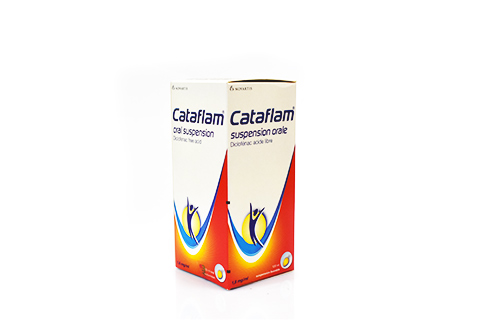
CATAFLAM 1.8MG/ML SUSPENSION
CATAFLAM ORAL SUSPENSION
What it does
Cataflam is a medication used to relieve pain and reduce inflammation.
Commonly used for: pain relief, inflammation, arthritic conditions, menstrual pain
Read more in plain English ↓Plain-language summary for general understanding - not medical advice. Always follow your pharmacist/doctor.
Ask about this medicine
Answers come only from this medicine's registration record, BNF monograph and interaction data - not medical advice.
Hard to find? We help patients in Kenya source rare medicines. We don't sell or dispense medicines - licensed pharmacies do.
Source this medicineRegistration & product details
Source: Pharmacy and Poisons Board · fetched 2026-01-28 20:53:35 · updated 2026-07-26 11:44:13
About this medicine
Cataflam is a medication used to relieve pain and reduce inflammation.
What it treats
- pain relief
- inflammation
- arthritic conditions
- menstrual pain
How it works
Cataflam works by blocking substances in the body that cause pain and inflammation.
Who it's for
It is suitable for adults and children who need relief from pain or inflammation.
AI-assisted summary grounded in BNF data - general information only, not medical advice. Always confirm with your pharmacist or doctor.
Clinical monograph: cataflam
BNF-referencedCataflam is a nonsteroidal anti-inflammatory drug (NSAID) that is commonly used to relieve pain and inflammation. It is the potassium salt of diclofenac and is indicated for various conditions including arthritis, menstrual pain, and postoperative pain. Its anti-inflammatory properties make it effective in managing conditions associated with pain and inflammation.
Indications
- Osteoarthritis
- Rheumatoid arthritis
- Acute musculoskeletal pain
- Dysmenorrhea
- Postoperative pain
- Gout attacks
Dosage
Children: For children aged 1 to 12 years, the dose is generally based on weight. Refer to BNF for Children for specific dosing recommendations.
Adults: The usual oral dose for adults is 50 mg taken two or three times daily, depending on the severity of symptoms.
Mechanism of action
Cataflam works by inhibiting the enzyme cyclooxygenase (COX), which is involved in the conversion of arachidonic acid to prostaglandins. Prostaglandins are mediators of inflammation and pain. By decreasing their production, Cataflam effectively reduces pain, inflammation, and fever.
Pharmacodynamics
The pharmacodynamic effects of Cataflam include a reduction in the synthesis of prostaglandins, leading to decreased inflammatory responses and alleviation of pain. It exhibits analgesic, antipyretic, and anti-inflammatory effects. The onset of action typically occurs within a few hours, providing quick relief for acute pain conditions.
Pharmacokinetics
Cataflam is rapidly absorbed after oral administration, with peak plasma concentrations occurring within 1 to 2 hours. It is extensively metabolized in the liver, mainly through glucuronidation and oxidation. The elimination half-life ranges from 1 to 2 hours, with metabolites excreted primarily in urine. The drug's bioavailability is approximately 50% due to first-pass metabolism.
Contra-indications
- Active or history of peptic ulcer disease
- Severe heart failure
- Severe hepatic impairment
- Severe renal impairment
- Known hypersensitivity to diclofenac or any of the excipients
Adverse effects
- Gastrointestinal bleeding
- Nausea
- Vomiting
- Diarrhea
- Abdominal pain
- Headache
- Dizziness
- Rash
- Elevated liver enzymes
- Kidney impairment
Interactions
- Anticoagulants may enhance the risk of bleeding
- Other NSAIDs may increase the risk of adverse effects
- Diuretics may reduce effectiveness
- ACE inhibitors may have decreased effectiveness
- Methotrexate may have increased toxicity
Precautions
- Monitor renal function in patients with renal impairment
- Use with caution in patients with a history of gastrointestinal disease
- Avoid in patients with cardiovascular disease
- Caution in elderly patients due to increased risk of adverse effects
Pregnancy
Use during pregnancy, especially in the third trimester, is contraindicated as it may cause fetal harm or complications during delivery.
Breast-feeding
Diclofenac is excreted in breast milk, and caution is advised when used during breastfeeding.
Storage
Store in a cool, dry place away from direct sunlight. Keep out of reach of children.
Formulations
- Tablets
- Topical gel
- Injection solution
AI-synthesized from BNF references - general information only, not a substitute for professional medical advice or the current BNF. Verify doses with a pharmacist.
Molecular reference: cataflam
PubChem CID 23667642Molecular formula: C14H10Cl2KNO2
Source: PubChem (NCBI) · pathways from PathBank, Reactome, WikiPathways & PharmGKB.