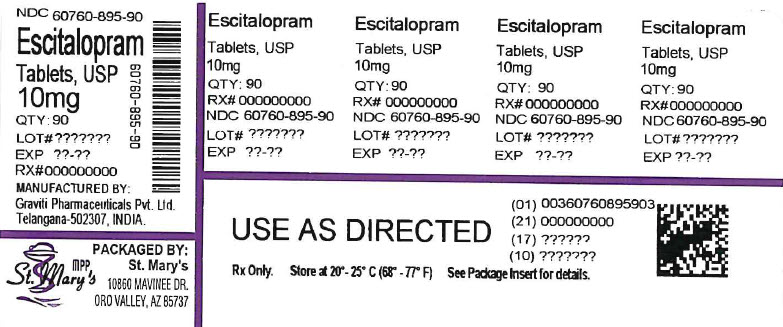
(escitalopram · DailyMed)
CIPRALEX 10 MG
ESCITALOPRAM (AS OXALATE)
What it does
Escitalopram is a type of antidepressant known as a selective serotonin reuptake inhibitor (SSRI). It is commonly used to help improve mood and relieve anxiety.
Commonly used for: depression, generalized anxiety disorder
Read more in plain English ↓Plain-language summary for general understanding - not medical advice. Always follow your pharmacist/doctor.
Ask about this medicine
Answers come only from this medicine's registration record, BNF monograph and interaction data - not medical advice.
Hard to find? We help patients in Kenya source rare medicines. We don't sell or dispense medicines - licensed pharmacies do.
Source this medicineRegistration & product details
Source: Pharmacy and Poisons Board · fetched 2026-01-28 21:12:46 · updated 2026-08-09 02:03:43
Drug Interactions
16Pharmacodynamic Warnings
Escitalopram appears in TABLE 4: Drugs with antiplatelet effects
Escitalopram appears in TABLE 9: Drugs that prolong the QT interval
Escitalopram appears in TABLE 13: Drugs that cause serotonin syndrome
Escitalopram appears in TABLE 18: Drugs that cause hyponatraemia
Severe (1)
Loxapine - increases exposure
SSRIs(fluvoxamine)arepredictedtoincreasetheexposureto loxapine.Avoid.qTheoretical
Moderate (6)
Cinacalcet - increases exposure
SSRIs (fluvoxamine) are predicted to increase the exposure to cinacalcet. Adjust dose.
Erlotinib - increases exposure
SSRIs (fluvoxamine) are predicted to increase the exposure to erlotinib. Monitor adverse effects and adjust dose.
Escitalopram - increases exposure
Moclobemideispredictedtoincreasetheexposureto escitalopram.Usewithcautionandadjustdose.rStudy → AlsoseeTABLE13p.1520
Propafenone - increases exposure
SSRIs (fluvoxamine) are predicted to increase the exposure to propafenone. Monitor and adjust dose.
Ropinirole - increases exposure
SSRIs (fluvoxamine) are predicted to increase the exposure to ropinirole. Adjust dose.
Selumetinib - increases exposure
SSRIs (fluoxetine) are predicted to increase the exposure to selumetinib. Avoid or adjust dose-consult product literature.
Unknown (9)
Anagrelide - increases exposure
SSRIs (fluvoxamine) are predicted to increase the exposure to anagrelide. Also see TABLE 4 p. 1517
Chlorpromazine - increases exposure
SSRIs(fluvoxamine)arepredictedtoincreasetheexposureto chlorpromazine.oTheoretical
Eltrombopag - increases exposure
SSRIs(fluvoxamine)arepredictedtoincreasetheexposureto eltrombopag.oTheoretical
Fedratinib - increases exposure
SSRIs (fluoxetine) are predicted to increase the exposure to fedratinib. Avoid depending on other drugs taken-consult product literature.
Lomitapide - increases exposure
SSRIs (fluoxetine) are predicted to increase the exposure to lomitapide. Separate administration by 12 hours.
Pentoxifylline - increases exposure
SSRIs(fluvoxamine)arepredictedtoincreasetheexposureto pentoxifylline.oTheoretical
Riluzole - increases exposure
SSRIs(fluvoxamine)arepredictedtoincreasetheexposureto riluzole.oTheoretical
Roflumilast - increases exposure
SSRIs (fluvoxamine) are predicted to increase the exposure to roflumilast.
Zolmitriptan - increases exposure
SSRIs (fluvoxamine) are predicted to increase the exposure to zolmitriptan. Adjust zolmitriptan dose, p. 520. Also see TABLE 13 p. 1520
Data from BNF 85 (British National Formulary). This is not a substitute for professional medical advice. Matched via: class
About this medicine
Escitalopram is a type of antidepressant known as a selective serotonin reuptake inhibitor (SSRI). It is commonly used to help improve mood and relieve anxiety.
What it treats
- depression
- generalized anxiety disorder
How it works
It works by increasing the levels of serotonin, a chemical in the brain that helps regulate mood.
Who it's for
Escitalopram is for adults experiencing depression or anxiety disorders.
Drug class
SSRIs
Cautions
- • Be careful if you are taking medications that prevent blood clotting.
- • Use caution with drugs that can cause heart rhythm problems.
- • Avoid drugs that may lead to serotonin syndrome, a serious condition caused by too much serotonin.
- • Watch out for medications that can lower sodium levels in the blood.
AI-assisted summary grounded in BNF data - general information only, not medical advice. Always confirm with your pharmacist or doctor.
Clinical monograph: Escitalopram
BNF-referencedEscitalopram is an antidepressant belonging to the selective serotonin re-uptake inhibitors (SSRIs) class, primarily used to treat mental health disorders such as depression, generalized anxiety disorder, obsessive-compulsive disorder, panic disorder, and social anxiety disorder. It is the active enantiomer of citalopram, showing enhanced potency and efficacy. Escitalopram increases serotonergic activity in the central nervous system by inhibiting the re-uptake of serotonin, thus enhancing mood and reducing anxiety.
Indications
- Depressive illness
- Generalized anxiety disorder
- Obsessive-compulsive disorder
- Panic disorder
- Social anxiety disorder
Mechanism of action
Escitalopram enhances serotonergic activity by binding to the primary binding site on the serotonin transporter (SERT), preventing the re-uptake of serotonin into the presynaptic neuron. It also acts as an allosteric serotonin re-uptake inhibitor, binding to a secondary allosteric site on SERT to more effectively inhibit serotonin re-uptake, leading to elevated extracellular serotonin levels. This sustained increase eventually desensitizes 5-HT1A auto-receptors, which is critical for the full clinical effect of SSRIs.
Pharmacodynamics
As a selective serotonin re-uptake inhibitor, escitalopram increases serotonin levels in neuronal synapses, leading to an antidepressant effect. Compared to other SSRIs, escitalopram has a relatively quick onset of action due to its potency. The drug has been associated with potential adverse effects such as abnormal bleeding and serotonin syndrome, particularly when used with other serotonergic drugs. Abrupt discontinuation may lead to withdrawal symptoms, necessitating a gradual tapering of the dose.
Pharmacokinetics
Escitalopram is well absorbed after oral administration, with peak plasma concentrations typically reached within 4-6 hours. It has a volume of distribution of approximately 12 L/kg and is highly protein-bound. The drug undergoes extensive hepatic metabolism, primarily via the cytochrome P450 enzyme CYP2C19, and has a half-life of about 27-32 hours, allowing for once-daily dosing. Renal impairment does not significantly affect the pharmacokinetics of escitalopram, but caution is advised in hepatic impairment.
Contra-indications
- QT-interval prolongation
- concurrent use of monoamine oxidase inhibitors (MAOIs)
- hypersensitivity to escitalopram or any of its excipients
Adverse effects
- nausea
- somnolence
- insomnia
- dry mouth
- sweating
- dizziness
- sexual dysfunction
- increased risk of bleeding
- serotonin syndrome
Interactions
- moclobemide + escitalopram: Moderate (increases exposure)
- other serotonergic drugs (risk of serotonin syndrome)
- anticoagulants (increased risk of bleeding)
Precautions
- use with caution in patients with a history of seizures
- monitor for signs of serotonin syndrome
- gradual tapering recommended to avoid discontinuation syndrome
- consider risks in patients with hepatic impairment
Pregnancy
Escitalopram should be used during pregnancy only if the potential benefit justifies the potential risk to the fetus. Data suggest potential risks including fetal cardiac defects.
Breast-feeding
Present in breast milk; use with caution and consider alternative treatments if necessary.
Storage
Store at room temperature, away from moisture and heat. Keep container tightly closed.
Formulations
- Citalopram 40 mg/ml oral drops, sugar-free
- Citalopram 10 mg tablets
- Citalopram 20 mg tablets
- Citalopram 40 mg tablets
AI-synthesized from BNF references - general information only, not a substitute for professional medical advice or the current BNF. Verify doses with a pharmacist.
Molecular reference: Escitalopram
PubChem CID 146570Molecular formula: C20H21FN2O
Mechanism of action
Escitalopram, like other selective serotonin re-uptake inhibitors, enhances serotonergic activity by binding to the orthosteric (i.e. primary) binding site on the serotonin transporter (SERT), the same site to which endogenous 5-HT binds, and thus prevents the re-uptake of serotonin into the presynaptic neuron. Escitalopram, along with [paroxetine], is also considered an allosteric serotonin re-uptake inhibitor - it binds to a secondary allosteric site on the SERT molecule to more strongly inhibit 5-HT re-uptake. Its combination of orthosteric and allosteric activity on SERT allows for greater extracellular 5-HT levels, a faster onset of action, and greater efficacy as compared to other SSRIs. The sustained elevation of synaptic 5-HT eventually causes desensitization of 5-HT<sub>1A</sub> auto-receptors, which normally shut down endogenous 5-HT release in the presence of excess 5-HT - this desensitization may be necessary for the full clinical effect of SSRIs and may be responsible for their typically prolonged onset of action. Escitalopram has shown little-to-no binding affinity at a number of other receptors, such as histamine and muscarinic receptors, and minor activity at these off-targets may explain some of its adverse effects. The mechanism of antidepressant action of escitalopram, the S-enantiomer of racemic citalopram, is presumed to be linked to potentiation of serotonergic activity in the central nervous system (CNS) resulting from its inhibition of CNS neuronal reuptake of serotonin (5-HT).
Pharmacodynamics
Escitalopram belongs to a class of medications called selective serotonin re-uptake inhibitors (SSRIs). These agents cause an increase in serotonin levels in neuronal synapses by preventing the re-uptake of serotonin (5-HT) into the presynaptic terminals of serotonergic neurons. As compared to other SSRIs, it appears to have a relatively quick onset of effect due to its potency. SSRIs as a class have been associated with abnormal bleeding, particularly in patients receiving concomitant therapy with other medications affecting hemostasis, and with the development of serotonin syndrome. Use escitalopram with caution in patients with a higher-than-baseline risk of bleeding and in patients receiving concomitant therapy with other serotonergic drugs. Escitalopram may also cause a discontinuation syndrome with abrupt removal of the drug, and should be slowly tapered if discontinuation of therapy is warranted.
Biological pathways
Source: PubChem (NCBI) · pathways from PathBank, Reactome, WikiPathways & PharmGKB.
This drug in other countries
The same active ingredient registered across other registries we cover - including different brands.
- ASCIPRAM_10 10MG TABLET
- ASCIPRAM_20 20MG TABLET
- CILENTRA_10 10MG TABLET
- CILENTRA_20 20MG TABLET
- EC-PRAM_10 10MG TABLET
- ESCIGRESS_5 5MG TABLET
- ASCIPRAM-10 · Micro Labs Limited
- ASCIPRAM-20 · Micro Labs Limited
- ASITALOX 10 · Aurobindo Pharma
- ASITALOX 20 · Aurobindo Pharma
- ASITALOX 5 · Aurobindo Pharma
- Ec- Pram 10 · Hetero Labs