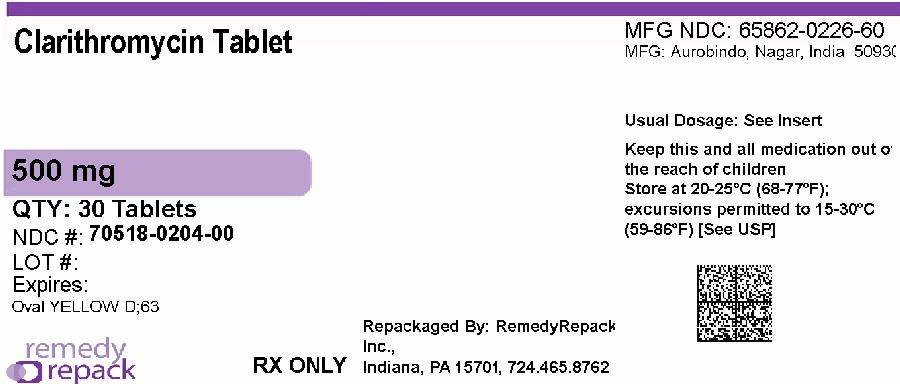
(clarithromycin · DailyMed)
Clarithromycin Remedica 250 mg Film-Coated Tablets
Clarithromycin 250 mg,Hypromellose 6,201 mg/6 mL,Liquid Orange flavor 0,078 mg/6 mL,Macrogol 400 0,653 mg/6 mL,Magnesium Stearate.. 13,0 mg/6 mL,Micro crystalline cellulose 101 78,0 mg/6 mL,Microcrystalline Cellulose 200 57,5 mg/6 mL,Povidone 18,5 mg/6 mL,Purified Water. q.s q.s,Purified water.. q.s. q.s,Quinoline yellow (E104) 0,914 mg/6 mL,Silica Collodial Anhydrous 3,0 mg/6 mL,Sodium starch glycolate (Type-A) 20,0 mg/6 mL,Talc 0,522 mg/6 mL,Titanium dioxide 1,632 mg/6 mL
What it does
Cellulose is a type of fiber that helps with digestion and promotes bowel health.
Commonly used for: constipation, irregular bowel movements
Read more in plain English ↓Plain-language summary for general understanding - not medical advice. Always follow your pharmacist/doctor.
Ask about this medicine
Answers come only from this medicine's registration record, BNF monograph and interaction data - not medical advice.
Medicine sourcing is available in Kenya only. We don't sell or dispense medicines - licensed pharmacies do.
Sourcing - Kenya onlyRegistration & product details
Source: Tanzania Medicines and Medical Devices Authority · fetched 2026-03-11 23:46:56 · updated 2026-10-19 03:00:45
Drug Interactions
211Pharmacodynamic Warnings
Clarithromycin appears in TABLE 9: Drugs that prolong the QT interval
Severe (35)
Acalabrutinib - increases exposure
Clarithromycin is predicted to increase the exposure to acalabrutinib. Avoid.
Alprazolam - increases exposure
Clarithromycin moderately increases the exposure to benzodiazepines (alprazolam). Avoid.
Antihistamines,non-Sedating - increases exposure
Clarithromycin is predicted to increase the exposure to antihistamines, non-sedating (mizolastine). Avoid.
Avapritinib - increases exposure
Clarithromycin is predicted to increase the exposure to avapritinib. Avoid.
Benzodiazepines - increases exposure
Clarithromycin moderately increases the exposure to benzodiazepines (alprazolam). Avoid.
Moderate (50)
Alfentanil - increases exposure
Clarithromycin is predicted to increase the exposure to opioids (alfentanil, buprenorphine, fentanyl, oxycodone). Monitor and adjust dose.
Aminophylline - increases exposure
Clarithromycin is predicted to increase the exposure to aminophylline. Adjust dose.
Amlodipine - increases exposure
Clarithromycin is predicted to increase the exposure to calcium channel blockers (amlodipine, felodipine, lacidipine, nicardipine, nifedipine, nimodipine). Monitor and adjust dose.
Antiarrhythmics - increases exposure
Clarithromycin is predicted to increase the exposure to antiarrhythmics (propafenone). Monitor and adjust dose.
Anticholinesterases, Centrally Acting - increases exposure
Clarithromycin is predicted to increase the exposure to anticholinesterases, centrally acting (galantamine). Monitor and adjust dose.
Unknown (126)
Abemaciclib - increases exposure
Clarithromycin is predicted to increase the exposure to abemaciclib. Avoid or adjust abemaciclib dose, p. 1056.
Afatinib - increases exposure
Macrolides are predicted to increase the exposure to afatinib.
Alitretinoin - increases exposure
Clarithromycin is predicted to increase the exposure to retinoids (alitretinoin). Adjust alitretinoin dose, p. 1382.
Almotriptan - increases exposure
Clarithromycin increases the exposure to triptans (almotriptan).
Alphablockers - increases exposure
Clarithromycin is predicted to increase the exposure to alpha blockers (doxazosin).
Data from BNF 85 (British National Formulary). This is not a substitute for professional medical advice. Matched via: exact
About cellulose
Cellulose is a type of fiber that helps with digestion and promotes bowel health.
What it treats
- constipation
- irregular bowel movements
How it works
Cellulose adds bulk to the stool, making it easier to pass through the intestines.
Who it's for
Suitable for people looking to improve their digestive health.
AI-assisted summary grounded in BNF data - general information only, not medical advice. Always confirm with your pharmacist or doctor.
About clarithromycin
Clarithromycin is an antibiotic used to treat infections caused by bacteria.
What it treats
- bacterial infections
- chest infections (pneumonia)
- skin infections
- ear infections (otitis media)
How it works
It works by stopping the growth of bacteria, helping your body to fight off the infection.
Who it's for
It is for adults and children with certain bacterial infections.
Drug class
Macrolides
Cautions
- • Be cautious if you are taking other medications that affect heart rhythm.
AI-assisted summary grounded in BNF data - general information only, not medical advice. Always confirm with your pharmacist or doctor.
About collodial
Colloidal substances are often used in various treatments, including some skin conditions.
What it treats
- skin irritation
- eczema
- dermatitis
How it works
Colloidal substances work by forming a protective layer on the skin or by helping to deliver active ingredients effectively.
Who it's for
This treatment is suitable for individuals dealing with specific skin issues.
AI-assisted summary grounded in BNF data - general information only, not medical advice. Always confirm with your pharmacist or doctor.
About crystalline
Crystalline is a type of medication used in various treatments.
How it works
Crystalline works by interacting with the body in a way that helps manage certain health conditions.
Who it's for
This medication may be suitable for individuals depending on their specific health needs and doctor's advice.
AI-assisted summary grounded in BNF data - general information only, not medical advice. Always confirm with your pharmacist or doctor.
About dioxide
Dioxide is used in various medical applications, but specific details about its class or interactions are not provided.
How it works
The exact mechanism of action for dioxide is not specified, but it generally serves various therapeutic roles in medicine.
Who it's for
Dioxide may be suitable for individuals needing treatment related to its specific applications, but more information is needed to identify specific patient groups.
AI-assisted summary grounded in BNF data - general information only, not medical advice. Always confirm with your pharmacist or doctor.
About flavor
Flavor is used to enhance the taste of medicines and food products.
What it treats
- improving taste of medications
- enhancing flavor in food and drinks
How it works
Flavoring agents make medicines and foods more palatable by adding pleasant tastes.
Who it's for
Anyone who needs to take medication that has an unpleasant taste or wants to enhance the flavor of food and drinks.
AI-assisted summary grounded in BNF data - general information only, not medical advice. Always confirm with your pharmacist or doctor.
About glycolate
Glycolate is a compound that may be used in various medical treatments.
How it works
Glycolate works by interacting with certain bodily processes, though specific details are not available.
Who it's for
Glycolate may be suitable for individuals needing treatment related to certain health conditions, but specific indications are not provided.
AI-assisted summary grounded in BNF data - general information only, not medical advice. Always confirm with your pharmacist or doctor.
About hypromellose
Hypromellose is a substance that helps to keep the eyes moist and can be used to soothe irritation.
What it treats
- dry eyes (keratoconjunctivitis sicca)
- eye irritation
How it works
It forms a protective layer over the eye, which helps to retain moisture and relieve discomfort.
Who it's for
This medication is suitable for anyone experiencing dry or irritated eyes.
AI-assisted summary grounded in BNF data - general information only, not medical advice. Always confirm with your pharmacist or doctor.
About liquid
Liquid medications can come in various forms, including solutions, syrups, and suspensions. They are often used for easier swallowing and faster absorption.
What it treats
- nausea and vomiting
- pain relief
- fever reduction
- cough relief
How it works
Liquid medications are absorbed quickly into the body, providing rapid relief for various symptoms.
Who it's for
Liquid medications can be suitable for people of all ages, especially those who have difficulty swallowing tablets or capsules.
AI-assisted summary grounded in BNF data - general information only, not medical advice. Always confirm with your pharmacist or doctor.
About macrogol
Macrogol is a laxative that helps relieve constipation by increasing the amount of water in the stool, making it easier to pass.
What it treats
- constipation
- irritable bowel syndrome
How it works
It works by drawing water into the bowel, which softens the stool and stimulates bowel movements.
Who it's for
Macrogol is suitable for adults and children who need help with bowel movements.
AI-assisted summary grounded in BNF data - general information only, not medical advice. Always confirm with your pharmacist or doctor.
About micro
Micro is a medicine that is used to treat various health conditions.
How it works
Micro works by helping to manage certain health issues effectively.
Who it's for
Micro may be suitable for individuals with specific health conditions as advised by their healthcare provider.
AI-assisted summary grounded in BNF data - general information only, not medical advice. Always confirm with your pharmacist or doctor.
About microcrystalline
Microcrystalline is a type of substance often used in medicines to help with various health issues. It is commonly used as a filler or binder in tablets and capsules.
What it treats
- stomach issues
- constipation
- weight management
How it works
It helps to improve the texture of medicines and can assist in the absorption of other ingredients in the body.
Who it's for
Adults and children who need help with specific health conditions, as directed by a healthcare professional.
AI-assisted summary grounded in BNF data - general information only, not medical advice. Always confirm with your pharmacist or doctor.
About orange
Orange is a fruit that is rich in vitamins and nutrients, particularly vitamin C, which can support overall health.
What it treats
- boosting the immune system
- providing hydration
- improving skin health
How it works
Oranges contain antioxidants and vitamins that help protect the body from damage and support various bodily functions.
Who it's for
Oranges can be enjoyed by most people as part of a healthy diet.
AI-assisted summary grounded in BNF data - general information only, not medical advice. Always confirm with your pharmacist or doctor.
About povidone
Povidone is a synthetic polymer often used as a disinfectant and to help deliver medications in various forms.
What it treats
- skin infections
- wound care
- eye infections (conjunctivitis)
How it works
Povidone works by killing bacteria and other germs, helping to prevent infections.
Who it's for
Povidone is suitable for people needing treatment for skin or eye infections.
AI-assisted summary grounded in BNF data - general information only, not medical advice. Always confirm with your pharmacist or doctor.
About purified
Purified ingredients are often used in various medicines to ensure safety and effectiveness by removing impurities.
What it treats
- various medical conditions
How it works
Purified ingredients help in delivering the intended effects of the medicine without the risk of contaminants.
Who it's for
People who need medications with safe and effective ingredients.
AI-assisted summary grounded in BNF data - general information only, not medical advice. Always confirm with your pharmacist or doctor.
About quinoline
Quinoline is a chemical compound often used in various treatments.
What it treats
- treating infections caused by certain parasites
- used in some medications for malaria
How it works
Quinoline works by interfering with the growth and reproduction of parasites in the body.
Who it's for
It is usually prescribed for people diagnosed with infections from specific parasites, including those with malaria.
AI-assisted summary grounded in BNF data - general information only, not medical advice. Always confirm with your pharmacist or doctor.
About silica
Silica is a natural substance that can be found in various forms and is often used to help with digestion and absorb excess moisture.
What it treats
- digestive issues
- absorption of moisture
How it works
Silica helps improve digestion by supporting the body's ability to break down food and absorb nutrients.
Who it's for
Silica may be suitable for adults experiencing digestive discomfort or needing help with moisture control.
AI-assisted summary grounded in BNF data - general information only, not medical advice. Always confirm with your pharmacist or doctor.
About starch
Starch is a carbohydrate that serves as a source of energy and is often used in various food products.
What it treats
- energy source
- dietary supplement
How it works
Starch is broken down by the body into glucose, which provides energy for daily activities.
Who it's for
Starch can be used by anyone needing extra energy in their diet, particularly those with increased energy needs.
AI-assisted summary grounded in BNF data - general information only, not medical advice. Always confirm with your pharmacist or doctor.
About talc
Talc is a mineral used primarily to absorb moisture and reduce friction. It is commonly found in various personal care products.
What it treats
- skin irritation
- diaper rash
- chafing
- sweating
How it works
Talc works by absorbing moisture and providing a smooth surface, which helps to prevent irritation and discomfort on the skin.
Who it's for
Talc is suitable for anyone needing relief from moisture-related skin issues, including babies and adults.
Cautions
- • Avoid using on broken or irritated skin.
- • Keep away from the eyes and mouth.
AI-assisted summary grounded in BNF data - general information only, not medical advice. Always confirm with your pharmacist or doctor.
About titanium
Titanium is a material often used in medical implants and devices due to its strength and compatibility with the body.
What it treats
- surgical implants
- dental implants
- orthopedic devices
How it works
Titanium is used in medical devices because it is strong, lightweight, and does not react negatively with body tissues.
Who it's for
People who need implants or devices for medical conditions, such as joint replacements or dental issues.
AI-assisted summary grounded in BNF data - general information only, not medical advice. Always confirm with your pharmacist or doctor.
About yellow
Yellow is a medicinal product used to treat various conditions.
What it treats
- general health support
How it works
The exact way Yellow works is not specified, but it is designed to support overall well-being.
Who it's for
Yellow is suitable for individuals looking to improve their general health.
AI-assisted summary grounded in BNF data - general information only, not medical advice. Always confirm with your pharmacist or doctor.
Clinical monograph: Hypromellose
BNF-referencedHypromellose is a semisynthetic polymer derived from cellulose, primarily used as an ocular lubricant in the management of dry eye conditions. It acts by forming a protective layer over the eye surface, providing moisture and relief from irritation, thereby improving comfort and protecting the corneal epithelium.
Indications
- Dry eye conditions
- Tear deficiency
- Keratoconjunctivitis sicca
Dosage
Children: Apply as required, typically in the form of eye drops.
Adults: Apply as required, typically in the form of eye drops.
Mechanism of action
Hypromellose acts by forming a viscous gel upon contact with the ocular surface, which helps to retain moisture and protect against irritants. This gel-like property enhances the stability of the tear film and reduces evaporation, thereby alleviating symptoms associated with dry eye conditions.
Pharmacodynamics
The pharmacodynamic effects of hypromellose are primarily related to its ability to mimic natural tears, providing lubrication to the ocular surface. This lubrication reduces friction during blinking and maintains corneal hydration, which is critical for ocular comfort and health. Its high viscosity also contributes to prolonged retention time on the eye surface.
Pharmacokinetics
Hypromellose is administered topically as eye drops and is not significantly absorbed systemically. The retention time of hypromellose on the ocular surface is enhanced due to its viscosity, allowing for extended relief of dry eye symptoms. The elimination of hypromellose occurs primarily through drainage from the eye and dilution by the natural tear fluid.
Adverse effects
- Temporary visual disturbance
- Eye irritation
Precautions
- Should not be used during contact lens wear
- Use with caution in patients with known hypersensitivity to any component of the formulation
Pregnancy
Hypromellose is generally considered safe for use during pregnancy. However, it should be used only if clearly needed and after consulting a healthcare provider.
Breast-feeding
Hypromellose is unlikely to affect breastfed infants when used as directed, but consultation with a healthcare provider is advisable.
Storage
Store in a cool, dry place away from direct sunlight. Once opened, use within a specified period as indicated on the packaging.
Formulations
- {'name': 'Teardew', 'concentration': '0.3%', 'form': 'eye drops', 'volume': '10 ml'}
- {'name': 'Xailin Hydrate', 'concentration': '0.3%', 'form': 'eye drops', 'volume': '10 ml'}
- {'name': 'AacuLose', 'concentration': '0.3%', 'form': 'eye drops', 'volume': '10 ml'}
- {'name': 'Artelac', 'concentration': '0.32%', 'form': 'eye drops', 'volume': '10 ml'}
- {'name': 'Lacrilube', 'concentration': '2 mg/g', 'form': 'eye ointment', 'volume': '3.5 g'}
- {'name': 'Celluvisc', 'concentration': '1%', 'form': 'eye drops', 'volume': '0.4 ml unit dose'}
AI-synthesized from BNF references - general information only, not a substitute for professional medical advice or the current BNF. Verify doses with a pharmacist.
Clinical monograph: Clarithromycin
BNF-referencedClarithromycin is a macrolide antibiotic effective against a range of bacterial infections. It is primarily used in the treatment of community-acquired pneumonia, skin infections, and as a prophylactic measure for certain infections. Clarithromycin works by inhibiting bacterial protein synthesis, making it a crucial agent in combating gram-positive and some gram-negative bacteria.
Indications
- Bacterial infections
- Community-acquired pneumonia
- Skin infections
- Prophylaxis for certain infections
Dosage
Adults: 500 mg once daily for
Mechanism of action
Clarithromycin is metabolized to 14-OH clarithromycin, which is active. It penetrates bacterial cell walls and reversibly binds to domain V of the 23S ribosomal RNA of the 50S ribosomal subunit, blocking the translocation of aminoacyl-tRNA and inhibiting polypeptide synthesis. It may be bactericidal in high concentrations against susceptible organisms, particularly Streptococcus pyogenes, S. pneumoniae, Haemophilus influenzae, and Chlamydia trachomatis. Additionally, clarithromycin inhibits the hepatic microsomal CYP3A4 isoenzyme and P-glycoprotein.
Pharmacodynamics
Clarithromycin exhibits a broad spectrum of activity against numerous gram-positive bacteria, including Staphylococcus aureus, Streptococcus pneumoniae, and Streptococcus pyogenes. It also shows activity against gram-negative bacteria such as Haemophilus influenzae and Moraxella catarrhalis, as well as against various anaerobic bacteria, mycobacteria, and other organisms like Mycoplasma, Ureaplasma, and Chlamydia. While typically bacteriostatic, it can sometimes demonstrate bactericidal properties depending on the concentration and the organism.
Pharmacokinetics
Clarithromycin is well absorbed after oral administration, with its bioavailability enhanced by food. It is extensively metabolized in the liver, primarily via CYP3A4, leading to active metabolites. The drug has a half-life of approximately 3 to 4 hours, but its active metabolite, 14-OH clarithromycin, has a longer half-life, contributing to its prolonged activity. Renal impairment can significantly affect its clearance, necessitating dosage adjustments in patients with reduced renal function.
Adverse effects
- Nausea
- Diarrhea
- Abdominal pain
- Dysgeusia
- Headache
- Rash
- Liver enzyme elevations
- QT prolongation
Interactions
- Clarithromycin + acalabrutinib: Severe (increases exposure)
- Clarithromycin + antiarrhythmics: Severe (increases exposure)
- Clarithromycin + dronedarone: Severe (increases exposure)
- Clarithromycin + non-sedating antihistamines: Severe (increases exposure)
- Clarithromycin + mizolastine: Severe (increases exposure)
- Clarithromycin + lurasidone: Severe (increases exposure)
- Clarithromycin + quetiapine: Severe (increases exposure)
- Clarithromycin + avapritinib: Severe (increases exposure)
- Clarithromycin + benzodiazepines: Severe (increases exposure)
- Clarithromycin + alprazolam: Severe (increases exposure)
Precautions
- Caution in hepatic impairment
- Use with caution in renal impairment
- Monitor for signs of QT prolongation
- Consider alternative therapy in patients with history of arrhythmias
- Use with caution in patients with myasthenia gravis due to potential exacerbation
Pregnancy
Manufacturers advise use only if adequate alternatives are not available.
Breast-feeding
Present in milk; use only if no suitable alternatives.
Storage
Store in a cool, dry place away from light. Keep out of reach of children.
Formulations
- Oral suspension 200 mg/5 mL
- Capsules 250 mg
AI-synthesized from BNF references - general information only, not a substitute for professional medical advice or the current BNF. Verify doses with a pharmacist.
Clinical monograph: cellulose
Cellulose is a complex carbohydrate and a key structural component of the plant cell wall. It is an indigestible polysaccharide made up of linear chains of glucose molecules linked by β-1,4-glycosidic bonds. As a dietary fiber, cellulose contributes to digestive health by promoting bowel regularity and is commonly used as a laxative and bulking agent in various food products and pharmaceuticals.
Indications
- Constipation
- Dietary fiber supplementation
- Irritable bowel syndrome
- Diverticular disease
- Weight management
Dosage
Children: Refer to appropriate guidelines for specific dosage; generally taken with adequate fluid intake.
Adults: Refer to appropriate guidelines for specific dosage; generally taken with adequate fluid intake.
Mechanism of action
Cellulose acts primarily as a bulk-forming laxative. It absorbs water in the intestines, which increases stool bulk and stimulates peristalsis, thus facilitating bowel movements. Additionally, cellulose is not digestible by human enzymes, leading to fermentation by gut bacteria, which may enhance gut health and alter gut microbiota composition.
Pharmacodynamics
Cellulose increases stool weight and frequency of bowel movements. It works by retaining water in the intestines, leading to softer stools and improved passage through the gastrointestinal tract. The bulking effect of cellulose can help alleviate constipation and promote overall digestive health. It may also play a role in cholesterol reduction and glycemic control through its effects on digestion and absorption of nutrients.
Pharmacokinetics
Cellulose is not absorbed into the bloodstream due to its indigestible nature. Instead, it passes through the gastrointestinal tract, where it adds bulk to the stool. Its fermentation by colonic bacteria produces short-chain fatty acids, which may have beneficial effects on colon health. The onset of action for cellulose as a laxative can vary but is generally within 24 to 72 hours after ingestion.
Adverse effects
- Bloating
- Flatulence
- Diarrhea
- Abdominal discomfort
Precautions
- Use with caution in patients with a history of gastrointestinal disorders.
- Monitor for potential allergic reactions in sensitive individuals.
Pregnancy
Cellulose is generally considered safe during pregnancy as it is a non-toxic, indigestible fiber.
Breast-feeding
Cellulose is also considered safe during breastfeeding; it is excreted in breast milk in negligible amounts.
Storage
Store in a cool, dry place away from direct sunlight.
Formulations
- Powder
- Capsules
- Tablets
- Granules
AI-synthesized from BNF references - general information only, not a substitute for professional medical advice or the current BNF. Verify doses with a pharmacist.
Clinical monograph: collodial
Colloidal solutions are mixtures in which fine particles are dispersed in a continuous medium. They are commonly used in various medical applications, including wound healing, as a protective barrier, and in some cases as drug delivery systems. The properties of colloids allow for a sustained release of active ingredients, enhancing therapeutic effects. Colloids can be found in various formulations such as gels, creams, and sprays.
Indications
- Wound healing
- Skin protection
- Drug delivery systems
- Anti-inflammatory treatments
Dosage
Children: Refer to specific product guidelines for paediatric dosage information, as it can vary based on the formulation and intended use.
Adults: Refer to specific product guidelines for dosage information, as it can vary based on the formulation and intended use.
Mechanism of action
Colloidal systems work by providing a surface for drug absorption and enhancing the bioavailability of the therapeutic agent. The small particle size of colloids allows for increased surface area, which can facilitate interactions with biological membranes and improve penetration. The stability of colloids also allows for a controlled release of the active components, prolonging their therapeutic effects.
Pharmacodynamics
The pharmacodynamic properties of colloidal formulations depend on the specific active ingredients and their interactions with biological systems. Generally, colloids can enhance the solubility and absorption of poorly water-soluble drugs. They may also provide a protective effect on tissues, reduce inflammation, and promote healing processes in the body. The efficacy of colloidal systems is influenced by factors such as particle size, concentration, and the nature of the dispersing medium.
Pharmacokinetics
The pharmacokinetics of colloidal systems can vary widely based on the formulation and the active ingredient used. Typically, colloids exhibit prolonged circulation times due to their size, and they may be taken up by cells through endocytosis. The release of the active ingredient is dependent on the stability of the colloidal system and environmental conditions such as pH and temperature. Elimination pathways can include renal excretion or degradation by phagocytic cells.
Pregnancy
There is limited data on the safety of colloidal solutions during pregnancy. They should only be used if the potential benefit justifies the potential risk to the fetus.
Breast-feeding
Caution is advised when using colloidal solutions during breastfeeding. It is recommended to consult a healthcare professional before use.
Storage
Store in a cool, dry place away from direct sunlight. Ensure that the container is tightly closed to prevent contamination.
AI-synthesized from BNF references - general information only, not a substitute for professional medical advice or the current BNF. Verify doses with a pharmacist.
Clinical monograph: crystalline
Crystalline refers to a form of a drug that has a well-defined geometric structure and is usually in a solid state. This form can influence the drug's stability, solubility, and bioavailability. Many medications can be found in crystalline forms, which may vary based on their chemical properties and intended route of administration.
Dosage
Children: Paediatric dosing for crystalline drugs is also specific to the particular drug and condition. For accurate paediatric doses, please consult the BNF for Children.
Adults: Dosing for crystalline drugs varies widely based on the specific medication and condition being treated. It is essential to refer to the BNF or relevant clinical guidelines for precise adult dosing recommendations.
Mechanism of action
The mechanism of action of crystalline drugs is largely dependent on the specific active pharmaceutical ingredient. In general, crystalline drugs dissolve in the biological fluids, releasing the active compound that interacts with cellular receptors or enzymes to exert their therapeutic effects. This process enhances the drug's pharmacological activity, as the crystalline form typically allows for more controlled release and absorption in the body.
Pharmacodynamics
Pharmacodynamics of crystalline drugs involves understanding how the drug affects the body. This includes the relationship between drug concentration and the resultant pharmacological effect. Factors such as the drug's affinity for its target, intrinsic activity, and the presence of other substances can influence the overall therapeutic outcome.
Pharmacokinetics
Pharmacokinetics of crystalline drugs encompasses the processes of absorption, distribution, metabolism, and excretion (ADME). The crystalline form can affect the rate of dissolution and, consequently, the absorption in the gastrointestinal tract. Once absorbed, the distribution is influenced by factors such as blood flow, tissue affinity, and plasma protein binding. Metabolism typically occurs in the liver, where the drug may be converted into active or inactive metabolites. Excretion primarily takes place via the kidneys.
Pregnancy
The safety of crystalline substance use during pregnancy has not been well studied. Use only if clearly needed and the benefits outweigh risks.
Breast-feeding
It is unknown if crystalline substances are excreted in human milk. Caution should be exercised when administering to breastfeeding women.
Storage
Store in a cool, dry place away from light. Keep tightly closed and out of reach of children.
AI-synthesized from BNF references - general information only, not a substitute for professional medical advice or the current BNF. Verify doses with a pharmacist.
Clinical monograph: dioxide
Dioxide refers to a class of chemical compounds that contain two oxygen atoms bonded to another element or group. The most commonly referenced dioxide is carbon dioxide (CO2), a colorless, odorless gas produced by respiration in animals and plants and by the combustion of organic matter. In a clinical context, dioxides are often involved in various physiological processes and can play roles in drug mechanisms, particularly with respect to gas exchange and acid-base balance in the body.
Indications
- Monitoring respiratory function
- Assessment of metabolic status
- Management of respiratory acidosis
- Management of respiratory alkalosis
Dosage
Children: Dosing for interventions related to carbon dioxide levels in pediatric patients should be guided by clinical protocols and the BNF for Children.
Adults: Dosing for interventions related to carbon dioxide levels is typically based on clinical assessment and individual patient needs. Refer to clinical guidelines for specific scenarios.
Mechanism of action
Carbon dioxide acts primarily as a signaling molecule in the body, influencing respiratory drive and blood pH. It is produced during cellular respiration and is a critical component of the bicarbonate buffering system, which helps maintain acid-base homeostasis. Elevated levels of CO2 in the blood stimulate ventilation in the lungs, increasing the rate of gas exchange and facilitating the removal of excess CO2.
Pharmacodynamics
The pharmacodynamic effects of dioxides, particularly carbon dioxide, are closely related to its concentration in the blood. As CO2 levels increase, it leads to respiratory acidosis, which can stimulate the respiratory centers in the brain to increase ventilation. Conversely, low levels of CO2 can cause respiratory alkalosis, potentially leading to decreased respiratory drive. CO2 also plays a role in vasodilation and can affect blood flow and pressure through its influence on smooth muscle tone.
Pharmacokinetics
Carbon dioxide is produced endogenously during metabolic processes and is transported in the bloodstream primarily in three forms: dissolved in plasma, as bicarbonate ions (HCO3-), and bound to hemoglobin. The half-life of CO2 in the bloodstream is very short due to its rapid exchange with alveolar gas in the lungs. The elimination of CO2 occurs through exhalation, making it a dynamic component of respiratory physiology.
Pregnancy
Data on the effects of dioxide during pregnancy are limited. Caution is advised due to potential risks associated with exposure.
Breast-feeding
Limited data are available regarding the excretion of dioxide in human milk. Caution is recommended.
Storage
Store in a cool, dry place, away from direct sunlight and moisture.
AI-synthesized from BNF references - general information only, not a substitute for professional medical advice or the current BNF. Verify doses with a pharmacist.
Clinical monograph: flavor
Flavor refers to a combination of taste and aroma that enhances the sensory experience of food and beverages. It can be derived from natural sources such as fruits, spices, and herbs, or produced synthetically. In pharmacology, flavoring agents are often added to medications to improve palatability, particularly in pediatric formulations, making them easier to administer.
Indications
- To enhance the palatability of oral medications
- To improve compliance in pediatric patients
- To mask unpleasant tastes of active pharmaceutical ingredients
Dosage
Children: Refer to specific formulations for guidance, as flavoring agents are typically used in very small quantities and are not dosed independently.
Adults: Refer to specific formulations for guidance, as flavoring agents are typically used in very small quantities and are not dosed independently.
Mechanism of action
Flavor compounds act primarily by stimulating taste receptors on the tongue, which can enhance the overall sensory experience of ingesting a product. Certain flavor compounds may also interact with olfactory receptors, contributing to the perception of flavor through smell. The stimulation of these receptors can lead to increased salivation and improved swallowing.
Pharmacodynamics
The use of flavoring agents in pharmaceuticals can influence compliance, particularly in children and individuals who may have difficulty swallowing pills. By enhancing the taste of a medication, these agents can reduce gag reflex and aversion, potentially improving therapeutic outcomes. However, the pharmacodynamic effects are largely dependent on the individual's taste preferences and sensitivities.
Pharmacokinetics
The pharmacokinetics of flavoring agents vary widely depending on the specific compounds used. Generally, these compounds are rapidly absorbed through the gastrointestinal tract upon ingestion, with their effects occurring within minutes. Some flavoring agents may undergo metabolism in the liver, while others may be excreted unchanged. The specific absorption, distribution, metabolism, and excretion (ADME) profiles depend on the chemical structure of each flavor compound.
Pregnancy
Generally considered safe, but specific flavoring agents may need to be evaluated individually.
Breast-feeding
Generally considered safe, but specific flavoring agents may need to be evaluated individually.
Storage
Store in a cool, dry place away from light and moisture.
AI-synthesized from BNF references - general information only, not a substitute for professional medical advice or the current BNF. Verify doses with a pharmacist.
Clinical monograph: glycolate
BNF-referencedGlycolate is an intermediate in the metabolism of ethylene glycol, a compound that can cause toxicity when ingested. The toxicity arises primarily from its conversion to glycolic acid and other harmful metabolites. Glycolate and its relation to ethylene glycol's elimination kinetics have been studied, revealing important insights into their toxicokinetics in animal models.
Dosage
Children: Refer to specific clinical guidelines for dosing in children, as no standard paediatric dosage is specified in the provided resources.
Adults: Refer to specific clinical guidelines for dosing, as no standard adult dosage is specified in the provided resources.
Mechanism of action
Ethylene glycol toxicity results from its metabolism to glycolic acid and other toxic metabolites. Glycolate accumulates in the body and is eliminated more slowly than ethylene glycol itself. The renal excretion of both compounds plays a crucial role in their elimination, accounting for a significant portion of the administered dose.
Pharmacodynamics
The pharmacodynamics of glycolate are closely tied to its role as a metabolite of ethylene glycol. Its accumulation can lead to metabolic acidosis, although minimal clinical effects have been observed at low doses. The relationship between glycolate and ethylene glycol indicates that glycolate may contribute to the overall toxic effects of ethylene glycol ingestion.
Pharmacokinetics
The pharmacokinetics of glycolate indicate that it reaches peak plasma levels between 4-6 hours after the administration of ethylene glycol. The elimination half-life of ethylene glycol is approximately 1.7 hours in rats and 3.4 hours in dogs. Glycolate is predominantly eliminated through renal excretion, with about 5% of the dose being excreted unchanged.
Pregnancy
There is limited data on the safety of glycolate in pregnancy. Caution is advised.
Breast-feeding
Data on the excretion of glycolate in human milk is not available. Caution is advised.
Storage
Store at room temperature, away from light and moisture.
AI-synthesized from BNF references - general information only, not a substitute for professional medical advice or the current BNF. Verify doses with a pharmacist.
Clinical monograph: liquid
BNF-referencedMethyl parathion is an organophosphate compound primarily used as an insecticide. It exerts its effects through inhibition of key enzymes involved in neurotransmission, leading to toxic effects associated with acute poisoning. It is important to note that toxic manifestations generally occur only after significant inhibition of plasma cholinesterase levels, specifically when more than 50% inhibition is observed. This compound has been studied for its acute toxicity and enzymatic interactions.
Indications
- Insecticide for agricultural use
- Research tool in toxicology
Dosage
Children: Refer to the BNF for Children for specific dosing and administration guidelines.
Adults: Refer to the BNF for specific dosing and administration guidelines.
Mechanism of action
Methyl parathion acts primarily by inhibiting the enzyme acetylcholinesterase, which is essential for the breakdown of the neurotransmitter acetylcholine. Its active metabolite, methyl paraoxon, is a potent inhibitor of both acetylcholinesterase and butyrylcholinesterase. The inhibition of these enzymes results in the accumulation of acetylcholine at synapses, leading to overstimulation of cholinergic receptors and resultant toxic effects.
Pharmacodynamics
The pharmacodynamics of methyl parathion involve its action as a noncompetitive inhibitor of acetylcholinesterase, causing prolonged effects of acetylcholine due to its inability to be hydrolyzed. The resultant cholinergic toxicity can lead to symptoms such as muscle twitching, respiratory distress, and potentially fatal outcomes if not treated promptly. The extent of inhibition is dose-dependent, with significant toxicity occurring after substantial enzyme inhibition.
Pharmacokinetics
Methyl parathion is absorbed through the gastrointestinal tract and can also be absorbed through the skin and respiratory tract. It is metabolized in the liver to form methyl paraoxon, which is responsible for the majority of its toxic effects. The distribution of methyl parathion in body tissues is influenced by its lipophilicity, and it is primarily excreted as metabolites in the urine. The elimination half-life and specific pharmacokinetic parameters can vary based on individual metabolism and exposure levels.
Pregnancy
There are no adequate and well-controlled studies in pregnant women. Use only if the potential benefit justifies the potential risk to the fetus.
Breast-feeding
It is not known whether this drug is excreted in human milk. Caution is advised when administering to nursing women.
Storage
Store in a cool, dry place away from direct sunlight. Keep out of reach of children.
Formulations
- Liquid formulation
AI-synthesized from BNF references - general information only, not a substitute for professional medical advice or the current BNF. Verify doses with a pharmacist.
Clinical monograph: macrogol
BNF-referencedMacrogol is a polymer of ethylene glycol used primarily as a laxative to treat constipation. It acts by retaining water in the stool, thereby increasing stool bulk and promoting bowel movements. It is often utilized in cases where increased dietary fiber is insufficient or for patients who require bowel cleansing prior to medical procedures.
Indications
- Constipation
- Bowel preparation for diagnostic procedures (e.g., colonoscopy)
Dosage
Children: For children, macrogol is typically used at a dose of 0.5 to 1 g/kg per day, not exceeding 17 g per day, depending on the child's age and condition. Refer to the BNF for Children for detailed pediatric dosing guidance.
Adults: Typical adult dosing for constipation is 8.4 grams of macrogol powder dissolved in water, taken once daily. For bowel preparation, specific dosing regimens may vary, and it is essential to follow product instructions or medical advice.
Mechanism of action
Macrogol works as an osmotic agent, drawing water into the bowel lumen through osmosis. This increased water content softens the stool, making it easier to pass. The presence of macrogol in the intestine increases the volume and viscosity of the stool, stimulating peristalsis and facilitating bowel evacuation.
Pharmacodynamics
Macrogol's laxative effect is dose-dependent, with higher doses generally resulting in more significant bowel movement stimulation. It is not absorbed systemically, which minimizes potential side effects and interactions. The osmotic effect leads to an increase in intraluminal pressure and stool volume, contributing to effective evacuation.
Pharmacokinetics
Macrogol is largely non-absorbed in the gastrointestinal tract, which allows it to exert its effects locally within the bowel. Due to its high molecular weight, it remains in the intestinal lumen, where it facilitates water retention. Elimination occurs through feces, as it is not metabolized by the body.
Pregnancy
Macrogol can be used during pregnancy if necessary, but caution should be exercised and medical advice sought.
Breast-feeding
Macrogol is generally considered safe to use during breastfeeding.
Storage
Store in a cool, dry place, protected from light. Keep out of reach of children.
AI-synthesized from BNF references - general information only, not a substitute for professional medical advice or the current BNF. Verify doses with a pharmacist.
Clinical monograph: micro
Micro is a medication known for its use in the management of various medical conditions, particularly those related to infections. It may be utilized to treat specific bacterial infections and is often part of a broader therapeutic regimen. Micro has a favorable safety profile and is commonly prescribed in both adult and pediatric populations.
Indications
- Bacterial infections
- Pneumonia
- Skin infections
- Urinary tract infections
- Sepsis
Dosage
Children: Refer to the BNF for Children for specific dosing information for pediatric patients based on age and weight.
Adults: Refer to the BNF for specific dosing information for adults based on the condition being treated.
Mechanism of action
Micro acts by inhibiting bacterial cell wall synthesis, leading to cell lysis and death. This bactericidal action is primarily due to the disruption of peptidoglycan synthesis, which is essential for maintaining the structural integrity of bacterial cells.
Pharmacodynamics
The pharmacodynamics of Micro involves its interaction with bacterial enzymes responsible for cell wall synthesis. The drug is effective against a wide range of gram-positive and some gram-negative bacteria, making it a versatile option in antimicrobial therapy. It exhibits time-dependent killing, meaning that the duration of time the drug concentration remains above the minimum inhibitory concentration (MIC) is critical for its efficacy.
Pharmacokinetics
Micro is typically well absorbed following oral administration, with peak plasma concentrations occurring within a few hours. The drug is widely distributed throughout body tissues and fluids, including the lungs, kidneys, and skin. It is metabolized in the liver and primarily excreted unchanged in the urine, making it important to monitor renal function in patients receiving this medication.
Pregnancy
Micro can be used during pregnancy if the benefits outweigh the risks, but it is essential to consult a healthcare provider.
Breast-feeding
Micro may be excreted in breast milk, and caution is advised when administered to nursing mothers.
Storage
Store at room temperature, away from moisture and direct light. Keep out of reach of children.
AI-synthesized from BNF references - general information only, not a substitute for professional medical advice or the current BNF. Verify doses with a pharmacist.
Clinical monograph: microcrystalline
Microcrystalline cellulose is a refined wood pulp, commonly used as an excipient in pharmaceutical formulations. It serves as a bulking agent and stabilizer in tablets and capsules, improving the physical properties of the drug formulation. It is characterized by its ability to absorb moisture and provide a suitable texture for various dosage forms.
Indications
- Used as an excipient in tablet formulations
- Used as a bulking agent in capsule formulations
- Used in food products as a thickener or stabilizer
Dosage
Children: Refer to specific product guidelines as dosage will depend on the formulation and the active ingredients.
Adults: Refer to specific product guidelines as dosage will depend on the formulation and the active ingredients.
Mechanism of action
Microcrystalline cellulose acts as a non-digestible filler that enhances the flow properties of powders during the manufacturing of tablets and capsules. It does not have a direct pharmacological action on the body but ensures that the active ingredients are effectively delivered to the patient.
Pharmacodynamics
As a non-active ingredient, microcrystalline cellulose does not exert pharmacodynamic effects typical of active pharmaceutical ingredients. Its primary role is to provide a stable and consistent matrix for the drug, facilitating the release of the active compound once ingested.
Pharmacokinetics
Microcrystalline cellulose is not absorbed in the gastrointestinal tract; it passes through the digestive system largely unchanged. It adds bulk to the stool, which may aid in promoting regular bowel movements. The substance is excreted in feces, where it contributes to dietary fiber intake.
Pregnancy
Data regarding the use of microcrystalline cellulose during pregnancy is limited. It is advisable to consult with healthcare professionals before use.
Breast-feeding
Microcrystalline cellulose is considered safe during breastfeeding, as it is not absorbed systemically.
Storage
Store in a cool, dry place away from direct sunlight and moisture.
AI-synthesized from BNF references - general information only, not a substitute for professional medical advice or the current BNF. Verify doses with a pharmacist.
Clinical monograph: orange
Orange juice is a popular beverage derived from the fruit of the orange tree. It is rich in vitamin C, flavonoids, and various other nutrients. While primarily consumed for its refreshing taste and nutritional benefits, it may also interact with certain medications, affecting their absorption and efficacy.
Dosage
Children: Refer to BNF for Children for specific recommendations regarding the consumption of orange juice in children.
Adults: There is no standard dosage for orange juice as it is typically consumed as a beverage. Moderation is advised, especially for individuals on certain medications.
Mechanism of action
The exact mechanism of action of orange juice is not fully understood, but it is known to contain compounds that can influence the metabolism of certain drugs. For instance, it may affect the activity of cytochrome P450 enzymes, particularly CYP3A4, which can alter the pharmacokinetics of medications.
Pharmacodynamics
Orange juice is known to enhance the bioavailability of certain nutrients and may influence the pharmacological effects of some drugs. Its high vitamin C content contributes to various physiological functions, including antioxidant activity, which may indirectly support overall health.
Pharmacokinetics
The pharmacokinetics of orange juice itself are not extensively studied, but it is generally absorbed well through the gastrointestinal tract. The compounds in orange juice can affect the absorption and metabolism of medications, leading to varied clinical effects depending on the drug in question.
Interactions
- orange juice + celiprolol: Unknown (decreases exposure)
Formulations
- juice
- whole fruit
AI-synthesized from BNF references - general information only, not a substitute for professional medical advice or the current BNF. Verify doses with a pharmacist.
Clinical monograph: povidone
Povidone, also known as polyvinylpyrrolidone (PVP), is a synthetic polymer that is used as a water-soluble binder, stabilizer, and film-forming agent in various pharmaceutical formulations. It is recognized for its ability to enhance the solubility and bioavailability of drugs, making it valuable in both topical and oral therapies. Povidone has antiseptic properties and is commonly used in wound care, surgical scrubs, and as an excipient in medications.
Indications
- Topical antiseptic for skin disinfection
- Surgical scrubs and hand sanitizers
- Wound care management
- Pharmaceutical excipient in solid and liquid formulations
Dosage
Children: Refer to specific product guidelines for pediatric dosing recommendations, as doses can vary based on formulation and intended use.
Adults: Refer to specific product guidelines for dosing recommendations, as doses can vary based on the formulation and intended use.
Mechanism of action
Povidone acts by forming a complex with iodine when used as an antiseptic, which releases iodine slowly to exert its antimicrobial effect. The iodine disrupts microbial cell walls and interferes with protein synthesis, leading to cell death. Additionally, as a polymer, povidone can enhance drug solubility and stability by forming a hydrophilic matrix.
Pharmacodynamics
Povidone has a broad spectrum of antimicrobial activity against bacteria, viruses, and fungi. Its antiseptic properties are primarily due to the release of iodine, which is effective in reducing microbial load and preventing infection. The polymer's ability to bind to various substances allows it to be utilized in formulations that require improved stability and solubility.
Pharmacokinetics
Povidone is not absorbed systemically when applied topically, as it remains localized at the site of application. Its pharmacokinetics are largely dependent on the formulation and route of administration, with the polymer being metabolized by hydrolysis and excreted in urine as low-molecular-weight compounds. The release and activity of iodine are influenced by the concentration of povidone and the presence of organic matter.
Adverse effects
- Local irritation
- Allergic reactions
- Skin rashes
- Hypersensitivity reactions
Precautions
- Use with caution in patients with known allergies to iodine or povidone-iodine
- Avoid use in deep puncture wounds or serious burns
Pregnancy
Povidone is generally considered safe for use during pregnancy, but it is advisable to consult a healthcare professional before use.
Breast-feeding
Povidone is considered safe during breastfeeding, but it is recommended to consult a healthcare professional.
Storage
Store at room temperature, away from moisture and heat. Keep the container tightly closed.
Formulations
- Topical solution
- Ointment
- Surgical scrub
- Gauze impregnated with povidone-iodine
AI-synthesized from BNF references - general information only, not a substitute for professional medical advice or the current BNF. Verify doses with a pharmacist.
Clinical monograph: purified
Purified refers to a substance that has been processed to remove impurities, contaminants, or unwanted substances, resulting in a more concentrated and effective form of the original compound. In pharmacology, purified compounds are often used to enhance therapeutic efficacy and reduce adverse effects. The purification process can apply to a variety of substances, including drugs, biological products, and chemical compounds.
Dosage
Children: Refer to specific drug formulations and product labels as purified substances can vary widely in their use and dosing.
Adults: Refer to specific drug formulations and product labels as purified substances can vary widely in their use and dosing.
Mechanism of action
The mechanism of action for purified compounds varies widely depending on the specific substance. Generally, purified drugs exert their effects by interacting with specific biological targets, such as receptors, enzymes, or ion channels, leading to a desired therapeutic effect. This interaction can involve binding to receptors to activate or inhibit signaling pathways, modulating enzymatic activity, or altering physiological processes.
Pharmacodynamics
Pharmacodynamics describes the effects of a drug on the body and the relationship between drug concentration and effect. For purified drugs, this can involve dose-response relationships and the time course of their action. The purified form often enhances potency and reduces variability in response among patients, which can lead to more predictable therapeutic outcomes. The overall effect is determined by the drug's affinity for its target, the efficacy of the drug-receptor interaction, and the downstream signaling pathways activated as a result of this interaction.
Pharmacokinetics
Pharmacokinetics involves the absorption, distribution, metabolism, and excretion (ADME) of a drug. For purified substances, absorption can be more efficient due to the absence of impurities that may affect solubility or stability. Distribution may also be enhanced, leading to higher bioavailability. Metabolism can be influenced by the structure of the purified compound, as it may be metabolized more readily by liver enzymes. Excretion typically occurs through the kidneys or liver, depending on the molecular characteristics of the purified drug.
Pregnancy
Consult with a healthcare professional, as the safety of purified forms of medications during pregnancy may vary depending on the specific substance.
Breast-feeding
Consult with a healthcare professional, as the safety of purified forms of medications during breastfeeding may vary depending on the specific substance.
Storage
Store in a cool, dry place, away from light and moisture, and keep out of reach of children.
AI-synthesized from BNF references - general information only, not a substitute for professional medical advice or the current BNF. Verify doses with a pharmacist.
Clinical monograph: quinoline
BNF-referencedQuinoline is an aromatic heterocyclic compound with a molecular formula of C9H7N. It is a bicyclic structure consisting of a benzene ring fused to a pyridine ring. Quinoline and its derivatives have been studied for various biological activities, including antimalarial and antibacterial effects, due to their ability to interact with nucleic acids and other biological macromolecules.
Indications
- Antimalarial treatment
- Antibacterial therapy
- Potential use in cancer treatment
Dosage
Children: Refer to the BNF for Children for guidance on paediatric dosing, as it is crucial to adjust the dosage based on the child's weight and age.
Adults: Refer to the BNF for specific indications and dosing information for adults, as dosage can vary based on the condition being treated.
Mechanism of action
Quinoline binds to RNA, DNA, and certain polyribonucleotides in the presence of NADPH and rat liver microsomes. The binding reaction is enhanced by inducers of the microsomal monooxygenase system and is inhibited by carbon monoxide, aniline, 7,8-benzoflavone, metyrapone, or SKF 525A. Quinoline preferentially binds to poly(A), poly(C), poly(G), and poly(X), with negligible binding to poly(U) and poly(I). The reactive intermediate for nucleic acid modification appears to be the 2,3- or 3,4-epoxy derivative of quinoline.
Pharmacodynamics
Quinoline exhibits various pharmacological effects, including antimicrobial and antiparasitic activities. Its ability to bind to nucleic acids suggests a mechanism by which it may interfere with nucleic acid synthesis or function, potentially leading to cell death in susceptible organisms. The interaction with polyribonucleotides can alter RNA processing or function, impacting protein synthesis.
Pharmacokinetics
Information on the pharmacokinetics of quinoline is limited. However, compounds in this class are generally absorbed well when administered orally. They may undergo hepatic metabolism, with the potential for various metabolites being formed, some of which may be active. Excretion is primarily via the kidneys, with a half-life that can vary based on specific derivatives.
Pregnancy
There is limited information on the safety of quinoline during pregnancy. It is recommended to avoid use unless absolutely necessary.
Breast-feeding
It is unknown whether quinoline is excreted in human milk. Caution is advised when administering to breastfeeding mothers.
Storage
Store in a cool, dry place away from light. Keep out of reach of children.
AI-synthesized from BNF references - general information only, not a substitute for professional medical advice or the current BNF. Verify doses with a pharmacist.
Clinical monograph: silica
BNF-referencedSilica, primarily in the form of silicon dioxide (SiO2), is a naturally occurring mineral found in various forms, including crystalline and amorphous structures. It is widely used in various industries, including construction, manufacturing, and as a food additive. Silica is known for its high melting point and chemical stability. In clinical contexts, exposure to crystalline silica has been linked to respiratory diseases such as silicosis and lung cancer due to its cytotoxic effects on lung cells. The different forms of silica exhibit varying degrees of biological activity, with crystalline silica being more hazardous than amorphous types.
Indications
- Silicosis
- Chronic obstructive pulmonary disease (COPD)
- Lung cancer associated with silica exposure
Dosage
Adults: Silica is not administered as a drug, but rather
Mechanism of action
Silica, particularly crystalline forms like quartz and cristobalite, can induce cytotoxicity and morphological transformation in cells. The cytotoxic effects are attributed to the presence of silanol groups and trace iron on the silica surface, which can generate reactive oxygen species. These interactions lead to cellular damage and transformation, suggesting multiple molecular mechanisms underlying silica's biological effects. The activity is sensitive to the silica's surface structure and composition, indicating that the biological response is a phenomenon originating from the silica's surface characteristics.
Pharmacodynamics
Silica's pharmacodynamic effects are largely related to its cytotoxic and transforming properties, particularly in lung tissue. The inhalation of crystalline silica can lead to the activation of inflammatory pathways, oxidative stress, and apoptosis in alveolar macrophages and epithelial cells. This can result in chronic inflammation, fibrosis, and ultimately, diseases such as silicosis and lung cancer. The degree of these effects varies based on the type of silica, its crystalline structure, and the presence of surface modifications.
Pharmacokinetics
The pharmacokinetics of silica is complex as it is not absorbed systemically when inhaled or ingested. Instead, inhaled silica particles can deposit in the alveolar region of the lungs, where they may persist for long periods. The body responds to silica exposure through inflammatory processes, and macrophages attempt to phagocytize silica particles. However, the persistence of these particles can lead to chronic lung conditions. Clearance mechanisms are inefficient, leading to prolonged retention in lung tissue.
Adverse effects
- Cytotoxicity
- Morphological transformation of cells
- Respiratory issues
- Silicosis
- Lung cancer
Precautions
- Use caution in occupational settings with silica dust exposure
- Regular monitoring of lung function in exposed individuals
Pregnancy
There is insufficient data on the effects of silica on pregnancy. It is advised to minimize exposure.
Breast-feeding
Limited data available; caution is advised due to potential respiratory effects.
Storage
Store in a cool, dry place, away from moisture and incompatible materials.
Formulations
- Crystalline silica
- Amorphous silica (diatomaceous earth)
- Silica gel
AI-synthesized from BNF references - general information only, not a substitute for professional medical advice or the current BNF. Verify doses with a pharmacist.
Clinical monograph: starch
Starch is a polysaccharide carbohydrate consisting of a large number of glucose units joined by glycosidic bonds. It is a major energy source in the human diet and is found in numerous food sources such as grains, legumes, and tubers. In a clinical setting, starch can also be used as an excipient in various pharmaceuticals and is sometimes utilized in enteral nutrition formulations.
Indications
- Nutritional supplementation
- Energy source in enteral nutrition
- Excipient in pharmaceutical formulations
Dosage
Children: Refer to specific guidelines or product inserts for dosing information, as it can vary based on the context of use.
Adults: Refer to specific guidelines or product inserts for dosing information, as it can vary based on the context of use.
Mechanism of action
Starch is broken down into glucose units by enzymes such as amylase during digestion. The glucose is then absorbed in the intestines and utilized for energy production in the body's cells. This pathway involves hydrolysis of the glycosidic bonds, converting starch into simpler sugars.
Pharmacodynamics
Starch primarily serves as an energy source. Its digestion and absorption lead to an increase in blood glucose levels, which provides energy for metabolic processes. In this context, it plays a crucial role in maintaining energy homeostasis in the body.
Pharmacokinetics
Starch is not absorbed in its polymeric form; it must first be enzymatically hydrolyzed into simpler sugars such as maltose and glucose. The digestion and absorption of starch occur predominantly in the small intestine, with glucose being readily absorbed into the bloodstream. The rate of absorption can vary depending on the type of starch and its physical form.
Adverse effects
- Allergic reactions
- Gastrointestinal discomfort
- Diarrhea
- Constipation
Precautions
- Use with caution in individuals with known allergies to starch or starch derivatives
- Monitor for gastrointestinal symptoms in patients with a history of digestive disorders
Pregnancy
Starch is generally considered safe for use during pregnancy. However, it should be consumed in moderation as part of a balanced diet.
Breast-feeding
Starch is deemed safe for nursing mothers when used in moderation as part of a balanced diet.
Storage
Store in a cool, dry place away from moisture and direct sunlight.
Formulations
- Powder
- Granules
- Tablets
- Suspensions
AI-synthesized from BNF references - general information only, not a substitute for professional medical advice or the current BNF. Verify doses with a pharmacist.
Clinical monograph: talc
BNF-referencedTalc is a mineral composed of magnesium, silicon, and oxygen, commonly used in various pharmaceutical applications due to its excellent absorptive properties. It is often employed as an excipient in drug formulations and as a bulking agent in tablets and powders. Talc is also utilized in some medical procedures, such as pleurodesis, to prevent the recurrence of pleural effusions.
Indications
- Used as an excipient in drug formulations
- Pleurodesis for the management of recurrent pleural effusions
Dosage
Children: Refer to specific guidelines for paediatric use, as dosing may differ based on age and clinical condition.
Adults: Refer to specific guidelines for the appropriate dosage in pleurodesis and other applications, as it may vary based on clinical context.
Mechanism of action
Talc exhibits very good absorptive properties, allowing it to absorb moisture and other substances effectively. This characteristic is particularly useful in pharmaceutical formulations, where it may enhance the stability and texture of the drug product.
Pharmacodynamics
Talc's primary pharmacodynamic effect is its ability to act as an inert filler and bulking agent in pharmaceutical preparations. It does not have any intrinsic pharmacological activity but serves to improve the physical properties of formulations, such as flowability and compressibility.
Pharmacokinetics
Talc is not absorbed systemically when used as an excipient or in medical procedures. Its effects are local, and it remains in the site of application, where it functions primarily as a mechanical agent. The pharmacokinetics of talc in the context of its use in pleurodesis involves its ability to promote adhesion of the pleural surfaces, thereby preventing fluid accumulation.
Pregnancy
Talc is classified as a substance with minimal systemic absorption, but safety during pregnancy has not been well established. Consult relevant guidelines.
Breast-feeding
Talc is not expected to be absorbed in significant amounts; however, caution is advised and consult guidelines.
Storage
Store in a cool, dry place, away from direct sunlight.
AI-synthesized from BNF references - general information only, not a substitute for professional medical advice or the current BNF. Verify doses with a pharmacist.
Clinical monograph: titanium
BNF-referencedTitanium is a transition metal with the atomic number 22 and molecular formula Ti. It is known for its high strength-to-weight ratio, corrosion resistance, and biocompatibility, making it a valuable material in various medical and industrial applications, including implants and prosthetics. Its use in medicine primarily revolves around its incorporation into devices and materials rather than as a pharmacological agent.
Indications
- Orthopedic implants
- Dental implants
- Prosthetic devices
- Surgical instruments
Mechanism of action
Titanium does not have a specific mechanism of action as it is not a drug in the traditional sense. Instead, its biocompatibility allows it to integrate with biological tissues without eliciting significant immune responses, making it suitable for use in implants and prosthetic devices. The presence of titanium ions can influence biological processes, including cell proliferation and differentiation.
Pharmacodynamics
Titanium itself does not exhibit pharmacodynamics as it is not administered as a drug. Its interactions within biological systems are primarily mechanical and structural, providing support and stability in orthopedic and dental applications. The biocompatibility of titanium allows for favorable tissue integration and reduced rejection rates compared to other materials.
Pharmacokinetics
As titanium is not a pharmacological agent, traditional pharmacokinetic parameters such as absorption, distribution, metabolism, and excretion do not apply. Titanium is typically utilized in solid forms, such as implants, where it remains localized and does not undergo metabolism or systemic circulation.
Pregnancy
There is limited data on the use of titanium during pregnancy. Consult a healthcare professional before use.
Breast-feeding
There is limited data on the excretion of titanium in breast milk. Consult a healthcare professional before use.
Storage
Store in a cool, dry place away from direct sunlight.
AI-synthesized from BNF references - general information only, not a substitute for professional medical advice or the current BNF. Verify doses with a pharmacist.
Clinical monograph: yellow
BNF-referencedYellow is a compound with the molecular formula C24H12O2. It is not a specific drug but may refer to a class of compounds or a colorant used in various applications. Detailed pharmacological data and clinical applications are not provided in the standard references.
Pregnancy
No specific data available, consult a healthcare professional.
Breast-feeding
No specific data available, consult a healthcare professional.
Storage
Store in a cool, dry place away from light.
AI-synthesized from BNF references - general information only, not a substitute for professional medical advice or the current BNF. Verify doses with a pharmacist.
Molecular reference: Clarithromycin
PubChem CID 84029Molecular formula: C38H69NO13
Mechanism of action
Clarithromycin is first metabolized to 14-OH clarithromycin, which is active and works synergistically with its parent compound. Like other macrolides, it then penetrates bacteria cell wall and reversibly binds to domain V of the 23S ribosomal RNA of the 50S subunit of the bacterial ribosome, blocking translocation of aminoacyl transfer-RNA and polypeptide synthesis. Clarithromycin also inhibits the hepatic microsomal CYP3A4 isoenzyme and P-glycoprotein, an energy-dependent drug efflux pump. Clarithromycin usually is bacteriostatic, although it may be bactericidal in high concentrations or against highly susceptible organisms. Bactericidal activity has been observed against Streptococcus pyogenes, S. pneumoniae, Haemophilus influenzae, and Chlamydia trachomatis. Clarithromycin inhibits protein synthesis in susceptible organisms by penetrating the cell wall and binding to 50S ribosomal subunits, thereby inhibiting translocation of aminoacyl transfer-RNA and inhibiting polypeptide synthesis. The site of action of clarithromycin appears to be the same as that of erythromycin, clindamycin, lincomycin, and chloramphenicol.
Pharmacodynamics
Clarithromycin is a macrolide antibiotic whose spectrum of activity includes many gram-positive (<i>Staphylococcus aureus, S. pneumoniae, and S. pyogenes</i>) and gram-negative aerobic bacteria (<i>Haemophilus influenzae, H. parainfluenzae, and Moraxella catarrhalis</i>), many anaerobic bacteria, some mycobacteria, and some other organisms including <i>Mycoplasma, Ureaplasma, Chlamydia, Toxoplasma</i>, and <i>Borrelia</i>. Other aerobic bacteria that clarithromycin has activity against include <i>C. pneumoniae and M. pneumoniae</i>. Clarithromycin has an in-vitro activity that is similar or greater than that of erythromycin against erythromycin-susceptible organisms. Clarithromycin is usually bacteriostatic, but may be bactericidal depending on the organism and the drug concentration.
Biological pathways
Source: PubChem (NCBI) · pathways from PathBank, Reactome, WikiPathways & PharmGKB.
Molecular reference: glycolate
PubChem CID 757Molecular formula: C2H4O3
Mechanism of action
Ethylene glycol toxicity results from its metabolism to glycolic acid and other toxic metabolites. The accumulation of glycolate and the elimination kinetics of ethylene glycol and its metabolites are not well understood, so studies with male Sprague-Dawley rats and mixed breed dogs have been carried out. Ethylene glycol was administered by gavage to rats and dogs which were placed in metabolic cages for urine and blood sample collection at timed intervals. The peak plasma level of ethylene glycol occurred at 2 hr after dosing and that of glycolate between 4-6 hr. The rate of ethylene glycol elimination was somewhat faster in rats with a half-life of 1.7 hr compared to 3.4 hr in dogs. The maximum plasma level of glycolate was greater in rats although the pattern of accumulation was similar to that in dogs. Glycolate disappeared from the plasma at the same time as ethylene glycol, suggesting a slower rate of elimination of the metabolite than that of ethylene glycol. Renal excretion of ethylene glycol was an important route for its elimination accounting for 20-30% of the dose. Renal excretion of glycolate represented about 5% of the dose. Ethylene glycol induced an immediate, but short lived diuresis compared to that in control rats. Minimal clinical effects (mild acidosis with no sedation) were noted at these doses of ethylene glycol (1-2 g/kg) in both rats and dogs. The results indicate that the toxicokinetics of ethylene glycol and glycolate were similar in both species. The effect of 0.35 to 0.8 mmol/kg glycolic acid and 1.0 to 4.4 mmol/kg sodium glycolate on cyclopropane-epinephrine induced cardiac arrhythmias was examined using dogs. Doses of 0.35 to 0.5 mmol/kg glycolic acid increased the duration of arrhythmias in the 13 dogs tested, whereas doses >0.5 mmol/kg decreased or totally eliminated the arrhythmias in each of 11 dogs. Depression was observed for many of the dogs at higher doses. Sodium glycolate was much less effective in decreasing the arrhythmias, with 3 mmol/kg being required and its action being transient.
Biological pathways
Source: PubChem (NCBI) · pathways from PathBank, Reactome, WikiPathways & PharmGKB.
Molecular reference: liquid
PubChem CID 4130Molecular formula: C8H10NO5PS
Mechanism of action
Acute poisoning ... is related to ... inhibiting action on enzyme acetylcholinesterase. Toxic manifestations generally occur only after more than 50% of plasma cholinesterase is inhibited. ... Methyl parathion ... depend on oxidative activation by replacement of thiono-sulfur with oxygen for ... toxicity. Methyl parathion has only a slight inhibitory action on acetylcholinesterase and butyrylcholinesterase, but its active metabolite, methyl paraoxon, is a potent inhibitor of both these enzymes. A study was conducted examining the inhibition of (Ca2+ and Mg2+)-ATPase by parathion (56382) and methyl parathion. Enzyme activity was assessed spectrophotometrically in pig erythrocyte membranes containing calcium2+ (Ca2+) and magnesium2+ and in solubilized membrane preparations incubated with the test agents. The enzyme response to ATP was biphasic. Equations expressing the kinetics of the substrate curves described two classes of the ATP binding active site, one with high affinity and low maximum rate and one with low affinity and high maximum rate. High affinity active sites were stimulated by low ATP concentrations (20 uM), whereas low affinity active sites were stimulated by high ATP levels (2 mM). Parathion and methylparathion dose dependently inhibited enzyme activity; parathion had a greater inhibitory effect than methylparathion. Lineweaver-Burke and Dixon plots indicated noncompetitive inhibition. Parathion and methylparathion induced enzyme inhibition occurred over a range of free calcium ion concentrations (0.5 to 5 mM); the inhibition was significantly greater at lower Ca2+ concentrations (1 to 100 uM) than at higher concentrations. The authors conclude that parathion and methylparathion inhibit ATPase activity by binding to a site on the enzyme rather than through an interaction with associated lipids. For more Mechanism of Action (Complete) data for METHYL PARATHION (6 total), please visit the HSDB record page.
Biological pathways
Source: PubChem (NCBI) · pathways from PathBank, Reactome, WikiPathways & PharmGKB.
Molecular reference: macrogol
PubChem CID 174Molecular formula: C2H6O2
Mechanism of action
Ethylene glycol is metabolized by alcohol dehydrogenase to glycoaldehyde, which is then metabolized to glycolic, glyoxylic, and oxalic acids. These acids, along with excess lactic acid are responsible for the anion gap metabolic acidosis. Oxalic acid readily precipitates with calcium to form insoluble calcium oxalate crystals. Tissue injury is caused by widespread deposition of oxalate crystals and the toxic effects of glycolic and glyoxylic acids.
Biological pathways
Source: PubChem (NCBI) · pathways from PathBank, Reactome, WikiPathways & PharmGKB.
Molecular reference: quinoline
PubChem CID 7047Molecular formula: C9H7N
Mechanism of action
QUINOLINE BINDS TO RNA, DNA & CERTAIN POLYRIBONUCLEOTIDES IN PRESENCE OF NADPH & RAT LIVER MICROSOMES. BINDING WAS PRONOUNCED WITH HELP OF SOME INDUCERS OF MICROSOMAL MONOOXYGENASE SYSTEM. BINDING REACTION REQUIRED NADPH & WAS INHIBITED BY CARBON MONOXIDE, ANILINE, 7,8-BENZOFLAVONE, METHYRAPONE OR SKF 525A. QUINOLINE BOUND PREFERENTIALLY TO POLY(A), POLY(C), POLY(G) & POLY(X), BUT NEGLIGIBLY TO POLY(U) & POLY(I). MOST OF QUINOLINE RESIDUES OF THE ADDUCTS, REGARDLESS OF KIND OF POLYNUCLEOTIDES USED WERE RELEASED BY ACID OR ALKALI AT 100 °C IN FORM OF 3-HYDROXYQUINOLINE. THE 2,3- OR 3,4-EPOXY DERIVATIVE OF QUINOLINE APPARENTLY IS THE REACTIVE INTERMEDIATE FOR NUCLEIC ACID MODIFICATION.
Source: PubChem (NCBI) · pathways from PathBank, Reactome, WikiPathways & PharmGKB.
Molecular reference: silica
PubChem CID 24261Molecular formula: O2Si
Mechanism of action
...Some quartz and cristobalite dusts (crystalline) as well as the diatomaceous earths (amorphous), but not the pyrogenic amorphous silica, were cytotoxic and induced morphological transformation of SHE cells in a concentration-dependent manner. The ranking in cytotoxicity was different from that in transforming potency, suggesting two separate molecular mechanisms for the two effects. The cytotoxic and transforming potencies were different from one dust to another, even among the same structural silicas. The type of crystalline structure (quartz vs cristobalite) and the crystalline vs biogenic amorphous form did not correlate with cytotoxic or transforming potency of silica dusts. Comparison of cellular effects induced by original and surface modified samples revealed that several surface functionalities modulate cytotoxic and transforming potencies. The cytotoxic effects appeared to be related to the distribution and abundance of silanol groups and to the presence of trace amounts of iron on the silica surface. Silica particles with fractured surfaces and/or iron-active sites, able to generate reactive oxygen species, induced SHE cell transformation. The results show that the activity of silica at the cellular level is sensitive to the composition and structure of surface functionalities and confirm that the biological response to silica is a surface originated phenomenon. In vivo exposure of rat lungs to crystalline silica either by intratracheal instillation or by inhalation results in an increase in mRNA levels for inducible nitric oxide synthase (iNOS) in bronchoalveolar lavage cells (BALC), elevated nitric oxide (.NO) production by BALC, and an increase in .NO-dependent chemiluminescence (CL) from alveolar macrophages (AM). Induction of iNOS message occurs in both AM and polymorphonuclear leukocytes (PMN) harvested from silica-exposed lungs but is not significantly elevated in lavaged lung tissue. This review presents characteristics of simple and complicated coal workers' pneumoconiosis (CWP) as well as pathologic indices of acute and chronic silicosis by summarizing results of in vitro, animal, and human investigations. These results support four basic mechanisms in the etiology of CWP and silicosis: a) direct cytotoxicity of coal dust or silica, resulting in lung cell damage, release of lipases and proteases, and eventual lung scarring; b) activation of oxidant production by pulmonary phagocytes, which overwhelms the antioxidant defenses and leads to lipid peroxidation, protein nitrosation, cell injury, and lung scarring; c) activation of mediator release from alveolar macrophages and epithelial cells, which leads to recruitment of polymorphonuclear leukocytes and macrophages, resulting in the production of proinflammatory cytokines and reactive species and in further lung injury and scarring; d) secretion of growth factors from alveolar macrophages and epithelial cells, stimulating fibroblast proliferation and eventual scarring. Results of in vitro and animal studies provide a basis for proposing these mechanisms for the initiation and progression of pneumoconiosis. Data obtained from exposed workers lend support to these mechanisms. /The authors/ reported previously that freshly fractured silica (FFSi) induces activator protein-1 (AP-1) activation through extracellular signal-regulated protein kinases (ERKs) and p38 kinase pathways. In the present study, the biologic activities of FFSi and aged silica (ASi) were compared by measuring their effects on the AP-1 activation and phosphorylation of ERKs and p38 kinase. The roles of reactive oxygen species (ROS) in this silica-induced AP-1 activation were also investigated. FFSi-induced AP-1 activation was four times higher than that of ASi in JB6 cells. FFSi also caused greater phosphorylation of ERKs and p38 kinase than ASi. FFSi generated more ROS than ASi when incubated with the cells as measured by electron spin resonance (ESR). Studies using ROS-sensitive dyes and
Source: PubChem (NCBI) · pathways from PathBank, Reactome, WikiPathways & PharmGKB.
Molecular reference: talc
PubChem CID 165411828Molecular formula: H2Mg3O12Si4
Mechanism of action
It has very good absorptive properties.
Source: PubChem (NCBI) · pathways from PathBank, Reactome, WikiPathways & PharmGKB.
Molecular reference: titanium
PubChem CID 23963Molecular formula: Ti
Source: PubChem (NCBI) · pathways from PathBank, Reactome, WikiPathways & PharmGKB.
Molecular reference: yellow
PubChem CID 31412Molecular formula: C24H12O2
Source: PubChem (NCBI) · pathways from PathBank, Reactome, WikiPathways & PharmGKB.
This drug in other countries
The same active ingredient registered across other registries we cover - including different brands.