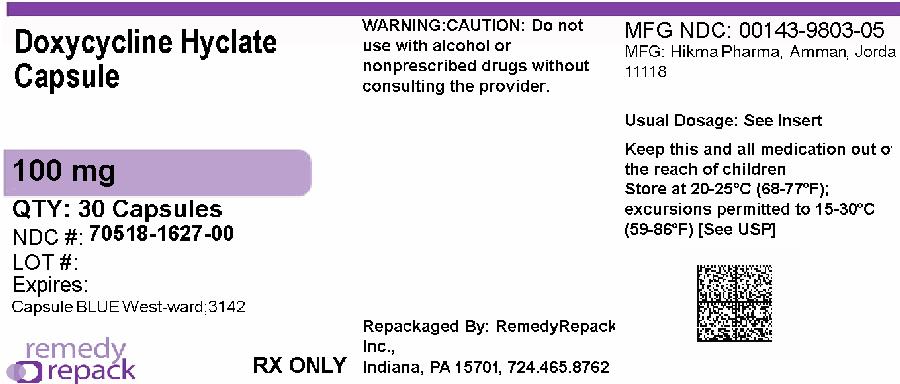
(doxycycline · DailyMed)
Dawa Tylodoxy 200
Doxycycline Hyclate 200 mg/g,Tylosin tartrate 200 mg/g
What it does
Doxycycline is an antibiotic used to treat various infections.
Commonly used for: bacterial infections, acne, respiratory infections, malaria prevention
Read more in plain English ↓Plain-language summary for general understanding - not medical advice. Always follow your pharmacist/doctor.
Ask about this medicine
Answers come only from this medicine's registration record, BNF monograph and interaction data - not medical advice.
Medicine sourcing is available in Kenya only. We don't sell or dispense medicines - licensed pharmacies do.
Sourcing - Kenya onlyRegistration & product details
Source: Tanzania Medicines and Medical Devices Authority · fetched 2026-03-11 23:48:40 · updated 2026-09-17 03:00:44
Drug Interactions
11Pharmacodynamic Warnings
Doxycycline appears in TABLE 1: Drugs that cause hepatotoxicity
Severe (1)
Tetracyclines - decreases absorption
Strontium is predicted to decrease the absorption of tetracyclines. Avoid. Theoretical Sucralfate
Moderate (5)
Doxycycline - decreases concentration
Fosphenytoin is predicted to decrease the concentration of tetracyclines (doxycycline). Adjust dose.
Doxycycline - decreases exposure
Rifampicin modestly decreases the exposure to tetracyclines (doxycycline). Adjust dose.
Lithium - increases risk of lithium toxicity
Tetracyclines are predicted to increase the risk of lithium toxicity when given with lithium. Avoid or adjust dose.
Tetracyclines - decreases concentration
Fosphenytoin is predicted to decrease the concentration of tetracyclines (doxycycline). Adjust dose.
Tetracyclines - decreases exposure
Rifampicin modestly decreases the exposure to tetracyclines (doxycycline). Adjust dose.
Unknown (5)
Ciclosporin - increases concentration
Doxycyclineispredictedtoincreasetheconcentrationof ciclosporin.rTheoretical
Tetracyclines - decreases exposure
Mitotane is predicted to decrease the exposure to tetracyclines (eravacycline). Adjust eravacycline dose, p. 625.
Tetracyclines - decreases exposure
Rifampicin is predicted to decrease the exposure to tetracyclines (eravacycline). Adjust eravacycline dose, p. 625.
Tetracyclines - decreases exposure
St John's wort is predicted to decrease the exposure to tetracyclines (eravacycline). Adjust eravacycline dose, p. 625.
Tetracyclines - decreases absorption
Oralzincispredictedtodecreasetheabsorptionof tetracyclines.Separateadministrationby2to3hours. oTheoretical https://www.facebook.c (Books-Courses-Medic
Data from BNF 85 (British National Formulary). This is not a substitute for professional medical advice. Matched via: class
About doxycycline
Doxycycline is an antibiotic used to treat various infections.
What it treats
- bacterial infections
- acne
- respiratory infections
- malaria prevention
How it works
It works by stopping the growth of bacteria.
Who it's for
It is for adults and children who need treatment for bacterial infections.
Drug class
Tetracyclines
Cautions
- • Be cautious if taking other medications that can harm the liver.
AI-assisted summary grounded in BNF data - general information only, not medical advice. Always confirm with your pharmacist or doctor.
About hyclate
Hyclate is a medication that may be used for various conditions, providing relief and support in treatment.
What it treats
- stomach cramps
- irritable bowel syndrome (IBS)
How it works
Hyclate helps to relax the muscles in the stomach and intestines, which reduces pain and discomfort.
Who it's for
This medication is generally for adults and children experiencing stomach or bowel issues.
AI-assisted summary grounded in BNF data - general information only, not medical advice. Always confirm with your pharmacist or doctor.
About tylosin
Tylosin is an antibiotic used to treat infections caused by certain bacteria.
What it treats
- bacterial infections
- respiratory infections
- gastrointestinal infections
How it works
Tylosin works by stopping the growth of bacteria, helping your body to fight off the infection.
Who it's for
Tylosin is used for adults and children who have specific bacterial infections.
AI-assisted summary grounded in BNF data - general information only, not medical advice. Always confirm with your pharmacist or doctor.
Clinical monograph: Doxycycline
BNF-referencedDoxycycline is a broad-spectrum tetracycline antibiotic effective against a variety of bacterial infections. It acts by inhibiting protein synthesis in susceptible bacteria, thereby halting their growth and replication. It is commonly used for treating infections such as chlamydia, rickettsia, and mycoplasma, and is also indicated for acne and certain periodontal diseases.
Indications
- Bacterial infections
- Acne
- Destructive (refractory) periodontal disease
- Exacerbations of chronic bronchitis
- Leptospirosis
- Chlamydia infections
- Rickettsial infections
- Mycoplasma infections
- Acute necrotising ulcerative gingivitis
Dosage
Children: For children aged 12–17 years, initially 200 mg daily in 1–2 divided doses for the
Adults: Initially 200 mg daily in 1–2 divided doses for the first day, then maintenance 100 mg daily.
Mechanism of action
Doxycycline exerts its antibacterial effects by binding to the 30S ribosomal subunit of bacterial ribosomes, inhibiting the binding of aminoacyl-tRNA to the mRNA-ribosome complex. This inhibition of protein synthesis is crucial for bacterial growth and is the primary mechanism by which doxycycline exhibits its antimicrobial activity. It also impacts cellular metabolism and has been associated with non-genotoxic carcinogenic effects.
Pharmacodynamics
Doxycycline has a broad spectrum of activity against Gram-positive, Gram-negative bacteria, and some protozoa. Its bacteriostatic action is particularly effective against certain resistant strains, including MRSA. The drug's efficacy may vary based on the sensitivity of the bacteria, and resistance can develop through various mechanisms, such as efflux pumps and ribosomal protection.
Pharmacokinetics
Doxycycline is well absorbed from the gastrointestinal tract, with peak plasma concentrations typically reached within 2 hours after oral administration. It has a high volume of distribution and is approximately 90% protein-bound. The drug is metabolized in the liver and excreted primarily in feces, with a smaller fraction eliminated in urine. The half-life of doxycycline is approximately 18 to 22 hours, allowing for once or twice daily dosing in most cases.
Contra-indications
- Pregnancy
- Breastfeeding
- Hypersensitivity to doxycycline or other tetracyclines
- Myasthenia gravis
- Severe hepatic impairment
Adverse effects
- Photosensitivity
- Dizziness
- Headache
- Nausea
- Vomiting
- Diarrhoea
- Angioedema
- Skin reactions
- Pseudomembranous enterocolitis
- Tooth discolouration
- Intracranial hypertension
- Thrombocytopenia
- Stevens-Johnson syndrome
- Pancreatitis
Interactions
- Fosphenytoin (decreases concentration)
- Rifampicin (decreases exposure)
- Ciclosporin (unknown effect on concentration)
- Antacids containing aluminium or magnesium (reduce absorption)
- Iron supplements (reduce absorption)
- Warfarin (may enhance anticoagulant effect)
Precautions
- Use with caution in renal impairment
- May cause increased intracranial pressure
- Risk of superinfection (e.g., fungal infections)
- Avoid exposure to sunlight or sun lamps
- Monitor liver function in patients receiving prolonged therapy
Pregnancy
Should not be given to pregnant women; effects on skeletal development have been documented in the first trimester in animal studies. Administration during the second or third trimester may cause discoloration of the child's teeth, and maternal hepatotoxicity has been reported with large parenteral doses.
Breast-feeding
Should not be given to women who are breastfeeding; absorption may lead to discoloration of teeth in the infant.
Storage
Store in a cool, dry place away from light. Keep out of reach of children.
Formulations
- Tablets
- Capsules
- Oral suspension
- Oral solution
AI-synthesized from BNF references - general information only, not a substitute for professional medical advice or the current BNF. Verify doses with a pharmacist.
Clinical monograph: hyclate
Hyclate, often referring to hyoscine hydrobromide, is a medication primarily used for its anticholinergic properties. It is effective in treating motion sickness, nausea, and vomiting, as well as in the management of muscle spasms in the gastrointestinal tract. Hyoscine works by blocking the action of acetylcholine at muscarinic receptors in the body, leading to decreased secretions and reduced gastrointestinal motility.
Indications
- Motion sickness
- Nausea and vomiting
- Gastrointestinal spasms
- Preoperative sedation
Dosage
Children: Refer to the BNF for Children for specific dosing recommendations based on the child's age, weight, and condition being treated.
Adults: Refer to the appropriate clinical guidelines or BNF for specific dosing recommendations based on the condition being treated and patient factors.
Mechanism of action
Hyclate exerts its effects by antagonizing muscarinic acetylcholine receptors, which are found throughout the central and peripheral nervous systems. This inhibition leads to a decrease in acetylcholine-induced effects, particularly in the gastrointestinal system and vestibular apparatus, thus alleviating symptoms of nausea and motion sickness.
Pharmacodynamics
The pharmacodynamic effects of hyoscine include reduced gastrointestinal motility, decreased secretions, and a sedative effect on the central nervous system. Its antimuscarinic activity can result in side effects such as dry mouth, blurred vision, constipation, and drowsiness, depending on the dose and individual patient response.
Pharmacokinetics
Hyclate is well-absorbed from the gastrointestinal tract, and its peak plasma concentrations are typically reached within 2 hours after oral administration. The drug is widely distributed throughout the body, including the central nervous system where it crosses the blood-brain barrier. Hyoscine is metabolized in the liver and excreted primarily through the urine. The half-life of hyoscine is approximately 3 to 5 hours, but this can vary based on the formulation and route of administration.
Contra-indications
- Hypersensitivity to hyoscyamine or any of the excipients
- Glaucoma
- Myasthenia gravis
- Severe ulcerative colitis
- Tachycardia
Adverse effects
- Dry mouth
- Blurred vision
- Constipation
- Urinary retention
- Dizziness
- Confusion
- Nausea
- Vomiting
Interactions
- Anticholinergic agents may enhance effects
- Opioids may increase risk of constipation
- Antidepressants may increase anticholinergic effects
- Antihistamines may have additive sedative effects
Precautions
- Use with caution in patients with prostate enlargement
- May exacerbate conditions like heart disease or hypertension
- Caution in elderly patients due to increased sensitivity
Pregnancy
Consult the prescribing information; safety during pregnancy is not established.
Breast-feeding
Consult a healthcare provider; may inhibit lactation.
Storage
Store at room temperature, away from moisture and heat.
Formulations
- Oral tablets
- Injection solution
- Extended-release capsules
AI-synthesized from BNF references - general information only, not a substitute for professional medical advice or the current BNF. Verify doses with a pharmacist.
Clinical monograph: tylosin
BNF-referencedTylosin is a macrolide antibiotic primarily used in veterinary medicine, particularly in the treatment of bacterial infections in livestock. It is effective against a variety of Gram-positive bacteria and some Gram-negative bacteria. Tylosin is known for its ability to inhibit protein synthesis in bacteria, leading to their growth inhibition and eventual death.
Indications
- Bacterial infections in livestock
- Respiratory infections
- Enteritis caused by various pathogens
- Mycoplasma infections
Dosage
Children: For paediatric dosing, refer to the BNF for Children for appropriate dosing information based on age and weight.
Adults: Refer to the BNF for specific dosing guidelines based on the condition being treated, as doses may vary.
Mechanism of action
Tylosin inhibits peptide bond formation by binding to the 50S ribosomal subunit of bacteria, blocking the aminoacyl-tRNA from entering the ribosome and thus halting protein synthesis. This inhibition acts as a slow-binding, slowly reversible process, and the interaction with the ribosome is characterized by a significant degree of irreversibility, which is crucial for its antibiotic properties.
Pharmacodynamics
Tylosin exhibits bacteriostatic activity, meaning it inhibits bacterial growth rather than directly killing bacteria. Its effectiveness is particularly notable against certain strains of bacteria that are resistant to other antibiotic classes. The irreversibility of its action on the ribosome contributes to its long-lasting effects against bacterial infections.
Pharmacokinetics
After administration, tylosin is absorbed and distributed throughout the body. It is metabolized in the liver and excreted primarily in the bile, with some renal excretion. The half-life of tylosin can vary based on the route of administration and the species being treated. It is important to monitor for potential accumulation in cases of renal impairment.
Pregnancy
There is insufficient data on the use of tylosin during pregnancy. It should only be used if the potential benefits outweigh the risks.
Breast-feeding
It is not known whether tylosin is excreted in human milk. Caution should be exercised when administering to nursing mothers.
Storage
Store in a cool, dry place, away from light. Keep out of reach of children.
Formulations
- Tylosin tartrate tablets
- Tylosin injectable solution
- Tylosin oral suspension
AI-synthesized from BNF references - general information only, not a substitute for professional medical advice or the current BNF. Verify doses with a pharmacist.
Molecular reference: Doxycycline
PubChem CID 54671203Molecular formula: C22H24N2O8
Biological pathways
Source: PubChem (NCBI) · pathways from PathBank, Reactome, WikiPathways & PharmGKB.
Molecular reference: tylosin
PubChem CID 5280440Molecular formula: C46H77NO17
Mechanism of action
The inhibition of peptide bond formation by tylosin, a 16-membered ring macrolide, was studied in a model system derived from Escherichia coli. In this cell-free system, a peptide bond is formed between puromycin (acceptor substrate) and AcPhe-tRNA (donor substrate) bound at the P-site of poly(U)-programmed ribosomes. It is shown that tylosin inhibits puromycin reaction as a slow-binding, slowly reversible inhibitor. Detailed kinetic analysis reveals that tylosin (I) reacts rapidly with complex C, i.e., the AcPhe-tRNA. poly(U).70S ribosome complex, to form the encounter complex CI, which then undergoes a slow isomerization and is converted to a tight complex, CI, inactive toward puromycin. These events are described by the scheme C + I <==> (K(i)) CI <==> (k(4), k(5)) CI. The K(i), k(4), and k(5) values are equal to 3 microM, 1.5 min(-1), and 2.5 x 10(-3) min(-1), respectively. The extremely low value of k(5) implies that the inactivation of complex C by tylosin is almost irreversible. The irreversibility of the tylosin effect on peptide bond formation is significant for the interpretation of this antibiotic's therapeutic properties; it also renders the tylosin reaction a useful tool in the study of other macrolides failing to inhibit the puromycin reaction but competing with tylosin for common binding sites on the ribosome. Thus, the tylosin reaction, in conjunction with the puromycin reaction, was applied to investigate the erythromycin mode of action. It is shown that erythromycin (Er), like tylosin, interacts with complex C according to the kinetic scheme C + Er <==> (K(er)) CEr <==> (k(6), k(7)) C*Er and forms a tight complex, CEr, which remains active toward puromycin. The determination of K(er), k(6), and k(7) enables us to classify erythromycin as a slow-binding ligand of ribosomes
Source: PubChem (NCBI) · pathways from PathBank, Reactome, WikiPathways & PharmGKB.
This drug in other countries
The same active ingredient registered across other registries we cover - including different brands.
- AMPROLIUM 20% WATER SOLUBLE POWDER · Shijiazhuang Jinding Pharmaceutical
- CENTRE TYLODOXINE FORTE WSP (Each gram contains Tylosin Tartrate 75mg/ Doxycycline Hyclate 50mg/ Bromhexine hydrochloride 8mg/ Vitamin A 8000iu/ Vitamin B1 4mg/ Vitamin B2 4mg/ Vitamin B6 2mg/ Vitamin B12 10mcg/ Vitamin C 30mg/ Vitamin D3 2000iu/ Vitamin E 4mg/Nicotinic Acid 20mg) · Aether Centre Biology
- CENTRE- ERYSTREP SOLUBLE POWDER · Aether Centre Biology
- CENTRE-NEODOX SOLUBLE POWDER (Each 1g contains Neomycin sulphate/ Doxycycline hydrochloride 200mg/100mg) · Aether Centre Biology
- CENTRE-TIAMDOX WATER SOLUBLE POWDER · Aether Center Biology
- CENTRE-TYLO 20 INJECTION · Aether Centre Biology
- ALLDOX · Medox Pharmaceuticals
- ASDOXIN · Opera Pharma
- ASHTYL 20% · Murphy Chemicals
- AVDOXI 100 · Zain Pharma Limited
- BIODOX CAPSULES · Biodeal Laboratories
- BOTADOXY 10/10 · Nerix Pharma