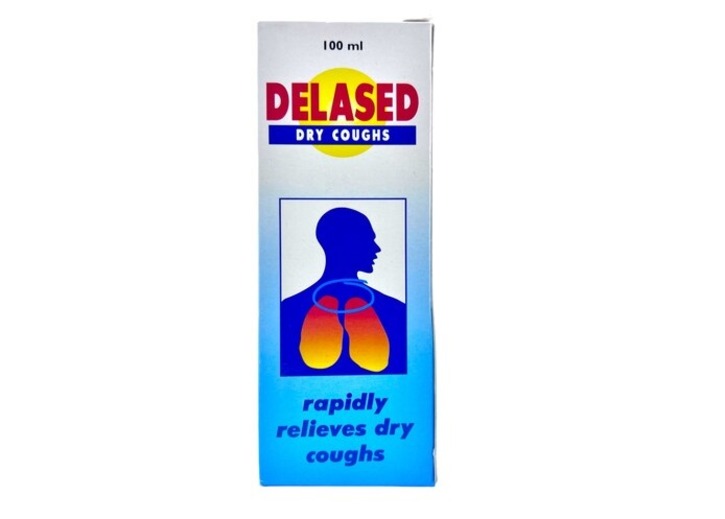
DELASED DRY COUGH SYRUP
DIPHENHYDRAMINE HCL BP SODIUM CITRATE BP DEXTROMETHORPHAN HBR BP MENTHOL BP
What it does
Dextromethorphan is a medicine used to relieve coughing.
Commonly used for: coughs due to colds, coughs due to flu, coughs due to bronchitis
Read more in plain English ↓Plain-language summary for general understanding - not medical advice. Always follow your pharmacist/doctor.
Ask about this medicine
Answers come only from this medicine's registration record, BNF monograph and interaction data - not medical advice.
Hard to find? We help patients in Kenya source rare medicines. We don't sell or dispense medicines - licensed pharmacies do.
Source this medicineRegistration & product details
Source: Pharmacy and Poisons Board · fetched 2026-01-28 22:07:47 · updated 2026-03-23 04:52:56
About dextromethorphan
Dextromethorphan is a medicine used to relieve coughing.
What it treats
- coughs due to colds
- coughs due to flu
- coughs due to bronchitis
How it works
It works by decreasing the activity in the part of the brain that triggers the cough reflex.
Who it's for
It is suitable for adults and children over a certain age, but not for very young children.
Cautions
- • Do not use if you have a cough with mucus or if you have asthma.
- • Consult a doctor if you are pregnant or breastfeeding.
AI-assisted summary grounded in BNF data - general information only, not medical advice. Always confirm with your pharmacist or doctor.
About diphenhydramine
Diphenhydramine is an antihistamine that helps relieve allergy symptoms and promotes sleep.
What it treats
- allergic reactions
- hay fever (allergic rhinitis)
- insomnia
- motion sickness
How it works
It works by blocking histamine, a substance in the body that causes allergic symptoms and can affect sleep.
Who it's for
It is suitable for adults and children over a certain age, but always check with a healthcare provider.
AI-assisted summary grounded in BNF data - general information only, not medical advice. Always confirm with your pharmacist or doctor.
About hbr
HBr is a medication used to treat various conditions, though specific details are not provided.
How it works
The exact mechanism of how HBr works is not specified.
Who it's for
HBr is typically prescribed for patients with specific health conditions, but details are not provided.
AI-assisted summary grounded in BNF data - general information only, not medical advice. Always confirm with your pharmacist or doctor.
About menthol
Menthol is a natural compound often used for its soothing and cooling effects.
What it treats
- cough relief
- muscle pain relief
- skin irritation treatment
How it works
Menthol creates a cooling sensation on the skin and mucous membranes, which can help relieve discomfort.
Who it's for
Menthol is suitable for adults and children who need relief from coughs, muscle aches, or skin irritation.
AI-assisted summary grounded in BNF data - general information only, not medical advice. Always confirm with your pharmacist or doctor.
Clinical monograph: dextromethorphan
BNF-referencedDextromethorphan is a semisynthetic morphine derivative that primarily functions as a cough suppressant. It is commonly found in over-the-counter medications for the treatment of cough and has additional applications in managing pseudobulbar affect. Despite its structural similarity to other central nervous system depressants, dextromethorphan does not exhibit mu-opioid receptor activity, distinguishing it from traditional opioids.
Indications
- Cough
- Pseudobulbar affect
Dosage
Children: Refer to the BNF for Children for specific dosing information tailored to paediatric patients.
Adults: Refer to the BNF for specific dosing guidelines based on the formulation and clinical context.
Mechanism of action
Dextromethorphan acts as a low-affinity uncompetitive antagonist of NMDA receptors and as an agonist at sigma-1 receptors. It also antagonizes α3/β4 nicotinic receptors. The clinical effects are thought to arise from NMDA receptor blockade and serotonin (5-HT) uptake inhibition, which may lead to increased serotonin receptor stimulation. However, the precise mechanisms by which these actions translate into therapeutic effects remain incompletely understood.
Pharmacodynamics
Dextromethorphan is considered an opioid-like molecule with a moderate therapeutic window, indicating that while it is effective at standard doses, higher doses can lead to intoxication. It has a moderate duration of action, making it suitable for use in cough management. Due to its potential for abuse and risk of intoxication, patients are advised to use it cautiously.
Pharmacokinetics
Dextromethorphan is metabolized primarily in the liver through the cytochrome P450 enzyme system, leading to the formation of its active metabolite, dextrorphan. The pharmacokinetics may be influenced by individual variations in metabolic pathways, which can affect the drug's efficacy and safety profile.
Contra-indications
- Hypersensitivity to dextromethorphan or any of its components
- Concurrent use with monoamine oxidase inhibitors (MAOIs)
- Severe respiratory insufficiency or asthma
- Persistent cough due to smoking, emphysema, or chronic bronchitis
Adverse effects
- Dizziness
- Nausea
- Vomiting
- Drowsiness
- Confusion
- Constipation
- Abdominal discomfort
- Euphoria or dysphoria
- Serotonin syndrome (when used with serotonergic drugs)
Interactions
- May interact with MAOIs, leading to serious side effects
- Potential interactions with other CNS depressants, leading to increased sedation
- May enhance the effects of alcohol
- Can interact with medications that affect serotonin levels, increasing the risk of serotonin syndrome
Precautions
- Use with caution in patients with a history of substance abuse
- Monitor use in patients with hepatic impairment
- Caution advised in patients with a history of seizures
- Should not be used in children under 2 years unless directed by a physician
Pregnancy
Dextromethorphan should be used during pregnancy only if clearly needed. Consult a healthcare provider for advice.
Breast-feeding
Dextromethorphan is excreted in breast milk. Caution is advised when administered to nursing mothers.
Storage
Store at room temperature, away from moisture and heat. Keep out of reach of children.
Formulations
- Oral syrup
- Tablets
- Capsules
- Lozenges
AI-synthesized from BNF references - general information only, not a substitute for professional medical advice or the current BNF. Verify doses with a pharmacist.
Clinical monograph: diphenhydramine
BNF-referencedDiphenhydramine is a first-generation antihistamine with sedative, anti-emetic, and antimuscarinic properties. It is commonly used to relieve symptoms of allergy, hay fever, and the common cold, such as runny nose, sneezing, and itchy or watery eyes. Additionally, it is utilized for its antiemetic effects in motion sickness and as a sleep aid due to its sedative properties. Its ability to cross the blood-brain barrier makes it effective in treating symptoms that involve the central nervous system.
Indications
- Allergic rhinitis
- Allergic conjunctivitis
- Urticaria
Mechanism of action
Diphenhydramine primarily functions by antagonizing H1 (Histamine 1) receptors located in various tissues, including the respiratory system, gastrointestinal tract, and central nervous system. By acting as an inverse agonist at H1 receptors, it mitigates the effects of histamine, thereby reducing allergic symptoms. As a first-generation antihistamine, it also crosses the blood-brain barrier, leading to sedative effects. Furthermore, diphenhydramine exhibits antimuscarinic activity by competitively antagonizing muscarinic acetylcholine receptors, contributing to its use in treating parkinsonian symptoms.
Pharmacodynamics
Diphenhydramine possesses anti-histaminic, anti-emetic, anti-vertigo, and sedative properties. Its antihistaminic action blocks the effects of histamine by competing for H1 receptor sites, preventing symptoms associated with histamine release. Its anti-emetic effects are due to inhibition at the medullary chemoreceptor trigger zone, while its anti-vertigo action arises from a central antimuscarinic effect on the vestibular apparatus and the vomiting center in the midbrain.
Pharmacokinetics
Diphenhydramine is well-absorbed following oral administration and reaches peak plasma concentrations within 1 to 2 hours. It is metabolized in the liver and has a half-life of approximately 4 to 8 hours, although this can vary based on individual factors. The drug is excreted primarily in the urine, with a significant portion eliminated as metabolites rather than unchanged drug. Due to its lipophilic nature, diphenhydramine readily crosses the blood-brain barrier, contributing to its sedative effects.
Contra-indications
- Severe asthma exacerbation
- Hypersensitivity to diphenhydramine or any of its components
- Newborns or premature infants
Adverse effects
- Drowsiness
- Dizziness
- Dry mouth
- Constipation
- Urinary retention
- Blurred vision
- Confusion
Interactions
- CNS depressants (e.g., alcohol, sedatives, tranquilizers) may enhance sedative effects
- MAO inhibitors can prolong and intensify anticholinergic effects
Precautions
- Use with caution in patients with glaucoma
- Prostatic hypertrophy
- Cardiovascular disease
- Elderly patients may be more sensitive to side effects
Pregnancy
Diphenhydramine should only be used during pregnancy if clearly needed. Consult a healthcare provider for advice.
Breast-feeding
Diphenhydramine is excreted in breast milk. Use caution when administering to nursing mothers.
Storage
Store at room temperature, away from moisture and heat. Keep out of reach of children.
Formulations
- Tablets
- Capsules
- Liquid formulations
- Topical preparations
AI-synthesized from BNF references - general information only, not a substitute for professional medical advice or the current BNF. Verify doses with a pharmacist.
Clinical monograph: menthol
BNF-referencedMenthol is a cyclic monoterpene alcohol that is widely used as a flavoring agent and in topical analgesic preparations due to its cooling sensation. It is commonly derived from peppermint oil and is known for its soothing properties in various applications, including cough drops, ointments, and as a fragrance in personal care products.
Indications
- Topical analgesic for muscle and joint pain
- Cough suppressant in cough drops and lozenges
- Relief of minor throat irritation
- Cooling agent in various cosmetic and personal care products
Dosage
Children: Refer to BNF for Children for specific dosing guidelines, as doses may vary based on age and formulation.
Adults: For topical use, apply a thin layer to the affected area not more than 3 to 4 times daily. For cough drops, follow the product-specific instructions as per the formulation.
Mechanism of action
Menthol acts as an agonist for the transient receptor potential subtype M8 (TRPM8), a non-selective cation channel that is activated by cold temperatures. This activation leads to calcium influx in mast cells, inducing the release of histamine, which can trigger allergic responses such as urticaria, asthma, and rhinitis. Menthol's ability to induce histamine release via TRPM8 suggests potential therapeutic applications for TRPM8 antagonists in managing cold- and menthol-induced allergies.
Pharmacodynamics
Menthol produces a cooling effect by stimulating sensory neurons that convey cold sensations. It interacts with TRPM8 channels, leading to the activation of intracellular signaling pathways that can result in vasodilation and increased blood flow to the area of application. This cooling sensation can provide symptomatic relief in conditions characterized by pain or irritation.
Pharmacokinetics
Menthol is absorbed through the skin and mucous membranes, with systemic effects depending on the route of administration. Its bioavailability can vary, and it is metabolized primarily in the liver. The elimination half-life and excretion pathways have not been extensively characterized, but menthol is generally considered to have a rapid onset of action with effects lasting for a few hours.
Adverse effects
- Allergic reactions
- Urticaria
- Asthma
- Rhinitis
- Skin irritation
Precautions
- Use with caution in patients with known allergies to menthol or related compounds
- May exacerbate asthma in sensitive individuals
Pregnancy
There are no well-controlled studies of menthol in pregnant women. Menthol should be used during pregnancy only if clearly needed.
Breast-feeding
Menthol is excreted in breast milk. Caution should be exercised when administering to nursing mothers.
Storage
Store in a cool, dry place away from light. Keep out of reach of children.
Formulations
- Topical ointment
- Cream
- Liquid
AI-synthesized from BNF references - general information only, not a substitute for professional medical advice or the current BNF. Verify doses with a pharmacist.
Molecular reference: dextromethorphan
PubChem CID 5360696Molecular formula: C18H25NO
Mechanism of action
Dextromethorphan is a low-affinity uncompetitive NMDA antagonist and sigma-1 receptor agonist. It is also an antagonist of α3/β4 nicotinic receptors. However, the mechanism by which dextromethorphan's receptor agonism and antagonism translate to a clinical effect is not well understood. Dextromethorphan (DXM) is the dextro isomer of levomethorphan, a semisynthetic morphine derivative. Although structurally similar to other /CNS depressants/, DXM does not act as a mu receptor opioid (eg, morphine, heroin). DXM and its metabolite, dextrorphan, act as potent blockers of the N-methyl-d-aspartate (NMDA) receptor. Amantadine and dextromethorphan suppress levodopa (L-DOPA)-induced dyskinesia (LID) in patients with Parkinson's disease (PD) and abnormal involuntary movements (AIMs) in the unilateral 6-hydroxydopamine (6-OHDA) rat model. These effects have been attributed to N-methyl-d-aspartate (NMDA) antagonism. However, amantadine and dextromethorphan are also thought to block serotonin (5-HT) uptake and cause 5-HT overflow, leading to stimulation of 5-HT(1A) receptors, which has been shown to reduce LID. We undertook a study in 6-OHDA rats to determine whether the anti-dyskinetic effects of these two compounds are mediated by NMDA antagonism and/or 5-HT(1A) agonism. In addition, we assessed the sensorimotor effects of these drugs using the Vibrissae-Stimulated Forelimb Placement and Cylinder tests. Our data show that the AIM-suppressing effect of amantadine was not affected by the 5-HT(1A) antagonist WAY-100635, but was partially reversed by the NMDA agonist d-cycloserine. Conversely, the AIM-suppressing effect of dextromethorphan was prevented by WAY-100635 but not by d-cycloserine. Neither amantadine nor dextromethorphan affected the therapeutic effects of L-DOPA in sensorimotor tests. We conclude that the anti-dyskinetic effect of amantadine is partially dependent on NMDA antagonism, while dextromethorphan suppresses AIMs via indirect 5-HT(1A) agonism. Combined with previous work from our group, our results support the investigation of 5-HT(1A) agonists as pharmacotherapies for LID in PD patients. Dextromethorphan (DM) is a dextrorotatory morphinan and an over-the-counter non-opioid cough suppressant. We have previously shown that DM protects against LPS-induced dopaminergic neurodegeneration through inhibition of microglia activation. Here, we investigated protective effects of DM against endotoxin shock induced by lipopolysaccharide/d-galactosamine (LPS/GalN) in mice and the mechanism underlying its protective effect. Mice were given multiple injections of DM (12.5 mg/kg, s.c.) 30 min before and 2, 4 hr after an injection of LPS/GalN (20 ug/700 mg/kg). DM administration decreased LPS/GalN-induced mortality and hepatotoxicity, as evidenced by increased survival rate, decreased serum alanine aminotransferase activity and improved pathology. Furthermore, DM was also effective when it was given 30 min after LPS/GalN injection. The protection was likely associated with reduced serum and liver tumor necrosis factor alpha (TNF-alpha) levels. DM also attenuated production of superoxide and intracellular reactive oxygen species in Kupffer cells and neutrophils. Real-time RT-PCR analysis revealed that DM administration suppressed the expression of a variety of inflammation-related genes such as macrophage inflammatory protein-2, CXC chemokine, thrombospondin-1, intercellular adhesion molecular-1 and interleukin-6. DM also decreased the expression of genes related to cell-death pathways, such as the DNA damage protein genes GADD45 and GADD153. In summary, DM is effective in protecting mice against LPS/GalN-induced hepatotoxicity, and the mechanism is likely through a faster TNF-alpha clearance, and decrease of superoxide production and inflammation and cell-death related components. This study not only extends neuroprotective effect of DM, but also suggests that DM may be a novel compound for the therapeutic intervention for sepsis. /The
Pharmacodynamics
Dextromethorphan is an opioid-like molecule indicated in combination with other medication in the treatment of coughs and pseudobulbar affect. It has a moderate therapeutic window, as intoxication can occur at higher doses. Dextromethorphan has a moderate duration of action. Patients should be counselled regarding the risk of intoxication.
Biological pathways
Source: PubChem (NCBI) · pathways from PathBank, Reactome, WikiPathways & PharmGKB.
Molecular reference: diphenhydramine
PubChem CID 3100Molecular formula: C17H21NO
Mechanism of action
Diphenhydramine predominantly works via the antagonism of H1 (Histamine 1) receptors. Such H1 receptors are located on respiratory smooth muscles, vascular endothelial cells, the gastrointestinal tract (GIT), cardiac tissue, immune cells, the uterus, and the central nervous system (CNS) neurons. When the H1 receptor is stimulated in these tissues it produces a variety of actions including increased vascular permeability, promotion of vasodilation causing flushing, decreased atrioventricular (AV) node conduction time, stimulation of sensory nerves of airways producing coughing, smooth muscle contraction of bronchi and the GIT, and eosinophilic chemotaxis that promotes the allergic immune response. Ultimately, diphenhydramine functions as an inverse agonist at H1 receptors, and subsequently reverses effects of histamine on capillaries, reducing allergic reaction symptoms. Moreover, since diphenhydramine is a first-generation antihistamine, it readily crosses the blood-brain barrier and inversely agonizes the H1 CNS receptors, resulting in drowsiness, and suppressing the medullary cough center. Furthermore, H1 receptors are similar to muscarinic receptors. Consequently, diphenhydramine also acts as an antimuscarinic. It does so by behaving as a competitive antagonist of muscarinic acetylcholine receptors, resulting in its use as an antiparkinson medication. Lastly, diphenhydramine has also demonstrated activity as an intracellular sodium channel blocker, resulting in possible local anesthetic properties. Antihistamines used in the treatment of allergy act by competing with histamine for H1-receptor sites on effector cells. They thereby prevent, but do not reverse, responses mediated by histamine alone. Antihistamines antagonize, in varying degrees, most of the pharmacological effects of histamine, including urticaria and pruritus. Also, the anticholinergic actions of most antihistamines provide a drying effect on the nasal mucosa. /Antihistamines/ H1 antagonists inhibit both the vasoconstrictor effects of histamine and, to a degree, the more rapid vasodilator effects mediated by activation of H1 receptors on endothelial cells (synthesis/release of NO and other mediators). /H1 Receptor Antagonists/ H1 antagonists suppress the action of histamine on nerve endings, including the flare component of the triple response and the itching caused by intradermal injection. /H1 Receptor Antagonists/ The first-generation antihistamines are widely prescribed medications that relieve allergic reactions and urticaria by blocking the peripheral histamine H(1) receptor. Overdose of these drugs often results in serious neuronal toxic effects, including seizures, convulsions and worsening of epileptic symptoms. The KCNQ/M K(+) channel plays a crucial role in controlling neuron excitability. Here, we demonstrate that mepyramine and diphenhydramine, two structurally related first-generation antihistamines, can act as potent KCNQ/M channel blockers. Extracellular application of these drugs quickly and reversibly reduced KCNQ2/Q3 currents heterologously expressed in HEK293 cells. The current inhibition was concentration and voltage dependent. The estimated IC(50) (12.5 and 48.1 microM, respectively) is within the range of drug concentrations detected in poisoned patients (30-300 microM). Both drugs shifted the I-V curve of KCNQ2/Q3 channel to more depolarized potentials and altered channel gating properties by prolonging activation and shortening deactivation kinetics. Mepyramine also inhibited the individual homomeric KCNQ1-4 and heteromeric KCNQ3/Q5 currents. Moreover, mepyramine inhibited KCNQ2/Q3 current in an outside-out patch excised from HEK293 cells and the inhibitory effect was neither observed when it was applied intracellularly nor affected by blocking phospholipase C (PLC) activity, indicating an extracellular and direct channel blocking mechanism. Finally, in cultured rat superior cervical ganglion (SCG) neurons, mepyramine reduced the
Pharmacodynamics
Diphenhydramine has anti-histaminic (H1-receptor), anti-emetic, anti-vertigo and sedative and hypnotic properties. The anti-histamine action occurs by blocking the spasmogenic and congestive effects of histamine by competing with histamine for H1 receptor sites on effector cells, preventing but not reversing responses mediated by histamine alone. Such receptor sites may be found in the gut, uterus, large blood vessels, bronchial muscles, and elsewhere. Anti-emetic action is by inhibition at the medullary chemoreceptor trigger zone. Anti-vertigo action is by a central antimuscarinic effect on the vestibular apparatus and the integrative vomiting center and medullary chemoreceptor trigger zone of the midbrain.
Biological pathways
Source: PubChem (NCBI) · pathways from PathBank, Reactome, WikiPathways & PharmGKB.
Molecular reference: menthol
PubChem CID 1254Molecular formula: C10H20O
Mechanism of action
Exposure to low temperatures often causes allergic responses or urticaria. Similarly, menthol, a common food additive is also known to cause urticaria, asthma, and rhinitis. However, despite the obvious clinical implications, the molecular mechanisms responsible for inducing allergic responses to low temperatures and menthol have not been determined. Because a non-selective cation channel, transient receptor potential subtype M8 (TRPM8) is activated by cold and menthol, we hypothesized that this channel mediates cold- and menthol-induced histamine release in mast cells. Here, we report that TRPM8 is expressed in the basophilic leukemia mast cell line, RBL-2H3, and that exposure to menthol or low temperatures induced Ca(2+) influx in RBL-2H3 cells, which was reversed by a TRPM8 blocker. Furthermore, menthol, a TRPM8 agonist, induced the dose-dependent release of histamine from RBL-2H3 cells. When TRPM8 transcripts were reduced by siRNA (small interfering RNA), menthol- and cold-induced Ca(2+) influx and histamine release were significantly reduced. In addition, subcutaneous injection of menthol evoked scratching, a typical histamine-induced response which was reversed by a TRPM8 blocker. Thus, our findings indicate that TRPM8 mediates the menthol- and cold-induced allergic responses of mast cells, and suggest that TRPM8 antagonists be viewed as potential treatments for cold- and menthol-induced allergies. /DL-Menthol/ Menthol's characteristic cooling sensation is due, in part, to the activation of sensory neurons generally termed transient receptor potential (TRP) channels, in particular transient receptor potential melastatin family member 8 (TRPM8) and transient receptor potential subfamily A, member 1 (TRPA1). Menthol acts upon TRPM8 receptors by rapidly increasing intracellular calcium and mobilizing calcium flux through the channels to induce cold response signals at the application site. Aside from its cold-inducing sensation capabilities, menthol exhibits cytotoxic effects in cancer cells, induces reduction in malignant cell growth, and engages in synergistic excitation of GABA receptors and sodium ion channels resulting in analgesia. /DL-Menthol/ In recent years, the transient receptor potential melastatin member 8 (TRPM8) channel has emerged as a promising prognostic marker and putative therapeutic target in prostate cancer. We have found that forced overexpression of TRPM8 in PC-3 cells can inhibit the cell proliferation and motility probably through the TRPM8 activation. In this study, we aimed to investigate whether activating the TRPM8 channel by its selective agonist menthol can inhibit the proliferation and motility of androgen-independent prostate cancer (AIPC) with remarkable expression of TRPM8. Menthol is a naturally occurring compound, which has been widely used in cosmetics and pharmaceutical products, and also as flavoring in food. DU145 cells are androgen-independent but have a remarkable expression of TRPM8. The demonstration of the existence of TRPM8 and the absence of TRPA1 in DU145 cells provided the foundation for the following experiments, because both TRPM8 and TRPA1 are molecular targets of menthol. The outcome of MTT assay indicated that menthol inhibited the cell growth (p < 0.01). Cell cycle distribution and scratch assay analysis revealed that menthol induced cell cycle arrest at the G(0)/G(1) phase (p < 0.01). Furthermore, menthol inhibited the migration of DU145 cells by downregulating the focal-adhesion kinase. So it suggests that the activation of the existing TRPM8 channels may serve as a potential and pragmatic treatment for those AIPC with remarkable expression of TRPM8, and menthol is a useful compound for future development as an anticancer agent. /DL-Menthol/
Source: PubChem (NCBI) · pathways from PathBank, Reactome, WikiPathways & PharmGKB.
This drug in other countries
The same active ingredient registered across other registries we cover - including different brands.
- ABICOF JUNIOR SYRUP · Socomed Pharmaceutical
- ABICOF SYRUP · Socomed Pharmaceutical
- ADDRUB GEL · Addii Biotech
- ADDRUB GEL ( Diclofenac Diethylamine/ Methyl Salicylate/Menthol/ Linseed Oil Gel 1.16%w/w/1.0%w/w/ 10.0% w/w / 5.0w/w/ 3.0w/w) · Addii Biotech
- ADULT BEDIKOF SYRUP · Enicar Pharmaceuticals
- ADULT MALIN COUGH SYRUP · M&g Pharmaceuticals