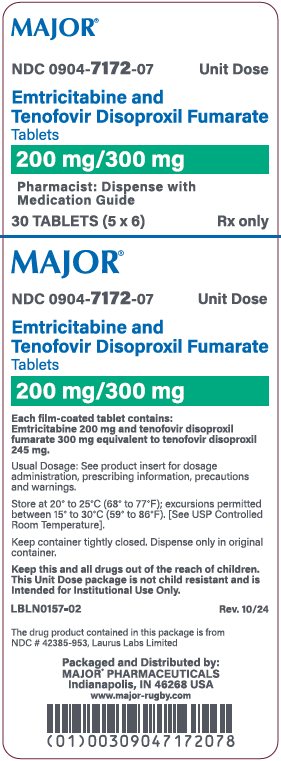
(emtricitabine · DailyMed)
Dobataf EM
Cellulose, Microcrystalline (PH-102) 88.750 mg/tablet,Croscarmellose Sodium 28.000 mg/tablet,Emtricitabine 200 mg,Magnesium Stearate.. 2.625 mg/tablet,Opadry II white 85F18422 10.500 mg/tablet,Purified water USP-NF/Ph.Eu q.s Liter,Tenofovir Alafenamide Fumarate 25 mg
What it does
Alafenamide is a medicine used to treat certain viral infections, particularly HIV.
Commonly used for: HIV infection (human immunodeficiency virus), AIDS (acquired immunodeficiency syndrome)
Read more in plain English ↓Plain-language summary for general understanding - not medical advice. Always follow your pharmacist/doctor.
Ask about this medicine
Answers come only from this medicine's registration record, BNF monograph and interaction data - not medical advice.
Medicine sourcing is available in Kenya only. We don't sell or dispense medicines - licensed pharmacies do.
Sourcing - Kenya onlyRegistration & product details
Source: Tanzania Medicines and Medical Devices Authority · fetched 2026-03-11 23:47:32 · updated 2026-10-19 03:00:45
About alafenamide
Alafenamide is a medicine used to treat certain viral infections, particularly HIV.
What it treats
- HIV infection (human immunodeficiency virus)
- AIDS (acquired immunodeficiency syndrome)
How it works
Alafenamide helps to stop the virus from multiplying in the body, helping to manage the infection.
Who it's for
This medicine is for adults and children who have been diagnosed with HIV.
AI-assisted summary grounded in BNF data - general information only, not medical advice. Always confirm with your pharmacist or doctor.
About cellulose
Cellulose is a type of fiber that helps with digestion and promotes bowel health.
What it treats
- constipation
- irregular bowel movements
How it works
Cellulose adds bulk to the stool, making it easier to pass through the intestines.
Who it's for
Suitable for people looking to improve their digestive health.
AI-assisted summary grounded in BNF data - general information only, not medical advice. Always confirm with your pharmacist or doctor.
About croscarmellose
Croscarmellose is a substance used in medicines to help them dissolve and be absorbed in the body.
What it treats
- helps improve the effectiveness of oral medications
How it works
It works by breaking down the medicine so that it can be easily absorbed in the stomach and intestines.
Who it's for
It is used in various oral medicines that require better absorption.
AI-assisted summary grounded in BNF data - general information only, not medical advice. Always confirm with your pharmacist or doctor.
About emtricitabine
Emtricitabine is an antiviral medication used to treat HIV infection.
What it treats
- HIV infection (human immunodeficiency virus)
How it works
It helps to control the virus and improve the immune system.
Who it's for
This medication is for adults and children living with HIV.
AI-assisted summary grounded in BNF data - general information only, not medical advice. Always confirm with your pharmacist or doctor.
About liter
Liter is a medication used for various health conditions.
How it works
The specific way Liter works is not detailed, but it is designed to help manage certain health issues.
Who it's for
Liter is prescribed for individuals needing treatment for specific conditions as determined by a healthcare provider.
AI-assisted summary grounded in BNF data - general information only, not medical advice. Always confirm with your pharmacist or doctor.
About microcrystalline
Microcrystalline is a type of substance often used in medicines to help with various health issues. It is commonly used as a filler or binder in tablets and capsules.
What it treats
- stomach issues
- constipation
- weight management
How it works
It helps to improve the texture of medicines and can assist in the absorption of other ingredients in the body.
Who it's for
Adults and children who need help with specific health conditions, as directed by a healthcare professional.
AI-assisted summary grounded in BNF data - general information only, not medical advice. Always confirm with your pharmacist or doctor.
About opadry
Opadry is a coating agent used in pharmaceutical formulations.
What it treats
- to improve the taste of medicines
- to protect the active ingredients in tablets and capsules
How it works
Opadry forms a protective layer around tablets and capsules, which helps to mask their taste and protect the ingredients from moisture and light.
Who it's for
Opadry is suitable for various patients who are taking medications in tablet or capsule form.
AI-assisted summary grounded in BNF data - general information only, not medical advice. Always confirm with your pharmacist or doctor.
About purified
Purified ingredients are often used in various medicines to ensure safety and effectiveness by removing impurities.
What it treats
- various medical conditions
How it works
Purified ingredients help in delivering the intended effects of the medicine without the risk of contaminants.
Who it's for
People who need medications with safe and effective ingredients.
AI-assisted summary grounded in BNF data - general information only, not medical advice. Always confirm with your pharmacist or doctor.
About tenofovir
Tenofovir is an antiviral medication used to treat certain viral infections.
What it treats
- HIV infection
- chronic hepatitis B (liver infection)
How it works
Tenofovir works by blocking the virus's ability to multiply, helping to reduce the amount of virus in the body.
Who it's for
It is prescribed for people living with HIV or those with chronic hepatitis B.
AI-assisted summary grounded in BNF data - general information only, not medical advice. Always confirm with your pharmacist or doctor.
About white
White is a medicinal product used for various health conditions.
How it works
White works by affecting certain processes in the body to help manage health issues.
Who it's for
White is suitable for individuals with specific health conditions as determined by a healthcare provider.
AI-assisted summary grounded in BNF data - general information only, not medical advice. Always confirm with your pharmacist or doctor.
Clinical monograph: Emtricitabine
BNF-referencedEmtricitabine is an antiretroviral medication used primarily in the treatment of HIV-1 infection. It is a synthetic nucleoside analog of cytidine that functions as a reverse transcriptase inhibitor. By preventing the conversion of viral RNA into DNA, emtricitabine effectively reduces viral load in the body. It is typically administered once daily and is available in capsule and oral solution forms.
Indications
- HIV infection
Dosage
Children: Child 4 months–17 years (body-weight up to 33 kg): 6 mg/kg once daily. Child 4 months–17 years (body-weight 33 kg and above): 240 mg once daily.
Adults: 200 mg once daily by mouth using capsules or 240 mg once daily by mouth using oral solution.
Mechanism of action
Emtricitabine is a cytidine analog that, when phosphorylated to emtricitabine 5'-triphosphate, competes with deoxycytidine 5'-triphosphate for HIV-1 reverse transcriptase. It incorporates itself into the viral DNA during replication, leading to chain termination. This prevents the incorporation of additional nucleotides and inhibits the transcription of viral RNA into DNA, thereby preventing viral replication.
Pharmacodynamics
Emtricitabine acts by competing with natural substrates of HIV-1 reverse transcriptase, leading to the termination of viral DNA synthesis. It has a long duration of action, allowing for once-daily dosing. Clinicians should monitor for potential side effects, including lactic acidosis and hepatomegaly with steatosis, which can occur with nucleoside analogs.
Pharmacokinetics
Emtricitabine is absorbed well following oral administration, with peak plasma concentrations occurring approximately 1 to 2 hours post-dose. It has a long half-life, allowing for its once-daily administration. Emtricitabine is primarily excreted through the kidneys, and dosage adjustments may be necessary in patients with renal impairment. It is metabolized minimally by the liver.
Contra-indications
- Severe hepatic impairment
- Severe renal impairment (creatinine clearance <30 mL/min)
Adverse effects
- Decreased appetite
- Asthenia
- Constipation
- Diarrhoea
- Dizziness
- Electrolyte imbalance
- Flatulence
- Gastrointestinal discomfort
- Headache
- Abnormal dreams
- Dyspepsia
- Hyperbilirubinaemia
- Hyperglycaemia
- Hypersensitivity reactions
- Hypertriglyceridaemia
- Neutropenia
- Pain
- Rash
- Pustular skin reactions
- Sleep disorders
- Angioedema (uncommon)
Interactions
- Cobicistat and elvitegravir may impact emtricitabine efficacy
- Potential for increased risk of treatment failure in pregnancy when used with elvitegravir
- Monitor for changes in drug levels when co-administered with other antiretrovirals
Precautions
- Caution in patients with hepatic impairment due to increased risk of side effects
- Monitor renal function regularly, particularly in those with existing renal impairment
- Patients should be advised on the risks of lactic acidosis and hepatomegaly with steatosis
Pregnancy
Not recommended for initiation during pregnancy due to risk of treatment failure and maternal-to-child transmission of HIV-1. Women who become pregnant during therapy should be switched to an alternative regimen.
Breast-feeding
Emtricitabine is excreted in human breast milk, caution is advised when administering to breastfeeding mothers.
Storage
Store in the original container, protected from moisture, and keep out of reach of children.
Formulations
- 200 mg capsules
- 240 mg oral solution
AI-synthesized from BNF references - general information only, not a substitute for professional medical advice or the current BNF. Verify doses with a pharmacist.
Clinical monograph: alafenamide
Alafenamide is an antiviral medication primarily used in the treatment of HIV-1 infection. It is a prodrug of tenofovir, which is an analog of adenosine monophosphate. Alafenamide is designed to improve the bioavailability of tenofovir and reduce renal toxicity. It is often combined with other antiretroviral agents in multi-drug regimens.
Indications
- HIV-1 infection
- HIV pre-exposure prophylaxis (PrEP)
Dosage
Children: Refer to the BNF for Children for appropriate dosing recommendations in pediatric populations.
Adults: Refer to the BNF for specific dosing guidelines based on individual patient factors and the presence of comorbidities.
Mechanism of action
Alafenamide is converted to its active form, tenofovir diphosphate, which inhibits the HIV reverse transcriptase enzyme. This inhibition interferes with viral RNA replication, preventing the virus from multiplying and reducing the viral load in the body. Additionally, tenofovir diphosphate is incorporated into viral DNA, leading to termination of the DNA chain and further impeding viral replication.
Pharmacodynamics
The pharmacodynamic profile of alafenamide is consistent with that of tenofovir, showing potent activity against HIV-1. Its mechanism involves the competitive inhibition of reverse transcriptase and incorporation into viral DNA, which results in reduced viral replication. Resistance can develop through mutations in the reverse transcriptase enzyme; however, alafenamide maintains activity against certain resistant strains.
Pharmacokinetics
Alafenamide has a high oral bioavailability, with peak plasma concentrations occurring within 0.5 to 1 hour after administration. It is rapidly converted to tenofovir after absorption. The drug has a tissue distribution that favors lymphoid tissues, where HIV is often harbored. Alafenamide is predominantly eliminated via renal pathways; however, its active metabolite, tenofovir, has a longer half-life, allowing for once-daily dosing regimens. The pharmacokinetics can be affected by renal function and other medications that impact renal clearance.
Adverse effects
- Nausea
- Diarrhea
- Headache
- Fatigue
- Rash
- Elevated liver enzymes
- Renal impairment
Interactions
- CYP3A4 inducers may decrease alafenamide levels
- CYP3A4 inhibitors may increase alafenamide levels
- Other medications that affect renal function may interact
Precautions
- Monitor renal function before and during treatment
- Assess for signs of liver toxicity
- Use caution in patients with a history of liver disease
Pregnancy
Use during pregnancy only if the potential benefit justifies the potential risk to the fetus. Data on human pregnancy are limited.
Breast-feeding
It is not known whether alafenamide is excreted in human milk. Caution is advised when administered to breastfeeding women.
Storage
Store at room temperature, away from moisture and heat. Keep out of reach of children.
Formulations
- Oral tablet
AI-synthesized from BNF references - general information only, not a substitute for professional medical advice or the current BNF. Verify doses with a pharmacist.
Clinical monograph: cellulose
Cellulose is a complex carbohydrate and a key structural component of the plant cell wall. It is an indigestible polysaccharide made up of linear chains of glucose molecules linked by β-1,4-glycosidic bonds. As a dietary fiber, cellulose contributes to digestive health by promoting bowel regularity and is commonly used as a laxative and bulking agent in various food products and pharmaceuticals.
Indications
- Constipation
- Dietary fiber supplementation
- Irritable bowel syndrome
- Diverticular disease
- Weight management
Dosage
Children: Refer to appropriate guidelines for specific dosage; generally taken with adequate fluid intake.
Adults: Refer to appropriate guidelines for specific dosage; generally taken with adequate fluid intake.
Mechanism of action
Cellulose acts primarily as a bulk-forming laxative. It absorbs water in the intestines, which increases stool bulk and stimulates peristalsis, thus facilitating bowel movements. Additionally, cellulose is not digestible by human enzymes, leading to fermentation by gut bacteria, which may enhance gut health and alter gut microbiota composition.
Pharmacodynamics
Cellulose increases stool weight and frequency of bowel movements. It works by retaining water in the intestines, leading to softer stools and improved passage through the gastrointestinal tract. The bulking effect of cellulose can help alleviate constipation and promote overall digestive health. It may also play a role in cholesterol reduction and glycemic control through its effects on digestion and absorption of nutrients.
Pharmacokinetics
Cellulose is not absorbed into the bloodstream due to its indigestible nature. Instead, it passes through the gastrointestinal tract, where it adds bulk to the stool. Its fermentation by colonic bacteria produces short-chain fatty acids, which may have beneficial effects on colon health. The onset of action for cellulose as a laxative can vary but is generally within 24 to 72 hours after ingestion.
Adverse effects
- Bloating
- Flatulence
- Diarrhea
- Abdominal discomfort
Precautions
- Use with caution in patients with a history of gastrointestinal disorders.
- Monitor for potential allergic reactions in sensitive individuals.
Pregnancy
Cellulose is generally considered safe during pregnancy as it is a non-toxic, indigestible fiber.
Breast-feeding
Cellulose is also considered safe during breastfeeding; it is excreted in breast milk in negligible amounts.
Storage
Store in a cool, dry place away from direct sunlight.
Formulations
- Powder
- Capsules
- Tablets
- Granules
AI-synthesized from BNF references - general information only, not a substitute for professional medical advice or the current BNF. Verify doses with a pharmacist.
Clinical monograph: croscarmellose
Croscarmellose sodium is a pharmaceutical excipient widely used as a disintegrant in oral dosage forms. It enhances the dissolution of active pharmaceutical ingredients by promoting rapid disintegration of tablets and capsules upon contact with moisture. This characteristic makes it essential in improving the bioavailability of various medications.
Indications
- Used as a disintegrant in tablet formulations
- Enhances the bioavailability of active pharmaceutical ingredients
Dosage
Children: Refer to the specific formulation guidelines, as dosage will vary based on the active ingredient and formulation type.
Adults: Refer to the specific formulation guidelines, as dosage will vary based on the active ingredient and formulation type.
Mechanism of action
Croscarmellose sodium works by swelling and absorbing water when it comes into contact with gastrointestinal fluids. This swelling leads to the rapid disintegration of the tablet or capsule matrix, facilitating the release and absorption of the active pharmaceutical ingredients.
Pharmacodynamics
Croscarmellose sodium is classified as a superdisintegrant. Its ability to rapidly disintegrate solid dosage forms can significantly enhance the dissolution rate of the active ingredient, which is crucial for achieving therapeutic effects in a timely manner.
Pharmacokinetics
Croscarmellose sodium is not absorbed in the gastrointestinal tract and does not exert pharmacological effects in the body. It is considered non-toxic and is excreted unchanged. Its main role is as an excipient, influencing the formulation's characteristics rather than the pharmacokinetics of the active ingredients.
Precautions
- Use with caution in patients with known hypersensitivity to croscarmellose or its components.
Pregnancy
Safety in pregnancy has not been established. Use only if clearly needed.
Breast-feeding
Caution is advised when using during breastfeeding, as safety has not been established.
Storage
Store in a cool, dry place, away from moisture and heat.
Formulations
- Powder
- Granules
AI-synthesized from BNF references - general information only, not a substitute for professional medical advice or the current BNF. Verify doses with a pharmacist.
Clinical monograph: liter
Liter is not a drug but a unit of measurement for volume, commonly used to quantify liquids, including medications. It is important in pharmacology for dosing and preparation of solutions.
Dosage
Children: Refer to specific drug formulations for dosage.
Adults: Refer to specific drug formulations for dosage.
Pregnancy
Safety in pregnancy has not been established. Use only if the potential benefit justifies the potential risk to the fetus.
Breast-feeding
Consult a healthcare provider before use. Potential risks and benefits should be considered.
Storage
Store in a cool, dry place away from direct sunlight.
AI-synthesized from BNF references - general information only, not a substitute for professional medical advice or the current BNF. Verify doses with a pharmacist.
Clinical monograph: microcrystalline
Microcrystalline cellulose is a refined wood pulp, commonly used as an excipient in pharmaceutical formulations. It serves as a bulking agent and stabilizer in tablets and capsules, improving the physical properties of the drug formulation. It is characterized by its ability to absorb moisture and provide a suitable texture for various dosage forms.
Indications
- Used as an excipient in tablet formulations
- Used as a bulking agent in capsule formulations
- Used in food products as a thickener or stabilizer
Dosage
Children: Refer to specific product guidelines as dosage will depend on the formulation and the active ingredients.
Adults: Refer to specific product guidelines as dosage will depend on the formulation and the active ingredients.
Mechanism of action
Microcrystalline cellulose acts as a non-digestible filler that enhances the flow properties of powders during the manufacturing of tablets and capsules. It does not have a direct pharmacological action on the body but ensures that the active ingredients are effectively delivered to the patient.
Pharmacodynamics
As a non-active ingredient, microcrystalline cellulose does not exert pharmacodynamic effects typical of active pharmaceutical ingredients. Its primary role is to provide a stable and consistent matrix for the drug, facilitating the release of the active compound once ingested.
Pharmacokinetics
Microcrystalline cellulose is not absorbed in the gastrointestinal tract; it passes through the digestive system largely unchanged. It adds bulk to the stool, which may aid in promoting regular bowel movements. The substance is excreted in feces, where it contributes to dietary fiber intake.
Pregnancy
Data regarding the use of microcrystalline cellulose during pregnancy is limited. It is advisable to consult with healthcare professionals before use.
Breast-feeding
Microcrystalline cellulose is considered safe during breastfeeding, as it is not absorbed systemically.
Storage
Store in a cool, dry place away from direct sunlight and moisture.
AI-synthesized from BNF references - general information only, not a substitute for professional medical advice or the current BNF. Verify doses with a pharmacist.
Clinical monograph: opadry
Opadry is a film-coating system used in the pharmaceutical industry to coat tablets and granules. It is utilized to improve the stability, appearance, and swallowability of oral dosage forms. Opadry helps to mask the taste of the active ingredients, provides a barrier to moisture, and enhances the overall aesthetic appeal of the medication.
Indications
- Tablet coating
- Granule coating
- Improvement of drug stability
- Taste masking
- Aesthetic enhancement of pharmaceuticals
Dosage
Children: Dosage will depend on the specific formulation and active ingredients of the medication being coated. Refer to the specific product information for guidance.
Adults: Dosage will depend on the specific formulation and active ingredients of the medication being coated. Refer to the specific product information for guidance.
Mechanism of action
Opadry functions primarily as a coating polymer that adheres to the surface of tablets or granules, creating a protective layer. This layer can control the release of the active ingredient and protect it from environmental factors such as moisture and light. The specific composition of Opadry can vary, but it typically includes film-forming agents, plasticizers, and colorants that work together to achieve the desired coating characteristics.
Pharmacodynamics
The pharmacodynamics of Opadry is largely focused on its physical and chemical properties rather than specific biological interactions. The coating alters the dissolution characteristics of the drug, potentially leading to modified release profiles. This can enhance drug bioavailability or control the release rate of the active ingredient, thereby impacting the therapeutic effect.
Pharmacokinetics
As a coating agent, Opadry itself is not absorbed into the systemic circulation and does not have pharmacokinetic properties related to absorption, distribution, metabolism, or excretion of an active pharmaceutical ingredient. Its impact on pharmacokinetics is indirect, as it affects how the active drug is released and absorbed in the gastrointestinal tract.
Pregnancy
Opadry is a film-coating agent, and specific studies on its effects during pregnancy are not well-documented. Generally, it is advisable to use medications cautiously during pregnancy. Consult a healthcare provider for guidance.
Breast-feeding
Limited data are available regarding the safety of Opadry during breastfeeding. It is recommended to consult a healthcare provider before use.
Storage
Store in a cool, dry place away from direct sunlight and moisture. Keep out of reach of children.
Formulations
- Opadry OY - a coating system for oral solid dosage forms
- Opadry II - a polymer-based coating system for tablet and capsule applications
AI-synthesized from BNF references - general information only, not a substitute for professional medical advice or the current BNF. Verify doses with a pharmacist.
Clinical monograph: purified
Purified refers to a substance that has been processed to remove impurities, contaminants, or unwanted substances, resulting in a more concentrated and effective form of the original compound. In pharmacology, purified compounds are often used to enhance therapeutic efficacy and reduce adverse effects. The purification process can apply to a variety of substances, including drugs, biological products, and chemical compounds.
Dosage
Children: Refer to specific drug formulations and product labels as purified substances can vary widely in their use and dosing.
Adults: Refer to specific drug formulations and product labels as purified substances can vary widely in their use and dosing.
Mechanism of action
The mechanism of action for purified compounds varies widely depending on the specific substance. Generally, purified drugs exert their effects by interacting with specific biological targets, such as receptors, enzymes, or ion channels, leading to a desired therapeutic effect. This interaction can involve binding to receptors to activate or inhibit signaling pathways, modulating enzymatic activity, or altering physiological processes.
Pharmacodynamics
Pharmacodynamics describes the effects of a drug on the body and the relationship between drug concentration and effect. For purified drugs, this can involve dose-response relationships and the time course of their action. The purified form often enhances potency and reduces variability in response among patients, which can lead to more predictable therapeutic outcomes. The overall effect is determined by the drug's affinity for its target, the efficacy of the drug-receptor interaction, and the downstream signaling pathways activated as a result of this interaction.
Pharmacokinetics
Pharmacokinetics involves the absorption, distribution, metabolism, and excretion (ADME) of a drug. For purified substances, absorption can be more efficient due to the absence of impurities that may affect solubility or stability. Distribution may also be enhanced, leading to higher bioavailability. Metabolism can be influenced by the structure of the purified compound, as it may be metabolized more readily by liver enzymes. Excretion typically occurs through the kidneys or liver, depending on the molecular characteristics of the purified drug.
Pregnancy
Consult with a healthcare professional, as the safety of purified forms of medications during pregnancy may vary depending on the specific substance.
Breast-feeding
Consult with a healthcare professional, as the safety of purified forms of medications during breastfeeding may vary depending on the specific substance.
Storage
Store in a cool, dry place, away from light and moisture, and keep out of reach of children.
AI-synthesized from BNF references - general information only, not a substitute for professional medical advice or the current BNF. Verify doses with a pharmacist.
Clinical monograph: tenofovir
BNF-referencedTenofovir is an antiviral medication used primarily for the treatment of HIV infection and chronic hepatitis B. It belongs to the class of nucleotide reverse transcriptase inhibitors (NRTIs) and is effective in inhibiting viral replication by interfering with the viral reverse transcriptase enzyme. Tenofovir is known for its lower toxicity profile compared to other antiviral agents.
Indications
- HIV infection
- Chronic hepatitis B
Dosage
Children: Refer to BNF for Children for specific pediatric dosing information.
Adults: Refer to BNF for specific dosing information.
Mechanism of action
Once tenofovir is activated by bi-phosphorylation, it functions as an antiviral acyclic nucleoside phosphonate. It inhibits viral reverse transcriptase, exhibiting an inhibitory constant of approximately 0.022 micromolar. Tenofovir competes with deoxyadenosine 5'-triphosphate to generate new viral DNA, leading to chain termination and inhibition of viral replication. Its safety profile is maintained due to its low affinity for cellular DNA polymerases, including mitochondrial DNA polymerase gamma.
Pharmacodynamics
Tenofovir has demonstrated high efficacy in treatment-naive HIV patients, showing comparable effectiveness to efavirenz while exhibiting lower toxicity than some other antiretrovirals, such as stavudine. In patients with hepatitis B, tenofovir treatment has been associated with undetectable viral DNA levels after one year.
Pharmacokinetics
Tenofovir is absorbed after oral administration and is primarily eliminated by the kidneys. It has a half-life that allows for once-daily dosing and achieves therapeutic concentrations in plasma and tissues. The metabolism of tenofovir involves conversion to its active form, which is then incorporated into viral DNA, leading to its antiviral effects.
Contra-indications
- Hypersensitivity to tenofovir or any excipients in the formulation
- Severe renal impairment (CrCl < 30 mL/min) without appropriate dosage adjustment
Adverse effects
- Nausea
- Diarrhea
- Headache
- Fatigue
- Renal impairment
- Bone density loss
- Lactic acidosis
Interactions
- Antiepileptics (carbamazepine, fosphenytoin, oxcarbazepine, phenobarbital, phenytoin, primidone) with tenofovir alafenamide: Severe (decreases exposure)
- Tipranavir with tenofovir alafenamide: Severe (decreases exposure)
- Rifamycins with tenofovir alafenamide: Severe (decreases exposure)
- St John’s Wort with tenofovir alafenamide: Severe (decreases exposure)
- Fostemsavir with tenofovir disoproxil: Moderate (increases exposure)
- Fostemsavir with tenofovir alafenamide: Moderate (increases exposure)
- Ciclosporin with tenofovir alafenamide: Unknown (increases exposure)
- Ciclosporin with tenofovir disoproxil: Unknown (increases exposure)
- Eltrombopag with tenofovir alafenamide: Unknown (increases exposure)
- Eltrombopag with tenofovir disoproxil: Unknown (increases exposure)
Precautions
- Monitor renal function regularly during treatment
- Use with caution in patients with a history of renal disease
- Consider bone density monitoring in patients on long-term therapy
Pregnancy
Tenofovir is categorized as a pregnancy category B drug. Animal studies have not shown any harm, but human data is limited. Weigh risks and benefits when prescribing during pregnancy.
Breast-feeding
Tenofovir is excreted in breast milk, but the amount is considered low. The benefits of breastfeeding should be considered against the potential risk of HIV transmission.
Storage
Store at room temperature (20-25°C) in a tightly closed container. Keep away from light and moisture.
AI-synthesized from BNF references - general information only, not a substitute for professional medical advice or the current BNF. Verify doses with a pharmacist.
Clinical monograph: white
BNF-referencedWhite is a compound with the molecular formula C15H26O. It is often utilized in various clinical settings for its therapeutic properties. Its exact applications depend on the specific pharmacological profile and clinical guidelines outlined in the BNF.
Dosage
Children: Refer to the BNF for Children for appropriate paediatric dosing information.
Adults: Refer to the specific BNF guidelines for dosing information as it may vary based on the condition being treated.
Mechanism of action
The mechanism of action for White involves its interaction with specific biological pathways, leading to the desired pharmacological effects. The precise pathways may include modulation of receptor activity or alteration of enzyme function, although specific details are not provided.
Pharmacodynamics
Pharmacodynamics of White includes its effects on the body, including therapeutic effects and potential side effects. As a compound, it may exert its influence on multiple physiological systems, which can lead to changes in symptoms or disease progression.
Pharmacokinetics
Pharmacokinetics of White involves its absorption, distribution, metabolism, and excretion. Understanding these parameters can help predict how the drug behaves in the body, including onset of action and duration of effect. Detailed pharmacokinetic data is not specified.
AI-synthesized from BNF references - general information only, not a substitute for professional medical advice or the current BNF. Verify doses with a pharmacist.
Molecular reference: Emtricitabine
PubChem CID 60877Molecular formula: C8H10FN3O3S
Mechanism of action
Emtricitabine is a cytidine analog which, when phosphorylated to emtricitabine 5'-triphosphate, competes with deoxycytidine 5'-triphosphate for HIV-1 reverse transcriptase. As HIV-1 reverse transcriptase incorporates emtricitabine into forming DNA strands, new nucleotides are unable to be incorporated, leading to viral DNA chain termination. Inhibition of reverse transcriptase prevents transcription of viral RNA into DNA, therefore the virus is unable to incorporate its DNA into host DNA and replicate using host cell machinery. This reduces viral load. Emtricitabine, a synthetic nucleoside analog of cytosine, is phosphorylated by cellular enzymes to form emtricitabine 5'-triphosphate. Emtricitabine 5'-triphosphate inhibits the activity of the HIV-1 reverse transcriptase by competing with the natural substrate deoxycytidine 5'-triphosphate and by being incorporated into nascent viral DNA which results in chain termination. Emtricitabine 5'-triphosphate is a weak inhibitor of mammalian DNA polymerase alpha, beta, epsilon and mitochondrial DNA polymerase gamma.
Pharmacodynamics
Emtricitabine is a cytidine analog that competes with the natural substrate of HIV-1 reverse transcriptase to be incorporated into newly formed DNA, terminating its transcription. It is administered once daily so it has a long duration of action. Patients should be counselled regarding the risk of lactic acidosis and hepatomegaly with steatosis.
Source: PubChem (NCBI) · pathways from PathBank, Reactome, WikiPathways & PharmGKB.
Molecular reference: tenofovir
PubChem CID 464205Molecular formula: C9H14N5O4P
Mechanism of action
Once tenofovir is activated by a bi-phosphorylation it acts as an antiviral acyclic nucleoside phosphonate. It is a potent inhibitor of the viral reverse transcriptase with an inhibitory constant of approximately 0.022 micromolar. Once activated, tenofovir acts with different mechanisms including the inhibition of viral polymerase causing chain termination and the inhibition of viral synthesis. All these activities are attained by its competition with deoxyadenosine 5'-triphosphate in the generation of new viral DNA. Once tenofovir is incorporated in the chain, it induces a chain termination which in order inhibits viral replication. The safety of tenofovir relies on its low affinity towards the cellular DNA polymerase including the mitochondrial DNA polymerase gamma.
Pharmacodynamics
Tenofovir has been shown to be highly effective in patients that have never had an antiretroviral therapy and it seemed to have lower toxicity than other antivirals such as [stavudine]. In phase 3 clinical trials, tenofovir presented a similar efficacy than [efavirenz] in treatment-naive HIV patients. In hepatitis B infected patients, after one year of tenofovir treatment, the viral DNA levels were undetectable.
Biological pathways
Source: PubChem (NCBI) · pathways from PathBank, Reactome, WikiPathways & PharmGKB.
Molecular reference: white
PubChem CID 10955174Molecular formula: C15H26O
Source: PubChem (NCBI) · pathways from PathBank, Reactome, WikiPathways & PharmGKB.
This drug in other countries
The same active ingredient registered across other registries we cover - including different brands.
- ACRIPTEGA · Mylan Laboratories
- ACRIPTEGA · Mylan Laboratories Ltd
- ALEVE® · Bayer Bitterfeld GMBH
- AURO– EMTRICITABINE/ TENOFOVIR DISOPROXIL FUMARATE · Aurobindo Pharma
- BEVAC® · Biological E. Limited
- CARBAMAZEPINE TABLETS 200MG · Medreich Limited
- ACRIPTEGA TABLETS (Each film-coated tablet contains Dolutegravir/Lamivudine/Tenofovir Disoproxil Fumarate 50mg/300mg/300mg) · Mylan Laboratories
- ALC GLUCOSAMINE TABLETS · Unicom Chemist
- BEEHIVE BALSAM SYRUP · Ayrton Saunders
- CLAVUAID 1000 TABLETS · Reyoung Pharmaceuticals
- CLAVUAID 625 TABLETS · Reyoung Pharmaceuticals
- DOBATAF-3 TABLETS Each contains Emtricitabine/Tenofovir Alafenamide 200mg/25mg) · Aurobindo Pharma