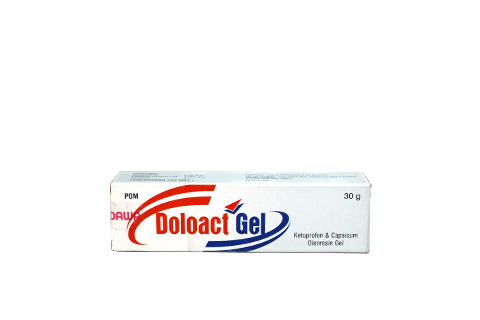
DOLOACT GEL
KETOPROFEN & CAPSICUM OLEORESIN
What it does
Capsicum is a natural ingredient that comes from chili peppers and is often used for its potential health benefits.
Commonly used for: pain relief, muscle soreness, joint pain, nerve pain
Read more in plain English ↓Plain-language summary for general understanding - not medical advice. Always follow your pharmacist/doctor.
Ask about this medicine
Answers come only from this medicine's registration record, BNF monograph and interaction data - not medical advice.
Hard to find? We help patients in Kenya source rare medicines. We don't sell or dispense medicines - licensed pharmacies do.
Source this medicineRegistration & product details
Source: Pharmacy and Poisons Board · fetched 2026-01-28 21:00:03 · updated 2026-07-26 13:42:11
Drug Interactions
14Pharmacodynamic Warnings
Ketoprofen appears in TABLE 2: Drugs that cause nephrotoxicity
Ketoprofen appears in TABLE 4: Drugs with antiplatelet effects
Ketoprofen appears in TABLE 16: Drugs that increase serum potassium
Ketoprofen appears in TABLE 18: Drugs that cause hyponatraemia
Severe (1)
Mifamurtide - decreases efficacy
NSAIDs(high-dose)arepredictedtodecreasetheefficacyof mifamurtide.Avoid.rTheoretical
Moderate (5)
Antiarrhythmics - increases exposure
NSAIDs (celecoxib) are predicted to increase the exposure to antiarrhythmics (flecainide, propafenone). Monitor and adjust dose.
Cladribine - increases exposure
NSAIDs(sulindac)mightincreasetheexposuretocladribine. Avoidoradjustdose.oTheoretical
Flecainide - increases exposure
NSAIDs (celecoxib) are predicted to increase the exposure to antiarrhythmics (flecainide, propafenone). Monitor and adjust dose.
Pemetrexed - increases exposure
NSAIDs are predicted to increase the exposure to pemetrexed. Use with caution or avoid. Also see TABLE 2 p. 1517
Propafenone - increases exposure
NSAIDs (celecoxib) are predicted to increase the exposure to antiarrhythmics (flecainide, propafenone). Monitor and adjust dose.
Unknown (8)
Alendronate - increases risk of gastrointestinal irritation
NSAIDs are predicted to increase the risk of gastrointestinal irritation when given with bisphosphonates (alendronate, ibandronate).
Bisphosphonates - increases risk of gastrointestinal irritation
NSAIDs are predicted to increase the risk of gastrointestinal irritation when given with bisphosphonates (alendronate, ibandronate).
Bisphosphonates - increases risk of renal impairment
NSAIDs are predicted to increase the risk of renal impairment when given with bisphosphonates (clodronate).
Clodronate - increases risk of renal impairment
NSAIDs are predicted to increase the risk of renal impairment when given with clodronate.
Deferasirox - increases risk of gastrointestinal bleeding
NSAIDs are predicted to increase the risk of gastrointestinal bleeding when given with deferasirox.
Deferiprone - increases exposure
NSAIDs(diclofenac)arepredictedtoincreasetheexposureto deferiprone.oTheoretical
Ibandronate - increases risk of gastrointestinal irritation
NSAIDs are predicted to increase the risk of gastrointestinal irritation when given with bisphosphonates (alendronate, ibandronate).
Ironchelators - increases risk of gastrointestinal bleeding
NSAIDs are predicted to increase the risk of gastrointestinal bleeding when given with iron chelators (deferasirox).
Data from BNF 85 (British National Formulary). This is not a substitute for professional medical advice. Matched via: class
About capsicum
Capsicum is a natural ingredient that comes from chili peppers and is often used for its potential health benefits.
What it treats
- pain relief
- muscle soreness
- joint pain
- nerve pain
How it works
Capsicum works by reducing the feeling of pain by blocking pain signals in the body.
Who it's for
Capsicum may be suitable for adults looking for relief from various types of pain.
Cautions
- • May cause irritation on the skin or mucous membranes.
- • Avoid contact with eyes.
AI-assisted summary grounded in BNF data - general information only, not medical advice. Always confirm with your pharmacist or doctor.
About ketoprofen
Ketoprofen is a non-steroidal anti-inflammatory drug (NSAID) used to relieve pain and reduce inflammation.
What it treats
- pain relief (analgesia)
- inflammation reduction
- arthritis (rheumatoid arthritis, osteoarthritis)
- muscle pain
- menstrual pain
- gout
How it works
Ketoprofen works by blocking certain chemicals in the body that cause pain and inflammation.
Who it's for
Ketoprofen is for adults who need relief from pain or inflammation.
Drug class
NSAIDs
Cautions
- • Avoid using with other drugs that can harm the kidneys.
- • Be cautious if taking medications that affect blood clotting.
- • Use with care if on medicines that can raise potassium levels.
- • Monitor if using drugs that can lower sodium levels.
AI-assisted summary grounded in BNF data - general information only, not medical advice. Always confirm with your pharmacist or doctor.
About oleoresin
Oleoresin is a natural extract that can be used for various health purposes.
What it treats
- joint pain (arthritis)
- digestive issues
- inflammation
How it works
Oleoresin contains compounds that may help reduce inflammation and relieve pain.
Who it's for
Adults seeking relief from pain and inflammation.
AI-assisted summary grounded in BNF data - general information only, not medical advice. Always confirm with your pharmacist or doctor.
Clinical monograph: Ketoprofen
BNF-referencedKetoprofen is a nonsteroidal anti-inflammatory drug (NSAID) that exhibits analgesic, anti-inflammatory, and antipyretic properties. It is commonly used to relieve pain and inflammation associated with musculoskeletal disorders such as rheumatoid arthritis and osteoarthritis, as well as to alleviate moderate pain from various causes. Due to its mechanism of action and pharmacological profile, ketoprofen is effective in managing conditions that involve pain and inflammation.
Indications
- Pain and inflammation in musculoskeletal disorders
- Rheumatoid arthritis
- Osteoarthritis
- Dysmenorrhea
- Moderate pain relief
Mechanism of action
Ketoprofen's anti-inflammatory effects are primarily due to the inhibition of cyclooxygenase-2 (COX-2), an enzyme crucial for prostaglandin synthesis in the arachidonic acid pathway. This leads to reduced levels of prostaglandins, which mediate pain, fever, and inflammation. Ketoprofen also inhibits cyclooxygenase-1 (COX-1), contributing to its side effects such as gastrointestinal discomfort and ulceration. Additionally, it exhibits anti-bradykinin activity and stabilizes lysosomal membranes. Its antipyretic effects may involve action on the hypothalamus, enhancing peripheral blood flow, vasodilation, and heat dissipation.
Pharmacodynamics
As a nonsteroidal anti-inflammatory agent (NSAIA), ketoprofen shares pharmacological actions with other typical NSAIDs by inhibiting prostaglandin synthesis. It is effective in treating various conditions, including rheumatoid arthritis, osteoarthritis, and dysmenorrhea, and is used to alleviate moderate pain, thus providing both analgesic and anti-inflammatory effects.
Pharmacokinetics
Ketoprofen is absorbed from the gastrointestinal tract, with peak plasma concentrations typically reached within 1 to 2 hours after oral administration. It is extensively metabolized in the liver, primarily through conjugation, and excreted mainly via the urine. The drug has a half-life of approximately 1.5 to 2 hours, but this may vary based on individual factors such as age and liver function. Caution is advised in patients with hepatic or renal impairment, as these conditions may alter the drug's pharmacokinetics and increase the risk of adverse effects.
Contra-indications
- History of gastrointestinal perforation or ulceration
- Severe heart failure
- History of hypersensitivity to aspirin or other NSAIDs
Adverse effects
- Gastrointestinal discomfort
- Nausea
- Constipation
- Dizziness
- Drowsiness
- Fatigue
- Headache
- Rash
- Paraesthesia
- Skin reactions
- Increased risk of infection
- Angioedema
- Renal impairment
- Hypersensitivity reactions
- Photosensitivity
- Hematologic disorders
- Stomatitis
- Tinnitus
- Vision disorders
- Weight increase
Interactions
- May affect performance of skilled tasks such as driving
- Other NSAIDs may increase the risk of adverse effects
Precautions
- Caution in patients with dehydration or renal impairment
- Use with caution in elderly patients due to increased risk of serious side effects
- Careful monitoring required for prolonged therapy
- Caution advised in patients with a history of gastrointestinal disorders
Pregnancy
Avoid unless the potential benefit outweighs the risk. Avoid during the third trimester due to risk of fetal ductus arteriosus closure.
Breast-feeding
Amount probably too small to be harmful, but use with caution and avoid large amounts.
Storage
Store at room temperature, away from moisture and heat.
Formulations
- Oral suspension
- Oral solution
- Suppositories
AI-synthesized from BNF references - general information only, not a substitute for professional medical advice or the current BNF. Verify doses with a pharmacist.
Clinical monograph: capsicum
Capsicum, commonly known as chili pepper, contains active compounds such as capsaicin that contribute to its pharmacological properties. It is primarily used for its analgesic and anti-inflammatory effects, and it is known to stimulate digestion and enhance metabolism. Capsicum is often utilized in various formulations for topical applications as well as in dietary supplements.
Indications
- Topical pain relief for conditions such as osteoarthritis and neuropathic pain
- Management of postherpetic neuralgia
- Supportive treatment for muscle and joint pain
- Stimulation of digestion and appetite
Dosage
Children: Dosage for pediatric patients should be determined by a healthcare provider, taking into consideration
Adults: Topical formulations generally recommend application to the affected area, with specific dosing instructions provided by the product label. For oral supplements, follow the manufacturer's guidelines or consult a healthcare professional.
Mechanism of action
Capsaicin, the main active component in Capsicum, exerts its effects by binding to the TRPV1 (transient receptor potential vanilloid 1) receptor, which is a cation channel involved in the transmission of pain and heat sensations. This binding leads to the depolarization of sensory neurons, resulting in the release of substance P, a neuropeptide associated with pain signaling. Continuous exposure to capsaicin results in the desensitization of these receptors, leading to decreased pain perception over time.
Pharmacodynamics
The analgesic properties of Capsicum are attributed to its ability to alter the perception of pain. Capsaicin induces a sensation of warmth and pain initially, which is followed by a prolonged analgesic effect due to the depletion of substance P from the nerve endings. Additionally, Capsicum may exhibit anti-inflammatory effects through the modulation of cytokine release and inhibition of inflammatory pathways, contributing to its therapeutic applications in pain management and inflammatory conditions.
Pharmacokinetics
Capsaicin is poorly absorbed when ingested orally, but it can be effectively absorbed through the skin when applied topically. After application, it is metabolized by the liver, and its metabolites are excreted primarily through the kidneys. The onset of action for topical preparations can vary, with effects often observed within hours. The duration of action may last from several hours to days, depending on the formulation and the area of application.
Adverse effects
- Burning sensation at the site of application
- Skin irritation or rash
- Gastrointestinal upset (if ingested)
- Allergic reactions
Precautions
- Avoid contact with eyes and mucous membranes
- Use caution in patients with sensitive skin
- Consult a healthcare professional before use in patients with underlying health conditions
Pregnancy
Capsicum is generally considered unsafe during pregnancy due to potential effects on the fetus. Pregnant women should consult a healthcare provider before use.
Breast-feeding
Capsicum should be used with caution during breastfeeding as it may affect milk production or flavor.
Storage
Store in a cool, dry place away from direct sunlight. Keep out of reach of children.
Formulations
- Topical ointments or creams
- Capsules
- Powdered form for oral use
AI-synthesized from BNF references - general information only, not a substitute for professional medical advice or the current BNF. Verify doses with a pharmacist.
Clinical monograph: oleoresin
BNF-referencedOleoresin is a natural resin extracted from various plants, primarily from the family of conifers. It contains a mixture of essential oils and resins and is used for its therapeutic properties. Oleoresins are often employed in traditional medicine, flavoring agents, and as natural preservatives due to their antimicrobial and antioxidant properties. They are recognized for their role in enhancing the flavor and aroma of food products and are also utilized in perfumery.
Indications
- Antimicrobial treatment
- Antioxidant therapy
- Flavoring agent in food
- Natural preservative
- Traditional medicine applications
Dosage
Children: Refer to specific product guidelines or consult a healthcare professional for appropriate dosing.
Adults: Refer to specific product guidelines or consult a healthcare professional for appropriate dosing.
Mechanism of action
The mechanism of action of oleoresin varies depending on its source and the specific compounds it contains. Generally, oleoresins exhibit antimicrobial activity, which may involve the disruption of microbial cell membranes or interference with metabolic processes. Additionally, some components may have anti-inflammatory and antioxidant effects, contributing to their therapeutic potential.
Pharmacodynamics
Oleoresins exhibit a range of pharmacodynamic effects, including antimicrobial, antioxidant, and anti-inflammatory activities. The specific effects will depend on the source of the oleoresin and its chemical composition. These properties are attributed to the various phytochemicals present, such as terpenes, phenolics, and other bioactive compounds, which can modulate biological pathways and influence physiological responses.
Pharmacokinetics
The pharmacokinetics of oleoresin are not well-defined due to the complexity of its composition. Generally, the absorption and metabolism of oleoresins can vary widely based on the individual compounds they contain. Lipophilic components may be absorbed through the gastrointestinal tract and metabolized in the liver, while other components may undergo different metabolic pathways. The elimination half-life is also variable, reflecting the diverse nature of its constituents.
Pregnancy
Safety in pregnancy has not been established, consult healthcare provider.
Breast-feeding
Consult healthcare provider before use during breastfeeding.
Storage
Store in a cool, dry place away from direct sunlight.
AI-synthesized from BNF references - general information only, not a substitute for professional medical advice or the current BNF. Verify doses with a pharmacist.
Molecular reference: Ketoprofen
PubChem CID 3825Molecular formula: C16H14O3
Mechanism of action
The anti-inflammatory effects of ketoprofen are believed to be due to inhibition cylooxygenase-2 (COX-2), an enzyme involved in prostaglandin synthesis via the arachidonic acid pathway. This results in decreased levels of prostaglandins that mediate pain, fever and inflammation. Ketoprofen is a non-specific cyclooxygenase inhibitor and inhibition of COX-1 is thought to confer some of its side effects, such as GI upset and ulceration. Ketoprofen is thought to have anti-bradykinin activity, as well as lysosomal membrane-stabilizing action. Antipyretic effects may be due to action on the hypothalamus, resulting in an increased peripheral blood flow, vasodilation, and subsequent heat dissipation.
Pharmacodynamics
Ketoprofen is a nonsteroidal anti-inflammatory agent (NSAIA) with analgesic and antipyretic properties. Ketoprofen has pharmacologic actions similar to those of other prototypical NSAIDs, which inhibit prostaglandin synthesis. Ketoprofen is used to treat rheumatoid arthritis, osteoarthritis, dysmenorrhea, and alleviate moderate pain.
Biological pathways
Source: PubChem (NCBI) · pathways from PathBank, Reactome, WikiPathways & PharmGKB.
Molecular reference: oleoresin
PubChem CID 11980947Molecular formula: C181H251NO12
Source: PubChem (NCBI) · pathways from PathBank, Reactome, WikiPathways & PharmGKB.
This drug in other countries
The same active ingredient registered across other registries we cover - including different brands.
- CORAL'S KETOPROFEN GEL
- Chestcof · Elys Chemical Industries
- Chestcof · Elys Chemical Industries
- Cofta Tablets · Beta Healthcare
- Fastum · A.Menarini
- Good morning Cough Tablets · Beta Healthcare
- ADDRUB GEL · Addii Biotech
- AYRTON'S MUSCLE HEAT RUB EXTRA STRONG · Dannex Ayrton Starwin
- CAPSITOP GEL (Each 30g tube contains Diclofenac Diethylamine/ Capsicum Oleoresin/ Methyl Salicyclate/Levomenthol 0.025% w/w 1.160% w/w/ 1.000% w/w/ 3.000% w/w) · Stedman Pharmaceuticals
- DANRUB OINTMENT · Dannex
- FASTUME GEL · A. Menarini
- NEOPROFEN INJECTION ( Ketoprofen 100mg/ml) · Zenex Animal Health