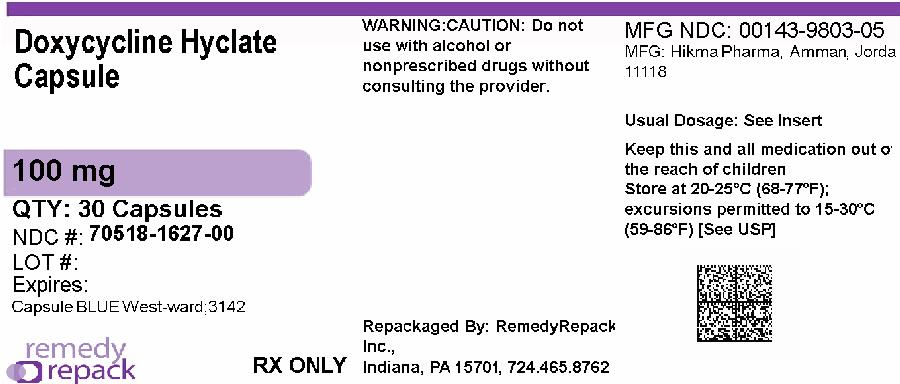
(doxycycline · DailyMed)
DOXYLH 50%
Doxycycline Hyclate 500 mg/g,Glucose 1 g
What it does
Doxycycline is an antibiotic used to treat various infections.
Commonly used for: bacterial infections, acne, respiratory infections, malaria prevention
Read more in plain English ↓Plain-language summary for general understanding - not medical advice. Always follow your pharmacist/doctor.
Ask about this medicine
Answers come only from this medicine's registration record, BNF monograph and interaction data - not medical advice.
Medicine sourcing is available in Kenya only. We don't sell or dispense medicines - licensed pharmacies do.
Sourcing - Kenya onlyRegistration & product details
Source: Tanzania Medicines and Medical Devices Authority · fetched 2026-03-11 23:41:17 · updated 2026-10-19 03:00:44
Drug Interactions
11Pharmacodynamic Warnings
Doxycycline appears in TABLE 1: Drugs that cause hepatotoxicity
Severe (1)
Tetracyclines - decreases absorption
Strontium is predicted to decrease the absorption of tetracyclines. Avoid. Theoretical Sucralfate
Moderate (5)
Doxycycline - decreases concentration
Fosphenytoin is predicted to decrease the concentration of tetracyclines (doxycycline). Adjust dose.
Doxycycline - decreases exposure
Rifampicin modestly decreases the exposure to tetracyclines (doxycycline). Adjust dose.
Lithium - increases risk of lithium toxicity
Tetracyclines are predicted to increase the risk of lithium toxicity when given with lithium. Avoid or adjust dose.
Tetracyclines - decreases concentration
Fosphenytoin is predicted to decrease the concentration of tetracyclines (doxycycline). Adjust dose.
Tetracyclines - decreases exposure
Rifampicin modestly decreases the exposure to tetracyclines (doxycycline). Adjust dose.
Unknown (5)
Ciclosporin - increases concentration
Doxycyclineispredictedtoincreasetheconcentrationof ciclosporin.rTheoretical
Tetracyclines - decreases exposure
Mitotane is predicted to decrease the exposure to tetracyclines (eravacycline). Adjust eravacycline dose, p. 625.
Tetracyclines - decreases exposure
Rifampicin is predicted to decrease the exposure to tetracyclines (eravacycline). Adjust eravacycline dose, p. 625.
Tetracyclines - decreases exposure
St John's wort is predicted to decrease the exposure to tetracyclines (eravacycline). Adjust eravacycline dose, p. 625.
Tetracyclines - decreases absorption
Oralzincispredictedtodecreasetheabsorptionof tetracyclines.Separateadministrationby2to3hours. oTheoretical https://www.facebook.c (Books-Courses-Medic
Data from BNF 85 (British National Formulary). This is not a substitute for professional medical advice. Matched via: class
About doxycycline
Doxycycline is an antibiotic used to treat various infections.
What it treats
- bacterial infections
- acne
- respiratory infections
- malaria prevention
How it works
It works by stopping the growth of bacteria.
Who it's for
It is for adults and children who need treatment for bacterial infections.
Drug class
Tetracyclines
Cautions
- • Be cautious if taking other medications that can harm the liver.
AI-assisted summary grounded in BNF data - general information only, not medical advice. Always confirm with your pharmacist or doctor.
About glucose
Glucose is a simple sugar that provides energy to the body.
What it treats
- low blood sugar (hypoglycemia)
- energy supplement
How it works
Glucose quickly raises blood sugar levels, providing immediate energy.
Who it's for
People who need quick energy, especially those with low blood sugar.
AI-assisted summary grounded in BNF data - general information only, not medical advice. Always confirm with your pharmacist or doctor.
About hyclate
Hyclate is a medication that may be used for various conditions, providing relief and support in treatment.
What it treats
- stomach cramps
- irritable bowel syndrome (IBS)
How it works
Hyclate helps to relax the muscles in the stomach and intestines, which reduces pain and discomfort.
Who it's for
This medication is generally for adults and children experiencing stomach or bowel issues.
AI-assisted summary grounded in BNF data - general information only, not medical advice. Always confirm with your pharmacist or doctor.
Clinical monograph: Doxycycline
BNF-referencedDoxycycline is a broad-spectrum tetracycline antibiotic effective against a variety of bacterial infections. It acts by inhibiting protein synthesis in susceptible bacteria, thereby halting their growth and replication. It is commonly used for treating infections such as chlamydia, rickettsia, and mycoplasma, and is also indicated for acne and certain periodontal diseases.
Indications
- Bacterial infections
- Acne
- Destructive (refractory) periodontal disease
- Exacerbations of chronic bronchitis
- Leptospirosis
- Chlamydia infections
- Rickettsial infections
- Mycoplasma infections
- Acute necrotising ulcerative gingivitis
Dosage
Children: For children aged 12–17 years, initially 200 mg daily in 1–2 divided doses for the
Adults: Initially 200 mg daily in 1–2 divided doses for the first day, then maintenance 100 mg daily.
Mechanism of action
Doxycycline exerts its antibacterial effects by binding to the 30S ribosomal subunit of bacterial ribosomes, inhibiting the binding of aminoacyl-tRNA to the mRNA-ribosome complex. This inhibition of protein synthesis is crucial for bacterial growth and is the primary mechanism by which doxycycline exhibits its antimicrobial activity. It also impacts cellular metabolism and has been associated with non-genotoxic carcinogenic effects.
Pharmacodynamics
Doxycycline has a broad spectrum of activity against Gram-positive, Gram-negative bacteria, and some protozoa. Its bacteriostatic action is particularly effective against certain resistant strains, including MRSA. The drug's efficacy may vary based on the sensitivity of the bacteria, and resistance can develop through various mechanisms, such as efflux pumps and ribosomal protection.
Pharmacokinetics
Doxycycline is well absorbed from the gastrointestinal tract, with peak plasma concentrations typically reached within 2 hours after oral administration. It has a high volume of distribution and is approximately 90% protein-bound. The drug is metabolized in the liver and excreted primarily in feces, with a smaller fraction eliminated in urine. The half-life of doxycycline is approximately 18 to 22 hours, allowing for once or twice daily dosing in most cases.
Contra-indications
- Pregnancy
- Breastfeeding
- Hypersensitivity to doxycycline or other tetracyclines
- Myasthenia gravis
- Severe hepatic impairment
Adverse effects
- Photosensitivity
- Dizziness
- Headache
- Nausea
- Vomiting
- Diarrhoea
- Angioedema
- Skin reactions
- Pseudomembranous enterocolitis
- Tooth discolouration
- Intracranial hypertension
- Thrombocytopenia
- Stevens-Johnson syndrome
- Pancreatitis
Interactions
- Fosphenytoin (decreases concentration)
- Rifampicin (decreases exposure)
- Ciclosporin (unknown effect on concentration)
- Antacids containing aluminium or magnesium (reduce absorption)
- Iron supplements (reduce absorption)
- Warfarin (may enhance anticoagulant effect)
Precautions
- Use with caution in renal impairment
- May cause increased intracranial pressure
- Risk of superinfection (e.g., fungal infections)
- Avoid exposure to sunlight or sun lamps
- Monitor liver function in patients receiving prolonged therapy
Pregnancy
Should not be given to pregnant women; effects on skeletal development have been documented in the first trimester in animal studies. Administration during the second or third trimester may cause discoloration of the child's teeth, and maternal hepatotoxicity has been reported with large parenteral doses.
Breast-feeding
Should not be given to women who are breastfeeding; absorption may lead to discoloration of teeth in the infant.
Storage
Store in a cool, dry place away from light. Keep out of reach of children.
Formulations
- Tablets
- Capsules
- Oral suspension
- Oral solution
AI-synthesized from BNF references - general information only, not a substitute for professional medical advice or the current BNF. Verify doses with a pharmacist.
Clinical monograph: Glucose
BNF-referencedGlucose is a simple sugar and a vital carbohydrate that serves as the primary energy source for human cells. It is essential for various metabolic processes, providing energy through glycolysis and subsequent pathways. Glucose is utilized by nearly all tissues and plays a crucial role in maintaining energy homeostasis in the body. It can be administered orally or intravenously and is commonly used in clinical settings for fluid and electrolyte management.
Indications
- Fluid and electrolyte imbalances
- Hypoglycemia
- Nutritional supplementation
- Diabetic emergencies
Dosage
Children: Refer to the BNF for Children for appropriate paediatric dosing guidelines.
Adults: The dosage varies based on the clinical condition and specific formulation used. For intravenous administration, consult product literature for precise dosing.
Mechanism of action
Glucose supplies energy to tissues by undergoing glycolysis, which begins with its phosphorylation by hexokinase to form glucose 6-phosphate. This activates glucose for breakdown, ultimately generating ATP and NADH. The aerobic metabolism of glucose can yield up to 36 ATP molecules. Glucose also serves as a precursor for other biomolecules and regulates various physiological processes including gene transcription and hormone secretion.
Pharmacodynamics
Glucose is an obligatory energy source for cellular activities and plays a significant role in metabolic signaling. It is oxidized to yield energy through glycolysis, the citric acid cycle, and oxidative phosphorylation. Glucose can be converted into fat for energy storage and is stored as glycogen in the liver and muscles. Its administration increases blood glucose levels and stimulates insulin secretion, particularly through oral routes that activate gut incretin hormones.
Pharmacokinetics
Glucose is rapidly absorbed from the gastrointestinal tract or directly into the bloodstream when administered intravenously. It is distributed widely throughout the body and metabolized primarily in tissues requiring energy. The body maintains glucose homeostasis through regulatory mechanisms involving insulin and glucagon. Excess glucose can be stored as glycogen or converted to triglycerides for long-term energy storage.
Adverse effects
- Hyperglycemia
- Increased osmolarity
- Fluid overload
- Electrolyte imbalances
Interactions
- Insulin - may require dose adjustments
Precautions
- Use with caution in patients with diabetes mellitus
- Monitor blood glucose levels in patients receiving parenteral glucose
- Adjust dosage in renal impairment
Pregnancy
Glucose is generally considered safe in pregnancy; however, monitoring is advised, especially in diabetic patients.
Breast-feeding
Glucose is considered safe during breastfeeding, as it is a natural sugar found in breast milk.
Storage
Store at room temperature, away from light. Avoid freezing.
Formulations
- Glucose 5% solution for infusion
- Glucose 10% solution for infusion
- Glucose 0.9% solution for injection
- Glucose sodium chloride combination solutions
AI-synthesized from BNF references - general information only, not a substitute for professional medical advice or the current BNF. Verify doses with a pharmacist.
Clinical monograph: hyclate
Hyclate, often referring to hyoscine hydrobromide, is a medication primarily used for its anticholinergic properties. It is effective in treating motion sickness, nausea, and vomiting, as well as in the management of muscle spasms in the gastrointestinal tract. Hyoscine works by blocking the action of acetylcholine at muscarinic receptors in the body, leading to decreased secretions and reduced gastrointestinal motility.
Indications
- Motion sickness
- Nausea and vomiting
- Gastrointestinal spasms
- Preoperative sedation
Dosage
Children: Refer to the BNF for Children for specific dosing recommendations based on the child's age, weight, and condition being treated.
Adults: Refer to the appropriate clinical guidelines or BNF for specific dosing recommendations based on the condition being treated and patient factors.
Mechanism of action
Hyclate exerts its effects by antagonizing muscarinic acetylcholine receptors, which are found throughout the central and peripheral nervous systems. This inhibition leads to a decrease in acetylcholine-induced effects, particularly in the gastrointestinal system and vestibular apparatus, thus alleviating symptoms of nausea and motion sickness.
Pharmacodynamics
The pharmacodynamic effects of hyoscine include reduced gastrointestinal motility, decreased secretions, and a sedative effect on the central nervous system. Its antimuscarinic activity can result in side effects such as dry mouth, blurred vision, constipation, and drowsiness, depending on the dose and individual patient response.
Pharmacokinetics
Hyclate is well-absorbed from the gastrointestinal tract, and its peak plasma concentrations are typically reached within 2 hours after oral administration. The drug is widely distributed throughout the body, including the central nervous system where it crosses the blood-brain barrier. Hyoscine is metabolized in the liver and excreted primarily through the urine. The half-life of hyoscine is approximately 3 to 5 hours, but this can vary based on the formulation and route of administration.
Contra-indications
- Hypersensitivity to hyoscyamine or any of the excipients
- Glaucoma
- Myasthenia gravis
- Severe ulcerative colitis
- Tachycardia
Adverse effects
- Dry mouth
- Blurred vision
- Constipation
- Urinary retention
- Dizziness
- Confusion
- Nausea
- Vomiting
Interactions
- Anticholinergic agents may enhance effects
- Opioids may increase risk of constipation
- Antidepressants may increase anticholinergic effects
- Antihistamines may have additive sedative effects
Precautions
- Use with caution in patients with prostate enlargement
- May exacerbate conditions like heart disease or hypertension
- Caution in elderly patients due to increased sensitivity
Pregnancy
Consult the prescribing information; safety during pregnancy is not established.
Breast-feeding
Consult a healthcare provider; may inhibit lactation.
Storage
Store at room temperature, away from moisture and heat.
Formulations
- Oral tablets
- Injection solution
- Extended-release capsules
AI-synthesized from BNF references - general information only, not a substitute for professional medical advice or the current BNF. Verify doses with a pharmacist.
Molecular reference: Doxycycline
PubChem CID 54671203Molecular formula: C22H24N2O8
Biological pathways
Source: PubChem (NCBI) · pathways from PathBank, Reactome, WikiPathways & PharmGKB.
Molecular reference: Glucose
PubChem CID 5793Molecular formula: C6H12O6
Mechanism of action
Glucose supplies most of the energy to all tissues by generating energy molecules ATP and NADH during a series of metabolism reactions called glycolysis. Glycolysis can be divided into two main phases where the preparatory phase is initiated by the phosphorylation of glucose by hexokinase to form glucose 6-phosphate. The addition of the high-energy phosphate group activates glucose for the subsequent breakdown in later steps of glycolysis and is the rate-limiting step. Products end up as substrates for following reactions, to ultimately convert C6 glucose molecule into two C3 sugar molecules. These products enter the energy-releasing phase where the total of 4ATP and 2NADH molecules are generated per one glucose molecule. The total aerobic metabolism of glucose can produce up to 36 ATP molecules. These energy-producing reactions of glucose are limited to D-glucose as L-glucose cannot be phosphorylated by hexokinase. Glucose can act as precursors to generate other biomolecules such as vitamin C. It plays a role as a signaling molecule to control glucose and energy homeostasis. Glucose can regulate gene transcription, enzyme activity, hormone secretion, and the activity of glucoregulatory neurons. The types, number, and kinetics of glucose transporters expressed depends on the tissues and fine-tunes glucose uptake, metabolism, and signal generation to preserve cellular and whole body metabolic integrity. Vascular calcification is a hallmark of type 2 diabetes. Glucose stimulates calcification in culture of vascular smooth muscle cells (VSMCs) but the underlying mechanisms remain obscure. We observed that high glucose levels stimulated mouse and human VSMC trans-differentiation into chondrocytes, with increased levels of Sox9, type II collagen, glycosaminoglycan and Runx2 expression, and increased alkaline phosphatase activity and mineralization. These effects were associated with increased expression of IL-1beta, which stimulated alkaline phosphatase and calcification, suggesting that glucose induces chondrocyte differentiation of VSMCs, possibly through IL-1beta activation.
Pharmacodynamics
Blood glucose is an obligatory energy source for humans involved in various cellular activities, and it also acts as a signaling molecule for diverse glucose-sensing molecules and proteins. Glucose undergoes oxidation into carbon dioxide, water, and yields energy molecules in the process of glycolysis and subsequent citric cycle and oxidative phosphorylation. Glucose is readily converted into fat in the body which can be used as a source of energy as required. Under a similar conversion into storage of energy, glucose is stored in the liver and muscles as glycogen. Glucose stores are mobilized in a regulated manner, depending on the tissues' metabolic demands. Oral glucose tablets or injections serve to increase the supply of glucose and oral glucose administration is more effective in stimulating insulin secretion because it stimulates the incretin hormones from the gut, which promotes insulin secretion.
Biological pathways
Source: PubChem (NCBI) · pathways from PathBank, Reactome, WikiPathways & PharmGKB.
This drug in other countries
The same active ingredient registered across other registries we cover - including different brands.
- AXADEX D10 · Axa Parenterals
- AXADEX D5 · Axa Parenterals
- AXADEX D50 · Axa Parenterals
- B-CANE HEAVY INJECTION (Each ml contains Bupivacaine Hydrochloride BP/ Glucose anhydrous BP Eq. to Glucose (Monohydrate) 5mg/ 80mg) · Aculife Healthcare
- BLUEAID-DNS INFUSION · Shijiazhuang Zdhf
- CENTRE TYLODOXINE FORTE WSP (Each gram contains Tylosin Tartrate 75mg/ Doxycycline Hyclate 50mg/ Bromhexine hydrochloride 8mg/ Vitamin A 8000iu/ Vitamin B1 4mg/ Vitamin B2 4mg/ Vitamin B6 2mg/ Vitamin B12 10mcg/ Vitamin C 30mg/ Vitamin D3 2000iu/ Vitamin E 4mg/Nicotinic Acid 20mg) · Aether Centre Biology