International reference: 6 US FDA recalls for this ingredient
Superpotent Drug: Out Of Specification (OOS) result for Assay. (disintegrating)
Out-of-specification test results obtained in Organic Impurities test during analysis of controlled samples. (disintegrating)
Superpotent Drug: Out Of Specification (OOS) result for Assay. (disintegrating)
FAILED DISSOLUTION SPECIFICATIONS (disintegrating)
Labeling: Label Error on Declared Strength; Some cartons were incorrectly labeled. The blister strips inside the product carton reflect the correct strength. (disintegrating)
Defective container: Preferred Pharmaceuticals received a letter from the manufacturer Glenmark, that the blister packs are not fully sealed and tablets falling out. Preferred Pharmaceuticals purchased the finished product and repackaged the product for sale. (disintegrating)
US-market enforcement records (OpenFDA), shown for reference - not specific to this product in Kenya.
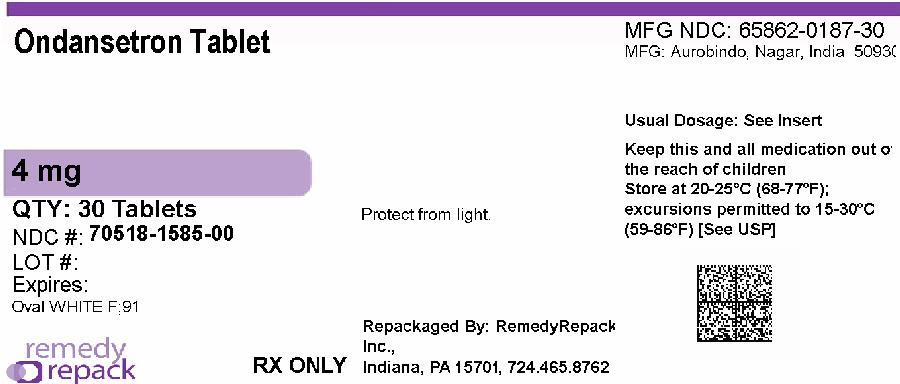
(ondansetron · DailyMed)
EMITRON TABLETS
ONDANSETRON ORALLY DISINTEGRATING TABLETS
What it does
Disintegrating medications are designed to dissolve quickly in the mouth for easy swallowing.
Commonly used for: difficulty swallowing (dysphagia), nausea, pain relief
Read more in plain English ↓Plain-language summary for general understanding - not medical advice. Always follow your pharmacist/doctor.
Ask about this medicine
Answers come only from this medicine's registration record, BNF monograph and interaction data - not medical advice.
Hard to find? We help patients in Kenya source rare medicines. We don't sell or dispense medicines - licensed pharmacies do.
Source this medicineRegistration & product details
Source: Pharmacy and Poisons Board · fetched 2026-01-28 20:11:23 · updated 2026-08-03 04:11:41
Drug Interactions
1Pharmacodynamic Warnings
Ondansetron appears in TABLE 9: Drugs that prolong the QT interval
Ondansetron appears in TABLE 13: Drugs that cause serotonin syndrome
Unknown (1)
Ondansetron - decreases exposure
Mitotane is predicted to decrease the exposure to ondansetron.
Data from BNF 85 (British National Formulary). This is not a substitute for professional medical advice. Matched via: exact
About disintegrating
Disintegrating medications are designed to dissolve quickly in the mouth for easy swallowing.
What it treats
- difficulty swallowing (dysphagia)
- nausea
- pain relief
How it works
These medications break down rapidly in the mouth, allowing for faster absorption into the body.
Who it's for
Suitable for individuals who have trouble swallowing traditional tablets or capsules.
AI-assisted summary grounded in BNF data - general information only, not medical advice. Always confirm with your pharmacist or doctor.
About ondansetron
Ondansetron is a medication used to prevent nausea and vomiting.
What it treats
- nausea and vomiting caused by chemotherapy
- nausea and vomiting after surgery
- nausea and vomiting during pregnancy
How it works
Ondansetron works by blocking signals in the brain that trigger nausea and vomiting.
Who it's for
It is suitable for adults and children who need relief from nausea and vomiting.
Cautions
- • Be careful if you are taking other medications that may affect heart rhythm.
- • Avoid using it with medications that may cause serotonin syndrome.
AI-assisted summary grounded in BNF data - general information only, not medical advice. Always confirm with your pharmacist or doctor.
About orally
This medication is taken by mouth and is used to treat various health conditions.
What it treats
- specific conditions treated by the medication are not provided
How it works
The exact way this medication works is not specified, but it generally helps to improve health or relieve symptoms.
Who it's for
This medicine is for anyone with the conditions it treats, as determined by a healthcare professional.
AI-assisted summary grounded in BNF data - general information only, not medical advice. Always confirm with your pharmacist or doctor.
Clinical monograph: Ondansetron
BNF-referencedOndansetron is a selective serotonin 5-HT3 receptor antagonist primarily used to prevent nausea and vomiting caused by chemotherapy, radiotherapy, and surgery. It works by blocking the action of serotonin, a neurotransmitter that can trigger nausea and vomiting. Ondansetron is particularly effective in managing symptoms associated with highly emetogenic chemotherapy regimens.
Indications
- Prevention of nausea and vomiting associated with cytotoxic chemotherapy
- Prevention of postoperative nausea and vomiting
- Management of nausea and vomiting induced by radiotherapy
Dosage
Adults: For adults, ondansetron is typically administered as 8 mg before chemotherapy or surgery, followed by an additional 8 mg dose 12 hours later if necessary. The maximum total dose should not
Mechanism of action
Ondansetron selectively antagonizes the serotonin receptor subtype 5-HT3. Cytotoxic chemotherapy and radiotherapy cause serotonin release from enterochromaffin cells in the small intestine, leading to the stimulation of 5-HT3 receptors on vagal afferents, which can initiate the vomiting reflex. By blocking these receptors, ondansetron interrupts this pathway, thus preventing nausea and vomiting. Additionally, it may influence the central nervous system by affecting the chemoreceptor trigger zone in the area postrema.
Pharmacodynamics
Ondansetron is a highly specific and selective 5-HT3 receptor antagonist with minimal activity at other serotonin receptors and low affinity for dopamine receptors. Its pharmacodynamic properties are characterized by its ability to inhibit the 5-HT3-mediated vomiting reflex, which is triggered by the release of serotonin due to the gastrointestinal effects of emetogenic drugs. The drug has a significant role in controlling nausea and vomiting without major sedative effects.
Pharmacokinetics
Ondansetron is well-absorbed after intravenous or oral administration, with peak plasma concentrations reached within 1-2 hours. It has a bioavailability of approximately 60% when taken orally. The drug is extensively metabolized in the liver, primarily by CYP3A4, CYP2D6, and CYP1A2 enzymes. Its elimination half-life ranges from 3 to 6 hours, and it is primarily excreted in urine as metabolites, with less than 5% of the dose excreted unchanged. Patients with hepatic impairment may require dose adjustments due to altered metabolism.
Adverse effects
- Extrapyramidal symptoms
- QT interval prolongation
- Serotonin syndrome
- Dystonia
- Appetite decreased
- Dry mouth
- Flushing
- Generalised oedema
- Vertigo
Interactions
- Mitotane - Unknown (decreases exposure)
Precautions
- Caution in hepatic impairment
- Avoid in pregnancy
- Avoid during breastfeeding
Pregnancy
Manufacturer advises to avoid use during pregnancy.
Breast-feeding
Avoid – no information available.
Storage
Store in a cool, dry place, away from direct sunlight.
Formulations
- Powder for solution for infusion
- Solution for injection
- Tablets
- Transdermal patch
AI-synthesized from BNF references - general information only, not a substitute for professional medical advice or the current BNF. Verify doses with a pharmacist.
Clinical monograph: disintegrating
Disintegrating tablets are solid dosage forms designed to dissolve rapidly in the mouth without the need for water. They are particularly useful for patients who have difficulty swallowing conventional tablets, such as children, the elderly, or those with certain medical conditions. The formulation usually includes disintegrants and flavoring agents to enhance palatability and provide a pleasant taste.
Indications
- Difficulty swallowing
- Dysphagia
- Pediatric use
- Elderly patients
- Patients with nausea
Dosage
Children: Refer to the BNF for Children for specific dosing guidance tailored to pediatric patients.
Adults: Refer to the prescribing information for specific dosages, as they can vary widely depending on the active ingredient and indication.
Mechanism of action
Disintegrating tablets utilize disintegrants that swell and promote rapid breakdown of the tablet upon contact with saliva. This action increases the surface area of the drug, facilitating quicker dissolution and absorption in the gastrointestinal tract. The rapid disintegration enhances the onset of action of the active pharmaceutical ingredients.
Pharmacodynamics
The pharmacodynamics of disintegrating tablets is primarily determined by the active ingredients they contain. Upon disintegration, the active drug is released into the saliva, which aids in absorption through the oral mucosa or, after swallowing, in the gastrointestinal tract. This delivery method can lead to faster onset of action compared to traditional tablets, particularly for drugs that are absorbed quickly.
Pharmacokinetics
The pharmacokinetics of disintegrating tablets vary based on the specific drug formulation and the active ingredients used. Generally, after disintegration and dissolution, the drug is absorbed in the gastrointestinal tract, with peak plasma concentrations occurring at different times depending on the drug's properties. Factors such as solubility, permeability, and presence of food can influence the absorption rate and bioavailability.
Pregnancy
Safety in pregnancy has not been established. Use during pregnancy only if the potential benefit justifies the potential risk to the fetus.
Breast-feeding
Use with caution. Monitor for adverse effects in the infant.
Storage
Store at room temperature, away from moisture and heat. Keep in a tightly closed container.
AI-synthesized from BNF references - general information only, not a substitute for professional medical advice or the current BNF. Verify doses with a pharmacist.
Clinical monograph: orally
Orally refers to a route of administration where a drug is taken by mouth and absorbed through the digestive system. This method is commonly used for various medications due to its ease of use and convenience. Medications administered orally can include tablets, capsules, syrups, and other formulations designed for ingestion.
Dosage
Children: Refer to specific drug monographs for paediatric dosing information, as it varies widely based on the medication and condition treated.
Adults: Refer to specific drug monographs for adult dosing information, as it varies widely based on the medication and condition treated.
Mechanism of action
The mechanism of action for orally administered drugs varies widely based on the specific medication. Generally, once ingested, drugs are absorbed through the gastrointestinal tract into the bloodstream, where they interact with target receptors or enzymes to exert their therapeutic effects. The pharmacological action depends on the specific drug's chemical structure and designed therapeutic pathway.
Pharmacodynamics
Pharmacodynamics describes how a drug affects the body, including the relationship between drug concentration and effect. For orally administered drugs, factors such as absorption rate, distribution, metabolism, and excretion influence therapeutic outcomes. Drugs may act as agonists or antagonists at receptor sites, modulating physiological responses to achieve desired effects.
Pharmacokinetics
Pharmacokinetics involves the study of how the body absorbs, distributes, metabolizes, and excretes drugs taken orally. The absorption phase can be affected by factors such as gastric pH, presence of food, and gastrointestinal motility. Once absorbed, drugs are distributed via the bloodstream to various tissues. Metabolism primarily occurs in the liver, where drugs may be converted into active or inactive forms. Excretion mainly occurs through the kidneys, eliminating drugs and their metabolites from the body.
Adverse effects
- Nausea
- Vomiting
- Diarrhea
- Abdominal pain
- Dizziness
- Headache
- Dry mouth
- Fatigue
Precautions
- Use with caution in patients with gastrointestinal disorders
- Monitor for potential allergic reactions
- Consider renal and hepatic function when prescribing
Pregnancy
Safety during pregnancy has not been established. Use only if the potential benefit justifies the potential risk to the fetus.
Breast-feeding
Caution is advised. The effects on nursing infants are unknown.
Storage
Store in a cool, dry place away from direct sunlight. Keep out of reach of children.
AI-synthesized from BNF references - general information only, not a substitute for professional medical advice or the current BNF. Verify doses with a pharmacist.
Molecular reference: Ondansetron
PubChem CID 4595Molecular formula: C18H19N3O
Mechanism of action
Ondansetron is a selective antagonist of the serotonin receptor subtype, 5-HT3. Cytotoxic chemotherapy and radiotherapy are associated with the release of serotonin (5-HT) from enterochromaffin cells of the small intestine, presumably initiating a vomiting reflex through stimulation of 5-HT3 receptors located on vagal afferents. Ondansetron may block the initiation of this reflex. Activation of vagal afferents may also cause a central release of serotonin from the chemoreceptor trigger zone of the area postrema, located on the floor of the fourth ventricle. Thus, the antiemetic effect of ondansetron is probably due to the selective antagonism of 5-HT3 receptors on neurons located in either the peripheral or central nervous systems, or both. Although the mechanisms of action of ondansetron in treating postoperative nausea and vomiting and cytotoxic induced nausea and vomiting may share similar pathways, the role of ondansetron in opiate-induced emesis has not yet been formally established.
Pharmacodynamics
Ondansetron is a highly specific and selective serotonin 5-HT<sub>3</sub> receptor antagonist, not shown to have activity at other known serotonin receptors and with low affinity for dopamine receptors,. The serotonin 5-HT<sub>3</sub> receptors are located on the nerve terminals of the vagus in the periphery, and centrally in the chemoreceptor trigger zone of the area postrema,. The temporal relationship between the emetogenic action of emetogenic drugs and the release of serotonin, as well as the efficacy of antiemetic agents, suggest that chemotherapeutic agents release serotonin from the enterochromaffin cells of the small intestine by causing degenerative changes in the GI tract,. The serotonin then stimulates the vagal and splanchnic nerve receptors that project to the medullary vomiting center, as well as the 5-HT<sub>3</sub> receptors in the area postrema, thus initiating the vomiting reflex, causing nausea and vomiting,. Moreover, the effect of ondansetron on the QTc interval was evaluated in a double-blind, randomized, placebo and positive (moxifloxacin) controlled, crossover study in 58 healthy adult men and women. Ondansetron was tested at single doses of 8 mg and 32 mg infused intravenously over 15 minutes. At the highest tested dose of 32 mg, prolongation of the Fridericia-corrected QTc interval (QT/RR0.33=QTcF) was observed from 15 min to 4 h after the start of the 15 min infusion, with a maximum mean (upper limit of 90% CI) difference in QTcF from placebo after baseline-correction of 19.6 (21.5) msec at 20 min. At the lower tested dose of 8 mg, QTc prolongation was observed from 15 min to 1 h after the start of the 15-minute infusion, with a maximum mean (upper limit of 90% CI) difference in QTcF from placebo after baseline-correction of 5.8 (7.8) msec at 15 min. The magnitude of QTc prolongation with ondansetron is expected to be greater if the infusion rate is faster than 15 minutes. The 32 mg intravenous dose of ondansetron must not be administered. No treatment-related effects on the QRS duration or the PR interval were observed at either the 8 or 32 mg dose. An ECG assessment study has not been performed for orally administered ondansetron. On the basis of pharmacokinetic-pharmacodynamic modelling, an 8 mg oral dose of ondansetron is predicted to cause a mean QTcF increase of 0.7 ms (90% CI -2.1, 3.3) at steady-state, assuming a mean maximal plasma concentration of 24.7 ng/mL (95% CI 21.1, 29.0). The magnitude of QTc prolongation at the recommended 5 mg/m2 dose in pediatrics has not been studied, but pharmacokinetic-pharmacodynamic modeling predicts a mean increase of 6.6 ms (90% CI 2.8, 10.7) at maximal plasma concentrations. In healthy subjects, single intravenous doses of 0.15 mg/kg of ondansetron had no effect on esophageal motility, gastric motility, lower esophageal sphincter pressure, or small intestinal transit time. Multiday administration of ondansetron has been shown to slow colonic transit in healthy subjects. Ondansetron has no effect on plasma prolactin concentrations.
Source: PubChem (NCBI) · pathways from PathBank, Reactome, WikiPathways & PharmGKB.
This drug in other countries
The same active ingredient registered across other registries we cover - including different brands.
- EMITINO 4MG TABLETS (Each uncoated tablet contains Ondansetron 4mg) · Cachet Pharmaceuticals
- EMITINO ORAL SUSPENSION (Each 5ml contains Ondansetron Hydrochloride 2mg) · Cachet Pharmaceuticals
- EMITINO-4 INJ INJECTION · East African Overseas
- NAUSTRON 4 SOLUTION FOR INJECTION (EACH 4ML CONTAINS ONDANSETRON 8MG/4ML · Lincoln Pharmaceuticals
- NAUSTRON 4 SOLUTION FOR INJECTION (EACH 4ML CONTAINS ONDANSETRON 8MG/4ML · Lincoln Pharmaceuticals
- NAUSTRON 4 SOLUTION FOR INJECTION (Each 2 ml contains Ondansetron 4mg/2ml) · Lincoln Pharmaceutocals Ltd
- AURODANZ 4
- AURODANZ 8
- EMEFILM-4 · Shilpa Therapeutics
- Emistop
- Emitino · Cachet Pharmaceuticals
- ONDAN 4 · National Pharmaceutical Industries
- ALEPET 4
- ALEPET 8
- ONDANSETRON 4 ODF PHARMA-Q
- ONDANSETRON 4 mg/2 ml VIATRIS
- ONDANSETRON 8 ODF PHARMA-Q
- ONDANSETRON 8 mg/4 ml VIATRIS
- EMITINO TABLETS (Ondansetron Orally Disintegrating Tablets USP 4 mg) · Cachet Pharmaceuticals
- Emitino 8 Tablet · Cachet Pharmaceuticals
- ONDA-SWISS · Swiss Parenterals Limited
- ONVELL · Vellinton Healthcare
- Onsett 4 tablets · Cadila Pharmaceuticals
- Vomikind Injection · Mankind Pharma
- EMISTOP 2MG/ML INJECTION
- EMITINO 2MG/5ML SOLUTION
- EMITINO 2MG/ML INJECTION
- EMITINO 4MG TABLET
- EMITINO 8MG ORALLY DISINTEGRATING TABLET
- NAUSETRON 4MG/2ML INJECTION