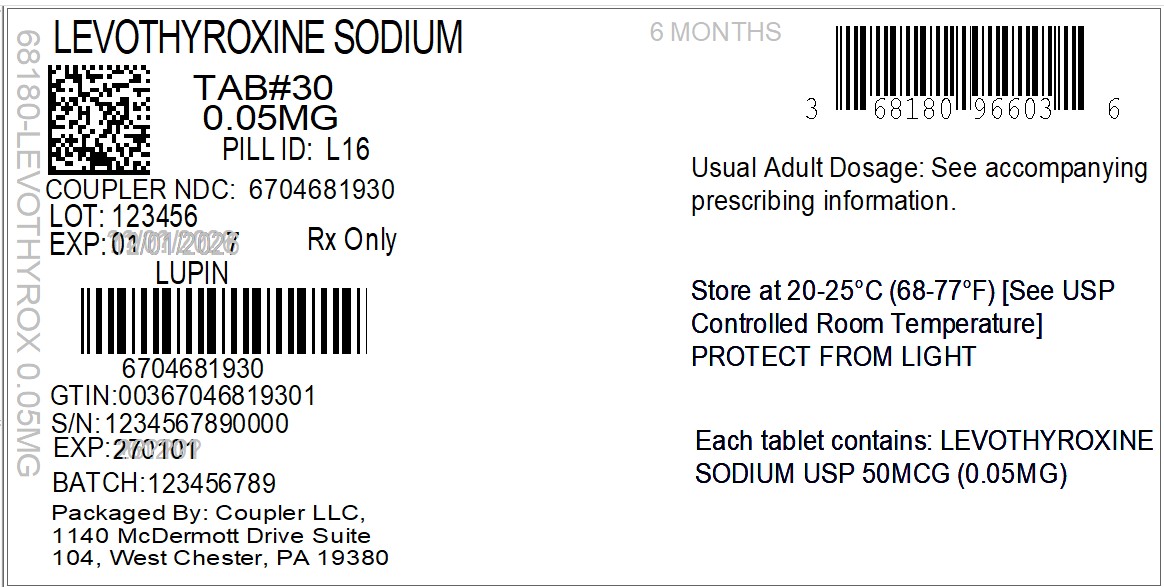
(levothyroxine · DailyMed)
EUTHYROX 50
LEVOTHYROXINE SODIUM
What it does
Levothyroxine is a medication used to treat thyroid hormone deficiency, helping to restore normal hormone levels in the body.
Commonly used for: hypothyroidism, underactive thyroid
Read more in plain English ↓Plain-language summary for general understanding - not medical advice. Always follow your pharmacist/doctor.
Ask about this medicine
Answers come only from this medicine's registration record, BNF monograph and interaction data - not medical advice.
Medicine sourcing is available in Kenya only. We don't sell or dispense medicines - licensed pharmacies do.
Sourcing - Kenya onlyRegistration & product details
Source: Rwanda Food and Drugs Authority · fetched 2026-03-11 22:07:02 · updated 2026-09-17 02:30:42
Drug Interactions
7Severe (1)
Levothyroxine - increases absorption
Voxilaprevirwithsofosbuvirandvelpatasvirincreasesthe concentrationofdabigatran.Avoid.rStudy Thyroidhormo .nes .. levothyroxine liothyronine d FOODANDLIFESTYLE Food,includingdietaryfibre,milk,soya prod
Unknown (6)
Levothyroxine - decreases absorption
Oral antacids are predicted to decrease the absorption of oral thyroid hormones (levothyroxine). Separate administration by at least 4 hours.
Levothyroxine - decreases exposure
Apalutamide potentially decreases the exposure to thyroid hormones (levothyroxine).
Levothyroxine - decreases absorption
Oral calcium salts are predicted to decrease the absorption of oral thyroid hormones (levothyroxine). Separate administration by at least 4 hours.
Levothyroxine - decreases concentration
Ritonavir decreases the concentration of thyroid hormones (levothyroxine). MHRA advises monitor TSH for at least one month after starting or stopping ritonavir.
Levothyroxine - decreases absorption
Oral iron decreases the absorption of oral thyroid hormones (levothyroxine). Separate administration by at least 4 hours.
Levothyroxine - decreases absorption
Sucralfate decreases the absorption of thyroid hormones (levothyroxine). Separate administration by at least 4 hours.
Data from BNF 85 (British National Formulary). This is not a substitute for professional medical advice. Matched via: exact
About this medicine
Levothyroxine is a medication used to treat thyroid hormone deficiency, helping to restore normal hormone levels in the body.
What it treats
- hypothyroidism
- underactive thyroid
How it works
Levothyroxine replaces or provides more thyroid hormone, which is normally produced by the thyroid gland to regulate metabolism and energy levels.
Who it's for
This medication is for individuals diagnosed with low thyroid hormone levels (hypothyroidism).
AI-assisted summary grounded in BNF data - general information only, not medical advice. Always confirm with your pharmacist or doctor.
Clinical monograph: levothyroxine
BNF-referencedLevothyroxine is a synthetic form of the thyroid hormone thyroxine (T4), primarily used to treat hypothyroidism, a condition where the thyroid gland does not produce sufficient thyroid hormones. By supplementing T4 levels, levothyroxine helps to restore normal metabolic function, supporting various physiological processes including growth, development, and metabolism.
Indications
- Hypothyroidism
- Thyroid hormone replacement therapy
- Goiter (as part of treatment)
- Thyroid cancer (in certain cases)
Dosage
Children: For children, dosing is determined by age and weight, and specific guidance should be referred from the BNF for Children.
Adults: The initial dose for adults varies based on clinical circumstances and should be titrated according to TSH levels. Typically, a starting dose is around 50-100 micrograms daily, adjusted as necessary.
Mechanism of action
Levothyroxine acts as a replacement for the deficient thyroid hormone T4 in conditions like hypothyroidism. It increases metabolic rate by decreasing thyroid-stimulating hormone (TSH) production from the pituitary gland and is converted to triiodothyronine (T3) in peripheral tissues, which has more potent metabolic effects. This hormone regulates numerous biochemical pathways that influence growth, metabolism, and overall energy levels in the body.
Pharmacodynamics
Levothyroxine maintains normal T4 levels in individuals with deficiency, exerting physiological effects similar to endogenous T4. It has a narrow therapeutic index, necessitating careful dose titration to achieve a euthyroid state, typically monitored via TSH levels. Over-treatment can lead to hyperthyroid symptoms, whereas under-treatment can cause symptoms of hypothyroidism. Regular monitoring is essential to avoid adverse effects on growth, cardiac function, and metabolism.
Pharmacokinetics
Levothyroxine is well-absorbed from the gastrointestinal tract, with peak plasma concentrations occurring approximately 2 to 4 hours post-administration. It has a long half-life, allowing for once-daily dosing, and is metabolized in the liver and other tissues, with a significant portion excreted as metabolites in urine. The pharmacokinetics can be affected by various factors including age, weight, gastrointestinal health, and interactions with other medications.
Adverse effects
- Increased heart rate
- Diarrhea
- Tremors
- Hypercalcemia
- Weakness
- Weight loss
- Heat intolerance
- Increased appetite
Interactions
- voxilaprevir with sofosbuvir and velpatasvir: Severe (increases absorption)
- oral antacids: Unknown (decreases absorption)
- apalutamide: Unknown (decreases exposure)
- oral calcium salts: Unknown (decreases absorption)
- ritonavir: Unknown (decreases concentration)
- oral iron: Unknown (decreases absorption)
- sucralfate: Unknown (decreases absorption)
Precautions
- Monitor thyroid-stimulating hormone (TSH) levels regularly to maintain a euthyroid state
- Titration of dose should be done slowly and carefully to avoid over- or under-treatment
- Patients should be monitored for responses to titration to prevent negative effects on growth, cardiovascular function, and metabolism
Pregnancy
Levothyroxine is considered safe during pregnancy; however, dosages may need to be adjusted to maintain normal thyroid hormone levels.
Breast-feeding
Levothyroxine is excreted in breast milk but in amounts that are not expected to harm a nursing infant; monitoring is recommended.
Storage
Store at room temperature, away from moisture and heat. Keep out of reach of children.
Formulations
- Tablets
- Oral solution
AI-synthesized from BNF references - general information only, not a substitute for professional medical advice or the current BNF. Verify doses with a pharmacist.
Clinical monograph: Levothyroxinesodium
BNF-referencedLevothyroxine sodium is a synthetic form of the thyroid hormone thyroxine (T4), utilized primarily in the treatment of hypothyroidism and conditions associated with inadequate thyroid hormone levels. It works by restoring normal levels of thyroid hormone in the body, which is crucial for regulating metabolism, growth, and development. Levothyroxine sodium is typically administered orally, with dosing adjusted based on individual response and thyroid function tests.
Indications
- Primary hypothyroidism
- Subclinical hypothyroidism
- Secondary hypothyroidism due to pituitary disease
- Congenital hypothyroidism
- Thyroid hormone replacement in patients with thyroidectomy
- Management of myxedema coma (in emergency settings)
- Hypothyroidism in patients with cardiac disease (with caution)
Dosage
Adults: Initially 1.6 micrograms/kg once daily, adjusted according to response, round dose to the nearest 25 micrograms. For the elderly, initially 25–50 micrograms once daily, adjusted in steps of 25 micrograms every 4 weeks
Mechanism of action
Levothyroxine sodium acts as a replacement for endogenous thyroxine, binding to thyroid hormone receptors in the nucleus of cells. This initiates the transcription of genes that regulate various metabolic processes, including protein synthesis, carbohydrate metabolism, and lipid metabolism. The increase in metabolic rate enhances the overall physiological processes in the body, promoting normal growth and development.
Pharmacodynamics
The pharmacodynamic effects of levothyroxine sodium include increased basal metabolic rate, enhancement of gluconeogenesis and glycogenolysis, and promotion of protein synthesis. It also plays a vital role in the development of the central nervous system and regulates the metabolism of carbohydrates and fats. The effects are dose-dependent, with higher doses leading to more pronounced effects on metabolism.
Pharmacokinetics
Levothyroxine sodium is well-absorbed from the gastrointestinal tract, with peak plasma concentrations occurring within 2 to 4 hours after oral administration. It has a half-life of approximately 6 to 7 days, allowing for once-daily dosing. The drug is extensively bound to plasma proteins, primarily thyroxine-binding globulin, and is metabolized predominantly in the liver. Renal impairment may prolong its half-life, necessitating dose adjustments in patients with compromised renal function.
Adverse effects
- Hyperthyroidism
- Allergic reactions
- Cardiac arrhythmias
- Osteoporosis
- Weight loss
- Nervousness
- Insomnia
- Menstrual irregularities
- Heat intolerance
- Tremors
Interactions
- Anticoagulants (e.g., warfarin) - increased effect
- Antidiabetic agents - possible alteration in blood glucose control
- Cholestyramine - may reduce levothyroxine absorption
- Calcium and iron supplements - may interfere with absorption
- Certain antidepressants (e.g., sertraline) - may require dose adjustment
- Estrogens - may increase levothyroxine requirements
Precautions
- Cardiac disease - need for careful dose adjustment
- Adrenal insufficiency - should be treated before starting levothyroxine
- Monitoring of thyroid levels is essential to avoid over-treatment
- Caution in patients with impaired hepatic or renal function
Pregnancy
Levothyroxine is considered safe during pregnancy, but dose adjustments may be required to maintain normal thyroid function.
Breast-feeding
Levothyroxine is excreted in breast milk in small amounts, but it is generally considered safe for use during breastfeeding.
Storage
Store in a cool, dry place away from light. Do not store above 25 degrees Celsius.
Formulations
- Tablets (various strengths)
- Oral solution
AI-synthesized from BNF references - general information only, not a substitute for professional medical advice or the current BNF. Verify doses with a pharmacist.
Molecular reference: levothyroxine
PubChem CID 5819Molecular formula: C15H11I4NO4
Mechanism of action
Levothyroxine is a synthetically prepared levo-isomer of the thyroid hormone thyroxine (T<sub>4</sub>, a tetra-iodinated tyrosine derivative) that acts as a replacement in deficiency syndromes such as hypothyroidism. T<sub>4</sub> is the major hormone secreted from the thyroid gland and is chemically identical to the naturally secreted T<sub>4</sub>: it increases metabolic rate, decreases thyroid-stimulating hormone (TSH) production from the anterior lobe of the pituitary gland, and, in peripheral tissues, is converted to T<sub>3</sub>. Thyroxine is released from its precursor protein thyroglobulin through proteolysis and secreted into the blood where is it then peripherally deiodinated to form triiodothyronine (T<sub>3</sub>) which exerts a broad spectrum of stimulatory effects on cell metabolism. T<sub>4</sub> and T<sub>3</sub> have a relative potency of ~1:4. Thyroid hormone increases the metabolic rate of cells of all tissues in the body. In the fetus and newborn, thyroid hormone is important for the growth and development of all tissues including bones and the brain. In adults, thyroid hormone helps to maintain brain function, food metabolism, and body temperature, among other effects. The symptoms of thyroid deficiency relieved by levothyroxine include slow speech, lack of energy, weight gain, hair loss, dry thick skin and unusual sensitivity to cold. The thyroid hormones have been shown to exert both genomic and non-genomic effects. They exert their genomic effects by diffusing into the cell nucleus and binding to thyroid hormone receptors in DNA regions called thyroid hormone response elements (TREs) near genes. This complex of T<sub>4</sub>, T<sub>3</sub>, DNA, and other coregulatory proteins causes a conformational change and a resulting shift in transcriptional regulation of nearby genes, synthesis of messenger RNA, and cytoplasmic protein production. For example, in cardiac tissues T<sub>3</sub> has been shown to regulate the genes for α- and β-myosin heavy chains, production of the sarcoplasmic reticulum proteins calcium-activated ATPase (Ca2+-ATPase) and phospholamban, β-adrenergic receptors, guanine-nucleotide regulatory proteins, and adenylyl cyclase types V and VI as well as several plasma-membrane ion transporters, such as Na+/K+–ATPase, Na+/Ca2+ exchanger, and voltage-gated potassium channels, including Kv1.5, Kv4.2, and Kv4.3. As a result, many cardiac functions including heart rate, cardiac output, and systemic vascular resistance are closely linked to thyroid status. The non-genomic actions of the thyroid hormones have been shown to occur through binding to a plasma membrane receptor integrin aVb3 at the Arg-Gly-Asp recognition site. From the cell-surface, T<sub>4</sub> binding to integrin results in down-stream effects including activation of mitogen-activated protein kinase (MAPK; ERK1/2) and causes subsequent effects on cellular/nuclear events including angiogenesis and tumor cell proliferation.
Pharmacodynamics
Oral levothyroxine is a synthetic hormone that exerts the same physiologic effect as endogenous T<sub>4</sub>, thereby maintaining normal T<sub>4</sub> levels when a deficiency is present. Levothyroxine has a narrow therapeutic index and is titrated to maintain a euthyroid state with TSH (thyroid stimulating hormone) within a therapeutic range of 0.4–4.0 mIU/L. Over- or under-treatment with levothyroxine may have negative effects on growth and development, cardiovascular function, bone metabolism, reproductive function, cognitive function, emotional state, gastrointestinal function and glucose and lipid metabolism. The dose of levothyroxine should be titrated slowly and carefully and patients should be monitored for their response to titration to avoid these effects. TSH levels should be monitored at least yearly to avoid over-treating with levothyroxine which can result in hyperthyroidism (TSH <0.1mIU/L) and symptoms of increased heart rate, diarrhea, tremor, hypercalcemia, and weakness to name a few. As many cardiac functions including heart rate, cardiac output, and systemic vascular resistance are closely linked to thyroid status, over-treatment with levothyroxine may result in increases in heart rate, cardiac wall thickness, and cardiac contractility and may precipitate angina or arrhythmias, particularly in patients with cardiovascular disease and in elderly patients. In populations with any cardiac concerns, levothyroxine should be initiated at lower doses than those recommended in younger individuals or in patients without cardiac disease. Patients receiving concomitant levothyroxine and sympathomimetic agents should be monitored for signs and symptoms of coronary insufficiency. If cardiac symptoms develop or worsen, reduce the levothyroxine dose or withhold for one week and restart at a lower dose. Increased bone resorption and decreased bone mineral density may occur as a result of levothyroxine over-replacement, particularly in post-menopausal women. The increased bone resorption may be associated with increased serum levels and urinary excretion of calcium and phosphorous, elevations in bone alkaline phosphatase and suppressed serum parathyroid hormone levels. Administer the minimum dose of levothyroxine that achieves the desired clinical and biochemical response to mitigate this risk. Addition of levothyroxine therapy in patients with diabetes mellitus may worsen glycemic control and result in increased antidiabetic agent or insulin requirements. Carefully monitor glycemic control after starting, changing or discontinuing levothyroxine.
Biological pathways
Source: PubChem (NCBI) · pathways from PathBank, Reactome, WikiPathways & PharmGKB.
This drug in other countries
The same active ingredient registered across other registries we cover - including different brands.
- LEVOTHYROXINE 100 UNICORN
- LEVOTHYROXINE 100 ug PD
- LEVOTHYROXINE 200 ug PD
- LEVOTHYROXINE 25 UNICORN
- LEVOTHYROXINE 25 ug PD
- LEVOTHYROXINE 50 UNICORN
- EUTHYROX TABLETS (Each film-coated tablet contains levothyroxine sodium 100mcg) · Merck Healthcare
- EUTHYROX TABLETS (Each film-coated tablet contains levothyroxine sodium 25mcg) · Merck Healthcare
- EUTHYROX TABLETS (Each film-coated tablet contains levothyroxine sodium 50mcg) · Merck Healthcare
- LEVOTHREX 6.25MCG (Each tablet contains Levothyroxine Sodium 6.25mcg) · Dm Pharma
- LEVOTHREX 100MG TABLETS (Each tablet contains Levothyroxine Sodium 100mcg) · Dm Pharma
- LEVOTHREX 12.5MCG (Each tablet contains Levothyroxine Sodium 12.5mcg) · Dm Pharma
- EUTHYROX 100MCG TABLETS · Imperial Managed Solutions
- EUTHYROX 25MCG TABLETS · Imperial Managed Solutions
- EUTHYROX 50MCG TABLETS · Imperial Managed Solutions
- ROXINE 100MCG · Ripple Pharmaceuticals
- ROXINE 25MCG · Ripple Pharmaceuticals
- TELITHRO 50 · Twokay Chemicals
- CP-LEVOTHYROXINE 50 · Acme Generics
- ELTROXIN · Aspen Bad Oldesloe
- ELTROXIN NEW FORMULATION · Aspen Bad Oldesloe
- ELTROXIN NEW FORMULATION 25UG · Aspen Bad Oldesloe
- NONE · Intas Pharmaceuticals
- NONE · Intas Pharmaceuticals
- EUTHYROX 50 · Merck
- EUTHYROX 75 · Merck
- Euthyrox 100 · Merck
- Euthyrox 25 · Merck Healthcare
- Euthyrox 50 · Merck
- LETHYROX 50 · Intas Pharmaceuticals Ltd