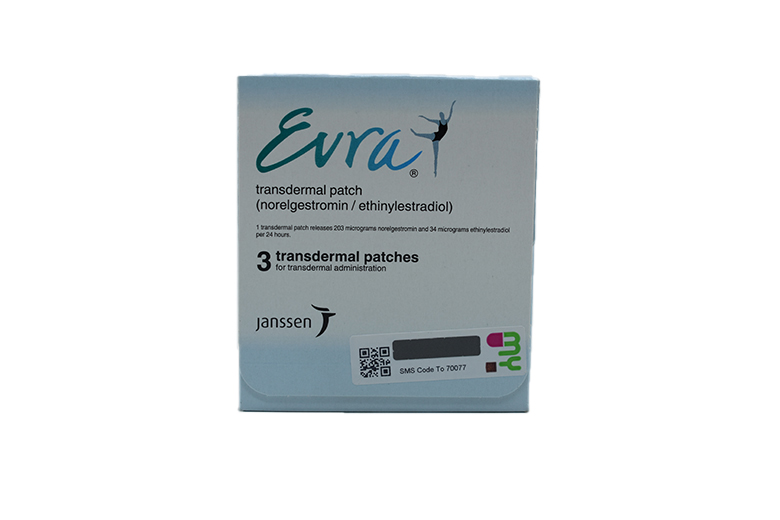
EVRA
NORELGESTROMIN (NGMN) AND ETHINYLOESTRADIOL (EE)
What it does
Ethinyloestradiol is a synthetic form of the hormone estrogen used in various hormonal treatments.
Commonly used for: birth control (contraception), regulating menstrual cycles, treating symptoms of menopause, managing hormone-related disorders
Read more in plain English ↓Plain-language summary for general understanding - not medical advice. Always follow your pharmacist/doctor.
Ask about this medicine
Answers come only from this medicine's registration record, BNF monograph and interaction data - not medical advice.
Hard to find? We help patients in Kenya source rare medicines. We don't sell or dispense medicines - licensed pharmacies do.
Source this medicineRegistration & product details
Source: Pharmacy and Poisons Board · fetched 2026-01-28 21:12:21 · updated 2026-07-20 08:55:31
About ethinyloestradiol
Ethinyloestradiol is a synthetic form of the hormone estrogen used in various hormonal treatments.
What it treats
- birth control (contraception)
- regulating menstrual cycles
- treating symptoms of menopause
- managing hormone-related disorders
How it works
Ethinyloestradiol works by mimicking the natural estrogen in the body, helping to regulate reproductive processes.
Who it's for
This medication is suitable for women seeking hormonal regulation or contraception.
AI-assisted summary grounded in BNF data - general information only, not medical advice. Always confirm with your pharmacist or doctor.
About norelgestromin
Norelgestromin is a hormone used in some birth control methods to prevent pregnancy.
What it treats
- prevention of pregnancy (birth control)
How it works
It works by stopping the ovaries from releasing eggs and thickening the mucus in the cervix to block sperm.
Who it's for
This medication is for women who want to prevent pregnancy.
AI-assisted summary grounded in BNF data - general information only, not medical advice. Always confirm with your pharmacist or doctor.
Clinical monograph: ethinyloestradiol
BNF-referencedEthinylestradiol is a synthetic estrogen primarily utilized in combined oral contraceptives and hormone replacement therapies. It mimics the effects of endogenous estrogens, playing a crucial role in the regulation of the female reproductive system, promoting secondary sexual characteristics, and maintaining menstrual cycle regularity. This compound is recognized for its efficacy in preventing ovulation and altering the uterine environment to prevent implantation.
Indications
- Contraception
- Hormone replacement therapy
- Management of menstrual disorders
- Treatment of acne in women
- Regulation of menstrual cycles
Dosage
Children: Refer to the BNF for Children for specific dosing information applicable to pediatric patients
Adults: The typical adult dosing for contraceptive purposes is one tablet daily, usually taken for 21 days followed by a 7-day break, during which withdrawal bleeding occurs. Refer to specific product guidelines for variations in dosing.
Mechanism of action
Ethinylestradiol works by binding to estrogen receptors in estrogen-responsive tissues, leading to a suppression of gonadotrophic hormones, which in turn inhibits ovulation. It thickens cervical mucus to impede sperm travel and alters the endometrial lining, making it less suitable for implantation. Additionally, it decreases luteinizing hormone levels, reducing endometrial vascularization, and increases sex hormone binding globulin levels.
Pharmacodynamics
As a synthetic estrogen, ethinylestradiol exhibits properties similar to endogenous estrogens, affecting various tissues in the body. It modulates the menstrual cycle by decreasing the secretion of luteinizing hormone and preventing ovulation, thus demonstrating a selective action with a long duration of effect when administered daily. The therapeutic index is wide, typically allowing for safe use at recommended doses, although there is a notable risk of thrombotic events associated with estrogen use.
Pharmacokinetics
Ethinylestradiol is well-absorbed after oral administration, undergoing first-pass metabolism in the liver, which influences its bioavailability. It has a half-life that allows for once-daily dosing, leading to stable plasma concentrations. Metabolism occurs primarily in the liver, and it is excreted in urine as metabolites. The drug's pharmacokinetic profile supports its use in contraceptive regimens, ensuring effective hormone levels are maintained throughout the dosing period.
Contra-indications
- History of thromboembolic disorders
- Severe hypertension
- Active liver disease
- Known or suspected pregnancy
- Estrogen-dependent tumors
Adverse effects
- Nausea
- Headache
- Breast tenderness
- Weight gain
- Mood changes
- Thromboembolic events
Interactions
- Antibiotics may reduce the effectiveness of ethinylestradiol
- Anticonvulsants may decrease plasma concentrations
- St. John's Wort may reduce effectiveness
Precautions
- Monitor for signs of thromboembolism
- Caution in patients with a history of migraines
- Monitor blood pressure regularly
- Consider risks versus benefits in patients with liver disease
Pregnancy
Ethinylestradiol is contraindicated during pregnancy due to potential harm to the fetus.
Breast-feeding
Use is not recommended during breastfeeding as it may reduce milk production.
Storage
Store at room temperature, away from light and moisture.
Formulations
- Tablets
- Combined oral contraceptive formulations
AI-synthesized from BNF references - general information only, not a substitute for professional medical advice or the current BNF. Verify doses with a pharmacist.
Clinical monograph: norelgestromin
BNF-referencedNorelgestromin is a synthetic progestin used primarily in hormonal contraceptives. It is often combined with ethinyl estradiol to create effective contraceptive methods, including transdermal patches and vaginal rings. Norelgestromin functions by inhibiting ovulation, altering the endometrial lining, and thickening cervical mucus, thereby reducing the likelihood of pregnancy.
Indications
- Contraception
- Menopausal hormonal therapy
Dosage
Children: Refer to BNF for Children for specific dosing recommendations.
Adults: Refer to BNF for specific dosing recommendations.
Mechanism of action
Norelgestromin inhibits estrone sulfatase, which converts sulfated steroid precursors to estrogen during pregnancy. It suppresses follicular development and induces changes to the endometrium, which decreases chances of implantation and thickens the cervical mucus, impeding sperm swimming into the uterus. It has similar agonistic binding affinities for progesterone and estrogen receptors as its parent compound, Norgestimate.
Pharmacodynamics
Norelgestromin is utilized for contraception and menopausal hormonal therapy, either transdermally or in combination with ethinyl estradiol. It inhibits ovulation by suppressing gonadotropins, effectively preventing the release of eggs from the ovaries.
Pharmacokinetics
Norelgestromin is absorbed through the skin when used in transdermal patches. Its pharmacokinetic profile includes a sustained release into the systemic circulation, allowing for prolonged contraceptive effects. The drug is metabolized in the liver and excreted primarily in urine. The exact half-life and other specific pharmacokinetic parameters may vary based on individual factors and formulation.
Contra-indications
- History of thromboembolic disorders
- Severe liver disease
- Known or suspected breast cancer
- Undiagnosed genital bleeding
- Hypersensitivity to norelgestromin or any component of the formulation
Adverse effects
- Nausea
- Headache
- Breast tenderness
- Weight gain
- Mood changes
- Irregular menstrual bleeding
- Thromboembolic events
Interactions
- Anticonvulsants
- Rifampicin
- St. John's Wort
- Some antibiotics may decrease efficacy
Precautions
- Monitor for signs of thromboembolic events
- Assess blood pressure regularly
- Consider alternative contraceptive methods in patients with gastrointestinal issues
- Evaluate risk factors for cardiovascular disease
Pregnancy
Norelgestromin should not be used during pregnancy as it may pose risks to the fetus.
Breast-feeding
Norelgestromin is excreted in breast milk; use with caution and consider alternative contraceptive methods.
Storage
Store at room temperature, away from moisture and heat. Keep out of reach of children.
Formulations
- Transdermal patch
- Vaginal ring in combination with ethinyl estradiol
AI-synthesized from BNF references - general information only, not a substitute for professional medical advice or the current BNF. Verify doses with a pharmacist.
Molecular reference: ethinyloestradiol
PubChem CID 5991Molecular formula: C20H24O2
Mechanism of action
Ethinylestradiol is a synthetic estrogenic compound. Use of estrogens have a number of effects on the body including reduced bone density. Combined oral contraceptives suppress ovulation by suppressing gonadotrophic hormone, thickening cervical mucus to prevent the travel of sperm, and preventing changes in the endometrium required for implantation of a fertilized egg. Ethinylestradiol decreases luteinizing hormone, decreasing vascularity in the endometrium. It also increases sex hormone binding globulin. Endogenous estrogens are largely responsible for the development and maintenance of the female reproductive system and secondary sexual characteristics. Although circulating estrogens exist in a dynamic equilibrium of metabolic interconversions, estradiol is the principal intracellular human estrogen and is substantially more potent than its metabolites estrone and estriol at the receptor level. ... After menopause, most endogenous estrogen is produced by conversion of androstenedione, secreted by the adrenal cortex, to estrone by peripheral tissues. Thus, estrone and the sulfate conjugated form, estrone sulfate, are the most abundant circulating estrogens in postmenopausal women. The pharmacologic effects of ethinyl estradiol are similar to those of endogenous estrogens. Estrogens act through binding to nuclear receptors in estrogen-responsive tissues. To date, two estrogen receptors have been identified. These vary in proportion from tissue to tissue. Circulating estrogens modulate the pituitary secretion of the gonadotropins, luteinizing hormone (LH) and follicle stimulating hormone (FSH) through a negative feedback mechanism. Estrogens act to reduce the elevated levels of these hormones seen in postmenopausal women. Estrogens have an important role in the reproductive, skeletal, cardiovascular, and central nervous systems in women, and act principally by regulating gene expression. Biologic response is initiated when estrogen binds to a ligand-binding domain of the estrogen receptor resulting in a conformational change that leads to gene transcription through specific estrogen response elements (ERE) of target gene promoters; subsequent activation or repression of the target gene is mediated through 2 distinct transactivation domains (ie, AF-1 and AF-2) of the receptor. The estrogen receptor also mediates gene transcription using different response elements (ie, AP-1) and other signal pathways. Recent advances in the molecular pharmacology of estrogen and estrogen receptors have resulted in the development of selective estrogen receptor modulators (eg, clomiphene, raloxifene, tamoxifen, toremifene), agents that bind and activate the estrogen receptor but that exhibit tissue-specific effects distinct from estrogen. Tissue-specific estrogen-agonist or -antagonist activity of these drugs appears to be related to structural differences in their estrogen receptor complex (eg, specifically the surface topography of AF-2 for raloxifene) compared with the estrogen (estradiol)-estrogen receptor complex. A second estrogen receptor also has been identified, and existence of at least 2 estrogen receptors (ER-alpha, ER-beta) may contribute to the tissue-specific activity of selective modulators. While the role of the estrogen receptor in bone, cardiovascular tissue, and the CNS continues to be studied, emerging evidence indicates that the mechanism of action of estrogen receptors in these tissues differs from the manner in which estrogen receptors function in reproductive tissue. /Estrogen General Statement/ Intracellular cytosol-binding proteins for estrogens have been identified in estrogen-responsive tissues including the female genital organs, breasts, pituitary, and hypothalamus. The estrogen-binding protein complex (ie, cytosol-binding protein and estrogen) distributes into the cell nucleus where it stimulates DNA, RNA, and protein synthesis. The presence of these receptor proteins is responsible for the palliative response to e
Pharmacodynamics
Ethinylestradiol is a synthetic estrogen that decreases luteinizing hormone to decrease endometrial vascularization, and decreases gonadotrophic hormone to prevent ovulation. It has a long duration of action as it is taken once daily, and a wide therapeutic index as overdoses are generally not associated with serious adverse effects. Patients should be counselled regarding the risks of thrombotic events.
Biological pathways
Source: PubChem (NCBI) · pathways from PathBank, Reactome, WikiPathways & PharmGKB.
Molecular reference: norelgestromin
PubChem CID 62930Molecular formula: C21H29NO2
Mechanism of action
Norelgestromin inhibits estrone sulfatase, which converts sulfated steroid precursors to estrogen during pregnancy. Norgelgestromin/ethinylestradiol suppresses follicular development, induces changes to the endometrium, which decreases chances of implantation and thickens the cervical mucus, impeding sperm swimming into the uterus. It also has similar agonisting binding affinities as its parent compound, Norgestimate, for progesterone and estrogen receptors.
Pharmacodynamics
Norelgestromin is used for contraception and menopausal hormonal therapy transdermally or in combination with ethinyl estradiol as a vaginal ring. Norelgestromin, in combination with ethinyl estradiol inhibits ovulation by suppressing gonadotropins.
Source: PubChem (NCBI) · pathways from PathBank, Reactome, WikiPathways & PharmGKB.
This drug in other countries
The same active ingredient registered across other registries we cover - including different brands.