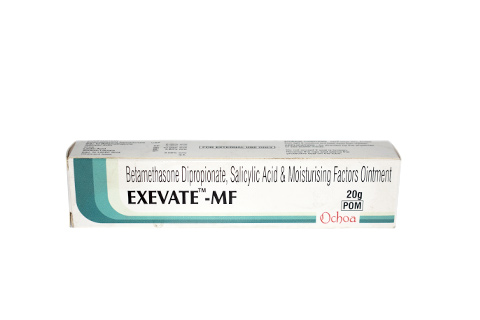
EXEVATE MF OINTMENT
BETAMETHASONE DIPROPIONATE USP 0.6MGSALICYLIC ACID BP 30MGUREA BP 100MH LACTIC ACID 30MG SODIUM LACTATE 42.5MG
What it does
Betamethasone is a corticosteroid used to reduce inflammation and suppress the immune system.
Commonly used for: inflammation, allergic reactions, skin conditions, certain autoimmune diseases
Read more in plain English ↓Plain-language summary for general understanding - not medical advice. Always follow your pharmacist/doctor.
Ask about this medicine
Answers come only from this medicine's registration record, BNF monograph and interaction data - not medical advice.
Hard to find? We help patients in Kenya source rare medicines. We don't sell or dispense medicines - licensed pharmacies do.
Source this medicineRegistration & product details
Source: Pharmacy and Poisons Board · fetched 2026-01-28 21:16:46 · updated 2026-07-20 08:59:58
Drug Interactions
39Pharmacodynamic Warnings
Betamethasone appears in TABLE 17: Drugs that reduce serum potassium
Severe (1)
Mifamurtide - decreases efficacy
Corticosteroidsarepredictedtodecreasetheefficacyof mifamurtide.Avoid.rTheoretical
Moderate (18)
Corticosteroids - increases exposure
Dronedarone is predicted to increase the exposure to corticosteroids (methylprednisolone). Monitor and adjust dose.
Corticosteroids - increases concentration
Miconazole is predicted to increase the concentration of corticosteroids (methylprednisolone). Monitor and adjust dose.
Corticosteroids - increases exposure
Antifungals, azoles (fluconazole, isavuconazole, posaconazole) are predicted to increase the exposure to corticosteroids (methylprednisolone). Monitor and adjust dose.
Corticosteroids - decreases exposure
Cenobamate is predicted to decrease the exposure to corticosteroids (fluticasone). Adjust dose.
Corticosteroids - decreases efficacy
Mifepristone is predicted to decrease the efficacy of corticosteroids. Use with caution and adjust dose.
Unknown (20)
Aspirin - decreases concentration
Corticosteroids are predicted to decrease the concentration of aspirin (high-dose) and aspirin (high-dose) increases the risk of gastrointestinal bleeding when given with corticosteroids.
Betamethasone - increases exposure
Cobicistat is predicted to increase the exposure to corticosteroids (betamethasone, budesonide, ciclesonide, deflazacort, dexamethasone, fludrocortisone, fluticasone, hydrocortisone, methylprednisolon
Betamethasone - increases exposure
Idelalisib is predicted to increase the exposure to corticosteroids (betamethasone, budesonide, ciclesonide, deflazacort, dexamethasone, fludrocortisone, fluticasone, hydrocortisone, methylprednisolon
Betamethasone - increases exposure
Clarithromycin is predicted to increase the exposure to corticosteroids (betamethasone, budesonide, ciclesonide, deflazacort, dexamethasone, fludrocortisone, fluticasone, hydrocortisone, methylprednis
Choline Salicylate - decreases concentration
Corticosteroids are predicted to decrease the concentration of cholinesalicylate. Ciclesonide → see corticosteroids Ciclosporin → see TABLE 2 p. 1517 (nephrotoxicity), TABLE 16 p. 1521 (increased seru
Data from BNF 85 (British National Formulary). This is not a substitute for professional medical advice. Matched via: class
About betamethasone
Betamethasone is a corticosteroid used to reduce inflammation and suppress the immune system.
What it treats
- inflammation
- allergic reactions
- skin conditions
- certain autoimmune diseases
How it works
It works by decreasing inflammation and modifying the body's immune response.
Who it's for
It is for adults and children who need treatment for conditions involving inflammation or an overactive immune system.
Drug class
Corticosteroids
Cautions
- • Be cautious if you are taking medications that lower potassium levels in the blood.
AI-assisted summary grounded in BNF data - general information only, not medical advice. Always confirm with your pharmacist or doctor.
About lactate
Lactate is a substance used in medical settings to help manage certain conditions related to acid-base balance in the body.
What it treats
- metabolic acidosis
- lactic acidosis
- supporting hydration
How it works
Lactate helps to correct acid levels in the body, providing energy to cells and supporting metabolic processes.
Who it's for
Adults and children who have conditions causing an imbalance in body acids.
AI-assisted summary grounded in BNF data - general information only, not medical advice. Always confirm with your pharmacist or doctor.
About lactic
Lactic acid is a substance that helps in various body functions and can be used in treatments.
What it treats
- muscle soreness
- lactic acidosis
- skin conditions
How it works
Lactic acid helps to improve the acidity level in certain body fluids, supporting better metabolism and skin health.
Who it's for
Lactic acid can be used by individuals experiencing muscle soreness or specific skin issues.
AI-assisted summary grounded in BNF data - general information only, not medical advice. Always confirm with your pharmacist or doctor.
Clinical monograph: Betamethasone
BNF-referencedBetamethasone is a potent corticosteroid with high glucocorticoid activity and minimal mineralocorticoid effects, used primarily to suppress inflammation and manage allergic conditions.
Indications
- Suppression of inflammatory disorders
- Management of allergic conditions
- Congenital adrenal hyperplasia
- Inflammatory and allergic eye conditions
Dosage
Children: For children aged 1–11 months: Initially 1 mg, repeated up to 4 times in 24 hours according to response. Aged 1–5 years: Initially 2 mg, repeated up to 4 times in 24 hours according to response. Aged 6–11 years: Initially 4 mg, repeated up to 4 times in 24 hours according to response. Aged 12–17 years: 4–20 mg, repeated up to 4 times in 24 hours according to response.
Adults: Dosage varies based on condition; typically, initial doses are adjusted according to the patient's response and severity of condition.
Mechanism of action
Betamethasone exerts its effects by binding to glucocorticoid receptors, leading to modulation of gene expression and suppression of inflammatory cytokines and mediators.
Pharmacodynamics
Betamethasone reduces inflammation and immune response, which is beneficial in managing various inflammatory and allergic disorders.
Pharmacokinetics
Betamethasone is rapidly absorbed after administration, with a long half-life allowing for once-daily dosing in many cases. It is metabolized in the liver and excreted primarily in urine.
Adverse effects
- Hiccups
- Oedema
- Mood and behaviour changes
- Vision disorders
- Serious gastro-intestinal effects
- Musculoskeletal effects
- Ophthalmic effects
- Stevens-Johnson syndrome
- Myocardial rupture (following recent myocardial infarction)
Interactions
- Cobicistat + betamethasone: Unknown (increases exposure)
- Idelalisib + betamethasone: Unknown (increases exposure)
- Clarithromycin + betamethasone: Unknown (increases exposure)
Precautions
- Immunosuppression due to prolonged corticosteroid treatment
- Adrenal suppression if given for longer than 3 weeks
- Increased susceptibility to infections, including chickenpox and measles
Pregnancy
Readily crosses the placenta. Transient effect on fetal movements and heart rate.
Storage
Store at room temperature, protect from light.
Formulations
- Betamethasone sodium phosphate 4 mg per 1 ml solution for injection ampoules
AI-synthesized from BNF references - general information only, not a substitute for professional medical advice or the current BNF. Verify doses with a pharmacist.
Clinical monograph: betamethasonedipropionate
Betamethasone dipropionate is a potent synthetic glucocorticoid steroid that is used topically to relieve inflammation and itching associated with various skin conditions. It is a derivative of betamethasone, which has anti-inflammatory, immunosuppressive, and anti-proliferative activities. The drug is commonly utilized in dermatology for conditions such as eczema, psoriasis, and dermatitis.
Indications
- Eczema
- Psoriasis
- Contact dermatitis
- Seborrheic dermatitis
- Atopic dermatitis
Dosage
Children: Refer to the BNF for Children for appropriate dosing information.
Adults: Refer to relevant clinical guidelines or product information for specific dosing instructions.
Mechanism of action
Betamethasone dipropionate exerts its effects by binding to the glucocorticoid receptor, leading to the modulation of gene expression. This interaction results in the inhibition of pro-inflammatory cytokines, chemokines, and adhesion molecules, which reduces inflammation, suppresses the immune response, and promotes vasoconstriction in the affected tissues.
Pharmacodynamics
The pharmacodynamic effects of betamethasone dipropionate include a significant reduction in inflammation and immune response due to the inhibition of leukocyte infiltration at the site of inflammation. The drug also inhibits the release of arachidonic acid, subsequently decreasing the production of inflammatory mediators such as prostaglandins and leukotrienes. Its efficacy is enhanced by its high lipid solubility, allowing for better penetration through the skin layers.
Pharmacokinetics
Betamethasone dipropionate is well absorbed through the skin when applied topically. Its bioavailability is influenced by the formulation and the condition of the skin. The drug is metabolized primarily in the liver to inactive metabolites, which are excreted in the urine. The systemic absorption and effects are minimal when used as directed, but caution is advised in extensive applications or occlusive dressings, which may increase absorption.
Adverse effects
- Local skin atrophy
- Striae
- Telangiectasia
- Hypopigmentation
- Allergic contact dermatitis
- Systemic effects with prolonged use
Precautions
- Use with caution in patients with a history of diabetes mellitus
- Monitor for potential adrenal suppression with prolonged use
- Avoid application to infected areas unless treated
Pregnancy
Betamethasone dipropionate should be used during pregnancy only if the potential benefit justifies the potential risk to the fetus. Limited data suggest that topical corticosteroids have low systemic absorption.
Breast-feeding
Caution is advised when using betamethasone dipropionate during breastfeeding, as it is unknown whether it is excreted in breast milk. Topical corticosteroids should be applied sparingly and avoided on the breast area to minimize ingestion by the infant.
Storage
Store at room temperature, away from light and moisture. Keep out of reach of children.
Formulations
- Topical cream
- Topical ointment
- Topical lotion
AI-synthesized from BNF references - general information only, not a substitute for professional medical advice or the current BNF. Verify doses with a pharmacist.
Clinical monograph: lactate
BNF-referencedLactate, the anion of lactic acid, is a key intermediate in metabolic processes, primarily produced during anaerobic glycolysis. It serves as an important energy source, particularly for heart and skeletal muscle, and plays a crucial role in the Cori cycle, where it is converted back to glucose in the liver. Elevated lactate levels can indicate anaerobic metabolism, often observed in conditions such as sepsis, shock, or strenuous exercise.
Indications
- Metabolic acidosis
- Lactic acidosis
- Energy substrate in critical illness
- Monitoring tissue perfusion and oxygenation
Dosage
Children: Refer to the BNF for Children for appropriate dosing in paediatric patients.
Adults: Refer to specific guidelines based on clinical context as dosing is highly variable and situation-dependent.
Mechanism of action
Lactate acts as a signaling molecule and energy substrate in various physiological and pathological processes. It is involved in the modulation of several metabolic pathways, including the Cori cycle and Krebs cycle. Lactate also participates in metabolic reprogramming, especially in cancer cells, where it can promote tumor growth and survival by providing an alternative energy source and influencing cellular signaling pathways such as the PI3K/AKT/mTOR pathway.
Pharmacodynamics
Lactate plays a vital role in energy metabolism. It can be oxidized back to pyruvate by lactate dehydrogenase, entering the Krebs cycle for ATP production. In addition to serving as an energy substrate, lactate impacts pH regulation and can influence the function of various immune cells. Its levels can indicate the state of oxygen delivery and utilization in tissues, thus serving as a marker for metabolic stress.
Pharmacokinetics
Lactate is produced primarily in the cytoplasm during glycolysis, with its concentration in the blood reflecting the balance between production and clearance. It is metabolized predominantly in the liver, where it can be converted back to glucose or utilized in the Krebs cycle. Lactate levels can vary based on factors such as exercise, tissue hypoxia, and metabolic conditions.
Pregnancy
Lactate is generally regarded as safe during pregnancy as it is a naturally occurring metabolite in the body, but specific clinical advice should be sought.
Breast-feeding
Lactate is considered safe during breastfeeding as it is a normal component of human metabolism, but consult a healthcare provider for personalized advice.
Storage
Store in a cool, dry place away from direct sunlight. Keep out of reach of children.
AI-synthesized from BNF references - general information only, not a substitute for professional medical advice or the current BNF. Verify doses with a pharmacist.
Clinical monograph: lactic
Lactic acid is a naturally occurring organic acid involved in various metabolic processes, particularly in anaerobic respiration. It is a byproduct of glycolysis, the process of converting glucose to energy in the absence of oxygen. Lactic acid is commonly used in clinical settings, particularly in the management of metabolic acidosis. It is also studied for its role in muscle metabolism and exercise physiology.
Indications
- Metabolic acidosis
- Lactic acidosis
- Support in shock or severe dehydration
- Exercise physiology research
Dosage
Children: Refer to clinical guidelines for specific dosing recommendations based on the clinical condition being treated.
Adults: Refer to clinical guidelines for specific dosing recommendations based on the clinical condition being treated.
Mechanism of action
Lactic acid primarily functions by contributing to the acid-base balance in the body. It can serve as a substrate for gluconeogenesis in the liver and is utilized in the Cori cycle, where it is converted back to glucose. Furthermore, lactic acid can act as a signaling molecule in various physiological processes, influencing metabolism and cellular responses during hypoxic conditions.
Pharmacodynamics
Lactic acid dissociates into lactate and hydrogen ions in solution, which can lead to a decrease in pH (acidosis) when produced in excess. Its accumulation in the body is indicative of anaerobic metabolism, often observed during intense exercise or in conditions of oxygen deprivation. The body can buffer the effects of lactic acid through bicarbonate and other mechanisms, maintaining homeostasis.
Pharmacokinetics
Lactic acid is rapidly absorbed and distributed throughout the body. It is metabolized primarily in the liver, where it can be converted to glucose or further metabolized to carbon dioxide and water. The elimination half-life of lactate varies depending on the metabolic state of the individual and the presence of underlying conditions. Renal function also plays a role in the clearance of lactate from the body.
Adverse effects
- Nausea
- Vomiting
- Abdominal pain
- Diarrhea
- Hypersensitivity reactions
Precautions
- Use with caution in patients with renal impairment
- Monitor for signs of metabolic acidosis
- Caution in patients with liver disease
Pregnancy
Lactic acid is generally regarded as safe, but clinical use should be evaluated on a case-by-case basis during pregnancy.
Breast-feeding
Considered safe for use during breastfeeding, but consult healthcare provider for individual cases.
Storage
Store at room temperature, away from direct sunlight and moisture.
Formulations
- Lactic acid injection
- Lactic acid oral solution
AI-synthesized from BNF references - general information only, not a substitute for professional medical advice or the current BNF. Verify doses with a pharmacist.
Molecular reference: Betamethasone
PubChem CID 9782Molecular formula: C22H29FO5
Mechanism of action
Glucocorticoids inhibit neutrophil apoptosis and demargination, and inhibit NF-Kappa B and other inflammatory transcription factors. They also inhibit phospholipase A2, leading to decreased formation of arachidonic acid derivatives. In addition, glucocorticoids promote anti-inflammatory genes like interleukin-10. Corticosteroids like betamethasone can act through nongenomic and genomic pathways. The genomic pathway is slower and occurs when glucocorticoids activate glucocorticoid receptors and initiate downstream effects that promote transcription of anti-inflammatory genes including phosphoenolpyruvate carboxykinase (PEPCK), IL-1-receptor antagonist, and tyrosine amino transferase (TAT). On the other hand, the nongenomic pathway is able to elicit a quicker response by modulating T-cell, platelet and monocyte activity through the use of existing membrane-bound receptors and second messengers. Corticosteroids interact with specific receptor proteins in target tissues to regulate the expression of corticosteroid responsive genes, thereby changing the levels and array of proteins synthesized by the various target tissues. As a consequence of the time required for changes in gene expression and protein synthesis, most effects of corticosteroids are not immediate, but become apparent after several hours. ... Although corticosteroids predominantly act to increase expression of target genes, there are well documented examples where glucocorticoids decrease transcription of target genes ... In contrast to these genomic effects, recent studies have raised the possibility that some actions of corticosteroids are immediate and are mediated by membrane-bound receptors. /Adrenocorticosteroids/ The mechanisms by which glucocorticoids inhibit glucose utilization in peripheral tissues are not fully understood. Glucocorticoids decrease glucose uptake in adipose tissue, skin, fibroblasts, thymocytes, and polymorphonuclear leukocytes; these effects are postulated to result from translocation of the glucose transporters from the plasma membrane to an intracellular location. These peripheral effects are associated with a number of catabolic actions, including atrophy of lymphoid tissue, decreased muscle mass, negative nitrogen balance, and thinning of the skin. /Adrenocorticalsteroids/ The mechanisms by which the glucocorticoids promote gluconeogenesis are not fully defined. Amino acids mobilized from a number of tissues in response to glucocorticoids reach the liver and provide substrate for the production of glucose and glycogen. In the liver, glucocorticoids induce the transcription of a number of enzymes involved in gluconeogenesis and amino acid metabolism, including phosphoenolpyruvate carboxykinase, glucose-6-phosphatase, and fructose-2,6-bisphosphatase. Analyses of the molecular basis for regulation of phosphoenolpyruvate carboxykinase gene expression have identified complex regulatory influences involving an interplay among glucocorticoids, insulin, glucagon, and catecholamine. The effects of these hormones and amines on phosphoenolpyruvate carboxykinase gene expression mirror the complex regulation of gluconeogenesis in the intact organism. /Adrenocorticalsteroids/ ... /A/ major action of corticosteroids on the cardiovascular system is to enhance vascular reactivity to other vasoactive substances. Hypoadrenalism generally is associated with hypotension and reduced response to vasoconstrictors such as norepinephrine and angiotensin II. This diminished pressor response is explained partly by recent studies in experimental systems showing that glucocorticoids increase expression of adrenergic receptors in the vascular wall. Conversely, hypertension is seen in patients with excessive glucocorticoid secretion, occurring in most patients with Cushing's syndrome and in a subset of patients treated with synthetic glucocorticoids (even those lacking any significant mineralocorticoid action). /Adrenocorticosteroids/ For more Mechanism of Action (
Pharmacodynamics
Corticosteroids bind to the glucocorticoid receptor inhibiting pro-inflammatory signals, while promoting anti-inflammatory signals. Corticosteroids have a wide therapeutic window as patients may require doses that are multiples of what the body naturally produces. Patients who require long-term treatment with a corticosteroid should be counselled regarding the risk of hypothalamic-pituitary-adrenal axis suppression and increased susceptibility to infections.
Source: PubChem (NCBI) · pathways from PathBank, Reactome, WikiPathways & PharmGKB.
Molecular reference: lactate
PubChem CID 91435Molecular formula: C3H5O3-
Biological pathways
Source: PubChem (NCBI) · pathways from PathBank, Reactome, WikiPathways & PharmGKB.
This drug in other countries
The same active ingredient registered across other registries we cover - including different brands.
- ABYTONE FORTE CAPSULES (Each hard gelatin capsule contains Cyproheptadine HCL (Anhydrous) BP/Vitamin A (as palmitate) BP/Vitamin D3 BP/Thiamine Hydrochloride BP/Riboflavin BP/Cyanocobalamin BP/Niacinamide BP/Calcium Pantothenate BP/Calcium Lactate BP 4mg/2500IU/200IU/2mg/1mcg/25mg/5mg/100mg/) · Socomed Pharma
- ADACT CREAM (Each gram contains Clotrimazole / Betamethasone Dipropionate / Neomycin Sulphate 1%w/w/0.025%w/w/0.5%w/w) · Rednex Phramaceuticals Pvt. Ltd
- AMIDERM CREAM · Lincoln Pharmaceuticals
- AMIDERM PLUS TRIPLE ACTION CREAM · Kremoint Pharma
- APSACID PLUS LIQUID (Each litre (L) contains Formic acid/ Lactic acid/ Propionic acid 250g/ 400g/ 200g) · Andres Pintluba
- BADRUF CREAM (Each cream contains Clotrimazole / Betamethasone Dipropionate / Neomycin Sulphate 1.0%/w/v 0.05%/w/v 0.5%w/v) · Centurion Remedies