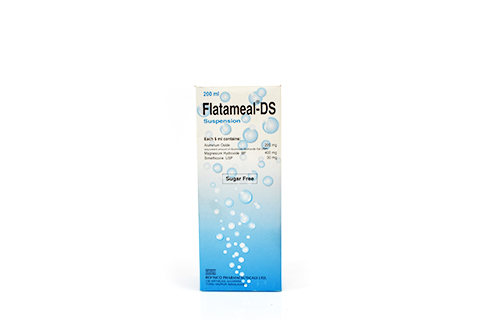
FLATAMEAL DS SUSPENSION
AL HYDROXIDE + MG HYDROXIDE + SIMETHICONE
What it does
Hydroxide is a compound used to help neutralize stomach acid and relieve indigestion or heartburn.
Commonly used for: indigestion, heartburn
Read more in plain English ↓Plain-language summary for general understanding - not medical advice. Always follow your pharmacist/doctor.
Ask about this medicine
Answers come only from this medicine's registration record, BNF monograph and interaction data - not medical advice.
Hard to find? We help patients in Kenya source rare medicines. We don't sell or dispense medicines - licensed pharmacies do.
Source this medicineRegistration & product details
Source: Pharmacy and Poisons Board · fetched 2026-06-29 03:58:56 · updated 2026-07-20 11:01:27
About hydroxide
Hydroxide is a compound used to help neutralize stomach acid and relieve indigestion or heartburn.
What it treats
- indigestion
- heartburn
How it works
Hydroxide works by neutralizing the excess acid in the stomach, which helps to reduce discomfort.
Who it's for
Hydroxide is suitable for adults and children experiencing symptoms of excess stomach acid.
AI-assisted summary grounded in BNF data - general information only, not medical advice. Always confirm with your pharmacist or doctor.
About simethicone
Simethicone is a medicine that helps relieve discomfort caused by gas in the stomach and intestines.
What it treats
- bloating
- gas pain
- flatulence
How it works
Simethicone works by breaking up gas bubbles in the stomach and intestines, making it easier for the body to eliminate them.
Who it's for
This medicine is suitable for adults and children experiencing gas-related discomfort.
AI-assisted summary grounded in BNF data - general information only, not medical advice. Always confirm with your pharmacist or doctor.
Clinical monograph: hydroxide
BNF-referencedHydroxide, represented by the molecular formula HO-, is an anion commonly found in various chemical and biological systems. It plays a crucial role in acid-base chemistry and is a fundamental component in many biochemical pathways. Hydroxide ions are involved in maintaining pH balance in biological systems and participate in various metabolic processes.
Dosage
Children: Refer to specific guidelines for pediatric dosing; consult the BNF for Children for accurate dosage information.
Adults: Refer to specific guidelines for use; dosage may vary based on the context of use.
Mechanism of action
Hydroxide ions act primarily as bases, neutralizing acids to form water and salts. They participate in various biochemical pathways, including selenium metabolism and the degradation of reactive oxygen species. Hydroxide can influence enzyme activity and stability by altering the pH of the environment, thereby affecting metabolic reactions.
Pharmacodynamics
Hydroxide ions can impact biological processes by changing the local pH, which influences enzyme activity, ion transport, and the solubility of other compounds. Their ability to neutralize acids can help regulate physiological pH, contributing to homeostasis in living organisms.
Pharmacokinetics
As an inorganic ion, hydroxide does not undergo traditional pharmacokinetic processes like absorption, distribution, metabolism, or excretion. Instead, it is rapidly equilibrated in biological fluids and participates in acid-base reactions, having immediate effects on the local environment.
Pregnancy
There is limited information regarding the use of hydroxide during pregnancy. Consult a healthcare professional for advice.
Breast-feeding
Limited data is available on the excretion of hydroxide in breast milk. Consult a healthcare professional before use.
Storage
Store in a cool, dry place away from direct sunlight. Keep out of reach of children.
AI-synthesized from BNF references - general information only, not a substitute for professional medical advice or the current BNF. Verify doses with a pharmacist.
Clinical monograph: simethicone
BNF-referencedSimethicone is a medication that functions as an antifoaming agent, primarily used to relieve symptoms of excess gas in the gastrointestinal tract. It works by reducing the surface tension of gas bubbles, which helps them to coalesce and be expelled from the body. It is often utilized in the management of conditions characterized by bloating and discomfort due to gas, such as flatulence and gastroesophageal reflux disease.
Indications
- Flatulence
- Bloating
- Gastroesophageal reflux disease
- Functional dyspepsia
Dosage
Children: For children, refer to the BNF for Children for specific dosing recommendations.
Adults: The usual adult dose is 40 to 125 mg taken after meals and at bedtime, as needed.
Mechanism of action
Simethicone is a surfactant that decreases the surface tension of gas bubbles in the gastrointestinal tract, facilitating their expulsion. It acts by forming a film of low surface tension that promotes the coalescence of mucus-surrounded gas bubbles, allowing for easier passage of gas.
Pharmacodynamics
Simethicone decreases the surface tension of gas bubbles in the gastrointestinal tract, facilitating their expulsion. Its effects are generally short-lived, as it is typically administered as needed. The therapeutic index is wide since it is not absorbed systemically, making it safe for use in various patient populations.
Pharmacokinetics
Simethicone is not systemically absorbed following oral administration, which contributes to its safety profile. Due to its lack of systemic absorption, specific pharmacokinetic parameters such as half-life, clearance, and volume of distribution are not applicable.
Pregnancy
Simethicone can be used during pregnancy as there are no known risks associated with its use.
Breast-feeding
Simethicone is considered safe to use during breastfeeding, as it is not absorbed systemically.
Storage
Store in a cool, dry place, away from direct sunlight. Keep out of reach of children.
Formulations
- Oral suspension
- Chewable tablets
- Soft gels
AI-synthesized from BNF references - general information only, not a substitute for professional medical advice or the current BNF. Verify doses with a pharmacist.
Molecular reference: hydroxide
PubChem CID 961Molecular formula: HO-
Biological pathways
Source: PubChem (NCBI) · pathways from PathBank, Reactome, WikiPathways & PharmGKB.
Molecular reference: simethicone
PubChem CID 6433516Molecular formula: C6H18O4Si3
Mechanism of action
Simethicone is a surfactant that decreases the surface tension of gas bubbles in the gastrointestinal tract, more easily allowing gas to exit the body. The clinical use of simethicone is based on its antifoam properties. Silicone antifoams spread on the surface of aqueous liquids, forming a film of low surface tension and thus causing collapse of foam bubbles. Simethicone reportedly allows mucus-surrounded gas bubbles in the GI tract to coalesce and be expelled.
Pharmacodynamics
Simethicone decreases the surface tension of gas bubbles in the gastrointestinal tract, facilitating their expulsion. It has a short duration of action as it is generally given as needed, and a wide therapeutic index as it is not systemically absorbed.
Source: PubChem (NCBI) · pathways from PathBank, Reactome, WikiPathways & PharmGKB.
This drug in other countries
The same active ingredient registered across other registries we cover - including different brands.
- ABYCID SUSPENSION (Each 5ml contains Magnesium Hydroxide BP/ Dried Aluminium Hydroxide BP Magnesium Trisilicate BP Activated Dimethicone (Simethicone) B 225mg/200mg/25mg) · Socomed Pharmceuticals Pvt Limited
- ACIQUARD O SUSPENSION (Each 5ml contains Dried Aluminium Hydroxide / Magnesium Hydroxide / Simethicone / Oxethazaine 250mg/250mg/50mg/10mg) · Pharmanova
- ALUMINIUM HYDROXIDE 500MG TABLETS · Letap Pharmaceuticals
- ALUMINIUM HYDROXIDE TABLETS · M&g Pharmaceuticals
- ALUMINIUM HYDROXIDE TABLETS · Phyto-Riker Pharmaceutical
- ALUSIL PLUS SUSPENSION (Each 5ml contains Aluminium Hydroxide/Magnesium Hydroxide/Magnesium Trisilicate/Simethicone 300mg/100mg/200mg/30mg) · Letap Pharmaceuticals