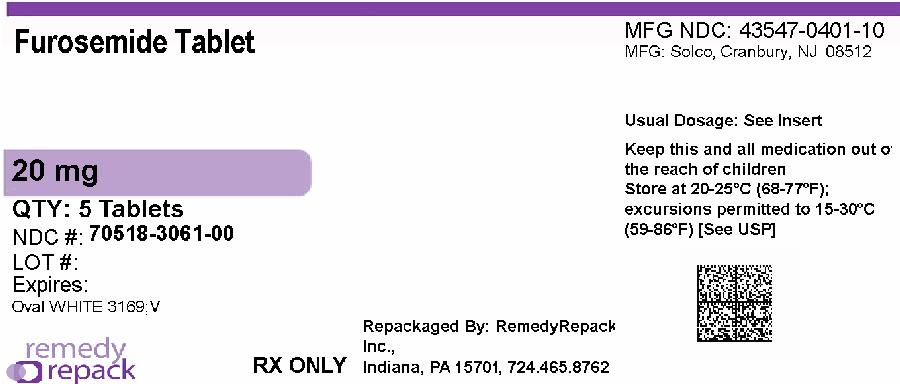
(furosemide · DailyMed)
FLORUSE 20
Furosemide 10 mg/ml
What it does
Furosemide is a type of loop diuretic that helps the body get rid of excess fluid by making you urinate more.
Commonly used for: fluid retention (oedema), high blood pressure (hypertension)
Read more in plain English ↓Plain-language summary for general understanding - not medical advice. Always follow your pharmacist/doctor.
Ask about this medicine
Answers come only from this medicine's registration record, BNF monograph and interaction data - not medical advice.
Medicine sourcing is available in Kenya only. We don't sell or dispense medicines - licensed pharmacies do.
Sourcing - Kenya onlyRegistration & product details
Source: Zambia Medicines Regulatory Authority · fetched 2026-05-18 02:11:51 · updated 2026-09-17 03:36:52
Drug Interactions
4Pharmacodynamic Warnings
Furosemide appears in TABLE 8: Drugs that cause hypotension
Furosemide appears in TABLE 17: Drugs that reduce serum potassium
Furosemide appears in TABLE 18: Drugs that cause hyponatraemia
Furosemide appears in TABLE 19: Drugs that cause ototoxicity
Unknown (4)
Furosemide - decreases exposure
Aliskirenslightlydecreasestheexposuretoloopdiuretics (furosemide).oStudy →AlsoseeTABLE8p.1518
Furosemide - increases exposure
Leflunomideispredictedtoincreasetheexposuretoloop diuretics(furosemide).oTheoretical
Furosemide - increases exposure
Nitisinone is predicted to increase the exposure to furosemide.
Furosemide - increases exposure
Teriflunomide is predicted to increase the exposure to furosemide.
Data from BNF 85 (British National Formulary). This is not a substitute for professional medical advice. Matched via: exact
About this medicine
Furosemide is a type of loop diuretic that helps the body get rid of excess fluid by making you urinate more.
What it treats
- fluid retention (oedema)
- high blood pressure (hypertension)
How it works
It works by blocking sodium and chloride reabsorption in the kidneys, which helps to remove water from the body.
Who it's for
It is used for adults and children who need to reduce excess fluid or lower high blood pressure.
Drug class
Loop diuretics
Cautions
- • Be careful if you are taking medications that lower blood pressure.
- • Avoid drugs that can lower potassium levels in the blood.
- • Watch out for medications that can cause low sodium levels.
- • Some drugs can harm your ears, so be cautious if you are taking them.
AI-assisted summary grounded in BNF data - general information only, not medical advice. Always confirm with your pharmacist or doctor.
Clinical monograph: Furosemide
BNF-referencedFurosemide is a potent loop diuretic primarily used to manage conditions associated with fluid overload, such as heart failure, cirrhosis, and renal disease. It promotes diuresis by inhibiting the reabsorption of sodium and chloride in the kidneys, leading to increased urine output and decreased fluid retention. It is administered either orally or intravenously, depending on the clinical situation and urgency.
Indications
- Oedema associated with congestive heart failure
- Oedema due to hepatic cirrhosis
- Nephrotic syndrome
Mechanism of action
Furosemide promotes diuresis by blocking tubular reabsorption of sodium and chloride in the proximal and distal tubules, as well as in the thick ascending loop of Henle. This is achieved through competitive inhibition of sodium-potassium-chloride cotransporters (NKCC2), preventing sodium reabsorption and consequently increasing the excretion of water, sodium, chloride, magnesium, calcium, hydrogen, and potassium ions. Furosemide also exerts direct vasodilatory effects, which contribute to its effectiveness in treating acute pulmonary edema.
Pharmacodynamics
Furosemide effectively manages hypertension and edema associated with congestive heart failure, cirrhosis, and renal disorders, including nephrotic syndrome. It enhances renal excretion of sodium and water by inhibiting their reabsorption from the nephron, resulting in increased urine production. The diuretic effect begins within 1 to 1.5 hours after oral administration, with peak effects occurring within 2 hours and lasting 4 to 6 hours. Intravenous administration leads to rapid effects, with onset within 5 minutes and peak effects at 30 minutes.
Pharmacokinetics
Furosemide is well-absorbed when given orally, with a bioavailability of approximately 50-70%. It is extensively protein-bound (approximately 95-98%) and is secreted via active transport mechanisms in the kidneys. The elimination half-life is about 1-2 hours in healthy individuals, but this can be prolonged in patients with renal impairment. Furosemide is excreted primarily through the kidneys, with a significant portion undergoing hepatic metabolism. Monitoring of electrolytes is necessary due to the risk of hypokalemia and other electrolyte imbalances.
Contra-indications
- Addison's disease
- anuria
- comatose or pre-comatose states associated with liver cirrhosis
- dehydration
- hyperkalaemia
- hypovolaemia
- resistant oedema
- hypotension
- impaired micturition
- prostatic enlargement
Adverse effects
- agranulocytosis
- aplastic anaemia
- dehydration
- hypotension
- malaise
- mucosal reaction
- nephritis
- tubulointerstitial nephritis
- pancreatitis
- acute kidney injury
- hepatic disorders
- skin eruption
- tetany
- vasculitis
- hearing impairment
- gastrointestinal discomfort
- gynaecomastia
- musculoskeletal pain
- hyperglycaemia
- hyperuricaemia
- muscle cramps
Interactions
- aliskiren + furosemide: Unknown (decreases exposure)
- leflunomide + furosemide: Unknown (increases exposure)
- nitisinone + furosemide: Unknown (increases exposure)
- teriflunomide + furosemide: Unknown (increases exposure)
Precautions
- Caution in patients with hepatorenal syndrome
- Caution in patients with hypoproteinaemia as it may reduce diuretic effect and increase risk of side effects
- Should correct hypovolaemia before initiation of treatment
- Monitor plasma-potassium concentration
- Monitor electrolytes
Pregnancy
Furosemide should not be used to treat gestational hypertension because of the maternal hypovolaemia associated with this condition.
Breast-feeding
Manufacturers advise avoiding use during breastfeeding as furosemide may inhibit lactation; however, the amount in milk is too small to be harmful.
Storage
Store in a cool, dry place away from direct sunlight.
Formulations
- Tablets
- Oral suspension
- Oral solution
AI-synthesized from BNF references - general information only, not a substitute for professional medical advice or the current BNF. Verify doses with a pharmacist.
Molecular reference: Furosemide
PubChem CID 3440Molecular formula: C12H11ClN2O5S
Mechanism of action
Furosemide promotes diuresis by blocking tubular reabsorption of sodium and chloride in the proximal and distal tubules, as well as in the thick ascending loop of Henle. This diuretic effect is achieved through the competitive inhibition of sodium-potassium-chloride cotransporters (NKCC2) expressed along these tubules in the nephron, preventing the transport of sodium ions from the lumenal side into the basolateral side for reabsorption. This inhibition results in increased excretion of water along with sodium, chloride, magnesium, calcium, hydrogen, and potassium ions. As with other loop diuretics, furosemide decreases the excretion of uric acid. Furosemide exerts direct vasodilatory effects, which results in its therapeutic effectiveness in the treatment of acute pulmonary edema. Vasodilation leads to reduced responsiveness to vasoconstrictors, such as angiotensin II and noradrenaline, and decreased production of endogenous natriuretic hormones with vasoconstricting properties. It also leads to increased production of prostaglandins with vasodilating properties. Furosemide may also open potassium channels in resistance arteries. The main mechanism of action of furosemide is independent of its inhibitory effect on carbonic anhydrase and aldosterone. Though both in vivo and in vitro studies have demonstrated an anticonvulsant effect of the loop diuretic furosemide, the precise mechanism behind this effect is still debated. The current study investigates the effect of furosemide on Cs-induced epileptiform activity (Cs-FP) evoked in area CA1 of rat hippocampal slices in the presence of Cs(+) (5mM) and ionotropic glutamatergic and GABAergic receptor antagonists. As this model diverges in several respects from other epilepsy models it can offer new insight into the mechanism behind the anticonvulsive effect of furosemide. The present study shows that furosemide suppresses the Cs-FP in a dose-dependent manner with a near complete block at concentrations = 1.25 mM. Because furosemide targets several types of ion transporters we examined the effect of more selective antagonists. Bumetanide (20 uM), which selectively inhibits the Na-K-2Cl co-transporter (NKCC1), had no significant effect on the Cs-FP. VU0240551 (10 uM), a selective antagonist of the K-Cl co-transporter (KCC2), reduced the ictal-like phase by 51.73 +/- 8.5% without affecting the interictal-like phase of the Cs-FP. DIDS (50 uM), a nonselective antagonist of Cl(-)/HCO3(-)-exchangers, Na(+)-HCO3(-)-cotransporters, chloride channels and KCC2, suppressed the ictal-like phase by 60.8 +/- 8.1% without affecting the interictal-like phase. At 500 uM, DIDS completely suppressed the Cs-FP. Based on these results we propose that the anticonvulsant action of furosemide in the Cs(+)-model is exerted through blockade of the neuronal KCC2 and Na(+)-independent Cl(-)/HCO3(-)-exchanger (AE3) leading to stabilization of the activity-induced intracellular acidification in CA1 pyramidal neurons. Sodium chloride reabsorption in the thick ascending limb of the loop of Henle is mediated by the Na(+)-K(+)-2Cl(-) cotransporter (NKCC2). The loop diuretic furosemide is a potent inhibitor of NKCC2. However, less is known about the mechanism regulating the electrolyte transporter. Considering the well-established effects of nitric oxide on NKCC2 activity, cGMP is likely involved in this regulation. cGMP-dependent protein kinase I (cGKI; PKGI) is a cGMP target protein that phosphorylates different substrates after activation through cGMP. We investigated the potential correlation between the cGMP/cGKI pathway and NKCC2 regulation. We treated wild-type (wt) and cGKIa-rescue mice with furosemide. cGKIa-rescue mice expressed cGKIa only under the control of the smooth muscle-specific transgelin (SM22) promoter in a cGKI deficient background. Furosemide treatment increased the urine excretion of sodium and chloride in cGKIa-rescue mice compared to that in wt mice. We analyzed the phosphorylation of NKC
Pharmacodynamics
Furosemide manages hypertension and edema associated with congestive heart failure, cirrhosis, and renal disease, including the nephrotic syndrome. Furosemide is a potent loop diuretic that works to increase the excretion of Na+ and water by the kidneys by inhibiting their reabsorption from the proximal and distal tubules, as well as the loop of Henle. It works directly acts on the cells of the nephron and indirectly modifies the content of the renal filtrate. Ultimately, furosemide increases the urine output by the kidney. Protein-bound furosemide is delivered to its site of action in the kidneys and secreted via active secretion by nonspecific organic transporters expressed at the luminal site of action. Following oral administration, the onset of the diuretic effect is about 1 and 1.5 hours, and the peak effect is reached within the first 2 hours. The duration of effect following oral administration is about 4-6 hours but may last up to 8 hours. Following intravenous administration, the onset of effect is within 5 minutes, and the peak effect is reached within 30 minutes. The duration of action following intravenous administration is approximately 2 hours. Following intramuscular administration, the onset of action is somewhat delayed.
Biological pathways
Source: PubChem (NCBI) · pathways from PathBank, Reactome, WikiPathways & PharmGKB.
This drug in other countries
The same active ingredient registered across other registries we cover - including different brands.
- ADRENALINE INJ 1MG/ML 1ML · Nairobi Pharmaceuticals
- ADVOCATE (FOR CATS) SOLUTION · Bayer
- ASIX · Opera Pharma
- ATRAPURE 2.5ML INJECTION · Nairobi Enterprises
- ATROMED INJECTION · Dawa
- ATROPINE · Reddys Pharma
- ALPHAGAN P · Allergan
- B-PROST 1 · Indoco Remedies
- BIOSULIN N · M. J. Biopharm Pvt. Ltd
- BIOSULIN R · Mj Biopharm
- BUDONEB 0,25 MG/ML · Teva
- BUDONEB 0,5 MG/ML · Teva
- BEDIMIDE INJECTION · Pharmalax India
- FRUSEMIDE · Pharmanova
- FUROSEMIDE INJECTION BP (Each ml contains Furosemide 10mg) · Atlantic Lifesciences
- FUROSEMIDE 40MG TABLETS · Letap Pharmaceuticals
- FUROSEMIDE TABLETS (Each tablet contains Furosemide 40 mg) · Gss Pharma
- INJECTION ( Furosemide 10mg/ml) · Bharat Parenterals