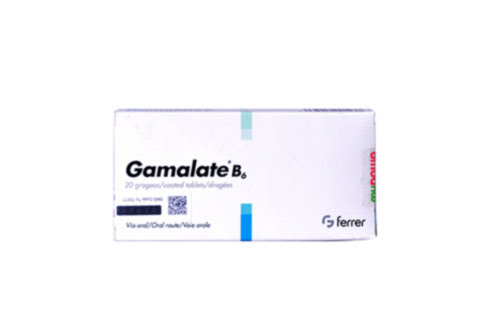
GAMALATE SOLUTION
MG GLUTAMATE HBR /GABA +GABOB /VIT B6
What it does
GABA is a natural substance that helps calm the brain and may reduce anxiety.
Commonly used for: anxiety disorders, epilepsy, sleep disorders
Read more in plain English ↓Plain-language summary for general understanding - not medical advice. Always follow your pharmacist/doctor.
Ask about this medicine
Answers come only from this medicine's registration record, BNF monograph and interaction data - not medical advice.
Hard to find? We help patients in Kenya source rare medicines. We don't sell or dispense medicines - licensed pharmacies do.
Source this medicineRegistration & product details
Source: Pharmacy and Poisons Board · fetched 2026-01-28 20:49:48 · updated 2026-09-25 02:04:37
About gaba
GABA is a natural substance that helps calm the brain and may reduce anxiety.
What it treats
- anxiety disorders
- epilepsy
- sleep disorders
How it works
GABA works by blocking signals in the brain that can cause anxiety and stress, helping to promote relaxation.
Who it's for
GABA may be suitable for people dealing with anxiety, seizures, or trouble sleeping.
AI-assisted summary grounded in BNF data - general information only, not medical advice. Always confirm with your pharmacist or doctor.
About gabob
Gabob is a medication used to treat certain conditions affecting the nervous system.
What it treats
- seizures (epilepsy)
- nerve pain (neuropathic pain)
How it works
Gabob helps to calm down nerve activity in the brain, which can reduce seizures and relieve pain.
Who it's for
Gabob is for people who have epilepsy or experience nerve pain.
AI-assisted summary grounded in BNF data - general information only, not medical advice. Always confirm with your pharmacist or doctor.
About glutamate
Glutamate is an amino acid that plays a key role in the brain and nervous system, often involved in nerve signal transmission.
What it treats
- promoting brain function
- supporting nerve health
How it works
Glutamate helps transmit signals between nerve cells, which is essential for brain activity and communication.
Who it's for
It is generally for individuals looking to support their cognitive functions or nerve health.
AI-assisted summary grounded in BNF data - general information only, not medical advice. Always confirm with your pharmacist or doctor.
About hbr
HBr is a medication used to treat various conditions, though specific details are not provided.
How it works
The exact mechanism of how HBr works is not specified.
Who it's for
HBr is typically prescribed for patients with specific health conditions, but details are not provided.
AI-assisted summary grounded in BNF data - general information only, not medical advice. Always confirm with your pharmacist or doctor.
About vit
Vitamin supplements are used to provide essential nutrients that may be missing from your diet.
What it treats
- vitamin deficiency
- poor diet
- boosting overall health
How it works
Vitamins help your body function properly and support overall health by aiding in various biological processes.
Who it's for
People who may not get enough vitamins from their food, including those with dietary restrictions, certain health conditions, or increased nutrient needs.
Cautions
- • Consult a healthcare professional before starting any vitamin supplement, especially if you are pregnant, breastfeeding, or have underlying health conditions.
AI-assisted summary grounded in BNF data - general information only, not medical advice. Always confirm with your pharmacist or doctor.
Clinical monograph: gaba
BNF-referencedGABA, or gamma-aminobutyric acid, is a neurotransmitter that plays a crucial role in inhibiting neuronal excitability throughout the nervous system. As an antiepileptic agent, it is primarily utilized in the management of epilepsy and other seizure disorders. GABA acts as the principal inhibitory neurotransmitter in the central nervous system, helping to regulate mood, anxiety, and muscle tension.
Indications
- Epilepsy
- Seizure disorders
- Anxiety disorders
- Muscle spasms
Dosage
Children: Refer to the BNF for Children for specific dosing guidelines.
Adults: Refer to the BNF for specific dosing guidelines.
Mechanism of action
GABA exerts its effects by binding to GABA receptors, which are ligand-gated ion channels. This binding results in the opening of ion channels that allow the influx of chloride ions into the neuron, leading to hyperpolarization and a decreased likelihood of action potential generation. Consequently, GABA reduces neuronal excitability and can help prevent seizures.
Pharmacodynamics
GABA's primary action as an inhibitory neurotransmitter is critical in maintaining the balance between excitation and inhibition in the brain. By enhancing GABAergic activity, antiepileptic medications that target GABA pathways can effectively reduce seizure frequency and severity. The modulation of GABA receptors can also influence various other neurological and psychiatric conditions, such as anxiety disorders and depression.
Pharmacokinetics
GABA is not extensively absorbed when administered orally, and its pharmacokinetics can vary based on formulation and route of administration. When utilized as a medication, its effects may be influenced by factors such as protein binding, metabolism, and excretion. The half-life and clearance rates can differ depending on the specific GABAergic drug used in therapy.
Pregnancy
Consult relevant guidelines, as safety during pregnancy is not established.
Breast-feeding
Consult relevant guidelines, as safety during breastfeeding is not established.
Storage
Store in a cool, dry place, away from light.
Formulations
- {'formulation': 'Capsules', 'strength': '100 mg'}
- {'formulation': 'Tablets', 'strength': '300 mg'}
- {'formulation': 'Oral solution', 'strength': '250 mg/5 mL'}
AI-synthesized from BNF references - general information only, not a substitute for professional medical advice or the current BNF. Verify doses with a pharmacist.
Clinical monograph: gabob
BNF-referencedGabob, also known as gabapentin, is an anticonvulsant medication primarily used to treat seizures and neuropathic pain. It is a structural analogue of gamma-aminobutyric acid (GABA), although it does not bind to GABA receptors. Gabob is also utilized in the management of restless legs syndrome and as an adjunct therapy for partial seizures in adults and children. Its safety and efficacy have made it a commonly prescribed medication in various clinical settings.
Indications
- Partial seizures in adults and children
- Neuropathic pain
- Restless legs syndrome
Dosage
Children: Refer to the BNF for Children for appropriate dosing information based on age and weight.
Adults: Refer to the BNF for specific dosing guidelines based on the condition being treated and patient factors.
Mechanism of action
Gabob primarily acts by inhibiting voltage-gated calcium channels on neurons, which reduces the release of excitatory neurotransmitters. This mechanism is believed to contribute to its anticonvulsant and analgesic effects. Additionally, gabapentin may enhance GABA-mediated inhibition in the central nervous system, although it does not bind to GABA receptors directly.
Pharmacodynamics
Gabob exhibits dose-dependent effects on seizure control and pain relief. It is thought to modulate the excitatory neurotransmitter release in the central nervous system, resulting in decreased neuronal excitability. The drug's ability to stabilize neuronal membranes contributes to its efficacy in treating seizures and neuropathic pain. The therapeutic effects are typically observed within a few days to weeks after initiation of treatment.
Pharmacokinetics
Gabob is well absorbed after oral administration, with peak plasma concentrations occurring approximately 2 to 3 hours post-dose. It has a bioavailability of about 60% to 80%, which decreases with increasing doses. The drug is not extensively metabolized by the liver and is primarily excreted unchanged in the urine. Gabapentin's half-life is approximately 5 to 7 hours, and its pharmacokinetics are not significantly affected by food. Special populations, such as those with renal impairment, may require dose adjustments due to altered clearance.
Pregnancy
There is insufficient data on the use of gabob in pregnant women. Consult healthcare professionals for individual assessment.
Breast-feeding
It is not known if gabob is excreted in human milk. Caution is advised when administering to nursing mothers.
Storage
Store in a cool, dry place away from direct sunlight. Keep out of reach of children.
AI-synthesized from BNF references - general information only, not a substitute for professional medical advice or the current BNF. Verify doses with a pharmacist.
Clinical monograph: glutamate
BNF-referencedGlutamate is a non-essential amino acid and serves as the most abundant excitatory neurotransmitter in the central nervous system. It plays a critical role in synaptic plasticity, cognitive functions such as learning and memory, and is involved in various metabolic pathways. Despite its importance, excessive glutamate can lead to excitotoxicity, contributing to neurodegenerative diseases.
Indications
- Cognitive enhancement
- Neuroprotective strategies in neurodegenerative diseases
- Potential roles in mood disorders
Dosage
Children: Refer to BNF for Children for specific dosing information.
Adults: Refer to BNF for specific dosing information.
Mechanism of action
Glutamate activates both ionotropic (AMPA, kainate, and NMDA receptors) and metabotropic glutamate receptors. It is primarily involved in neuronal signaling and synaptic transmission. Due to its inability to cross the blood-brain barrier, it is converted into L-glutamine for utilization in the brain.
Pharmacodynamics
As an excitatory neurotransmitter, glutamate is essential for normal brain function. It is a key player in neurotransmission and synaptic plasticity, influencing learning and memory. Moreover, it acts as a precursor for GABA synthesis in GABAergic neurons.
Pharmacokinetics
Glutamate is not freely available in significant quantities in the brain due to the blood-brain barrier. Instead, it is synthesized from glucose and other precursors. Its metabolism involves conversion into L-glutamine, which is then utilized in the brain. The transient nature of glutamate makes it challenging to study pharmacokinetically.
Pregnancy
Glutamate is generally regarded as safe during pregnancy when consumed in normal dietary amounts, but excessive intake, particularly in supplement form, should be approached with caution.
Breast-feeding
Glutamate is considered safe during breastfeeding as it is naturally present in various foods and is not expected to pose a risk to nursing infants.
Storage
Store in a cool, dry place, away from direct sunlight. Keep out of reach of children.
AI-synthesized from BNF references - general information only, not a substitute for professional medical advice or the current BNF. Verify doses with a pharmacist.
Molecular reference: gaba
PubChem CID 119Molecular formula: C4H9NO2
Biological pathways
Source: PubChem (NCBI) · pathways from PathBank, Reactome, WikiPathways & PharmGKB.
Molecular reference: gabob
PubChem CID 2149Molecular formula: C4H9NO3
Source: PubChem (NCBI) · pathways from PathBank, Reactome, WikiPathways & PharmGKB.
Molecular reference: glutamate
PubChem CID 33032Molecular formula: C5H9NO4
Mechanism of action
Glutamate activates both ionotropic and metabotropic glutamate receptors. The ionotropic ones being non-NMDA (AMPA and kainate) and NMDA receptors. Free glutamic acid cannot cross the blood-brain barrier in appreciable quantities; instead it is converted into L-glutamine, which the brain uses for fuel and protein synthesis. It is conjectured that glutamate is involved in cognitive functions like learning and memory in the brain, though excessive amounts may cause neuronal damage associated in diseases like amyotrophic lateral sclerosis, lathyrism, and Alzheimer's disease. Also, the drug phencyclidine (more commonly known as PCP) antagonizes glutamate at the NMDA receptor, causing behavior reminiscent of schizophrenia. Glutamate in action is extremely difficult to study due to its transient nature.
Pharmacodynamics
In addition to being one of the building blocks in protein synthesis, it is the most widespread neurotransmitter in brain function, as an excitatory neurotransmitter and as a precursor for the synthesis of GABA in GABAergic neurons.
Biological pathways
Source: PubChem (NCBI) · pathways from PathBank, Reactome, WikiPathways & PharmGKB.
This drug in other countries
The same active ingredient registered across other registries we cover - including different brands.
- 1000-D SOFT GEL CAPSULES · Contract Manufactury And Packaging Services
- ADVA-GROWTH GUMMIES · Guagdong Yichao Biological
- ADVATONIN GUMMIES · Guagdong Yichao Biological
- AJ WELLNESS IPACE CAPSULES · Renown Pharmaceuticals
- AJ WELLNESS IPACE CAPSULES · Renown Pharmaceuticals
- AJ WELLNESS IPACE CAPSULES · Renown Pharmaceuticals