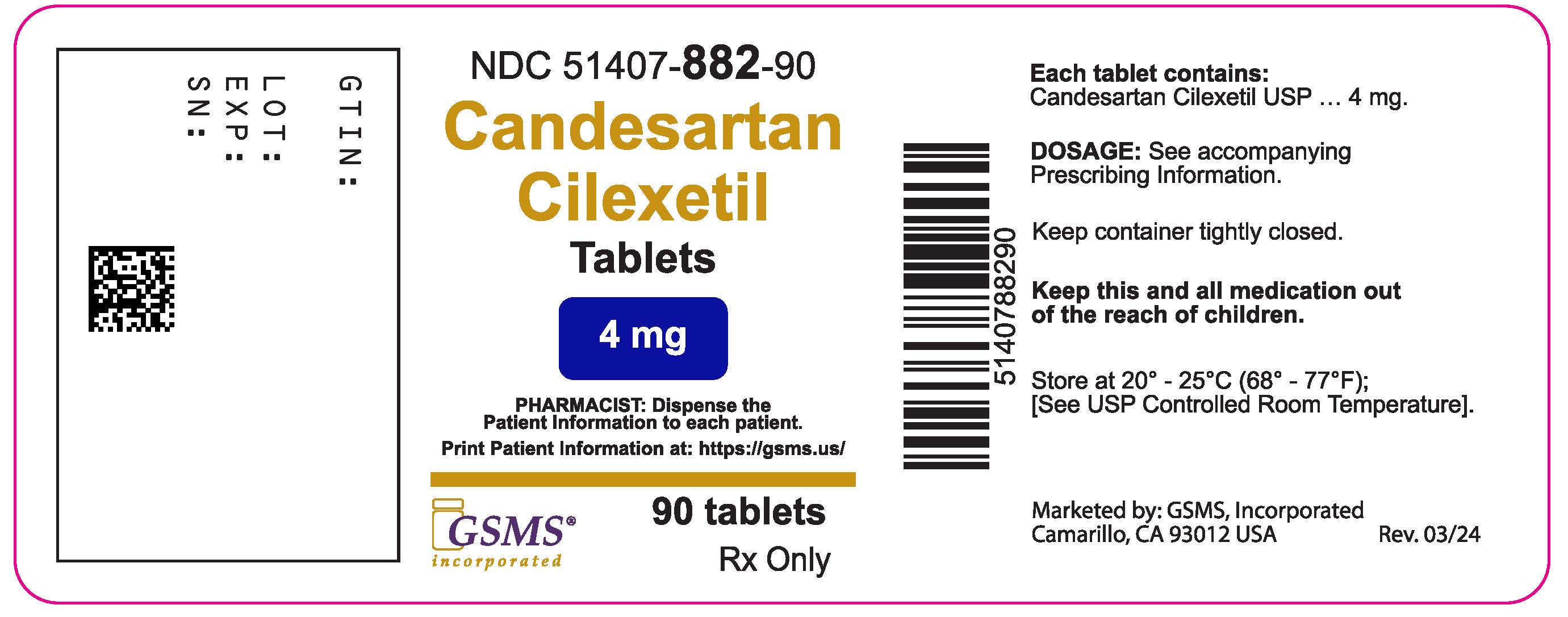
(candesartan · DailyMed)
ADVANT 8MG TABLETS
CANDESARTAN CILEXETIL
What it does
Candesartan is a medication that helps lower blood pressure and protect heart health.
Commonly used for: high blood pressure (hypertension), heart failure
Read more in plain English ↓Plain-language summary for general understanding - not medical advice. Always follow your pharmacist/doctor.
Ask about this medicine
Answers come only from this medicine's registration record, BNF monograph and interaction data - not medical advice.
Medicine sourcing is available in Kenya only. We don't sell or dispense medicines - licensed pharmacies do.
Sourcing - Kenya onlyRegistration & product details
Source: Food and Drugs Authority · fetched 2026-04-18 08:42:14 · updated 2026-09-15 04:00:10
About candesartan
Candesartan is a medication that helps lower blood pressure and protect heart health.
What it treats
- high blood pressure (hypertension)
- heart failure
How it works
Candesartan works by blocking a hormone that can narrow blood vessels, helping to relax them and lower blood pressure.
Who it's for
This medication is for adults with high blood pressure or heart failure.
Drug class
Angiotensin-II receptor antagonists
Cautions
- • Be careful if taking other medications that can cause low blood pressure.
- • Use caution with medications that may increase potassium levels in the blood.
AI-assisted summary grounded in BNF data - general information only, not medical advice. Always confirm with your pharmacist or doctor.
About cilexetil
Cilexetil is a medication used to treat certain health conditions. It works by affecting how the body responds to certain signals.
What it treats
- anxiety disorders
- depression
- panic attacks
How it works
Cilexetil helps to balance chemicals in the brain that affect mood and emotions.
Who it's for
This medication is for adults who are experiencing anxiety or depression.
AI-assisted summary grounded in BNF data - general information only, not medical advice. Always confirm with your pharmacist or doctor.
Clinical monograph: candesartan
BNF-referencedCandesartan is an angiotensin-II receptor antagonist used primarily in the treatment of hypertension and heart failure. It works by blocking the effects of angiotensin II, a hormone that can cause blood vessels to constrict, leading to increased blood pressure. By inhibiting this action, candesartan helps to lower blood pressure and reduce the workload on the heart.
Indications
- Hypertension
- Heart failure
- Left ventricular dysfunction post-myocardial infarction
Dosage
Children: For children aged 1 to 17 years, the dose is based on body weight. The recommended starting dose is 0.05 to 0.1 mg/kg once daily, with a maximum dose of 0.4 mg/kg or 32 mg, whichever is lower.
Adults: The typical adult starting dose for hypertension is 8 mg once daily, which may be increased to a maximum of 32 mg once daily based on blood pressure response.
Mechanism of action
Candesartan selectively antagonizes the type I angiotensin II receptor (AT1), preventing angiotensin II from exerting its vasoconstrictive and aldosterone-secreting effects. This inhibition allows for vasodilation and decreased aldosterone release, promoting sodium excretion and lowering blood pressure. Candesartan does not affect the degradation of bradykinin, thus minimizing the common side effects associated with ACE inhibitors, such as cough and angioedema.
Pharmacodynamics
Candesartan effectively reduces systemic vascular resistance and lowers blood pressure, which can lead to a decrease in myocardial oxygen demand. Its long duration of action allows for once-daily dosing, and it has shown efficacy in both monotherapy and in combination with other antihypertensive agents. It also demonstrates cardioprotective effects, making it beneficial in the management of heart failure.
Pharmacokinetics
Candesartan is well-absorbed following oral administration, with peak plasma concentrations occurring approximately 1 to 3 hours after dosing. It has a bioavailability of around 15% due to extensive first-pass metabolism. Candesartan is primarily excreted via the kidneys, with a half-life of about 9 hours. The presence of food does not significantly affect its absorption.
Contra-indications
- Hypersensitivity to candesartan or any of its excipients
- Severe hepatic impairment
- Pregnancy
Adverse effects
- Dizziness
- Fatigue
- Hypotension
- Hyperkalemia
- Renal impairment
- Angioedema
Interactions
- Other antihypertensive agents may increase the hypotensive effect
- Potassium-sparing diuretics or potassium supplements may increase the risk of hyperkalemia
- Non-steroidal anti-inflammatory drugs (NSAIDs) may reduce the antihypertensive effect and increase the risk of renal impairment
Precautions
- Caution in patients with renal artery stenosis
- Monitor renal function, especially in patients with pre-existing renal impairment
- Caution in patients with aortic stenosis or hypertrophic cardiomyopathy
- Use with caution in patients with a history of angioedema
Pregnancy
Candesartan is contraindicated in pregnancy due to potential harm to the fetus, particularly in the second and third trimesters.
Breast-feeding
Candesartan is excreted in breast milk, and caution should be exercised when administering to breastfeeding women.
Storage
Store below 25°C in a dry place, protect from light.
Formulations
- Tablets: 4 mg, 8 mg, 16 mg, 32 mg
AI-synthesized from BNF references - general information only, not a substitute for professional medical advice or the current BNF. Verify doses with a pharmacist.
Clinical monograph: cilexetil
BNF-referencedCilexetil is an esterified prodrug of the active compound cilexetil, which is used primarily as an antihypertensive agent. It acts by inhibiting the angiotensin II receptor, thereby leading to vasodilation and reduced blood pressure. Cilexetil is often used in the management of hypertension and certain cardiovascular conditions.
Indications
- Hypertension
- Heart failure
- Certain cardiovascular conditions
Dosage
Children: Refer to the BNF for Children for specific dosing information.
Adults: Refer to the BNF for specific dosing information.
Mechanism of action
Cilexetil is converted to its active form, which blocks the action of angiotensin II, a potent vasoconstrictor involved in blood pressure regulation. By inhibiting the angiotensin II receptor, cilexetil promotes vasodilation and decreases peripheral vascular resistance, leading to a reduction in blood pressure.
Pharmacodynamics
Cilexetil's antihypertensive effects are realized through its antagonistic action on the angiotensin II receptors, which results in decreased levels of aldosterone, inhibition of vasoconstriction, and reduced secretion of antidiuretic hormone. The overall pharmacodynamic profile contributes to improved cardiac output and reduced workload on the heart.
Pharmacokinetics
Cilexetil is well-absorbed following oral administration and undergoes extensive first-pass metabolism to its active metabolite. The pharmacokinetic profile indicates a moderate half-life, allowing for once-daily dosing. The distribution of cilexetil is extensive, with high protein binding rates, primarily to serum albumin. Metabolism occurs mainly in the liver, and renal excretion is the primary route for elimination of the drug and its metabolites.
Pregnancy
There is limited data on the use of cilexetil in pregnancy. Caution is advised.
Breast-feeding
It is not known whether cilexetil is excreted in human milk. Caution is recommended.
Storage
Store in a cool, dry place away from direct sunlight and moisture.
AI-synthesized from BNF references - general information only, not a substitute for professional medical advice or the current BNF. Verify doses with a pharmacist.
Molecular reference: candesartan
PubChem CID 2541Molecular formula: C24H20N6O3
Mechanism of action
Although these agents /angiotensin II receptor antagonists/ are similar to ACE inhibitors in that they decrease the effects of angiotensin II, rather than decreasing the formation of angiotensin II, drugs antagonize angiotensin II at the type I angiotensin receptor. This allows the drugs to inhibit the vasoconstrictive and aldosterone promoting effects of angiotensin II without interfering with bradykinin degradation, significantly reducing the adverse effects of cough and angioedema seen with ACE inhibitor therapy. ... /Angiotensin II receptor antagonists/ Angiotensin II is formed from angiotensin I in a reaction catalyzed by angiotensin-converting enzyme (ACE, kininase II). Angiotensin II is the principal pressor agent of the renin-angiotensin system, with effects that include vasoconstriction, stimulation of synthesis and release of aldosterone, cardiac stimulation, and renal reabsorption of sodium. Candesartan blocks the vasoconstrictor and aldosterone-secreting effects of angiotensin II by selectively blocking the binding of angiotensin II to the AT1 receptor in many tissues, such as vascular smooth muscle and the adrenal gland. Its action is, therefore, independent of the pathways for angiotensin II synthesis. There is also an AT2 receptor found in many tissues, but AT2 is not known to be associated with cardiovascular homeostasis. Candesartan has much greater affinity (>10,000-fold) for the ATI receptor than for the AT2 receptor. Blockade of the renin-angiotensin system with ACE inhibitors, which inhibit the biosynthesis of angiotensin II from angiotensin I, is widely used in the treatment of hypertension. ACE inhibitors also inhibit the degradation of bradykinin, a reaction also catalyzed by ACE. Because candesartan does not inhibit ACE (kininase II), it does not affect the response to bradykinin. Whether this difference has clinical relevance is not yet known. Candesartan does not bind to or block other hormone receptors or ion channels known to be important in cardiovascular regulation. Blockade of the angiotensin II receptor inhibits the negative regulatory feedback of angiotensin II on renin secretion, but the resulting increased plasma renin activity and angiotensin II circulating levels do not overcome the effect of candesartan on blood pressure.
Biological pathways
Source: PubChem (NCBI) · pathways from PathBank, Reactome, WikiPathways & PharmGKB.
Molecular reference: cilexetil
PubChem CID 22123692Molecular formula: C10H18O3
Source: PubChem (NCBI) · pathways from PathBank, Reactome, WikiPathways & PharmGKB.
This drug in other countries
The same active ingredient registered across other registries we cover - including different brands.
- ADERAN 16 · Harleys
- ADERAN 32 · Harleys
- ADERAN 8 · Harleys
- ADVANT 16 MG TABLETS · Harleys
- ADVANT 8 MG TABLETS · Harleys
- ADVANTEC TABLETS · Harleys
- ADERAN 8 · Ajanta Pharma
- Aderan 16
- Aderan 16 · Ajanta Pharma
- Aderan 8 · Ajanta Pharma
- Aderan HTZ 16/12.5 · Ajanta Pharma
- Aderan HTZ 8/12.5 · Ajanta Pharma