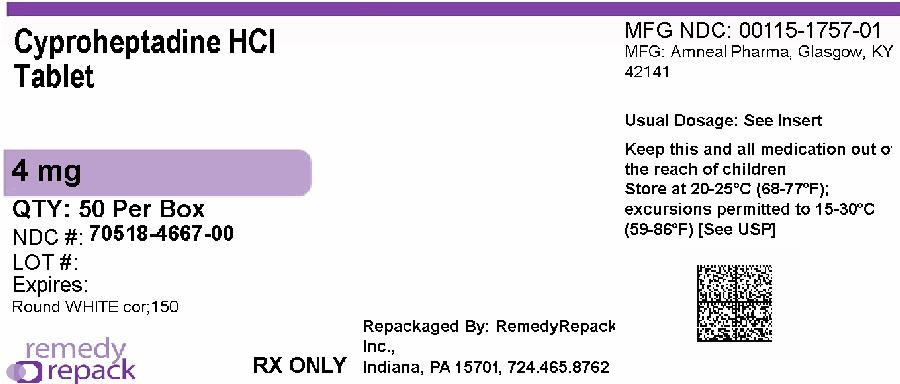
(cyproheptadine · DailyMed)
RONAKTONE SYRUP
CYPROHEPTADINE+L-LYSINE+VIT B1+VIT B2+VIT B6+NICOTINAMIDE+ZINC+MANGANESE
What it does
Cyproheptadine is a sedating antihistamine used to relieve allergy symptoms and other conditions.
Commonly used for: allergic reactions, hay fever (allergic rhinitis), sneezing, runny nose …
Read more in plain English ↓Plain-language summary for general understanding - not medical advice. Always follow your pharmacist/doctor.
Ask about this medicine
Answers come only from this medicine's registration record, BNF monograph and interaction data - not medical advice.
Medicine sourcing is available in Kenya only. We don't sell or dispense medicines - licensed pharmacies do.
Sourcing - Kenya onlyRegistration & product details
Source: Food and Drugs Authority · fetched 2026-04-18 08:33:08 · updated 2026-09-18 04:00:05
Drug Interactions
2Pharmacodynamic Warnings
Cyproheptadine appears in TABLE 10: Drugs with antimuscarinic effects
Cyproheptadine appears in TABLE 11: Drugs with CNS depressant effects
Severe (1)
Metyrapone - decreases effects
Cyproheptadine decreases the effects of metyrapone. Avoid.
Unknown (1)
Fenfluramine - decreases efficacy
Cyproheptadinemightdecreasetheefficacyoffenfluramine. rTheoretical
Data from BNF 85 (British National Formulary). This is not a substitute for professional medical advice. Matched via: exact
About cyproheptadine
Cyproheptadine is a sedating antihistamine used to relieve allergy symptoms and other conditions.
What it treats
- allergic reactions
- hay fever (allergic rhinitis)
- sneezing
- runny nose
- itchy eyes
- appetite stimulation
How it works
It works by blocking histamine, a substance in the body that causes allergic symptoms.
Who it's for
It is suitable for adults and children who need relief from allergies or increased appetite.
Drug class
Antihistamines, sedating
Cautions
- • Avoid using with medications that have similar effects on the body, like those that cause dry mouth or blurred vision.
- • Be cautious if you're taking medications that make you sleepy or affect your central nervous system.
AI-assisted summary grounded in BNF data - general information only, not medical advice. Always confirm with your pharmacist or doctor.
About l-lysine
L-lysine is an essential amino acid that your body needs to build proteins and support various bodily functions.
What it treats
- cold sores (herpes simplex)
- supporting immune function
- promoting muscle recovery
How it works
L-lysine helps your body produce proteins and is important for growth and maintenance.
Who it's for
L-lysine is suitable for adults and children who need extra support for their immune system or muscle recovery.
AI-assisted summary grounded in BNF data - general information only, not medical advice. Always confirm with your pharmacist or doctor.
About manganese
Manganese is a trace mineral important for many bodily functions, including bone formation and metabolism.
What it treats
- nutritional support
- bone health
How it works
Manganese helps the body use certain nutrients and is involved in the formation of connective tissue, bones, and blood-clotting factors.
Who it's for
Adults and children who may have low manganese levels due to dietary deficiencies.
Cautions
- • Excessive intake can lead to toxicity.
- • Consult a healthcare provider if you have liver problems.
AI-assisted summary grounded in BNF data - general information only, not medical advice. Always confirm with your pharmacist or doctor.
About nicotinamide
Nicotinamide is a form of vitamin B3 that helps maintain healthy skin and supports various body functions.
What it treats
- acne (acne vulgaris)
- skin conditions
- dry skin
- certain types of dermatitis
How it works
Nicotinamide helps improve skin health by reducing inflammation and promoting cell repair.
Who it's for
It is suitable for people looking to improve their skin condition or reduce acne.
AI-assisted summary grounded in BNF data - general information only, not medical advice. Always confirm with your pharmacist or doctor.
About vit
Vitamin supplements are used to provide essential nutrients that may be missing from your diet.
What it treats
- vitamin deficiency
- poor diet
- boosting overall health
How it works
Vitamins help your body function properly and support overall health by aiding in various biological processes.
Who it's for
People who may not get enough vitamins from their food, including those with dietary restrictions, certain health conditions, or increased nutrient needs.
Cautions
- • Consult a healthcare professional before starting any vitamin supplement, especially if you are pregnant, breastfeeding, or have underlying health conditions.
AI-assisted summary grounded in BNF data - general information only, not medical advice. Always confirm with your pharmacist or doctor.
Clinical monograph: Nicotinamide
BNF-referencedNicotinamide, also known as niacinamide, is a form of vitamin B3 that is involved in numerous biological processes including energy metabolism and DNA repair. It is primarily utilized topically for the treatment of skin conditions such as papulopustular rosacea and inflammatory acne vulgaris. Nicotinamide is known for its anti-inflammatory properties and its ability to improve skin barrier function, making it beneficial for various dermatological conditions.
Indications
- Papulopustular rosacea
- Inflammatory acne vulgaris
Dosage
Children: Refer to the BNF for Children for specific dosing recommendations.
Adults: For papulopustular rosacea, apply daily for up to 4 months. The treatment course may be repeated; discontinue if no improvement is observed after 3 months. For inflammatory acne vulgaris, apply twice daily, reduced to once daily or alternate days if irritation occurs.
Mechanism of action
Nicotinamide exhibits anti-inflammatory effects by inhibiting the release of pro-inflammatory cytokines and enhancing the barrier function of the skin. It is also involved in the NAD salvage pathway, which is essential for maintaining cellular energy levels and promoting cell repair mechanisms. Additionally, nicotinamide contributes to the synthesis of coenzymes involved in metabolic processes, including the conversion of niacin into NAD+.
Pharmacodynamics
Nicotinamide is known for its ability to improve skin hydration and reduce transepidermal water loss. It has been shown to decrease the appearance of acne lesions and rosacea by modulating inflammatory responses and accelerating cell turnover. Its antioxidant properties also help to protect the skin from oxidative stress and UV damage.
Pharmacokinetics
When applied topically, nicotinamide is absorbed through the skin layers, with minimal systemic absorption. Its peak plasma concentrations are generally low, and the drug has a half-life that varies depending on the route of administration. The metabolism of nicotinamide occurs primarily in the liver, where it is converted into its active forms, including NAD+. The elimination route is via the kidneys, with metabolites excreted in urine.
Contra-indications
- Pregnancy
- Severe acne involving large areas
- Severe skin reactions
Adverse effects
- Sunburn
- Skin reactions (common or very common)
- Cheilitis
- Eyelid oedema
- Flushing
- Dry skin
- Eye irritation
- Photosensitivity reactions
- Transient skin pigmentation changes
Interactions
- Clindamycin
- Topical retinoids
- Abrasive cleaners
- Comedogenic cosmetics
Precautions
- Avoid exposure to UV light, including sunlight and sunlamps
- Wash hands immediately after use
- Avoid contact with eyes and mucous membranes
- Use moisturizers to reduce the risk of skin irritation
- Discontinue treatment if severe irritation occurs
Pregnancy
Avoid use during pregnancy due to potential risks, as limited information is available regarding toxicity.
Breast-feeding
Amount of drug in milk after topical application is probably too small to be harmful; ensure infant does not come in contact with treated areas.
Storage
Store at room temperature away from moisture and light.
Formulations
- Cream
- Gel
AI-synthesized from BNF references - general information only, not a substitute for professional medical advice or the current BNF. Verify doses with a pharmacist.
Clinical monograph: Cyproheptadinehydrochloride
BNF-referencedCyproheptadine hydrochloride is a first-generation antihistamine with anticholinergic and sedative properties. It is primarily used for the symptomatic relief of allergic conditions, including hay fever and urticaria, and is known to stimulate appetite, making it useful in certain clinical contexts such as weight gain in undernourished patients.
Indications
- Allergic conditions
- Hay fever
- Urticaria
- Pruritus
- Appetite stimulation
Dosage
Children: For children aged 6 months to 5 years, the dose is 5-15 mg daily in divided doses, adjusted according to weight, with a maximum of 2 mg/kg per day. For children aged 6-17 years weighing up to 40 kg, the initial dose is 15-25 mg daily in divided doses, adjusted as necessary to a maximum of 2 mg/kg per day. For those weighing 40 kg and above, the initial dose is 15-25 mg daily in divided doses, increased if necessary to 50-100 mg daily.
Adults: Initially, 25 mg daily, taken at night; may be increased if necessary to 25 mg 3-4 times a day. Maximum dose is 32 mg per day.
Mechanism of action
Cyproheptadine acts as a competitive antagonist at histamine H1 receptors, thereby inhibiting the action of histamine, which is responsible for allergic symptoms. Additionally, it may also block serotonin receptors, contributing to its appetite-stimulating effects.
Pharmacodynamics
The drug exhibits sedative effects by crossing the blood-brain barrier, leading to central nervous system depression. It can also produce anticholinergic effects, such as dry mouth and urinary retention, due to its action on muscarinic receptors. The sedative properties can impair the performance of skilled tasks and may be potentiated by alcohol consumption.
Pharmacokinetics
Cyproheptadine is well-absorbed from the gastrointestinal tract and undergoes hepatic metabolism. Its elimination half-life is approximately 8-12 hours, and it is excreted primarily in urine. The onset of action is typically within 1-2 hours, with effects lasting for several hours.
Contra-indications
- Acute porphyrias
- Prolonged QT-interval
- Risk factors for QT prolongation
Adverse effects
- Drowsiness
- Dizziness
- Dry mouth
- Nausea
- Constipation
- Headache
- Palpitations
- Tachycardia
- Fatigue
- Irritability
- Paradoxical excitability
- Tremor
Interactions
- Antihistamines
- Sedating agents
- Alcohol
Precautions
- Use with caution in the elderly
- Patients with epilepsy
- Prostatic hypertrophy
- Pyloroduodenal obstruction
- Susceptibility to angle-closure glaucoma
- Urinary retention
Pregnancy
Most manufacturers of antihistamines advise avoiding their use during pregnancy; however, there is no evidence of teratogenicity. Use in the latter part of the third trimester may cause adverse effects in neonates.
Breast-feeding
Most antihistamines are present in breast milk in varying amounts; although not known to be harmful, most manufacturers advise avoiding their use in mothers who are breastfeeding.
Storage
Store in a cool, dry place away from direct sunlight. Keep out of reach of children.
Formulations
- Oral suspension
- Tablets (4 mg)
AI-synthesized from BNF references - general information only, not a substitute for professional medical advice or the current BNF. Verify doses with a pharmacist.
Clinical monograph: cyproheptadine
BNF-referencedCyproheptadine is a sedating antihistamine that primarily acts as a competitive antagonist at H1 histamine receptors and serotonin receptors. It is used clinically for its antihistaminic and antiserotonin effects, contributing to its ability to stimulate appetite and manage allergic reactions. Additionally, cyproheptadine exhibits weak anticholinergic properties and moderate central depressant effects.
Indications
- Allergic rhinitis
- Allergic conjunctivitis
- Urticaria
- Angioedema
- Anaphylaxis (as adjunct therapy)
- Appetite stimulation in certain conditions
Dosage
Children: Refer to BNF for Children for appropriate pediatric dosing, as it varies by age and condition. Generally, doses may start at 0.25 mg/kg for younger children, but specific guidelines should be
Adults: The usual adult dose for allergic conditions is 4 mg three times daily, which may be increased to a maximum of 12 mg per day as needed. For appetite stimulation, the starting dose is often 4 mg taken once or twice daily.
Mechanism of action
Cyproheptadine exerts its effects by competing with free histamine and serotonin for binding at their respective receptors. Its action as an H1 blocker is complemented by its antagonism of serotonin at 5-HT2A receptors, particularly influencing the appetite center in the hypothalamus. This dual action accounts for its appetite-stimulating properties and mitigates several pharmacodynamic effects of serotonin.
Pharmacodynamics
Cyproheptadine antagonizes several effects of serotonin and histamine, including bronchoconstriction and vasodepression. Its efficacy in combatting histamine-mediated effects has been established, although the details regarding its role in preventing anaphylactic shock remain unclear, likely linked to its anti-serotonergic activity. The drug's sedative properties arise from its central nervous system effects.
Pharmacokinetics
Cyproheptadine is well-absorbed after oral administration. It is metabolized in the liver, with a variable half-life and is primarily excreted in urine. The onset of action typically occurs within one to two hours, and the duration of action can last up to 12 hours. The pharmacokinetic profile may be influenced by individual metabolic variations.
Adverse effects
- Drowsiness
- Dizziness
- Dry mouth
- Constipation
- Blurred vision
- Increased appetite
Interactions
- cyproheptadine+metyrapone: Severe (decreases effects)
- cyproheptadine+fenfluramine: Unknown (decreases efficacy)
Precautions
- Caution in patients with glaucoma
- Caution in patients with prostate hypertrophy
- Use with caution in elderly patients due to increased sensitivity
Pregnancy
Cyproheptadine should only be used during pregnancy if the potential benefit justifies the potential risk to the fetus. Limited data are available on its safety.
Breast-feeding
Cyproheptadine is excreted in breast milk. Caution is advised when administered to breastfeeding mothers.
Storage
Store at room temperature, away from moisture and heat. Keep out of reach of children.
Formulations
- Tablets
- Syrup
AI-synthesized from BNF references - general information only, not a substitute for professional medical advice or the current BNF. Verify doses with a pharmacist.
Clinical monograph: llysine
BNF-referencedLysine is an essential amino acid that plays a critical role in protein synthesis and various metabolic functions. It is vital for the production of proteins, collagen, hormones, and enzymes. Additionally, lysine is known to inhibit the replication of herpes simplex virus when present in higher concentrations relative to L-arginine, providing potential therapeutic benefits for managing herpes infections. It also aids in calcium absorption and is necessary for proper growth and development.
Indications
- Herpes simplex virus infections
- Lysine deficiency
- Support in calcium absorption
- Collagen synthesis
Dosage
Children: Refer to the BNF for Children for specific paediatric dosing guidelines.
Adults: Refer to the BNF for specific adult dosing guidelines.
Mechanism of action
Lysine inhibits the replication of herpes simplex virus by altering the amino acid ratio in tissues, particularly decreasing the availability of L-arginine which the virus requires for replication. Additionally, lysine is involved in protein synthesis where it binds with transfer RNA (tRNA) to facilitate the translation process that produces specific proteins.
Pharmacodynamics
Lysine ensures the adequate absorption of calcium, supports collagen formation which is essential for bone, cartilage, and connective tissues, and aids in the production of antibodies, hormones, and enzymes. A deficiency in lysine can lead to various health issues including fatigue, concentration difficulties, irritability, and reproductive problems.
Pharmacokinetics
Lysine is rapidly absorbed from the gastrointestinal tract. It is distributed throughout the body and is primarily excreted via the kidneys. The half-life and detailed metabolic pathways of lysine can vary based on individual physiological conditions and dietary intake.
Adverse effects
- Gastrointestinal disturbances
- Abdominal pain
- Nausea
- Diarrhea
Precautions
- Use with caution in individuals with kidney disease
- Monitor for gastrointestinal effects
Pregnancy
L-lysine is generally considered safe during pregnancy, but clinical advice should be sought.
Breast-feeding
L-lysine is excreted in breast milk, but is typically deemed safe during breastfeeding.
Storage
Store in a cool, dry place away from direct sunlight.
Formulations
- Tablets
- Capsules
- Powder
AI-synthesized from BNF references - general information only, not a substitute for professional medical advice or the current BNF. Verify doses with a pharmacist.
Clinical monograph: manganese
BNF-referencedManganese is a trace mineral that is essential for human health, playing a critical role in various physiological processes. It is involved in the formation of connective tissue, bones, blood clotting factors, and sex hormones. Additionally, manganese is a cofactor for several important enzymes, including those involved in metabolism and antioxidant defense. It is found in foods such as nuts, seeds, whole grains, and leafy vegetables.
Indications
- Manganese deficiency
- Bone health and development
- Antioxidant support
- Enzyme cofactor in metabolic processes
Dosage
Children: Refer to the BNF for Children for appropriate dosing recommendations.
Adults: Refer to specific clinical guidelines or the BNF for appropriate dosing recommendations.
Mechanism of action
Manganese serves as a cofactor for several enzymes, including manganese superoxide dismutase (MnSOD), which protects cells from oxidative stress by catalyzing the dismutation of superoxide radicals into oxygen and hydrogen peroxide. It also participates in the activation of enzymes involved in carbohydrate, fat, and protein metabolism.
Pharmacodynamics
Manganese plays a role in various biochemical pathways, particularly in the metabolism of amino acids, cholesterol, glucose, and carbohydrates. It is crucial for bone formation and the maintenance of cartilage. Manganese also aids in the synthesis of glycosyltransferases, which are important for the formation of glycoproteins and proteoglycans.
Pharmacokinetics
Manganese is absorbed primarily in the small intestine, with absorption efficiency influenced by dietary factors and the presence of competing minerals. It is transported in the bloodstream bound to proteins such as alpha-2-macroglobulin and transferrin. Manganese is stored in the liver, pancreas, and bones, and is excreted primarily through bile and to a lesser extent in urine. Its half-life in the human body is not well defined due to its trace nature and variable absorption.
Pregnancy
Manganese is classified as a dietary mineral that is essential for human health, but excessive intake should be avoided during pregnancy as it may affect fetal development.
Breast-feeding
Manganese is present in breast milk, and normal dietary intake is considered safe during breastfeeding. However, excessive supplementation should be avoided.
Storage
Store in a cool, dry place, away from direct light and moisture.
AI-synthesized from BNF references - general information only, not a substitute for professional medical advice or the current BNF. Verify doses with a pharmacist.
Molecular reference: Nicotinamide
PubChem CID 936Molecular formula: C6H6N2O
Biological pathways
Source: PubChem (NCBI) · pathways from PathBank, Reactome, WikiPathways & PharmGKB.
Molecular reference: cyproheptadine
PubChem CID 2913Molecular formula: C21H21N
Mechanism of action
Cyproheptadine appears to exert its antihistamine and antiserotonin effects by competing with free histamine and serotonin for binding at their respective receptors. Antagonism of serotonin on the appetite center of the hypothalamus may account for cyproheptadine's ability to stimulate the appetite. CYPROHEPTADINE...IS A SEROTONIN & HISTAMINE ANTAGONIST... ... It is an effective H1 blocker. Cyproheptadine also has prominent 5-H blocking activity on smooth muscle by virtue of its binding to 5-HT2A receptors. ... It has weak anticholinergic activity and possess mild central depressant properties.
Pharmacodynamics
Cyproheptadine has been observed to antagonize several pharmacodynamic effects of serotonin in laboratory animals, including bronchoconstriction and vasodepression, and has demonstrated similar efficacy in antagonizing histamine-mediated effects. The reason for its efficacy in preventing anaphylactic shock has not been elucidated, but appears to be related to its anti-serotonergic effects.
Biological pathways
Source: PubChem (NCBI) · pathways from PathBank, Reactome, WikiPathways & PharmGKB.
Molecular reference: l-lysine
PubChem CID 5962Molecular formula: C6H14N2O2
Mechanism of action
Proteins of the herpes simplex virus are rich in L-arginine, and tissue culture studies indicate an enhancing effect on viral replication when the amino acid ratio of L-arginine to lysine is high in the tissue culture media. When the ratio of L-lysine to L-arginine is high, viral replication and the cytopathogenicity of herpes simplex virus have been found to be inhibited. L-lysine may facilitate the absorption of calcium from the small intestine. Amino acids are selected for protein synthesis by binding with transfer RNA (tRNA) in the cell cytoplasm. The information on the amino acid sequence of each individual protein is contained in the sequence of nucleotides in the messenger RNA (mRNA) molecules, which are synthesized in the nucleus from regions of DNA by the process of transcription. The mRNA molecules then interact with various tRNA molecules attached to specific amino acids in the cytoplasm to synthesize the specific protein by linking together individual amino acids; this process, known as translation, is regulated by amino acids (e.g., leucine), and hormones. Which specific proteins are expressed in any particular cell and the relative rates at which the different cellular proteins are synthesized, are determined by the relative abundances of the different mRNAs and the availability of specific tRNA-amino acid combinations, and hence by the rate of transcription and the stability of the messages. From a nutritional and metabolic point of view, it is important to recognize that protein synthesis is a continuing process that takes place in most cells of the body. In a steady state, when neither net growth nor protein loss is occurring, protein synthesis is balanced by an equal amount of protein degradation. The major consequence of inadequate protein intakes, or diets low or lacking in specific indispensable amino acids relative to other amino acids (often termed limiting amino acids), is a shift in this balance so that rates of synthesis of some body proteins decrease while protein degradation continues, thus providing an endogenous source of those amino acids most in need. /Amino acids/ The mechanism of intracellular protein degradation, by which protein is hydrolyzed to free amino acids, is more complex and is not as well characterized at the mechanistic level as that of synthesis. A wide variety of different enzymes that are capable of splitting peptide bonds are present in cells. However, the bulk of cellular proteolysis seems to be shared between two multienzyme systems: the lysosomal and proteasomal systems. The lysosome is a membrane-enclosed vesicle inside the cell that contains a variety of proteolytic enzymes and operates mostly at acid pH. Volumes of the cytoplasm are engulfed (autophagy) and are then subjected to the action of the protease enzymes at high concentration. This system is thought to be relatively unselective in most cases, although it can also degrade specific intracellular proteins. The system is highly regulated by hormones such as insulin and glucocorticoids, and by amino acids. The second system is the ATP-dependent ubiquitin-proteasome system, which is present in the cytoplasm. The first step is to join molecules of ubiquitin, a basic 76-amino acid peptide, to lysine residues in the target protein. Several enzymes are involved in this process, which selectively targets proteins for degradation by a second component, the proteasome. /Amino acids/
Pharmacodynamics
Insures the adequate absorption of calcium; helps form collagen ( which makes up bone cartilage & connective tissues); aids in the production of antibodies, hormones & enzymes. Recent studies have shown that Lysine may be effective against herpes by improving the balance of nutrients that reduce viral growth. A deficiency may result in tiredness, inability to concentrate, irritability, bloodshot eyes, retarded growth, hair loss, anemia & reproductive problems.
Biological pathways
Source: PubChem (NCBI) · pathways from PathBank, Reactome, WikiPathways & PharmGKB.
Molecular reference: manganese
PubChem CID 23930Molecular formula: Mn
Source: PubChem (NCBI) · pathways from PathBank, Reactome, WikiPathways & PharmGKB.
This drug in other countries
The same active ingredient registered across other registries we cover - including different brands.