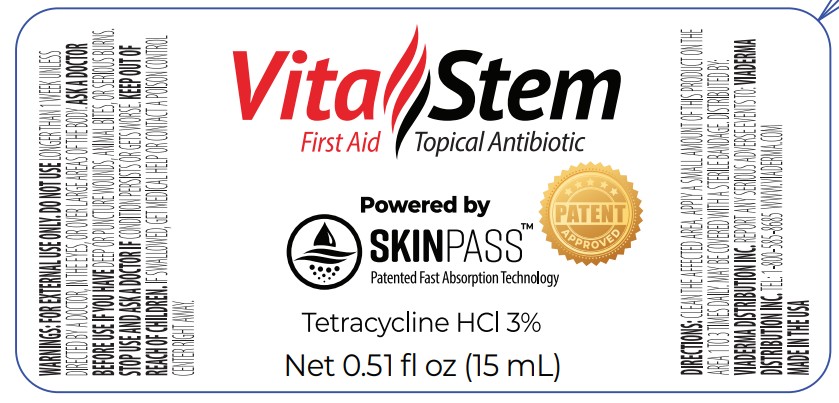
(tetracycline · DailyMed)
TCN WSP WATER SOLUBLE POWDER
Tetracycline HCL/Colistin Sulfate/Neomycin Sulphate
What it does
Colistin is an antibiotic used to treat serious infections caused by certain bacteria, especially when other antibiotics are not effective.
Commonly used for: serious bacterial infections, pneumonia, blood infections (sepsis)
Read more in plain English ↓Plain-language summary for general understanding - not medical advice. Always follow your pharmacist/doctor.
Ask about this medicine
Answers come only from this medicine's registration record, BNF monograph and interaction data - not medical advice.
Medicine sourcing is available in Kenya only. We don't sell or dispense medicines - licensed pharmacies do.
Sourcing - Kenya onlyRegistration & product details
Source: Food and Drugs Authority · fetched 2026-04-18 08:33:04 · updated 2026-05-29 03:52:23
Drug Interactions
19Pharmacodynamic Warnings
Tetracycline appears in TABLE 1: Drugs that cause hepatotoxicity
Neomycin appears in TABLE 2: Drugs that cause nephrotoxicity
Neomycin appears in TABLE 19: Drugs that cause ototoxicity
Neomycin appears in TABLE 20: Drugs with neuromuscular blocking effects
Severe (3)
Agalsidasealfa - decreases effects
Aminoglycosidesarepredictedtodecreasetheeffectsof agalsidasealfa.Avoid.oTheoretical
Agalsidasebeta - decreases effects
Aminoglycosidesarepredictedtodecreasetheeffectsof agalsidasebeta.Avoid.oTheoretical
Tetracyclines - decreases absorption
Strontium is predicted to decrease the absorption of tetracyclines. Avoid. Theoretical Sucralfate
Moderate (3)
Lithium - increases risk of lithium toxicity
Tetracyclines are predicted to increase the risk of lithium toxicity when given with lithium. Avoid or adjust dose.
Tetracyclines - decreases concentration
Fosphenytoin is predicted to decrease the concentration of tetracyclines (doxycycline). Adjust dose.
Tetracyclines - decreases exposure
Rifampicin modestly decreases the exposure to tetracyclines (doxycycline). Adjust dose.
Unknown (13)
Aminoglycosides - decreases exposure
Miconazole potentially decreases the exposure to aminoglycosides (tobramycin).
Antimalarials - decreases concentration
Tetracycline decreases the concentration of antimalarials (atovaquone).
Atovaquone - decreases concentration
Tetracycline decreases the concentration of antimalarials (atovaquone).
Digoxin - decreases absorption
Neomycin decreases the absorption of digoxin.
Neostigmine - decreases effects
Aminoglycosidesarepredictedtodecreasetheeffectsof neostigmine.oTheoretical
Data from BNF 85 (British National Formulary). This is not a substitute for professional medical advice. Matched via: class
About colistin
Colistin is an antibiotic used to treat serious infections caused by certain bacteria, especially when other antibiotics are not effective.
What it treats
- serious bacterial infections
- pneumonia
- blood infections (sepsis)
How it works
Colistin works by attacking the outer membrane of bacteria, leading to their death and helping to clear the infection.
Who it's for
This medicine is for adults and children with severe infections caused by bacteria that are resistant to other treatments.
AI-assisted summary grounded in BNF data - general information only, not medical advice. Always confirm with your pharmacist or doctor.
About neomycin
Neomycin is an antibiotic used to treat infections caused by certain bacteria.
What it treats
- bacterial infections
- skin infections
- ear infections
How it works
Neomycin works by stopping the growth of bacteria.
Who it's for
Neomycin is for people who have bacterial infections that are sensitive to this antibiotic.
Drug class
Aminoglycosides
Cautions
- • Be careful if you are taking other medications that can harm the kidneys.
- • Avoid use with drugs that may cause hearing problems.
- • Use caution with medications that can affect muscle function.
AI-assisted summary grounded in BNF data - general information only, not medical advice. Always confirm with your pharmacist or doctor.
About tetracycline
Tetracycline is an antibiotic that helps fight bacterial infections.
What it treats
- bacterial infections
- acne
- respiratory infections
How it works
It works by stopping the growth of bacteria in the body.
Who it's for
It is for people who have infections caused by certain types of bacteria.
Drug class
Tetracyclines
Cautions
- • Be cautious if you are taking other medications that can harm the liver.
AI-assisted summary grounded in BNF data - general information only, not medical advice. Always confirm with your pharmacist or doctor.
Clinical monograph: Tetracycline
BNF-referencedTetracycline is a broad-spectrum antibiotic belonging to the tetracycline class of drugs. It is primarily used to treat various bacterial infections by inhibiting protein synthesis in susceptible bacteria. Its efficacy includes treatment for infections caused by organisms such as Chlamydia, Rickettsia, and Mycoplasma. Due to its ability to bind to calcium, it can cause deposition in growing bones and teeth, which is a significant consideration in pediatric use.
Indications
- Bacterial infections such as chlamydia
- Rickettsial infections
- Mycoplasma infections
- Acne vulgaris (off-label use)
Dosage
Children: In children aged 12 to 17 years, the recommended dose for susceptible infections is 100 mg daily, but this can vary based on specific circumstances and should be guided by the BNF for Children
Adults: For susceptible infections, the typical adult dose is 100 mg twice daily for 5 to 14 days, depending on the specific infection. For acne, 500 mg twice daily for 6 to 12 weeks may be used.
Mechanism of action
Tetracycline works by binding to the 30S ribosomal subunit of bacteria, inhibiting the attachment of aminoacyl-tRNA to the ribosomal acceptor site. This effectively prevents protein synthesis, which is essential for bacterial growth and replication.
Pharmacodynamics
The pharmacodynamics of tetracycline involves its bacteriostatic action, meaning it stops bacteria from multiplying rather than killing them outright. Its spectrum of activity covers a wide range of gram-positive and gram-negative bacteria, as well as some atypical pathogens. Resistance can develop through various mechanisms, including efflux pumps and ribosomal protection.
Pharmacokinetics
Tetracycline is well-absorbed from the gastrointestinal tract, although its absorption can be decreased by the presence of divalent and trivalent metal ions (such as calcium, magnesium, and iron). It is distributed widely in body tissues and fluids, with a volume of distribution of approximately 0.5-1.0 L/kg. Tetracycline is largely excreted unchanged in the urine, with a half-life ranging from 6 to 12 hours. Renal impairment can increase its half-life, necessitating caution in dosing.
Contra-indications
- Children under 12 years due to deposition in growing bone and teeth, causing staining and occasionally dental hypoplasia
Adverse effects
- Gastrointestinal disturbances
- Hearing impairment
- Discoloration of teeth
- Photosensitivity
- Dizziness
- Vertigo
- Skin reactions such as rash or pruritus
- Allergic reactions including anaphylaxis
- Esophagitis
- Stomatitis
- Pseudomembranous colitis
Interactions
- Strontium and tetracyclines: Severe (decreases absorption)
- Fosphenytoin and tetracyclines: Moderate (decreases concentration)
- Tetracyclines and lithium: Moderate (increases risk of lithium toxicity)
- Rifampicin and tetracyclines: Moderate (decreases exposure)
- Mitotane and tetracyclines: Unknown (decreases exposure)
- St John's Wort and tetracyclines: Unknown (decreases exposure)
- Tetracycline and antimalarials: Unknown (decreases concentration)
- Tetracycline and atovaquone: Unknown (decreases concentration)
- Tetracycline and relugolix: Unknown (increases exposure)
Precautions
- Use with caution in patients with renal impairment, as dose adjustments may be necessary
- Monitor for hepatotoxicity, pigmentation, and systemic lupus erythematosus in long-term use
- Avoid concurrent use with medications that may affect absorption or increase toxicity
- Advise patients to remain upright for at least 30 minutes after taking to prevent esophageal irritation
Pregnancy
Tetracyclines are generally not recommended during pregnancy due to the risk of dental staining and skeletal abnormalities in the developing fetus.
Breast-feeding
Tetracyclines can be excreted in breast milk and may affect the infant's dental development; caution is advised.
Storage
Store in a cool, dry place, away from direct sunlight and moisture. Keep out of reach of children.
Formulations
- Tablets: 250 mg, 500 mg
- Oral suspension
AI-synthesized from BNF references - general information only, not a substitute for professional medical advice or the current BNF. Verify doses with a pharmacist.
Clinical monograph: Neomycinsulfate
BNF-referencedNeomycin sulfate is an aminoglycoside antibiotic used primarily for its effectiveness against a wide range of gram-negative bacterial infections. It is often employed in topical formulations but can also be used systemically for bowel sterilization before surgical procedures and in the treatment of hepatic coma. The drug acts by inhibiting bacterial protein synthesis, thus halting bacterial growth and replication.
Indications
- Bowel sterilization before surgery
- Hepatic coma
- Topical infections caused by susceptible organisms
Dosage
Children: Refer to the BNF for Children for appropriate dosing information.
Adults: By mouth: 1 g every 1 hour for 4 hours, then 1 g every 4 hours for 2–3 days. For hepatic coma: Up to 4 g daily in divided doses usually for 5–7 days.
Mechanism of action
Neomycin sulfate binds to the 30S ribosomal subunit of bacteria, leading to the misreading of mRNA and the inhibition of protein synthesis. This disrupts the production of essential proteins needed for bacterial growth and function, ultimately resulting in cell death.
Pharmacodynamics
Neomycin demonstrates bactericidal activity against susceptible bacteria. Its efficacy is enhanced in alkaline environments, which is why it is often used in combination with other agents for surgical prophylaxis. The drug is primarily effective against a range of gram-negative organisms, including Escherichia coli and Klebsiella species, but also has some activity against gram-positive organisms.
Pharmacokinetics
Neomycin is poorly absorbed from the gastrointestinal tract, and its systemic absorption is minimal when administered orally. In cases of systemic use, such as intramuscular or intravenous administration, neomycin is distributed widely in the body but is primarily excreted unchanged in the urine. The elimination half-life varies but is generally around 2 to 3 hours in individuals with normal renal function. Monitoring of serum concentrations is essential to prevent toxicity, especially in patients with renal impairment.
Adverse effects
- neurotoxicity
- ototoxicity
- nephrotoxicity
- allergic reactions
- skin rashes
- hearing loss
Interactions
- other nephrotoxic drugs
- loop diuretics
- neuromuscular blocking agents
Precautions
- monitor renal function
- use cautiously in patients with hearing impairment
- avoid concurrent use with other ototoxic medications
- ensure adequate hydration
Pregnancy
Safety in pregnancy has not been established. Use only if the potential benefit justifies the potential risk to the fetus.
Breast-feeding
Use caution; neomycin can be absorbed systemically and may affect the nursing infant.
Storage
Store at room temperature, away from light and moisture. Keep out of reach of children.
Formulations
- oral tablets
- topical ointments
- injectable solutions
AI-synthesized from BNF references - general information only, not a substitute for professional medical advice or the current BNF. Verify doses with a pharmacist.
Clinical monograph: colistin
BNF-referencedColistin is a polymyxin antibiotic primarily used to treat infections caused by multidrug-resistant gram-negative bacteria. It acts as a surface-active agent that disrupts bacterial cell membranes, leading to cell death. Due to the emergence of antibiotic-resistant pathogens, colistin has regained importance in clinical settings, particularly for treating severe infections in patients with limited treatment options.
Indications
- Treatment of multidrug-resistant gram-negative bacterial infections
- Pneumonia caused by Pseudomonas aeruginosa
- Complicated urinary tract infections
- Infections in cystic fibrosis patients
Dosage
Children: Refer to the BNF for Children for appropriate paediatric dosing information.
Adults: Refer to the BNF for specific dosing guidelines, as doses may vary based on infection severity and renal function.
Mechanism of action
Colistin interacts with the bacterial cytoplasmic membrane, disrupting its integrity and altering permeability. It binds to the membrane through its cationic properties, leading to leakage of essential intracellular components, which results in bactericidal effects.
Pharmacodynamics
Colistin functions as a cationic polypeptide that disrupts bacterial cell membranes via a detergent-like mechanism. It is effective against certain multidrug-resistant organisms, including Pseudomonas aeruginosa and Acinetobacter baumannii. Its use has increased due to the rise of antibiotic-resistant infections, particularly in patients with cystic fibrosis and other serious infections.
Pharmacokinetics
Colistin is administered parenterally and has variable pharmacokinetics depending on the route of administration. It is not well-absorbed orally and is primarily eliminated by the kidneys. The pharmacokinetic profile may vary based on renal function and dosage regimen, necessitating careful monitoring in patients with renal impairment.
Adverse effects
- Nephrotoxicity
- Neurotoxicity
- Allergic reactions
- Rash
- Fever
Interactions
- Increased risk of nephrotoxicity with other nephrotoxic agents
- Potential interactions with neuromuscular blockers
Precautions
- Monitor renal function during treatment
- Use with caution in patients with renal impairment
- Consider monitoring neuromuscular function in patients receiving concomitant neuromuscular blockers
Pregnancy
Colistin should be used during pregnancy only if the potential benefit justifies the potential risk to the fetus.
Breast-feeding
It is not known whether colistin is excreted in human milk. Caution should be exercised when administering to a nursing mother.
Storage
Store in a cool, dry place, away from light. Keep out of reach of children.
Formulations
- Colistin sulfate for injection
- Colistin methanesulfonate for injection
AI-synthesized from BNF references - general information only, not a substitute for professional medical advice or the current BNF. Verify doses with a pharmacist.
Clinical monograph: neomycin
BNF-referencedNeomycin is an aminoglycoside antibiotic that is primarily used to treat infections caused by aerobic bacteria. It acts by binding to the 30S ribosomal subunit of bacteria, leading to the misreading of mRNA and disrupting protein synthesis. Neomycin is effective against a range of gram-positive and gram-negative bacteria, including strains of Escherichia coli and Klebsiella species. It is also utilized in specific clinical situations such as hepatic coma to reduce ammonia-producing bacteria in the colon, thereby improving neurologic symptoms.
Indications
- Bacterial infections caused by aerobic organisms
- Topical treatment of skin infections
Mechanism of action
Neomycin binds to specific proteins and 16S rRNA within the 30S ribosomal subunit of susceptible bacteria. This binding interferes with the decoding site, causing misreading of mRNA and leading to the incorporation of incorrect amino acids into polypeptides. As a result, nonfunctional or toxic peptides are produced, and polysomes are disrupted into nonfunctional monosomes. Neomycin's bactericidal action is characterized by its ability to irreversibly bind to the 30S ribosomal subunit, thereby inhibiting bacterial protein synthesis.
Pharmacodynamics
Neomycin is primarily active against aerobic bacteria and is not effective against fungi, viruses, or most anaerobic bacteria. It mediates its bactericidal effects by inhibiting protein synthesis, which suppresses bacterial growth and survival. Following oral administration, neomycin exhibits a duration of bactericidal activity lasting between 48 to 72 hours. It is particularly useful in treating infections caused by strains of E. coli and Klebsiella, and it also acts to reduce colonic bacterial populations in patients with hepatic coma.
Pharmacokinetics
Neomycin is poorly absorbed from the gastrointestinal tract when taken orally, which limits its systemic availability and enhances its utility in targeting colonic bacteria. It is generally not used parenterally due to its potential for nephrotoxicity and ototoxicity. The duration of action following oral administration can last from 48 to 72 hours, and it is primarily excreted unchanged in the urine. Caution should be exercised when using neomycin in patients with renal impairment, as the risk of toxicity increases.
Adverse effects
- Nephrotoxicity
- Ototoxicity
- Allergic reactions
- Diarrhea
- Nausea
- Vomiting
Interactions
- neomycin+digoxin: Unknown (decreases absorption)
- neomycin+sorafenib: Unknown (decreases exposure)
Precautions
- Use with caution in patients with renal impairment
- Monitor renal function during therapy
- Evaluate hearing function in long-term use
Pregnancy
Neomycin is classified as category D; it should be used only if the potential benefit justifies the potential risk to the fetus.
Breast-feeding
Neomycin is excreted in breast milk; caution should be exercised when administered to nursing mothers.
Storage
Store in a cool, dry place away from light. Keep out of reach of children.
Formulations
- Topical ointment
- Cream
- Eye drops
- Oral tablets
AI-synthesized from BNF references - general information only, not a substitute for professional medical advice or the current BNF. Verify doses with a pharmacist.
Molecular reference: Tetracycline
PubChem CID 54675776Molecular formula: C22H24N2O8
Biological pathways
Source: PubChem (NCBI) · pathways from PathBank, Reactome, WikiPathways & PharmGKB.
Molecular reference: colistin
PubChem CID 5311054Molecular formula: C52H98N16O13
Mechanism of action
Colistin is a surface active agent which penetrates into and disrupts the bacterial cell membrane. Colistin is polycationic and has both hydrophobic and lipophilic moieties. It interacts with the bacterial cytoplasmic membrane, changing its permeability. This effect is bactericidal. There is also evidence that polymyxins enter the cell and precipitate cytoplasmic components, primarily ribosomes. POLYMYXIN B IS SURFACE-ACTIVE AGENT... CONTAINING LIPOPHILIC & LIPOPHOBIC GROUPS SEPARATED WITHIN MOLECULE. /POLYMYXIN B/ PERMEABILITY OF THE BACTERIAL MEMBRANE CHANGES IMMEDIATELY ON CONTACT WITH DRUG. SENSITIVITY TO POLYMYXIN B APPARENTLY IS RELATED TO THE PHOSPHOLIPID CONTENT OF THE CELL WALL-MEMBRANE COMPLEX. /POLYMYXIN B/ Colistin acts like a cationic detergent and binds to and damages the bacterial cytoplasmic membrane of susceptible bacteria. Damage to the bacterial cytoplasmic membrane alters the osmotic barrier of the membrane and causes leakage of essential intracellular metabolites and nucleosides.
Pharmacodynamics
Colistin is a polymyxin antibiotic agent. Polymyxins are cationic polypeptides that disrupt the bacterial cell membrane through a detergentlike mechanism. With the development of less toxic agents, such as extended-spectrum penicillins and cephalosporins, parenteral polymyxin use was largely abandoned, except for the treatment of multidrug-resistant pulmonary infections in patients with cystic fibrosis. More recently, however, the emergence of multidrug-resistant gram-negative bacteria, such as <i>Pseudomonas aeruginosa</i> and <i>Acinetobacter baumannii</i>, and the lack of new antimicrobial agents have led to the revived use of the polymyxins.
Source: PubChem (NCBI) · pathways from PathBank, Reactome, WikiPathways & PharmGKB.
Molecular reference: neomycin
PubChem CID 8378Molecular formula: C23H46N6O13
Mechanism of action
Framycetin binds to specific 30S-subunit proteins and 16S rRNA, four nucleotides of 16S rRNA and a single amino acid of protein S12. This interferes with decoding site in the vicinity of nucleotide 1400 in 16S rRNA of 30S subunit. This region interacts with the wobble base in the anticodon of tRNA. This leads to interference with the initiation complex, misreading of mRNA so incorrect amino acids are inserted into the polypeptide leading to nonfunctional or toxic peptides and the breakup of polysomes into nonfunctional monosomes. Like other aminoglycoside antibiotic drugs, neomycin inhibits bacterial ribosomes by binding to the 30S ribosomal subunit of susceptible bacteria and disrupting the translational machinery of bacterial protein synthesis. Bacterial translation is normally initiated by the mRNA binding to the 30S ribosomal subunit and subsequent binding with 50S subunit for elongation. Aminoglycosides are usually bactericidal in action. Although the exact mechanism of action has not been fully elucidated, the drugs appear to inhibit protein synthesis in susceptible bacteria by irreversibly binding to 30S ribosomal subunits. /Aminoglycosides/ A class of angiogenesis inhibitor has emerged from our mechanistic study of the action of angiogenin, a potent angiogenic factor. Neomycin, an aminoglycoside antibiotic, inhibits nuclear translocation of human angiogenin in human endothelial cells, an essential step for angiogenin-induced angiogenesis. The phospholipase C-inhibiting activity of neomycin appears to be involved, because U-73122, another phospholipase C inhibitor, has a similar effect. In contrast, genistein, oxophenylarsine, and staurosporine, inhibitors of tyrosine kinase, phosphotyrosine phosphatase, and protein kinase C, respectively, do not inhibit nuclear translocation of angiogenin. Neomycin inhibits angiogenin-induced proliferation of human endothelial cells in a dose-dependent manner. At 50 microM, neomycin abolishes angiogenin-induced proliferation but does not affect the basal level of proliferation and cell viability. Other aminoglycoside antibiotics, including gentamicin, streptomycin, kanamycin, amikacin, and paromomycin, have no effect on angiogenin-induced cell proliferation. Most importantly, neomycin completely inhibits angiogenin-induced angiogenesis in the chicken chorioallantoic membrane at a dose as low as 20 ng per egg. These results suggest that neomycin and its analogs are a class of agents that may be developed for anti-angiogenin therapy. ... Aminoglycosides are aminocyclitols that kill bacteria by inhibiting protein synthesis as they bind to the 16S rRNA and by disrupting the integrity of bacterial cell membrane. Aminoglycoside resistance mechanisms include: (a) the deactivation of aminoglycosides by N-acetylation, adenylylation or O-phosphorylation, (b) the reduction of the intracellular concentration of aminoglycosides by changes in outer membrane permeability, decreased inner membrane transport, active efflux, and drug trapping, (c) the alteration of the 30S ribosomal subunit target by mutation, and (d) methylation of the aminoglycoside binding site. ... /Aminoglycosides/
Pharmacodynamics
Framycetin is used for the treatment of bacterial eye infections such as conjunctivitis. Framycetin is an antibiotic. It is not active against fungi, viruses and most kinds of anaerobic bacteria. Framycetin works by binding to the bacterial 30S ribosomal subunit, causing misreading of t-RNA, leaving the bacterium unable to synthesize proteins vital to its growth. Framycetin is useful primarily in infections involving aerobic bacteria bacteria. Neomycin mediates its bactericidal action by inhibiting bacterial protein synthesis, thereby suppressing the growth and survival of susceptible bacteria. Following oral administration, the duration of bactericidal activity of neomycin ranged from 48 to 72 hours. By decreasing colonic bacteria that produce ammonia, neomycin was shown to be effective as an adjunctive therapy in hepatic coma to improve neurologic symptoms. Neomycin is active against both gram positive and gram negative organisms, including the major _E. coli_ species resident in the colon as well as the enteropathogenic forms of _E. coli_. It is also active against _Klebsiella_-_Enterobacter_ group. Resistant strains of _E. coli_, _Klebsiella_ and _Proteus spp_. may emerge from neomycin therapy. Neomycin has no antifungal activity and has some activity against some protozoa.
Biological pathways
Source: PubChem (NCBI) · pathways from PathBank, Reactome, WikiPathways & PharmGKB.
This drug in other countries
The same active ingredient registered across other registries we cover - including different brands.
- ABAMYCIN 10% INJECTION · Murphy Chemicals
- ANUSTAT OINTMENT · Madawa Pharmaceuticals
- AVALON NF CREAM · Europa Healthcare
- BACTOSPORIN (NEOMYCIN, POLYMYXIN B SULFATES AND BACITRACIN ZINC OINTMENT USP) · Harleys
- BECLOGENTA - N CREAM · Surgilinks
- BECLOMIN OINTMENT · Unisel