International reference: 5 US FDA recalls for this ingredient
Lack of sterility assurance (antibiotic)
Lack of sterility assurance (antibiotic)
Lack of sterility assurance (antibiotic)
GMP Deviations; FDA inspection found significant manufacturing practices that call into question the safety, identity, strength, quality and purity of unexpired drug products manufactured by the firm. (antibiotic)
Microbial Contamination of Non-Sterile Products: Elevated counts of gram positive rods were found during environmental testing (antibiotic)
US-market enforcement records (OpenFDA), shown for reference - not specific to this product in Kenya.
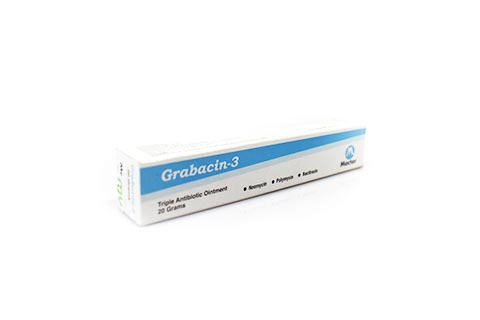
GRABACIN-3 TULLE
TRIPLE ANTIBIOTIC GAUZE DRESSINGS NEOMYCIN*POLYMYXIN*BACITRACIN
What it does
This medication is an antibiotic, which helps to treat infections caused by bacteria.
Commonly used for: bacterial infections, pneumonia, urinary tract infections, skin infections …
Read more in plain English ↓Plain-language summary for general understanding - not medical advice. Always follow your pharmacist/doctor.
Ask about this medicine
Answers come only from this medicine's registration record, BNF monograph and interaction data - not medical advice.
Hard to find? We help patients in Kenya source rare medicines. We don't sell or dispense medicines - licensed pharmacies do.
Source this medicineRegistration & product details
Source: Pharmacy and Poisons Board · fetched 2026-01-28 21:34:31 · updated 2026-07-20 11:08:50
About antibiotic
This medication is an antibiotic, which helps to treat infections caused by bacteria.
What it treats
- bacterial infections
- pneumonia
- urinary tract infections
- skin infections
- stomach infections
How it works
Antibiotics work by killing bacteria or stopping their growth, helping your body to recover from an infection.
Who it's for
This medicine is for people who have infections caused by bacteria.
Cautions
- • May cause allergic reactions in some individuals.
- • Use with caution in people with kidney issues.
AI-assisted summary grounded in BNF data - general information only, not medical advice. Always confirm with your pharmacist or doctor.
About dressings
Dressings are materials used to cover and protect wounds, helping them heal and preventing infection.
What it treats
- wound care
- burn treatment
- skin protection
How it works
Dressings keep the wound clean and moist, which promotes healing and protects it from bacteria and dirt.
Who it's for
Anyone with a cut, scrape, burn, or other skin injury that needs protection and care.
AI-assisted summary grounded in BNF data - general information only, not medical advice. Always confirm with your pharmacist or doctor.
About gauze
Gauze is a type of medical fabric used for dressing wounds and injuries.
What it treats
- wound care
- bandaging
- surgical dressings
How it works
Gauze helps to protect wounds from infection and keeps them clean while allowing air circulation.
Who it's for
Anyone needing to cover a wound or injury, including patients recovering from surgery.
Cautions
- • Ensure the gauze is sterile to avoid infection.
- • Change the gauze regularly to promote healing.
AI-assisted summary grounded in BNF data - general information only, not medical advice. Always confirm with your pharmacist or doctor.
About triple
Triple is a medication used to help manage certain medical conditions.
What it treats
- high blood pressure (hypertension)
- heart failure
- chronic kidney disease
How it works
Triple works by affecting the blood vessels and the heart to improve blood flow and reduce strain on the heart.
Who it's for
This medication is for adults who need help controlling their blood pressure or managing heart-related conditions.
AI-assisted summary grounded in BNF data - general information only, not medical advice. Always confirm with your pharmacist or doctor.
Clinical monograph: antibiotic
Antibiotics are a class of drugs used to treat bacterial infections by inhibiting the growth of bacteria or killing them outright. They work by targeting specific bacterial functions or structures, which can include cell wall synthesis, protein synthesis, nucleic acid synthesis, and metabolic pathways. Antibiotics are not effective against viral infections.
Indications
- Bacterial infections
- Pneumonia
- Urinary tract infections
- Skin and soft tissue infections
- Sepsis
- Gastrointestinal infections
- Bone and joint infections
Dosage
Children: Refer to specific pediatric dosing guidelines and product information for age-appropriate dosing.
Adults: Refer to specific antibiotic guidelines and product information for appropriate dosing recommendations.
Mechanism of action
Antibiotics exert their effects through various mechanisms depending on their class. For example, beta-lactam antibiotics, such as penicillins and cephalosporins, inhibit bacterial cell wall synthesis by binding to penicillin-binding proteins, leading to cell lysis. Tetracyclines inhibit bacterial protein synthesis by binding to the 30S ribosomal subunit, while aminoglycosides also target protein synthesis but by binding to the 30S and causing misreading of mRNA. Fluoroquinolones inhibit DNA gyrase and topoisomerase IV, enzymes critical for bacterial DNA replication.
Pharmacodynamics
The pharmacodynamic properties of antibiotics involve their ability to kill bacteria (bactericidal) or inhibit their growth (bacteriostatic). The efficacy of an antibiotic is often determined by its minimum inhibitory concentration (MIC) against the target organism. The post-antibiotic effect, which is the continued suppression of bacterial growth after the antibiotic concentration falls below the MIC, can also play a role in their effectiveness.
Pharmacokinetics
The pharmacokinetics of antibiotics includes absorption, distribution, metabolism, and excretion (ADME). Most antibiotics are absorbed in the gastrointestinal tract, with bioavailability varying by drug class. They are widely distributed in body tissues and fluids. Some antibiotics are metabolized in the liver, while others are excreted unchanged by the kidneys. This pharmacokinetic profile influences dosing regimens, particularly in patients with renal impairment.
Contra-indications
- Hypersensitivity to the antibiotic or any of its components
- Severe renal impairment (specific antibiotics may vary)
- History of antibiotic-associated colitis
Adverse effects
- Nausea
- Vomiting
- Diarrhea
- Rash
- Allergic reactions (e.g., anaphylaxis)
- Hepatotoxicity
- Nephrotoxicity
- Superinfection (such as Clostridium difficile infection)
Interactions
- Antacids may reduce the absorption of certain antibiotics
- Probenecid may increase the plasma concentration of some antibiotics
- Warfarin may have increased anticoagulant effects
- Oral contraceptives may be less effective when combined with certain antibiotics
Precautions
- Use with caution in patients with a history of gastrointestinal disease
- Monitor for signs of anaphylaxis after the first dose
- Assess renal function prior to use for those with pre-existing conditions
- Consider the potential for antibiotic resistance
Pregnancy
Generally considered safe in pregnancy; however, specific antibiotics may have limitations or risks, consult relevant guidelines.
Breast-feeding
Many antibiotics are excreted in breast milk; consult specific guidelines for safety during lactation.
Storage
Store in a cool, dry place away from direct sunlight. Some formulations may require refrigeration.
Formulations
- Tablets
- Capsules
- Liquid suspensions
- Injectable forms
- Topical preparations
AI-synthesized from BNF references - general information only, not a substitute for professional medical advice or the current BNF. Verify doses with a pharmacist.
Clinical monograph: dressings
Dressings are medical supplies used to cover and protect wounds, including cuts, abrasions, burns, and surgical incisions. They serve to absorb exudate, prevent infection, and promote healing by creating an optimal environment for tissue regeneration. Dressings vary in material, composition, and purpose, which may include hydrocolloid, alginate, polyurethane, and gauze types.
Indications
- Acute wounds
- Chronic wounds
- Surgical wounds
- Burns
- Pressure ulcers
- Infected wounds
Dosage
Children: The use of dressings in children should be guided by the type and nature of the wound. Refer to specific product guidelines for detailed application instructions.
Adults: The application of dressings should be based on the type and severity of the wound. Refer to specific product guidelines for detailed application instructions.
Mechanism of action
Dressings act by providing a barrier to external contaminants, maintaining a moist wound environment, and facilitating gas exchange. Certain types, such as hydrocolloids, form a gel-like substance upon contact with wound exudate, which aids in autolytic debridement and promotes healing. Antimicrobial dressings release agents that inhibit microbial growth, contributing to infection prevention.
Pharmacodynamics
The pharmacodynamics of dressings depend on their specific characteristics. Hydrocolloid and foam dressings maintain moisture and support autolytic debridement, while alginate dressings can absorb significant amounts of exudate. Antimicrobial dressings release active agents that target pathogens, reducing the risk of infection. The interaction between the dressing material and the wound environment influences healing rates and outcomes.
Pharmacokinetics
Dressings do not have systemic pharmacokinetics since they are applied topically and act locally at the site of application. The duration of action varies based on the type of dressing, the wound's exudate level, and the specific materials used. Changes in the dressing may be required based on the wound's condition and healing progress.
Pregnancy
Generally considered safe for use during pregnancy, but specific type of dressing should be assessed based on clinical need and patient condition.
Breast-feeding
Generally safe for use while breastfeeding, but care should be taken to ensure the dressing does not irritate the skin or affect the infant.
Storage
Store in a cool, dry place away from direct sunlight. Keep in original packaging until use to maintain sterility.
Formulations
- Hydrocolloid dressings
- Foam dressings
- Alginate dressings
- Transparent film dressings
- Hydrogel dressings
- Gauze dressings
AI-synthesized from BNF references - general information only, not a substitute for professional medical advice or the current BNF. Verify doses with a pharmacist.
Clinical monograph: gauze
Gauze is a thin, woven fabric typically made from cotton or a cotton blend. It is commonly used in medical settings for wound care, dressing, and as a barrier to protect wounds from infection. Its porous nature allows for absorption of exudate and facilitates air circulation, promoting healing. Gauze can be sterile or non-sterile, and it is available in various sizes and thicknesses to suit different types of wounds.
Indications
- Acute wounds
- Chronic wounds
- Surgical incisions
- Burns
- Pressure ulcers
- Trauma wounds
Dosage
Children: Refer to the guidance for adult dosing, as pediatric use is similar and should be based on clinical assessment of the wound and exudate.
Adults: The dosage or application frequency of gauze depends on the specific wound type and the amount of exudate. It is typically changed as needed, based on clinical assessment.
Mechanism of action
Gauze functions primarily as a physical barrier to protect wounds from external contaminants and further injury. It absorbs exudate from wounds, which helps to maintain a moist environment conducive to healing. The open weave of gauze allows for breathability, which is essential in preventing maceration of the surrounding skin.
Pharmacodynamics
As a non-pharmacological product, gauze does not have pharmacodynamic properties in the traditional sense. Its effectiveness is related to its physical characteristics, such as absorbency, flexibility, and ability to protect wounds. The interaction with the wound environment aids in managing exudate and reducing the risk of infection.
Pharmacokinetics
Gauze does not undergo pharmacokinetic processes such as absorption, distribution, metabolism, or excretion, as it is not an active pharmaceutical ingredient. Instead, it provides a mechanical function in wound management. The duration of action is dependent on the frequency of dressing changes, which is influenced by the amount of exudate produced by the wound.
Pregnancy
Gauze is considered safe for use during pregnancy as it is a non-pharmacological material used primarily for wound care.
Breast-feeding
Gauze is safe for use during breastfeeding, as it is unlikely to affect breast milk or the nursing infant.
Storage
Store in a cool, dry place, away from direct sunlight and moisture. Ensure that the packaging remains sealed until use to prevent contamination.
Formulations
- Sterile gauze pads
- Non-sterile gauze pads
- Gauze rolls
AI-synthesized from BNF references - general information only, not a substitute for professional medical advice or the current BNF. Verify doses with a pharmacist.
Clinical monograph: triple
BNF-referencedTriple is a topical preparation primarily containing zinc oxide, recognized for its astringent, soothing, and protective properties. It is used to prevent skin irritation and to promote healing of damaged skin. Its efficacy extends to conditions such as eczema, minor excoriations, wounds, and hemorrhoids. Additionally, zinc oxide acts as a physical sunscreen by reflecting ultraviolet radiation, providing further protective benefits.
Indications
- Eczema
- Minor excoriations
- Wounds
- Hemorrhoids
- Sunburn prevention
Dosage
Children: Consult the BNF for Children for appropriate dosing information based on age and condition.
Adults: Apply to the affected area as needed, ensuring the skin is clean and dry before application. Refer to specific product guidelines for frequency.
Mechanism of action
Triple acts by providing a physical barrier to prevent skin irritation and help heal damaged skin. When inhaled, zinc oxide fumes can initiate pro-inflammatory responses in the lungs, leading to conditions such as metal fume fever by increasing pulmonary neutrophils and the release of tumor necrosis factor (TNF) and interleukins.
Pharmacodynamics
Zinc oxide exhibits astringent, soothing, and protective properties. Its topical applications are effective for various skin conditions, including eczema and minor wounds. The substance also has the ability to reflect ultraviolet radiation, making it useful in sunscreens and protection against sunburn.
Pharmacokinetics
Zinc oxide is minimally absorbed through the skin when used topically, thus its systemic effects are negligible. When inhaled, the fine particles can affect lung tissue but are typically of low concern when used as intended in topical formulations. The onset of local effects is rapid due to its barrier properties.
Adverse effects
- skin irritation
- allergic reactions
- respiratory distress if inhaled
Precautions
- Avoid inhalation of fumes, especially in poorly ventilated areas.
- Use with caution in patients with a history of allergies to zinc or other components.
Pregnancy
Zinc oxide is generally considered safe for use during pregnancy. However, it is advisable to consult a healthcare provider before use.
Breast-feeding
Zinc oxide is considered safe during breastfeeding, but it is recommended to consult a healthcare provider for individual cases.
Storage
Store in a cool, dry place away from direct sunlight. Keep out of reach of children.
Formulations
- topical creams
- ointments
- powders
AI-synthesized from BNF references - general information only, not a substitute for professional medical advice or the current BNF. Verify doses with a pharmacist.
Molecular reference: triple
PubChem CID 3007857Molecular formula: OZn
Mechanism of action
It acts by providing a physical barrier to prevent skin irritation and help heal damaged skin. ... Freshly formed fumes are ... composed of ... particles in range of 0.05 to 0.5 um, and ... /have/ increased activity when they come into contact with the alveolar walls of lung. As fumes age they become less reactive because they tend to agglomerate or form aggregates and settle out of atmosphere ... thereby reducing concn of reactive particulates in lung. ... The size of particles is important factor in producing the illness. ... Finely divided particles of metals /are/ so small that they behave much like a gas and act on the alveolar surfaces, affecting the lung tissue and not upper respiratory tract. /Zinc/ ... /That/ zinc oxide fume inhalation initiates a time-dependent sequence of proinflammatory events /was postulated/. This includes dose-dependent increases in pulmonary neutrophils and increased tumor necrosis factor (TNF) release into the pulmonary environment beginning at 3 hr after exposure, which, in turn, may lead to increases in bronchoalveolar lavage (BAL) IL-6 and the neutrophil chemoattractant IL-8. The IL-6 then enters the circulation, contributing to the development of the fever and the symptoms of metal-fume fever. /It was/ confirmed, through in vitro studies, that zinc oxide exposure stimulated U937 mononuclear cells to release TNF and IL-8, a finding consistent with in vivo observations in metal-fume fever. The pathogenesis /of metal fume fever/ is unknown, but it is thought to result from endogenous pyrogen release due to cell lysis. Extracts prepared from tracheal mucosa and from the lungs of animals with experimentally induced metal fume fever produce similar symptoms when injected into other animals. Diminish the penetration of ultraviolet (UV) light through the epidermis by absorbing UV radiation within a specific wavelength range. The amount and wavelength of UV radiation absorbed are affected by the molecular structure of the sunscreen agent. /Sunscreen agents/
Pharmacodynamics
Zinc oxide has astringent, soothing and protective properties and is used in topical preparations for eczema, slight excoriations, wounds and haemorrhoids. It also reflects ultraviolet radiation and can be used as a physical sunscreen.
Source: PubChem (NCBI) · pathways from PathBank, Reactome, WikiPathways & PharmGKB.
This drug in other countries
The same active ingredient registered across other registries we cover - including different brands.