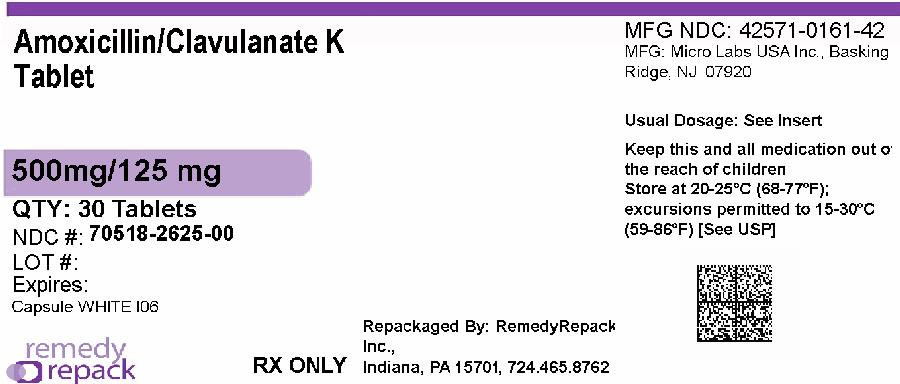
(amoxicillin · DailyMed)
HITKIT
COMBIKIT OF (A) RABEPRAZOLE SODIUM TABLETS (B) CLARITHROMYCIN TABLETS (C) AMOXICILLIN TABLETS
What it does
Amoxicillin is an antibiotic used to treat infections caused by bacteria.
Commonly used for: infections of the ear, nose, and throat, urinary tract infections, pneumonia, skin infections
Read more in plain English ↓Plain-language summary for general understanding - not medical advice. Always follow your pharmacist/doctor.
Ask about this medicine
Answers come only from this medicine's registration record, BNF monograph and interaction data - not medical advice.
Hard to find? We help patients in Kenya source rare medicines. We don't sell or dispense medicines - licensed pharmacies do.
Source this medicineRegistration & product details
Source: Pharmacy and Poisons Board · fetched 2026-06-28 22:13:52 · updated 2026-08-03 04:16:03
Drug Interactions
219Pharmacodynamic Warnings
Clarithromycin appears in TABLE 9: Drugs that prolong the QT interval
Severe (36)
Acalabrutinib - increases exposure
Clarithromycin is predicted to increase the exposure to acalabrutinib. Avoid.
Alprazolam - increases exposure
Clarithromycin moderately increases the exposure to benzodiazepines (alprazolam). Avoid.
Antihistamines,non-Sedating - increases exposure
Clarithromycin is predicted to increase the exposure to antihistamines, non-sedating (mizolastine). Avoid.
Avapritinib - increases exposure
Clarithromycin is predicted to increase the exposure to avapritinib. Avoid.
Benzodiazepines - increases exposure
Clarithromycin moderately increases the exposure to benzodiazepines (alprazolam). Avoid.
Moderate (50)
Alfentanil - increases exposure
Clarithromycin is predicted to increase the exposure to opioids (alfentanil, buprenorphine, fentanyl, oxycodone). Monitor and adjust dose.
Aminophylline - increases exposure
Clarithromycin is predicted to increase the exposure to aminophylline. Adjust dose.
Amlodipine - increases exposure
Clarithromycin is predicted to increase the exposure to calcium channel blockers (amlodipine, felodipine, lacidipine, nicardipine, nifedipine, nimodipine). Monitor and adjust dose.
Antiarrhythmics - increases exposure
Clarithromycin is predicted to increase the exposure to antiarrhythmics (propafenone). Monitor and adjust dose.
Anticholinesterases, Centrally Acting - increases exposure
Clarithromycin is predicted to increase the exposure to anticholinesterases, centrally acting (galantamine). Monitor and adjust dose.
Unknown (133)
Abemaciclib - increases exposure
Clarithromycin is predicted to increase the exposure to abemaciclib. Avoid or adjust abemaciclib dose, p. 1056.
Afatinib - increases exposure
Macrolides are predicted to increase the exposure to afatinib.
Alitretinoin - increases exposure
Clarithromycin is predicted to increase the exposure to retinoids (alitretinoin). Adjust alitretinoin dose, p. 1382.
Almotriptan - increases exposure
Clarithromycin increases the exposure to triptans (almotriptan).
Alphablockers - increases exposure
Clarithromycin is predicted to increase the exposure to alpha blockers (doxazosin).
Data from BNF 85 (British National Formulary). This is not a substitute for professional medical advice. Matched via: exact
About amoxicillin
Amoxicillin is an antibiotic used to treat infections caused by bacteria.
What it treats
- infections of the ear, nose, and throat
- urinary tract infections
- pneumonia
- skin infections
How it works
It kills bacteria or stops their growth, helping to clear up infections.
Who it's for
Amoxicillin is suitable for adults and children who have bacterial infections.
Drug class
Penicillins
AI-assisted summary grounded in BNF data - general information only, not medical advice. Always confirm with your pharmacist or doctor.
About clarithromycin
Clarithromycin is an antibiotic used to treat infections caused by bacteria.
What it treats
- bacterial infections
- chest infections (pneumonia)
- skin infections
- ear infections (otitis media)
How it works
It works by stopping the growth of bacteria, helping your body to fight off the infection.
Who it's for
It is for adults and children with certain bacterial infections.
Drug class
Macrolides
Cautions
- • Be cautious if you are taking other medications that affect heart rhythm.
AI-assisted summary grounded in BNF data - general information only, not medical advice. Always confirm with your pharmacist or doctor.
About combikit
Combikit is a medication commonly used in the treatment of various health conditions.
What it treats
- high blood pressure (hypertension)
- heart failure
- certain types of kidney disease
How it works
Combikit works by helping to relax blood vessels, making it easier for the heart to pump blood.
Who it's for
This medication is typically prescribed for adults dealing with heart and blood vessel-related issues.
AI-assisted summary grounded in BNF data - general information only, not medical advice. Always confirm with your pharmacist or doctor.
About rabeprazole
Rabeprazole is a medication used to reduce stomach acid and help heal ulcers.
What it treats
- stomach ulcers
- gastroesophageal reflux disease (GERD)
- excess stomach acid
How it works
It works by blocking the production of stomach acid, which helps to relieve symptoms and promote healing.
Who it's for
This medication is for adults and children over the age of 12 who need help with stomach acid-related conditions.
AI-assisted summary grounded in BNF data - general information only, not medical advice. Always confirm with your pharmacist or doctor.
Clinical monograph: Amoxicillin
BNF-referencedAmoxicillin is a broad-spectrum antibiotic belonging to the penicillin class, effective against a variety of bacterial infections. It is commonly used to treat conditions such as urinary tract infections, sinusitis, community-acquired pneumonia, and salmonellosis.
Indications
- Bacterial infections
- Urinary tract infections
- Sinusitis
- Uncomplicated community-acquired pneumonia
- Salmonellosis
- Oral infections
- Lyme disease (under expert supervision)
- Acute exacerbation of bronchiectasis
- Anthrax (treatment and post-exposure prophylaxis)
Dosage
Children: 1 month–11 years: 30 mg/kg 3 times a day for 21 days; children 1–4 years: 250 mg 3 times a day; children 5–11 years: 500 mg 3 times a day.
Adults: 500 mg 3 times a day; increased if necessary up to 1 g 3 times a day in severe infections.
Mechanism of action
Amoxicillin works by inhibiting bacterial cell wall synthesis, leading to cell lysis and death. It binds to penicillin-binding proteins (PBPs) located inside the bacterial cell wall, interfering with the transpeptidation process necessary for cell wall integrity.
Pharmacodynamics
Amoxicillin exhibits bactericidal activity against susceptible bacteria. Its action is time-dependent, meaning that its effectiveness is related to the duration of time that the drug concentration remains above the minimum inhibitory concentration (MIC) for the target pathogen.
Pharmacokinetics
Amoxicillin is well absorbed from the gastrointestinal tract, with peak plasma concentrations achieved within 1-2 hours after oral administration. It is widely distributed in body tissues and fluids, and it is excreted primarily via the kidneys. The elimination half-life is approximately 1 hour, and renal impairment may necessitate dosage adjustments.
Adverse effects
- Skin rash
- Gastrointestinal disturbances (nausea, vomiting, diarrhea)
- Allergic reactions (including anaphylaxis)
- Superinfection (due to resistant organisms)
Interactions
- Allopurinol (increases risk of skin rash)
Precautions
- History of penicillin allergy
- Renal impairment (reduce dose)
- Use with caution in patients with mononucleosis
Pregnancy
Use only if clearly needed; no adequate studies in pregnant women.
Breast-feeding
Amoxicillin is excreted in breast milk; use with caution.
Storage
Store in a cool, dry place away from direct sunlight.
Formulations
- Phenoxymethylpenicillin 250mg/5ml oral solution
- Phenoxymethylpenicillin 250 mg tablets
AI-synthesized from BNF references - general information only, not a substitute for professional medical advice or the current BNF. Verify doses with a pharmacist.
Clinical monograph: Clarithromycin
BNF-referencedClarithromycin is a macrolide antibiotic effective against a range of bacterial infections. It is primarily used in the treatment of community-acquired pneumonia, skin infections, and as a prophylactic measure for certain infections. Clarithromycin works by inhibiting bacterial protein synthesis, making it a crucial agent in combating gram-positive and some gram-negative bacteria.
Indications
- Bacterial infections
- Community-acquired pneumonia
- Skin infections
- Prophylaxis for certain infections
Dosage
Adults: 500 mg once daily for
Mechanism of action
Clarithromycin is metabolized to 14-OH clarithromycin, which is active. It penetrates bacterial cell walls and reversibly binds to domain V of the 23S ribosomal RNA of the 50S ribosomal subunit, blocking the translocation of aminoacyl-tRNA and inhibiting polypeptide synthesis. It may be bactericidal in high concentrations against susceptible organisms, particularly Streptococcus pyogenes, S. pneumoniae, Haemophilus influenzae, and Chlamydia trachomatis. Additionally, clarithromycin inhibits the hepatic microsomal CYP3A4 isoenzyme and P-glycoprotein.
Pharmacodynamics
Clarithromycin exhibits a broad spectrum of activity against numerous gram-positive bacteria, including Staphylococcus aureus, Streptococcus pneumoniae, and Streptococcus pyogenes. It also shows activity against gram-negative bacteria such as Haemophilus influenzae and Moraxella catarrhalis, as well as against various anaerobic bacteria, mycobacteria, and other organisms like Mycoplasma, Ureaplasma, and Chlamydia. While typically bacteriostatic, it can sometimes demonstrate bactericidal properties depending on the concentration and the organism.
Pharmacokinetics
Clarithromycin is well absorbed after oral administration, with its bioavailability enhanced by food. It is extensively metabolized in the liver, primarily via CYP3A4, leading to active metabolites. The drug has a half-life of approximately 3 to 4 hours, but its active metabolite, 14-OH clarithromycin, has a longer half-life, contributing to its prolonged activity. Renal impairment can significantly affect its clearance, necessitating dosage adjustments in patients with reduced renal function.
Adverse effects
- Nausea
- Diarrhea
- Abdominal pain
- Dysgeusia
- Headache
- Rash
- Liver enzyme elevations
- QT prolongation
Interactions
- Clarithromycin + acalabrutinib: Severe (increases exposure)
- Clarithromycin + antiarrhythmics: Severe (increases exposure)
- Clarithromycin + dronedarone: Severe (increases exposure)
- Clarithromycin + non-sedating antihistamines: Severe (increases exposure)
- Clarithromycin + mizolastine: Severe (increases exposure)
- Clarithromycin + lurasidone: Severe (increases exposure)
- Clarithromycin + quetiapine: Severe (increases exposure)
- Clarithromycin + avapritinib: Severe (increases exposure)
- Clarithromycin + benzodiazepines: Severe (increases exposure)
- Clarithromycin + alprazolam: Severe (increases exposure)
Precautions
- Caution in hepatic impairment
- Use with caution in renal impairment
- Monitor for signs of QT prolongation
- Consider alternative therapy in patients with history of arrhythmias
- Use with caution in patients with myasthenia gravis due to potential exacerbation
Pregnancy
Manufacturers advise use only if adequate alternatives are not available.
Breast-feeding
Present in milk; use only if no suitable alternatives.
Storage
Store in a cool, dry place away from light. Keep out of reach of children.
Formulations
- Oral suspension 200 mg/5 mL
- Capsules 250 mg
AI-synthesized from BNF references - general information only, not a substitute for professional medical advice or the current BNF. Verify doses with a pharmacist.
Clinical monograph: Rabeprazolesodium
BNF-referencedRabeprazole sodium is a proton pump inhibitor (PPI) that reduces gastric acid secretion by inhibiting the H+/K+ ATPase enzyme located in the gastric parietal cells. It is primarily used for the treatment of various acid-related gastrointestinal disorders, including gastric and duodenal ulcers, gastro-oesophageal reflux disease (GERD), and functional dyspepsia.
Indications
- Gastric ulcer
- Duodenal ulcer
- Gastro-oesophageal reflux disease (GERD)
- Functional dyspepsia
- NSAID-associated peptic ulcer disease
- Zollinger-Ellison syndrome
Dosage
Adults: Initially 20 mg once daily for 4 to 8 weeks for GERD. For gastric and duodenal ulcers, the initial dose is 20 mg daily for 4 to 8 weeks. For NSAID-associated peptic ulcer disease, the recommended dose is 20 mg once daily for 4 to 8 weeks. Dose adjustments may be necessary in hepatic impairment, with a maximum dose of 20 mg daily
Mechanism of action
Rabeprazole sodium acts by irreversibly binding to and inhibiting the H+/K+ ATPase enzyme system (proton pump) in the gastric epithelium. This action leads to a decrease in gastric acid secretion, both basal and stimulated. The inhibition is dose-dependent and can last for 24 hours or longer, which helps in healing peptic ulcers and alleviating symptoms of acid-related disorders.
Pharmacodynamics
Rabeprazole sodium effectively suppresses gastric acid secretion, providing symptomatic relief and promoting mucosal healing in conditions associated with excessive gastric acidity. It demonstrates a rapid onset of action, with peak plasma concentrations occurring approximately 3-4 hours after administration. The drug's effects on gastric acid secretion can lead to increased gastric pH and improved healing of ulcerative lesions.
Pharmacokinetics
Rabeprazole sodium is rapidly absorbed after oral administration, with bioavailability of approximately 52% due to first-pass metabolism. The drug is extensively metabolized in the liver, primarily via the cytochrome P450 system. Its elimination half-life ranges from 1 to 2 hours, and it is excreted primarily through urine as metabolites. Food does not significantly affect its absorption.
Adverse effects
- Asthenia
- Angioedema
- Electrolyte imbalance
- Muscle spasms
- Hyperlipidaemia
- Weight change
Precautions
- Manufacturer advises caution in severe hepatic impairment, monitor liver function and discontinue if deterioration occurs.
Pregnancy
Manufacturer advises to avoid unless potential benefit outweighs risk-fetotoxic in animals.
Breast-feeding
Specialist sources indicate that the amount in milk is small and not known to be harmful.
Storage
Store below 25 degrees Celsius. Protect from light and moisture.
Formulations
- Gastro-resistant tablet
- Powder for solution for injection
AI-synthesized from BNF references - general information only, not a substitute for professional medical advice or the current BNF. Verify doses with a pharmacist.
Clinical monograph: combikit
Combikit is a combination medication typically used in the management of various conditions, often including pain relief and anti-inflammatory purposes. It usually contains a combination of analgesics and/or anti-inflammatory agents, which work synergistically to enhance therapeutic effects while minimizing the risk of side effects associated with higher doses of a single agent.
Indications
- Pain relief
- Inflammatory conditions
- Fever reduction
- Post-operative pain management
- Musculoskeletal disorders
Dosage
Children: Refer to the BNF for Children for appropriate dosing guidance, as it will depend on the specific formulation and age of the child.
Adults: Refer to the specific product label or BNF for appropriate dosing guidelines, as it may vary based on the formulation and condition being treated.
Mechanism of action
The specific mechanism of action varies depending on the components of the Combikit formulation. Generally, it may involve the inhibition of cyclooxygenase (COX) enzymes, leading to a decrease in the synthesis of prostaglandins, which are mediators of inflammation and pain. Some components may also modulate pain pathways in the central nervous system, providing analgesic effects.
Pharmacodynamics
The pharmacodynamics of Combikit is characterized by its ability to reduce pain and inflammation through its active ingredients. The combination allows for enhanced analgesic efficacy and may provide a broader spectrum of action, addressing both nociceptive and inflammatory pain pathways.
Pharmacokinetics
The pharmacokinetics of Combikit will depend on the specific components involved. Generally, the absorption may occur rapidly following oral administration, with peak plasma concentrations reached within a few hours. Metabolism typically occurs in the liver, with various metabolic pathways depending on the active ingredients. Excretion primarily takes place via the kidneys, with half-lives varying among the compounds.
Pregnancy
Safety during pregnancy has not been established, consult healthcare provider before use.
Breast-feeding
Consult healthcare provider before use while breastfeeding.
Storage
Store in a cool, dry place away from direct sunlight.
AI-synthesized from BNF references - general information only, not a substitute for professional medical advice or the current BNF. Verify doses with a pharmacist.
Clinical monograph: rabeprazole
BNF-referencedRabeprazole is a substituted benzimidazole compound classified as a proton-pump inhibitor (PPI). It is primarily used to reduce gastric acid secretion in various gastrointestinal disorders. By inhibiting the hydrogen-potassium ATPase enzyme at the secretory surface of gastric parietal cells, rabeprazole effectively suppresses acid production in the stomach, providing relief from conditions such as gastroesophageal reflux disease (GERD), peptic ulcers, and Zollinger-Ellison syndrome.
Indications
- Gastroesophageal reflux disease (GERD)
- Peptic ulcers
- Zollinger-Ellison syndrome
- Prevention of gastric ulcers associated with NSAID use
Dosage
Adults: Refer to BNF for specific dosing recommendations based on condition being treated.
Mechanism of action
Rabeprazole inhibits gastric acid secretion by irreversibly binding to the hydrogen-potassium ATPase enzyme system (H+, K+-ATPase) located at the parietal cell surface. This action blocks the final step in the gastric acid secretion process, leading to a reduction in hydrogen ion transport into the gastric lumen. Rabeprazole is activated in the acidic environment of the stomach, transforming into an active sulfenamide which exerts its inhibitory effects.
Pharmacodynamics
By preventing the production of gastric acid, rabeprazole alleviates symptoms associated with excessive acid secretion, such as heartburn and esophagitis. It is particularly effective in treating gastroesophageal reflux disease (GERD) and peptic ulcers, as well as in combination with antibiotics for the eradication of Helicobacter pylori. Furthermore, rabeprazole is utilized in managing conditions like Zollinger-Ellison syndrome, where there is an overproduction of gastric acid.
Pharmacokinetics
Rabeprazole is rapidly absorbed following oral administration, with peak plasma concentrations occurring within 1 to 2 hours. It is extensively metabolized in the liver through the cytochrome P450 system, primarily via CYP2C19 and CYP3A4 isoenzymes. The elimination half-life of rabeprazole ranges from 1 to 2 hours. The drug is excreted mainly in the urine as metabolites, with minimal unchanged drug present. Food intake can affect the absorption but not the overall efficacy of the drug.
Adverse effects
- Headache
- Nausea
- Diarrhea
- Constipation
- Abdominal pain
- Rash
- Dizziness
Interactions
- apalutamide+rabeprazole: Unknown (decreases exposure)
Precautions
- Use with caution in patients with hepatic impairment
- Monitor for potential vitamin B12 deficiency with long-term use
- Consider risk of Clostridium difficile infection in patients with diarrhea
Pregnancy
Rabeprazole is classified as category B. Animal studies have shown no harm, but there are no well-controlled studies in pregnant women. Use only if clearly needed.
Breast-feeding
Rabeprazole is excreted in breast milk. Caution should be exercised when administered to a nursing mother.
Storage
Store at room temperature, away from moisture and heat. Keep out of reach of children.
Formulations
- Tablets: 20 mg
AI-synthesized from BNF references - general information only, not a substitute for professional medical advice or the current BNF. Verify doses with a pharmacist.
Molecular reference: Amoxicillin
PubChem CID 33613Molecular formula: C16H19N3O5S
Mechanism of action
Amoxicillin competitively inhibits penicillin-binding protein 1 and other high molecular weight penicillin binding proteins. Penicillin bind proteins are responsible for glycosyltransferase and transpeptidase reactions that lead to cross-linking of D-alanine and D-aspartic acid in bacterial cell walls. Without the action of penicillin binding proteins, bacteria upregulate autolytic enzymes and are unable to build and repair the cell wall, leading to bacteriocidal action. The penicillins and their metabolites are potent immunogens because of their ability to combine with proteins and act as haptens for acute antibody-mediated reactions. The most frequent (about 95 percent) or "major" determinant of penicillin allergy is the penicilloyl determinant produced by opening the beta-lactam ring of the penicillin. This allows linkage of the penicillin to protein at the amide group. "Minor" determinants (less frequent) are the other metabolites formed, including native penicillin and penicilloic acids. /Penicillins/ Amoxicillin is similar to penicillin in its bactericidal action against susceptible bacteria during the stage of active multiplication. It acts through the inhibition of cell wall biosynthesis that leads to the death of the bacteria.
Pharmacodynamics
Amoxicillin competitively inhibit penicillin binding proteins, leading to upregulation of autolytic enzymes and inhibition of cell wall synthesis. Amoxicillin has a long duration of action as it is usually given twice daily. Amoxicillin has a wide therapeutic range as mild overdoses are not associated with significant toxicity. Patients should be counselled regarding the risk of anaphylaxis, _Clostridium difficile_ infections, and bacterial resistance.
Biological pathways
Source: PubChem (NCBI) · pathways from PathBank, Reactome, WikiPathways & PharmGKB.
Molecular reference: Clarithromycin
PubChem CID 84029Molecular formula: C38H69NO13
Mechanism of action
Clarithromycin is first metabolized to 14-OH clarithromycin, which is active and works synergistically with its parent compound. Like other macrolides, it then penetrates bacteria cell wall and reversibly binds to domain V of the 23S ribosomal RNA of the 50S subunit of the bacterial ribosome, blocking translocation of aminoacyl transfer-RNA and polypeptide synthesis. Clarithromycin also inhibits the hepatic microsomal CYP3A4 isoenzyme and P-glycoprotein, an energy-dependent drug efflux pump. Clarithromycin usually is bacteriostatic, although it may be bactericidal in high concentrations or against highly susceptible organisms. Bactericidal activity has been observed against Streptococcus pyogenes, S. pneumoniae, Haemophilus influenzae, and Chlamydia trachomatis. Clarithromycin inhibits protein synthesis in susceptible organisms by penetrating the cell wall and binding to 50S ribosomal subunits, thereby inhibiting translocation of aminoacyl transfer-RNA and inhibiting polypeptide synthesis. The site of action of clarithromycin appears to be the same as that of erythromycin, clindamycin, lincomycin, and chloramphenicol.
Pharmacodynamics
Clarithromycin is a macrolide antibiotic whose spectrum of activity includes many gram-positive (<i>Staphylococcus aureus, S. pneumoniae, and S. pyogenes</i>) and gram-negative aerobic bacteria (<i>Haemophilus influenzae, H. parainfluenzae, and Moraxella catarrhalis</i>), many anaerobic bacteria, some mycobacteria, and some other organisms including <i>Mycoplasma, Ureaplasma, Chlamydia, Toxoplasma</i>, and <i>Borrelia</i>. Other aerobic bacteria that clarithromycin has activity against include <i>C. pneumoniae and M. pneumoniae</i>. Clarithromycin has an in-vitro activity that is similar or greater than that of erythromycin against erythromycin-susceptible organisms. Clarithromycin is usually bacteriostatic, but may be bactericidal depending on the organism and the drug concentration.
Biological pathways
Source: PubChem (NCBI) · pathways from PathBank, Reactome, WikiPathways & PharmGKB.
Molecular reference: rabeprazole
PubChem CID 5029Molecular formula: C18H21N3O3S
Mechanism of action
Rabeprazole belongs to a class of antisecretory compounds (substituted benzimidazole proton-pump inhibitors) that do not exhibit anticholinergic or histamine H2-receptor antagonist properties, but suppress gastric acid secretion by inhibiting the gastric H<sup>+</sup>/K<sup>+</sup>ATPase (hydrogen-potassium adenosine triphosphatase) at the secretory surface of the gastric parietal cell. Because this enzyme is regarded as the acid (proton) pump within the parietal cell, rabeprazole has been characterized as a gastric proton-pump inhibitor. Rabeprazole blocks the final step of gastric acid secretion. In gastric parietal cells, rabeprazole is protonated, accumulates, and is transformed to an active sulfenamide. When studied in vitro, rabeprazole is chemically activated at pH 1.2 with a half-life of 78 seconds. Rabeprazole is a selective and irreversible proton pump inhibitor. Rabeprazole suppresses gastric acid secretion by specific inhibition of the hydrogen-potassium adenosine triphosphatase (H+, K+-ATPase) enzyme system found at the secretory surface of parietal cells. It inhibits the final transport of hydrogen ions (via exchange with potassium ions) into the gastric lumen. Since the H+, K+-ATPase enzyme system is regarded as the acid (proton) pump of the gastric mucosa, rabeprazole is known as a gastric acid pump inhibitor. Rabeprazole does not have anticholinergic or histamine H2-receptor antagonist properties. Rabeprazole binds to hydrogen-potassium ATPase in gastric parietal cells; inactivation of this enzyme system (also known as the proton, hydrogen, or acid pump) blocks the final step in the secretion of hydrochloric acid secretion. The antisecretory effect is apparent within 1 hour following oral administration with the median inhibitory effect on 24-hour gastric acidity being 88% of maximal after the first dose.
Pharmacodynamics
Rabeprazole prevents the production of acid in the stomach. It reduces symptoms and prevents injury to the esophagus or stomach in patients with gastroesophageal reflux disease (GERD) or ulcers. Rabeprazole is also useful in conditions that produce too much stomach acid such as Zollinger-Ellison syndrome. Rabeprazole may also be used with antibiotics to get rid of bacteria that are associated with some ulcers. Rabeprazole is a selective and irreversible proton pump inhibitor, suppresses gastric acid secretion by specific inhibition of the H<sup>+</sup>, K<sup>+</sup> -ATPase, which is found at the secretory surface of parietal cells. In doing so, it inhibits the final transport of hydrogen ions (via exchange with potassium ions) into the gastric lumen.
Biological pathways
Source: PubChem (NCBI) · pathways from PathBank, Reactome, WikiPathways & PharmGKB.
This drug in other countries
The same active ingredient registered across other registries we cover - including different brands.
- AC-CLAV 1000 TABLETS (Each film coated tablet contains Amoxicillin and Cluvalanate Potassium 1000mg · Kiux Pharma
- AC-CLAV 625 TABLETS (Each film coated tablet contains Amoxicillin and Clavulanate Potassium 625 · Kiux Pharma
- ACICLAVCARE 1G TABLETS (Each film-coated tablet contains Amoxicillin trihydrate / Potassium clavulanate 1g) · East African Overseas
- ACINET 1.2G INJECTION (Each vial contains Amoxicillin Sodium/Potassium Clavulanate 1g/0.2g · East African Creasteas
- ACINET 228.5MG/5ML DRY SUSPENSION (Each 5ml of reconstituted suspension contains Amoxicillin Trihydrate/Potassium Clavulanate 200mg/28.5mg) · Indchemie Health Specialities
- ACINET 457MG/5ML DRY SUSPENSION (Each 5ml of reconstituted suspension contains Amoxicillin Trihydrate/Potassium Clavulanate 400mg/57mg) · Indchemie Health Specialities