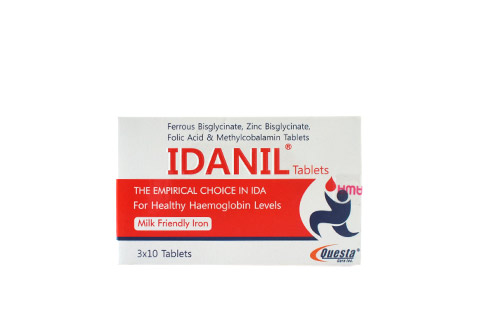
IDANIL TABLETS
FERROUS BISGLYCINATE, ZINC BISGLYCINATE, FOLIC ACID BP, METHYLCOBALAMIN JP.
What it does
Bisglycinate is a form of mineral supplement often used to support overall health.
Commonly used for: iron deficiency, anemia (low iron levels), improving energy levels
Read more in plain English ↓Plain-language summary for general understanding - not medical advice. Always follow your pharmacist/doctor.
Ask about this medicine
Answers come only from this medicine's registration record, BNF monograph and interaction data - not medical advice.
Hard to find? We help patients in Kenya source rare medicines. We don't sell or dispense medicines - licensed pharmacies do.
Source this medicineRegistration & product details
Source: Pharmacy and Poisons Board · fetched 2026-01-28 20:06:14 · updated 2026-08-03 04:06:35
About bisglycinate
Bisglycinate is a form of mineral supplement often used to support overall health.
What it treats
- iron deficiency
- anemia (low iron levels)
- improving energy levels
How it works
Bisglycinate helps the body absorb minerals better, especially iron, which is important for producing red blood cells.
Who it's for
This supplement is suitable for anyone needing extra iron, especially those who are pregnant, have heavy menstrual periods, or follow vegetarian diets.
AI-assisted summary grounded in BNF data - general information only, not medical advice. Always confirm with your pharmacist or doctor.
About ferrous
Ferrous is a type of iron supplement used to treat or prevent low iron levels in the body.
What it treats
- iron deficiency anemia
- low iron levels
How it works
Ferrous provides the body with iron, which is necessary for producing red blood cells and transporting oxygen.
Who it's for
It is suitable for individuals who have low iron levels or are at risk of iron deficiency, such as pregnant women, vegetarians, or those with certain medical conditions.
AI-assisted summary grounded in BNF data - general information only, not medical advice. Always confirm with your pharmacist or doctor.
About folate
Folate is a type of B vitamin that is important for the production of red blood cells and helps prevent certain types of birth defects.
What it treats
- prevention of neural tube defects in pregnancy
- treatment of folate deficiency
- supporting overall health
How it works
Folate helps the body make DNA and is essential for the growth and division of cells.
Who it's for
Folate is suitable for pregnant women, those planning to become pregnant, and individuals with low levels of folate.
AI-assisted summary grounded in BNF data - general information only, not medical advice. Always confirm with your pharmacist or doctor.
About methylcobalamin
Methylcobalamin is a form of vitamin B12 that helps your body produce red blood cells and maintain healthy nerve cells.
What it treats
- Vitamin B12 deficiency
- Peripheral neuropathy (nerve damage)
- Anemia
How it works
It supports the production of red blood cells and helps in the proper functioning of the nervous system.
Who it's for
It is suitable for individuals with low vitamin B12 levels or conditions affecting nerve health.
AI-assisted summary grounded in BNF data - general information only, not medical advice. Always confirm with your pharmacist or doctor.
Clinical monograph: Ferrousfumarate
BNF-referencedFerrous fumarate is an iron supplement used primarily in the treatment and prevention of iron deficiency anemia. It provides elemental iron, which is essential for the synthesis of hemoglobin and the production of red blood cells. This compound plays a crucial role in increasing the iron stores in the body, which can be depleted in conditions such as chronic blood loss, malnutrition, or increased physiological demands.
Indications
- Iron deficiency anemia
- Prophylaxis of iron deficiency in at-risk populations
- Epithelial tissue changes such as atrophic glossitis and koilonychia
Dosage
Children: For children aged 1 month to 11 years: 0.25 mL per kilogram twice daily, with the total daily dose possibly given in 3 divided doses, not exceeding 20 mL per day. For children aged 12-17 years: 10 mL once daily.
Adults: The dose is calculated according to body weight and the iron deficit, specifying both the iron salt and formulation. For specific dosing, consult product literature.
Mechanism of action
Iron is necessary for the production of hemoglobin. Iron deficiency can lead to decreased production of hemoglobin and a microcytic, hypochromic anemia. Ferrous fumarate releases iron in the gastrointestinal tract, facilitating its absorption and subsequent incorporation into hemoglobin, thus alleviating anemia.
Pharmacodynamics
The major activity of supplemental iron, including ferrous fumarate, is in the prevention and treatment of iron deficiency anemia. Iron also has putative immune-enhancing, anticarcinogenic, and cognition-enhancing activities, supporting overall health and functionality.
Pharmacokinetics
Ferrous fumarate is absorbed in the gastrointestinal tract, with absorption being optimal in an acidic environment. The bioavailability can be influenced by dietary factors, such as the presence of certain foods or medications that may inhibit iron absorption. Once absorbed, iron is transported in the blood bound to transferrin and is stored in tissues as ferritin and hemosiderin. The elimination half-life of iron is variable and depends on the individual's iron status and the amount of iron stored.
Contra-indications
- Iron overload syndromes
- Repeated blood transfusions
- Porphyria cutanea tarda
Adverse effects
- Asthenia
- Drowsiness
- Urine discoloration
- Cold sweat
- Confusion
- Decreased level of consciousness
- Thrombophlebitis
- Headache
- Joint stiffness
- Pain in extremities
- Skin reactions
- Small intestinal bacterial overgrowth
- Thirst
- Nausea
- Constipation
- Diarrhea
- Decreased appetite
Interactions
- Iron absorption may be affected by antacids and certain medications that alter gastric pH.
Precautions
- Monitor iron status to avoid iron overload.
- Caution in patients with intestinal strictures or diverticular disease.
- Care in elderly patients and those on high doses.
Pregnancy
Iron is generally considered safe during pregnancy, but supplementation should be monitored to avoid overload.
Breast-feeding
Iron supplementation may be necessary for exclusively breast-fed infants if maternal iron stores are low.
Storage
Store in a cool, dry place, away from direct sunlight. Keep out of reach of children.
Formulations
- Solution for injection (Iron as Iron sucrose 20 mg per 1 ml)
- Capsules containing iron formulations
AI-synthesized from BNF references - general information only, not a substitute for professional medical advice or the current BNF. Verify doses with a pharmacist.
Clinical monograph: Ferroussulfate
BNF-referencedFerrous sulfate is an iron supplement used primarily for the treatment and prevention of iron-deficiency anemia. It provides the body with iron, an essential component of hemoglobin in red blood cells, facilitating oxygen transport throughout the body. Iron-deficiency anemia can result from inadequate dietary intake, chronic blood loss, or increased physiological demands such as pregnancy.
Indications
- Iron-deficiency anemia (therapeutic)
- Iron-deficiency anemia (prophylactic)
Dosage
Children: For children aged 1 month to 11 years: 0.25 mL/kilogram twice daily. For children aged 12 to 17 years: 10 mL once daily.
Adults: 280 mg twice daily.
Mechanism of action
Ferrous sulfate acts as a source of iron, which is essential for the synthesis of hemoglobin, the protein in red blood cells that carries oxygen. Iron is absorbed in the intestines, where it is converted into a form that can be incorporated into hemoglobin. The mechanism involves transport proteins that facilitate iron uptake and incorporation into the heme group of hemoglobin.
Pharmacodynamics
The pharmacodynamic effect of ferrous sulfate is the increase in hemoglobin levels and improvement in symptoms of anemia, such as fatigue and weakness. Iron supplementation leads to increased erythropoiesis (red blood cell production) in the bone marrow, effectively correcting the deficit in iron stores and enhancing oxygen-carrying capacity.
Pharmacokinetics
Ferrous sulfate is absorbed in the gastrointestinal tract, particularly in the duodenum and proximal jejunum. The bioavailability of iron from ferrous sulfate can be affected by dietary factors, with enhanced absorption in acidic environments. Peak plasma concentrations typically occur within 2 to 6 hours post-administration. Iron is primarily stored in the liver and bone marrow, and any excess iron is excreted through feces, urine, and sweat.
Contra-indications
- Hypersensitivity to ferrous sulfate or any of its excipients
- Hemochromatosis
- Hemosiderosis
- Thalassemia
- Other anemias not due to iron deficiency
Adverse effects
- Gastrointestinal disturbances (nausea, constipation, diarrhea, abdominal pain)
- Dark stools
- Staining of teeth (with liquid formulations)
- Allergic reactions (rare)
Interactions
- Antacids may reduce the absorption of iron
- Tetracycline antibiotics may interfere with iron absorption
- Ascorbic acid (vitamin C) may enhance iron absorption
- Certain foods and beverages (e.g., tea, coffee, dairy) can decrease iron absorption
Precautions
- Use with caution in patients with peptic ulcer disease
- Monitor for signs of iron overload
- Assess the cause of anemia before initiation of therapy
- Keep out of reach of children to prevent accidental overdose
Pregnancy
Ferrous sulfate is generally considered safe for use during pregnancy to prevent or treat iron-deficiency anemia.
Breast-feeding
Ferrous sulfate is excreted in breast milk in small amounts but is considered safe for breastfeeding mothers.
Storage
Store in a cool, dry place away from direct sunlight. Keep out of reach of children.
Formulations
- Ferrous sulfate 200 mg tablets
- Ferrous sulfate 325 mg modified-release tablets
- Ferrous sulfate oral solution 140 mg/5 mL
- Ferrous sulfate drops
AI-synthesized from BNF references - general information only, not a substitute for professional medical advice or the current BNF. Verify doses with a pharmacist.
Clinical monograph: bisglycinate
Bisglycinate is a chelated form of minerals, particularly magnesium, where the mineral is bound to two glycine molecules. This form enhances the bioavailability of magnesium, making it more easily absorbed in the gastrointestinal tract compared to other mineral salts. It is often used as a dietary supplement to support various physiological functions, particularly in individuals with magnesium deficiency.
Indications
- Magnesium deficiency
- Muscle cramps
- Fatigue
- Anxiety
- Sleep disorders
- Bone health maintenance
Dosage
Children: Refer to specific product guidelines for dosing, as pediatric doses should be determined based on clinical guidelines and individual assessment.
Adults: Refer to specific product guidelines for dosing, as doses may vary based on individual needs and formulations.
Mechanism of action
Bisglycinate works by providing a bioavailable source of magnesium, which is essential for numerous enzymatic processes in the body. Magnesium ions play a crucial role in muscle function, nerve transmission, and the maintenance of normal heart rhythm. The glycine component may also have additional benefits, including promoting relaxation and improving sleep quality.
Pharmacodynamics
As a magnesium supplement, bisglycinate contributes to the maintenance of normal physiological functions, including muscle contraction, nerve signal transmission, and energy production through ATP synthesis. It also contributes to the regulation of blood pressure and supports bone health. The presence of glycine may enhance its calming effects, potentially aiding in reducing anxiety and improving sleep.
Pharmacokinetics
The absorption of bisglycinate occurs primarily in the small intestine, where the chelated form enhances the solubility and bioavailability of magnesium. Once absorbed, magnesium enters the bloodstream and is distributed to various tissues, where it is utilized or stored. The metabolism of bisglycinate is minimal, as it primarily exists as a mineral supplement. The elimination of excess magnesium is primarily through renal excretion.
Adverse effects
- Gastrointestinal discomfort
- Nausea
- Diarrhea
- Constipation
Precautions
- Use with caution in patients with renal impairment
- Monitor for potential gastrointestinal side effects
Pregnancy
Safety in pregnancy has not been established. Use only if clearly needed and prescribed by a healthcare provider.
Breast-feeding
Limited data available. Consult a healthcare provider before use.
Storage
Store in a cool, dry place, away from direct sunlight.
Formulations
- Oral powder
- Tablets
- Capsules
AI-synthesized from BNF references - general information only, not a substitute for professional medical advice or the current BNF. Verify doses with a pharmacist.
Clinical monograph: ferrous
BNF-referencedFerrous refers to iron in its +2 oxidation state, primarily encountered as ferrous sulfate, which is used as an iron supplement to treat or prevent iron deficiency anemia. Iron is a crucial component of hemoglobin in red blood cells, facilitating oxygen transport throughout the body. Adequate iron levels are essential for various biological functions, including energy metabolism and immune system performance.
Indications
- Iron deficiency anemia
- Iron deficiency due to inadequate dietary intake
- Anemia associated with chronic disease
- Pregnancy-related anemia
Dosage
Children: Refer to the BNF for Children for specific dosing recommendations based on age and weight.
Adults: Refer to the BNF for specific dosing recommendations, generally, adults may require 100-200 mg of elemental iron daily divided into several doses.
Mechanism of action
Ferrous ions (Fe2+) play a vital role in hemoglobin production by participating in the synthesis of heme, the iron-containing compound essential for oxygen transport in the blood. In addition, iron is a cofactor for various enzymes involved in metabolic pathways, including those related to DNA synthesis and energy production.
Pharmacodynamics
The pharmacodynamic effects of ferrous include increased hemoglobin synthesis, improved oxygen transport, and enhanced cellular energy metabolism. Supplementation leads to an increase in serum ferritin levels and replenishment of iron stores in the body, which is particularly beneficial in cases of iron deficiency anemia.
Pharmacokinetics
Ferrous iron is absorbed primarily in the duodenum and upper jejunum of the small intestine. The absorption rate can be influenced by various factors, including the presence of food, the form of iron, and individual patient characteristics. Once absorbed, ferrous is transported in the bloodstream bound to transferrin, and it is stored in the liver, spleen, and bone marrow as ferritin. The elimination half-life of iron is not well-defined as it is not excreted directly but rather recycled in the body.
Pregnancy
Not contraindicated, but iron supplementation should be done under medical supervision.
Breast-feeding
Iron is excreted in breast milk, but supplementation is generally considered safe.
Storage
Store in a cool, dry place away from sunlight. Keep out of reach of children.
AI-synthesized from BNF references - general information only, not a substitute for professional medical advice or the current BNF. Verify doses with a pharmacist.
Clinical monograph: folate
BNF-referencedFolate, also known as vitamin B9, is a water-soluble vitamin essential for the synthesis of nucleic acids and amino acids. It plays a crucial role in cellular division and growth, making it particularly important during periods of rapid growth such as pregnancy and infancy. Folate is naturally found in various foods, including leafy green vegetables, fruits, and legumes. It is also available as a dietary supplement and is often used to prevent or treat folate deficiency, which can lead to conditions such as megaloblastic anemia.
Indications
- Folate deficiency
- Megaloblastic anemia
- Prevention of neural tube defects in pregnancy
- Supplementation in patients on certain medications (e.g., methotrexate)
Dosage
Children: Refer to the BNF for Children for appropriate pa
Adults: Refer to specific guidelines or the BNF for appropriate adult dosing based on the indication.
Mechanism of action
Folate functions as a coenzyme in the conversion of homocysteine to methionine, a process that is vital for DNA synthesis and repair. It is involved in the one-carbon metabolism pathway, where it acts as a carrier of one-carbon units necessary for the synthesis of purines and thymidylate, thus supporting the production of nucleotides and DNA. This mechanism is particularly important in rapidly dividing cells.
Pharmacodynamics
Folate is critical for the formation of red blood cells and the proper functioning of the nervous system. It aids in the production of nucleic acids, which are essential for cell proliferation. Folate deficiency can lead to impaired DNA synthesis, resulting in megaloblastic anemia characterized by the presence of large, immature red blood cells in the bloodstream. Adequate folate levels are also associated with reduced risk of neural tube defects in developing fetuses.
Pharmacokinetics
Folate is absorbed in the proximal part of the small intestine, primarily in the jejunum, and is transported in the bloodstream bound to plasma proteins. It undergoes hepatic metabolism and is stored mainly in the liver. The elimination half-life varies, but dietary folate can be retained in the body for several weeks. Excess folate is excreted through the urine. The bioavailability of folate from food sources is lower compared to synthetic folic acid found in supplements.
Interactions
- folates+fluorouracil: Severe (increases risk of toxicity)
- folates+antiepileptics: Moderate (decreases concentration)
- folates+fosphenytoin: Moderate (decreases concentration)
- folates+phenobarbital: Moderate (decreases concentration)
- folates+phenytoin: Moderate (decreases concentration)
- folates+primidone: Moderate (decreases concentration)
- sulfasalazine+folates: Unknown (decreases absorption)
Pregnancy
Folate is essential for fetal development and is often recommended to prevent neural tube defects.
Breast-feeding
Folate is generally safe during breastfeeding, as it is important for both maternal and infant health.
Storage
Store in a cool, dry place, away from direct sunlight.
Formulations
- Tablets
- Injection
AI-synthesized from BNF references - general information only, not a substitute for professional medical advice or the current BNF. Verify doses with a pharmacist.
Clinical monograph: methylcobalamin
BNF-referencedMethylcobalamin is a form of vitamin B12, essential for various biological processes including DNA synthesis, red blood cell formation, and neurological function. It is particularly important in the metabolism of homocysteine, which is a risk factor for cardiovascular diseases. Methylcobalamin is often used in the treatment of vitamin B12 deficiency and associated conditions such as neuropathy and megaloblastic anemia.
Indications
- Vitamin B12 deficiency
- Megaloblastic anemia
- Peripheral neuropathy
- Neuropathic pain
- Multiple sclerosis
Dosage
Children: For paediatric patients, refer to the BNF for Children for appropriate dosing guidelines.
Adults: The typical adult dosage for methylcobalamin is 500 micrograms to 1,000 micrograms administered intramuscularly or subcutaneously, usually once daily for the initial treatment, followed by maintenance doses as needed.
Mechanism of action
Methylcobalamin serves as a cofactor for the enzyme methionine synthase, which catalyzes the conversion of homocysteine to methionine. This reaction is crucial in the synthesis of S-adenosylmethionine (SAMe), an important methyl donor in numerous methylation reactions within the body. Methylcobalamin also plays a role in myelin formation and the maintenance of nerve cells.
Pharmacodynamics
Methylcobalamin exhibits neuroprotective effects, promoting nerve regeneration and repair in peripheral neuropathy. It is believed to enhance nerve conduction and improve neurological function. The physiological effects are primarily attributed to its role in methylation processes and the synthesis of neurotransmitters.
Pharmacokinetics
Methylcobalamin is water-soluble and is absorbed in the intestine. The bioavailability can be affected by gastrointestinal health, and intrinsic factor is not required for its absorption. It is distributed throughout the body, with high concentrations in the liver, kidneys, and brain. The elimination half-life of methylcobalamin is approximately 6 hours, and it is excreted primarily in the urine.
Adverse effects
- Nausea
- Diarrhea
- Headache
- Dizziness
- Anxiety
- Rash
- Pruritus
Precautions
- Monitor patients with Leber's disease due to potential optic nerve damage.
- Caution in patients with allergies to cobalt or vitamin B12.
- Use with caution in patients with renal impairment.
Pregnancy
Methylcobalamin is classified as a category A drug. It is generally considered safe during pregnancy, but consultation with a healthcare provider is recommended.
Breast-feeding
Methylcobalamin is excreted in breast milk. It is generally considered safe during breastfeeding, but consultation with a healthcare provider is recommended.
Storage
Store in a cool, dry place away from direct sunlight. Keep out of reach of children.
Formulations
- Tablets
- Injections
- Sublingual tablets
- Oral solutions
AI-synthesized from BNF references - general information only, not a substitute for professional medical advice or the current BNF. Verify doses with a pharmacist.
Molecular reference: Ferrousfumarate
PubChem CID 6433164Molecular formula: C4H2FeO4
Mechanism of action
Iron is necessary for the production of hemoglobin. Iron-deficiency can lead to decreased production of hemoglobin and a microcytic, hypochromic anemia.
Pharmacodynamics
The major activity of supplemental iron is in the prevention and treatment of iron deficiency anemia. Iron has putative immune-enhancing, anticarcinogenic and cognition-enhancing activities.
Source: PubChem (NCBI) · pathways from PathBank, Reactome, WikiPathways & PharmGKB.
Molecular reference: Ferrousgluconate
PubChem CID 23616740Molecular formula: C12H22FeO14
Mechanism of action
Iron is necessary for the production of hemoglobin. Iron-deficiency can lead to decreased production of hemoglobin and a microcytic, hypochromic anemia.
Pharmacodynamics
The major activity of supplemental iron is in the prevention and treatment of iron deficiency anemia. Iron has putative immune-enhancing, anticarcinogenic and cognition-enhancing activities.
Source: PubChem (NCBI) · pathways from PathBank, Reactome, WikiPathways & PharmGKB.
Molecular reference: ferrous
PubChem CID 27284Molecular formula: Fe+2
Biological pathways
Source: PubChem (NCBI) · pathways from PathBank, Reactome, WikiPathways & PharmGKB.
Molecular reference: folate
PubChem CID 135405876Molecular formula: C19H19N7O6
Source: PubChem (NCBI) · pathways from PathBank, Reactome, WikiPathways & PharmGKB.
Molecular reference: methylcobalamin
PubChem CID 10898559Molecular formula: C63H91CoN13O14P
Source: PubChem (NCBI) · pathways from PathBank, Reactome, WikiPathways & PharmGKB.
This drug in other countries
The same active ingredient registered across other registries we cover - including different brands.
- ABIVIT DROPS · Accelius Global
- ABVITE ADULT MULTIVITAMIN GUMMIES · Abvite
- ACTIKID MAGIC BEANS JELLY BEANS · Amapharm
- AJ WELLNESS IPACE CAPSULES · Renown Pharmaceuticals
- AJ WELLNESS IPACE CAPSULES · Renown Pharmaceuticals
- AJ WELLNESS IPACE CAPSULES · Renown Pharmaceuticals