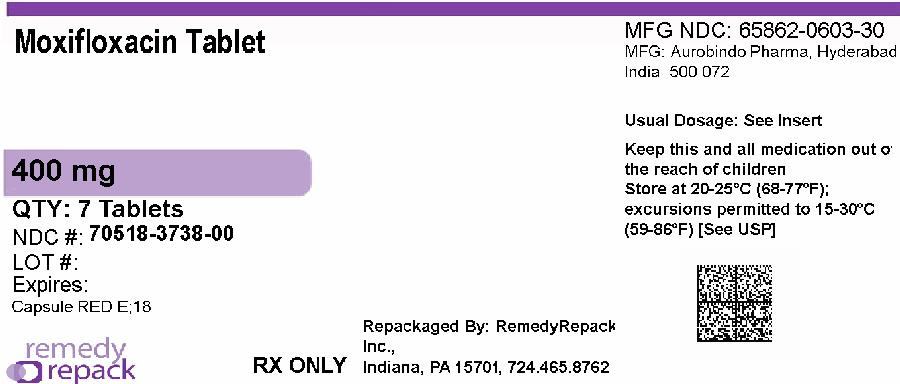
(moxifloxacin · DailyMed)
iMOX, Sterile Eye Drops
Boric Acid 450 mg/6 mL,Highly purified water Up to 150 ml,Moxifloxacin Hydrochloride 0.5 %w/v,Sodium Hydroxide Q.S to adjust pH mg/6 mL
What it does
Adjust is a medication used to help manage certain health conditions.
Read more in plain English ↓Plain-language summary for general understanding - not medical advice. Always follow your pharmacist/doctor.
Ask about this medicine
Answers come only from this medicine's registration record, BNF monograph and interaction data - not medical advice.
Medicine sourcing is available in Kenya only. We don't sell or dispense medicines - licensed pharmacies do.
Sourcing - Kenya onlyRegistration & product details
Source: Tanzania Medicines and Medical Devices Authority · fetched 2026-03-11 23:40:23 · updated 2026-09-17 03:00:43
Drug Interactions
6Pharmacodynamic Warnings
Moxifloxacin appears in TABLE 9: Drugs that prolong the QT interval
Severe (1)
Quinolones - decreases absorption
Strontiumispredictedtodecreasetheabsorptionof quinolones.Avoid.oTheoretical
Unknown (5)
Quinolones - decreases exposure
Lanthanum moderately decreases the exposure to quinolones. Quinolones should be taken 2 hours before or 4 hours after lanthanum.
Quinolones - increases exposure
Leflunomideispredictedtoincreasetheexposuretoquinolones (ciprofloxacin).oTheoretical
Quinolones - decreases exposure
Sucralfate decreases the exposure to quinolones. Separate administration by 2 hours.
Quinolones - decreases exposure
Zinc is predicted to decrease the exposure to quinolones. Separate administration by 2 hours. Rabeprazole → see proton pump inhibitors Rabies immunoglobulin → see immunoglobulins Rabies vaccine
Quinolones - increases exposure
Teriflunomideispredictedtoincreasetheexposureto quinolones(ciprofloxacin).oTheoretical https://www.facebook.c (Books-Courses-Medic
Data from BNF 85 (British National Formulary). This is not a substitute for professional medical advice. Matched via: class
About adjust
Adjust is a medication used to help manage certain health conditions.
How it works
Adjust helps to balance certain chemicals in the body to improve health.
Who it's for
Adjust is for individuals needing assistance with specific health conditions.
AI-assisted summary grounded in BNF data - general information only, not medical advice. Always confirm with your pharmacist or doctor.
About boric
Boric acid is a compound that can be used for various purposes, including treating certain infections and conditions.
What it treats
- vaginal infections (such as yeast infections)
- eye infections
- skin irritation
How it works
Boric acid has antifungal and antibacterial properties, helping to kill harmful organisms and promote healing.
Who it's for
It is suitable for adults and may be used in specific cases as directed by a healthcare professional.
AI-assisted summary grounded in BNF data - general information only, not medical advice. Always confirm with your pharmacist or doctor.
About highly
Highly is a medication used for various health conditions. Please consult a healthcare provider for specific uses and information.
How it works
The exact way Highly works is not specified, but it is used to help manage certain health issues.
Who it's for
Highly can be prescribed to individuals with specific health conditions, as determined by a healthcare professional.
AI-assisted summary grounded in BNF data - general information only, not medical advice. Always confirm with your pharmacist or doctor.
About hydroxide
Hydroxide is a compound used to help neutralize stomach acid and relieve indigestion or heartburn.
What it treats
- indigestion
- heartburn
How it works
Hydroxide works by neutralizing the excess acid in the stomach, which helps to reduce discomfort.
Who it's for
Hydroxide is suitable for adults and children experiencing symptoms of excess stomach acid.
AI-assisted summary grounded in BNF data - general information only, not medical advice. Always confirm with your pharmacist or doctor.
About moxifloxacin
Moxifloxacin is an antibiotic used to treat various bacterial infections.
What it treats
- bacterial infections
- lung infections (pneumonia)
- skin infections
- abdominal infections
How it works
It works by stopping the growth of bacteria, helping your body to fight off the infection.
Who it's for
It is for adults and children aged 2 months and above who have certain bacterial infections.
Drug class
Quinolones
Cautions
- • Be cautious if you are taking other medications that may affect heart rhythm.
AI-assisted summary grounded in BNF data - general information only, not medical advice. Always confirm with your pharmacist or doctor.
About purified
Purified ingredients are often used in various medicines to ensure safety and effectiveness by removing impurities.
What it treats
- various medical conditions
How it works
Purified ingredients help in delivering the intended effects of the medicine without the risk of contaminants.
Who it's for
People who need medications with safe and effective ingredients.
AI-assisted summary grounded in BNF data - general information only, not medical advice. Always confirm with your pharmacist or doctor.
Clinical monograph: Moxifloxacin
BNF-referencedMoxifloxacin is a fluoroquinolone antibiotic used to treat a variety of bacterial infections. It exhibits a broad spectrum of activity against both Gram-positive and Gram-negative bacteria and is particularly effective against respiratory tract infections, skin and soft tissue infections, and certain intra-abdominal infections. The drug is characterized by its bactericidal action, which results from the inhibition of bacterial DNA replication.
Indications
- Bacterial infections
- Complicated skin and soft-tissue infections
- Pelvic inflammatory disease
- Respiratory tract infections
- Intra-abdominal infections
Dosage
Children: Refer to the BNF for Children for appropriate dosing information.
Adults: 400 mg once daily for 7-21 days, depending on the specific infection being treated.
Mechanism of action
Moxifloxacin's bactericidal effect is primarily due to its inhibition of the enzymes topoisomerase II (DNA gyrase) and topoisomerase IV. By interfering with these enzymes, moxifloxacin prevents the replication, transcription, and repair of bacterial DNA. This mechanism is crucial for bacterial cell division and survival.
Pharmacodynamics
As a quinolone antibiotic, moxifloxacin is effective against a range of bacteria including aerobic Gram-positive organisms such as _Staphylococcus aureus_ and _Streptococcus pneumoniae_, as well as Gram-negative organisms like _Haemophilus influenzae_. It is known for its high affinity for bacterial DNA gyrase, which is approximately 100 times greater than its affinity for mammalian enzymes, making it selectively toxic to bacteria.
Pharmacokinetics
Moxifloxacin exhibits good oral bioavailability and is widely distributed in body tissues, reaching peak plasma concentrations approximately 1 to 2 hours after administration. The drug is primarily metabolized in the liver and excreted via the urine. The half-life of moxifloxacin is approximately 12 hours, allowing for once-daily dosing.
Contra-indications
- Acute myocardial infarction (risk factor for QT interval prolongation)
- Bradycardia (risk factor for QT interval prolongation)
- Congenital long QT syndrome (risk factor for QT interval prolongation)
- Electrolyte disturbances (risk factor for QT interval prolongation)
- Heart failure with reduced left ventricular ejection fraction (risk factor for QT interval prolongation)
- History of symptomatic arrhythmias (risk factor for QT interval prolongation)
Adverse effects
- Increased risk of infection
- Akathisia
- Angina pectoris
- Colitis associated with antibiotics
- Asthma
- Dehydration
- Gastritis
- Hyperlipidaemia
- Malaise
- Oedema
- Pelvic pain
- Thrombocytosis
- Vasodilation
Precautions
- May impair performance of skilled tasks (e.g. driving)
- Use with caution in patients with a history of seizures or CNS disorders
Pregnancy
Manufacturer advises use only if potential benefit outweighs risk.
Breast-feeding
Manufacturer advises avoid-present in milk in animal studies.
Storage
Store in a cool, dry place away from direct sunlight.
Formulations
- Tablets 400 mg
- Injection solution 400 mg/250 ml
- Nebuliser solution 100 mg/1 ml
AI-synthesized from BNF references - general information only, not a substitute for professional medical advice or the current BNF. Verify doses with a pharmacist.
Clinical monograph: adjust
Adjust is a term that may refer to a variety of products depending on the context, including medications that help to manage conditions such as hypertension, diabetes, or other chronic illnesses. In the context of pharmacology, it is essential to identify the specific drug being referenced to provide accurate and comprehensive information.
Dosage
Children: Refer to specific drug guidelines for paediatric dosing, as this varies widely.
Adults: Refer to specific drug guidelines for adult dosing, as this varies widely.
Mechanism of action
The mechanism of action will vary depending on the specific drug referred to as 'adjust'. Generally, medications designed to 'adjust' physiological parameters may work by modulating neurotransmitter systems, altering hormonal levels, or affecting enzyme activity to achieve therapeutic effects.
Pharmacodynamics
Pharmacodynamics will depend on the specific drug, but typically involves the interaction of the drug with its receptor sites, leading to a biological response. The efficacy and potency of the drug are influenced by its affinity for the target receptors and the subsequent signaling pathways activated.
Pharmacokinetics
Pharmacokinetics, including absorption, distribution, metabolism, and excretion, will vary by drug. Common factors influencing pharmacokinetics include bioavailability, half-life, and the presence of food or other drugs that may affect the drug's metabolism and elimination from the body.
AI-synthesized from BNF references - general information only, not a substitute for professional medical advice or the current BNF. Verify doses with a pharmacist.
Clinical monograph: boric
Boric acid, also known as hydrogen borate, is a weak acid that is often used as an antiseptic, insecticide, and antifungal agent. It has a long history of use in various medical and non-medical applications. In clinical settings, boric acid is primarily employed for the treatment of vaginal infections and as a disinfectant. Its antifungal properties make it effective against certain fungal infections, particularly those caused by Candida species. Boric acid is typically formulated as a powder or solution for topical or intravaginal use.
Indications
- Vulvovaginal candidiasis
- Fungal infections
- Antiseptic for minor cuts and abrasions
- Ocular antiseptic
- Insecticide in pest control
Dosage
Adults: Refer to specific guidelines for formulations. Commonly used as a 2-3% solution
Mechanism of action
Boric acid exerts its antifungal effects by disrupting the cell membrane integrity of fungi. It interferes with the synthesis of essential cellular components, leading to cell lysis and death. The acid also has mild antibacterial properties, which can help in reducing bacterial load in infected areas. The exact molecular pathways involved in these actions are not fully elucidated, but it is known to alter the pH of the environment, making it less conducive for fungal growth.
Pharmacodynamics
Boric acid demonstrates a low toxicity profile in humans when used appropriately. Its antifungal activity is primarily effective against Candida species, and it can be used as a second-line treatment for vulvovaginal candidiasis, particularly in cases of recurrent infections. The effectiveness of boric acid is also attributed to its ability to maintain an acidic environment, which is unfavorable for the growth of many pathogens. Its antiseptic properties help in reducing inflammation and promoting healing in infected tissues.
Pharmacokinetics
Boric acid is poorly absorbed through the gastrointestinal tract but can be absorbed through the skin and mucous membranes. Once absorbed, it is distributed throughout the body, with a tendency to accumulate in various tissues, including the liver and kidneys. The elimination half-life of boric acid is variable, depending on dosage and route of administration. It is primarily excreted unchanged in the urine. Due to its potential for toxicity with high systemic exposure, it is important to adhere to recommended dosages.
Contra-indications
- Hypersensitivity to boron or any component of the formulation
- Severe renal impairment
Adverse effects
- Skin irritation or rash
- Nausea
- Vomiting
- Diarrhea
- Headache
- Fatigue
- Tremors
- Confusion
Interactions
- May interact with other topical medications
- Caution with nephrotoxic agents
Precautions
- Use with caution in patients with renal insufficiency
- Careful monitoring is advised in long-term use
- Not recommended for use in large areas of broken skin
Pregnancy
Boric acid is classified as category C. Use during pregnancy only if the potential benefit justifies the potential risk to the fetus.
Breast-feeding
Limited data available. It is advisable to avoid use while breastfeeding.
Storage
Store in a cool, dry place away from light. Keep out of reach of children.
Formulations
- Topical ointment
- Powder
- Solution
AI-synthesized from BNF references - general information only, not a substitute for professional medical advice or the current BNF. Verify doses with a pharmacist.
Clinical monograph: highly
Highly is a term that does not refer to a specific drug but may imply a class of medications or a descriptor related to drug potency or efficacy. Without specific context or a defined substance, it is challenging to provide a detailed monograph. Medications that are considered highly effective generally work through well-established biochemical pathways and mechanisms that enhance therapeutic outcomes.
Dosage
Children: Refer to specific drug guidelines or BNF for Children for appropriate dosing information in paediatric populations.
Adults: Refer to specific drug guidelines or BNF for appropriate dosing information, as this can vary widely based on the condition being treated.
Mechanism of action
The mechanism of action would depend on the specific drug in question. Generally, medications work by interacting with specific receptors, enzymes, or pathways in the body, leading to therapeutic effects. For example, some drugs may inhibit enzymes that contribute to disease processes, while others may modulate receptor activity to enhance or inhibit physiological responses.
Pharmacodynamics
Pharmacodynamics involves the study of the effects of drugs and their mechanisms of action in the body. The relationship between drug concentration and its effect can vary widely among different classes of medications. Highly effective drugs may have a steep dose-response curve, meaning small changes in dose can lead to significant changes in effect.
Pharmacokinetics
Pharmacokinetics describes the absorption, distribution, metabolism, and excretion (ADME) of drugs. Highly effective medications may have specific pharmacokinetic profiles that optimize their therapeutic effects while minimizing side effects. This includes considerations like half-life, bioavailability, and clearance rates which can influence dosing regimens.
Pregnancy
Consult with a healthcare provider before use; safety profile during pregnancy is not well established.
Breast-feeding
Consult with a healthcare provider; safety during breastfeeding is not well established.
Storage
Store in a cool, dry place away from direct sunlight and out of reach of children.
AI-synthesized from BNF references - general information only, not a substitute for professional medical advice or the current BNF. Verify doses with a pharmacist.
Clinical monograph: hydroxide
BNF-referencedHydroxide, represented by the molecular formula HO-, is an anion commonly found in various chemical and biological systems. It plays a crucial role in acid-base chemistry and is a fundamental component in many biochemical pathways. Hydroxide ions are involved in maintaining pH balance in biological systems and participate in various metabolic processes.
Dosage
Children: Refer to specific guidelines for pediatric dosing; consult the BNF for Children for accurate dosage information.
Adults: Refer to specific guidelines for use; dosage may vary based on the context of use.
Mechanism of action
Hydroxide ions act primarily as bases, neutralizing acids to form water and salts. They participate in various biochemical pathways, including selenium metabolism and the degradation of reactive oxygen species. Hydroxide can influence enzyme activity and stability by altering the pH of the environment, thereby affecting metabolic reactions.
Pharmacodynamics
Hydroxide ions can impact biological processes by changing the local pH, which influences enzyme activity, ion transport, and the solubility of other compounds. Their ability to neutralize acids can help regulate physiological pH, contributing to homeostasis in living organisms.
Pharmacokinetics
As an inorganic ion, hydroxide does not undergo traditional pharmacokinetic processes like absorption, distribution, metabolism, or excretion. Instead, it is rapidly equilibrated in biological fluids and participates in acid-base reactions, having immediate effects on the local environment.
Pregnancy
There is limited information regarding the use of hydroxide during pregnancy. Consult a healthcare professional for advice.
Breast-feeding
Limited data is available on the excretion of hydroxide in breast milk. Consult a healthcare professional before use.
Storage
Store in a cool, dry place away from direct sunlight. Keep out of reach of children.
AI-synthesized from BNF references - general information only, not a substitute for professional medical advice or the current BNF. Verify doses with a pharmacist.
Clinical monograph: purified
Purified refers to a substance that has been processed to remove impurities, contaminants, or unwanted substances, resulting in a more concentrated and effective form of the original compound. In pharmacology, purified compounds are often used to enhance therapeutic efficacy and reduce adverse effects. The purification process can apply to a variety of substances, including drugs, biological products, and chemical compounds.
Dosage
Children: Refer to specific drug formulations and product labels as purified substances can vary widely in their use and dosing.
Adults: Refer to specific drug formulations and product labels as purified substances can vary widely in their use and dosing.
Mechanism of action
The mechanism of action for purified compounds varies widely depending on the specific substance. Generally, purified drugs exert their effects by interacting with specific biological targets, such as receptors, enzymes, or ion channels, leading to a desired therapeutic effect. This interaction can involve binding to receptors to activate or inhibit signaling pathways, modulating enzymatic activity, or altering physiological processes.
Pharmacodynamics
Pharmacodynamics describes the effects of a drug on the body and the relationship between drug concentration and effect. For purified drugs, this can involve dose-response relationships and the time course of their action. The purified form often enhances potency and reduces variability in response among patients, which can lead to more predictable therapeutic outcomes. The overall effect is determined by the drug's affinity for its target, the efficacy of the drug-receptor interaction, and the downstream signaling pathways activated as a result of this interaction.
Pharmacokinetics
Pharmacokinetics involves the absorption, distribution, metabolism, and excretion (ADME) of a drug. For purified substances, absorption can be more efficient due to the absence of impurities that may affect solubility or stability. Distribution may also be enhanced, leading to higher bioavailability. Metabolism can be influenced by the structure of the purified compound, as it may be metabolized more readily by liver enzymes. Excretion typically occurs through the kidneys or liver, depending on the molecular characteristics of the purified drug.
Pregnancy
Consult with a healthcare professional, as the safety of purified forms of medications during pregnancy may vary depending on the specific substance.
Breast-feeding
Consult with a healthcare professional, as the safety of purified forms of medications during breastfeeding may vary depending on the specific substance.
Storage
Store in a cool, dry place, away from light and moisture, and keep out of reach of children.
AI-synthesized from BNF references - general information only, not a substitute for professional medical advice or the current BNF. Verify doses with a pharmacist.
Molecular reference: hydroxide
PubChem CID 961Molecular formula: HO-
Biological pathways
Source: PubChem (NCBI) · pathways from PathBank, Reactome, WikiPathways & PharmGKB.
Molecular reference: Moxifloxacin
PubChem CID 152946Molecular formula: C21H24FN3O4
Mechanism of action
The bactericidal action of moxifloxacin results from inhibition of the enzymes topoisomerase II (DNA gyrase) and topoisomerase IV. DNA gyrase is an essential enzyme that is involved in the replication, transcription and repair of bacterial DNA. Topoisomerase IV is an enzyme known to play a key role in the partitioning of the chromosomal DNA during bacterial cell division. The fluoroquinolone antibiotic moxifloxacin has been associated with the acquired long QT syndrome and is used as a positive control in the evaluation of the QT-interval prolonging potential of new drugs. In common with other QT-prolonging agents, moxifloxacin is known to inhibit the hERG potassium K+ channel, but at present there is little mechanistic information available on this action. This study was conducted in order to characterise the inhibition of hERG current (I(hERG)) by moxifloxacin, and to determine the role in drug binding of the S6 aromatic amino-acid residues Tyr652 and Phe656. hERG currents were studied using whole-cell patch clamp (at room temperature and at 35-37 degrees C) in an HEK293 cell line stably expressing hERG channels. Moxifloxacin reversibly inhibited currents in a dose-dependent manner. We investigated the effects of different voltage commands to elicit hERG currents on moxifloxacin potency. Using a 'step-ramp' protocol, the IC50 was 65 uM at room temperature and 29 microM at 35 degrees C. When a ventricular action potential waveform was used to elicit currents, the IC50 was 114 microM. Block of hERG by moxifloxacin was found to be voltage-dependent, occurred rapidly and was independent of stimulation frequency. Mutagenesis of the S6 helix residue Phe656 to Ala failed to eliminate or reduce the moxifloxacin-mediated block whereas mutation of Tyr652 to Ala reduced moxifloxacin block by approximately 66%. Our data demonstrate that moxifloxacin blocks the hERG channel with a preference for the activated channel state. The Tyr652 but not Phe656 S6 residue is involved in moxifloxacin block of hERG, concordant with an interaction in the channel inner cavity. The bactericidal action of moxifloxacin results from inhibition of the topoisomerase II (DNA gyrase) and topoisomerase IV required for bacterial DNA replication, transcription, repair, and recombination. It appears that the C8-methoxy moiety contributes to enhanced activity and lower selection of resistant mutants of Gram-positive bacteria compared to the C8-H moiety. The presence of the bulky bicycloamine substituent at the C-7 position prevents active efflux, associated with the NorA or pmrA genes seen in certain Gram-positive bacteria. Torsade de pointes (TdP) is increasingly recognized as a complication of drug therapy. The most common cause of drug-induced QT prolongation is inhibition of the rapidly activating component of the delayed potassium current (I(Kr)). Moxifloxacin, a widely used fluoroquinolone, is a weak I(Kr) inhibitor and has been associated with QT prolongation. Fluoroquinolones prolong the QT interval by blocking voltage-gated potassium channels, especially the rapid component of the delayed rectifier potassium current I(Kr), expressed by HERG (the human ether-a-go-go-related gene). According to the available case reports and clinical studies, moxifloxacin carries the greatest risk of QT prolongation from all available quinolones in clinical practice and it should be used with caution in patients with predisposing factors for Torsades de pointes (TdP).
Pharmacodynamics
Moxifloxacin is a quinolone/fluoroquinolone antibiotic. Moxifloxacin can be used to treat infections caused by the following bacteria: Aerobic Gram-positive microorganisms: _Corynebacterium_ species, _Micrococcus luteus_, _Staphylococcus aureus_, _Staphylococcus epidermidis_, _Staphylococcus haemolyticus_, _Staphylococcus hominis_, _Staphylococcus warneri_, _Streptococcus pneumoniae_, and _Streptococcus viridans_ group. Aerobic Gram-negative microorganisms: _Acinetobacter lwoffii_, _Haemophilus influenzae_, and _Haemophilus parainfluenzae_. Other microorganisms: _Chlamydia trachomatis_. Moxifloxacin is bactericidal and its mode of action depends on blocking of bacterial DNA replication by binding itself to an enzyme called DNA gyrase, which allows the untwisting required to replicate one DNA double helix into two. Notably the drug has 100 times higher affinity for bacterial DNA gyrase than for mammalian. Moxifloxacin is a broad-spectrum antibiotic that is active against both Gram-positive and Gram-negative bacteria.
Source: PubChem (NCBI) · pathways from PathBank, Reactome, WikiPathways & PharmGKB.
This drug in other countries
The same active ingredient registered across other registries we cover - including different brands.
- ABYCID SUSPENSION (Each 5ml contains Magnesium Hydroxide BP/ Dried Aluminium Hydroxide BP Magnesium Trisilicate BP Activated Dimethicone (Simethicone) B 225mg/200mg/25mg) · Socomed Pharmceuticals Pvt Limited
- ACIQUARD O SUSPENSION (Each 5ml contains Dried Aluminium Hydroxide / Magnesium Hydroxide / Simethicone / Oxethazaine 250mg/250mg/50mg/10mg) · Pharmanova
- ALUMINIUM HYDROXIDE 500MG TABLETS · Letap Pharmaceuticals
- ALUMINIUM HYDROXIDE TABLETS · M&g Pharmaceuticals
- ALUMINIUM HYDROXIDE TABLETS · Phyto-Riker Pharmaceutical
- ALUSIL PLUS SUSPENSION (Each 5ml contains Aluminium Hydroxide/Magnesium Hydroxide/Magnesium Trisilicate/Simethicone 300mg/100mg/200mg/30mg) · Letap Pharmaceuticals
- ADCO MAYOGEL SUSPENSION · Adcock Ingram
- BEVAC® · Biological E. Limited
- COTRIMOL 400/80 · Ipca Labotratories Ltd
- CP-GLIMEPIRIDE 2 · Acme Formulation Pvt. Ltd
- EMPIGET TABLET 10MG · Getz Pharma Private Limited
- EMPIGET TABLET 25MG · Getz Pharma Private Limited