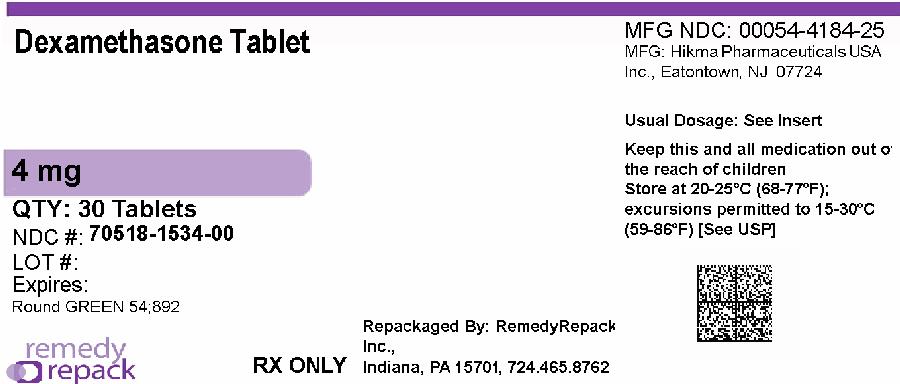
(dexamethasone · DailyMed)
Inflamgo
Anhydrous Sodium Sulfite 2 mg/5.26ml,Dexamethasone Sodium Phosphate equivalent to Dexamethasone Phosphate 2 mg/ml,Edetate Disodium 0.5 mg/5.26ml,Propylene Glycol 0.15 ml/ml,Water for injections q.s q.s to 1mL
What it does
Dexamethasone is a corticosteroid used to treat various conditions by reducing inflammation and suppressing the immune system.
Commonly used for: inflammation, allergic reactions, certain cancers, autoimmune diseases (e.g., lupus) …
Read more in plain English ↓Plain-language summary for general understanding - not medical advice. Always follow your pharmacist/doctor.
Ask about this medicine
Answers come only from this medicine's registration record, BNF monograph and interaction data - not medical advice.
Medicine sourcing is available in Kenya only. We don't sell or dispense medicines - licensed pharmacies do.
Sourcing - Kenya onlyRegistration & product details
Source: Tanzania Medicines and Medical Devices Authority · fetched 2026-03-11 23:41:00 · updated 2026-10-01 03:00:45
Drug Interactions
48Pharmacodynamic Warnings
Dexamethasone appears in TABLE 17: Drugs that reduce serum potassium
Severe (2)
Avapritinib - decreases exposure
Dexamethasoneispredictedtodecreasetheexposureto avapritinib.Avoid.rTheoretical
Mifamurtide - decreases efficacy
Corticosteroidsarepredictedtodecreasetheefficacyof mifamurtide.Avoid.rTheoretical
Moderate (24)
Corticosteroids - increases exposure
Dronedarone is predicted to increase the exposure to corticosteroids (methylprednisolone). Monitor and adjust dose.
Corticosteroids - increases concentration
Miconazole is predicted to increase the concentration of corticosteroids (methylprednisolone). Monitor and adjust dose.
Corticosteroids - increases exposure
Antifungals, azoles (fluconazole, isavuconazole, posaconazole) are predicted to increase the exposure to corticosteroids (methylprednisolone). Monitor and adjust dose.
Corticosteroids - decreases exposure
Cenobamate is predicted to decrease the exposure to corticosteroids (fluticasone). Adjust dose.
Corticosteroids - decreases efficacy
Mifepristone is predicted to decrease the efficacy of corticosteroids. Use with caution and adjust dose.
Unknown (22)
Aspirin - decreases concentration
Corticosteroids are predicted to decrease the concentration of aspirin (high-dose) and aspirin (high-dose) increases the risk of gastrointestinal bleeding when given with corticosteroids.
Caspofungin - decreases concentration
Dexamethasone is predicted to decrease the concentration of caspofungin. Adjust caspofungin dose, p. 654.
Choline Salicylate - decreases concentration
Corticosteroids are predicted to decrease the concentration of cholinesalicylate. Ciclesonide → see corticosteroids Ciclosporin → see TABLE 2 p. 1517 (nephrotoxicity), TABLE 16 p. 1521 (increased seru
Corticosteroids - increases exposure
Cobicistat is predicted to increase the exposure to corticosteroids (beclometasone) (risk with beclometasone is likely to be lower than with other corticosteroids).
Corticosteroids - increases risk of gastrointestinal perforation
Erlotinib is predicted to increase the risk of gastrointestinal perforation when given with corticosteroids.
Data from BNF 85 (British National Formulary). This is not a substitute for professional medical advice. Matched via: exact
About dexamethasone
Dexamethasone is a corticosteroid used to treat various conditions by reducing inflammation and suppressing the immune system.
What it treats
- inflammation
- allergic reactions
- certain cancers
- autoimmune diseases (e.g., lupus)
- skin conditions (e.g., eczema)
How it works
It works by mimicking the effects of hormones produced by the adrenal glands, helping to decrease inflammation and control the immune response.
Who it's for
It is prescribed for adults and children with specific health issues that require inflammation control or immune suppression.
Drug class
Corticosteroids
Cautions
- • Be cautious if taking medications that lower potassium levels.
AI-assisted summary grounded in BNF data - general information only, not medical advice. Always confirm with your pharmacist or doctor.
About disodium
Disodium is a compound that may be used in various medical applications, particularly in maintaining electrolyte balance.
What it treats
- maintaining salt and water balance in the body
- supporting kidney function
How it works
Disodium helps to regulate the levels of sodium in the body, which is important for many bodily functions, including nerve and muscle activity.
Who it's for
It is usually prescribed for individuals who need help with electrolyte balance, such as those with certain kidney conditions or those undergoing specific treatments.
AI-assisted summary grounded in BNF data - general information only, not medical advice. Always confirm with your pharmacist or doctor.
About edetate
Edetate is used to treat conditions caused by metal poisoning, such as lead or mercury poisoning.
What it treats
- metal poisoning
- lead poisoning
- mercury poisoning
How it works
Edetate works by binding to heavy metals in the body, helping to remove them through urine.
Who it's for
It is for individuals who have been exposed to harmful levels of certain metals.
AI-assisted summary grounded in BNF data - general information only, not medical advice. Always confirm with your pharmacist or doctor.
About glycol
Glycol is a substance used in various medical and industrial applications, primarily known for its properties as a solvent and humectant.
What it treats
- moisturizing skin (topical applications)
- acting as a solvent in medications
How it works
Glycol helps to retain moisture and can dissolve other substances, making it useful in creams and solutions.
Who it's for
Glycol is generally safe for use in topical products for adults and children when used as directed.
AI-assisted summary grounded in BNF data - general information only, not medical advice. Always confirm with your pharmacist or doctor.
About injections
Injections are a method of delivering medication directly into the body using a syringe and needle.
What it treats
- administering vaccines
- treating infections
- managing pain
- delivering hormones
- providing nutrients
How it works
Injections allow medicines to enter the bloodstream quickly, helping them work faster than oral medications.
Who it's for
Injections may be used for anyone who needs medication that cannot be taken by mouth or needs rapid effect.
Cautions
- • May cause discomfort or pain at the injection site.
- • Risk of infection if not administered properly.
- • Some people may have allergic reactions to injected medications.
AI-assisted summary grounded in BNF data - general information only, not medical advice. Always confirm with your pharmacist or doctor.
About propylene
Propylene is a compound used in various medical applications, often as a solvent or carrier for medications.
What it treats
- used in some topical treatments
- acts as a solvent in pharmaceuticals
How it works
Propylene helps dissolve other substances, making them easier to apply or absorb in the body.
Who it's for
It is typically for adults and children who need certain medications delivered in a specific form.
AI-assisted summary grounded in BNF data - general information only, not medical advice. Always confirm with your pharmacist or doctor.
About sulfite
Sulfite is a compound often used as a preservative in food and medications. Some people may have allergies or sensitivities to sulfites.
What it treats
- preservative in food and beverages
- preservative in medications
How it works
Sulfites help prevent spoilage and maintain the freshness of products.
Who it's for
Sulfites are generally safe for most people but should be avoided by those with sulfite allergies.
Cautions
- • Avoid use if you have a known allergy to sulfites.
- • Consult a healthcare professional if you experience allergic reactions.
AI-assisted summary grounded in BNF data - general information only, not medical advice. Always confirm with your pharmacist or doctor.
Clinical monograph: Dexamethasone
BNF-referencedDexamethasone is a synthetic corticosteroid with potent anti-inflammatory and immunosuppressive properties. It has predominantly glucocorticoid activity and is used to treat various inflammatory and allergic conditions. Its mechanisms include decreasing vasodilation and permeability of capillaries, inhibiting leukocyte migration, and altering gene expression related to inflammation. Dexamethasone is administered orally or via injection, and it is important to manage dosing carefully to avoid potential side effects.
Indications
- Suppression of inflammatory and allergic disorders
- Adjunctive treatment of suspected bacterial meningitis
- Reduction of peri- and neonatal morbidity and mortality in preterm birth
- Management of severe croup
- Congenital adrenal hyperplasia
- COVID-19 requiring supplemental oxygen
Dosage
Adults: For adults, the typical dosing varies by condition
Mechanism of action
Dexamethasone binds to the glucocorticoid receptor, leading to changes in gene expression that result in decreased inflammatory and immune responses. It inhibits phospholipase A2, reducing the formation of pro-inflammatory mediators, and promotes anti-inflammatory genes like interleukin-10. The drug also inhibits neutrophil apoptosis and demargination, contributing to its anti-inflammatory effects. Its glucocorticoid activity results in significant immunosuppression at higher doses.
Pharmacodynamics
Dexamethasone's pharmacodynamics involve the modulation of inflammatory responses through glucocorticoid receptor binding. It inhibits pro-inflammatory signals while promoting anti-inflammatory signals. The duration of action varies based on the administration route, and careful dosing is required to avoid suppression of the hypothalamic-pituitary-adrenal axis and increased infection risk. The drug has a wide therapeutic window, allowing for higher doses than the body's natural production.
Pharmacokinetics
Dexamethasone is well-absorbed after oral administration, with peak plasma concentrations typically occurring within 1-2 hours. It is extensively metabolized in the liver, primarily through hepatic cytochrome P450 enzymes. The elimination half-life ranges from 3 to 4 hours, although it may be longer in certain populations. The drug is excreted mainly in urine as metabolites. The pharmacokinetics can be affected by factors such as liver function and co-administered medications.
Contra-indications
- Systemic fungal infections
- Hypersensitivity to dexamethasone or any component of the formulation
- Active tuberculosis
- Cautious use in patients with peptic ulcer disease
Adverse effects
- Oedema
- Hypotension
- Increased susceptibility to infections
- Mood changes
- Cushing's syndrome
- Hyperglycemia
- Gastrointestinal perforation
- Osteoporosis
- Adrenal suppression
Interactions
- Severe interaction with avapritinib (decreases exposure)
- Moderate interaction with mitotane (decreases exposure)
- Moderate interaction with monoclonal antibodies (decreases exposure)
- Moderate interaction with tocilizumab (decreases exposure)
- Moderate interaction with aprepitant (increases exposure)
- Moderate interaction with netupitant (increases exposure)
- Moderate interaction with rifampicin (decreases exposure)
- Unknown interaction with cobicistat (increases exposure)
- Unknown interaction with caspofungin (decreases concentration)
- Unknown interaction with idelalisib (increases exposure)
Precautions
- Use with caution in patients with a history of tuberculosis
- Monitor for signs of infection due to immunosuppressive effects
- Consider dose adjustments in hepatic impairment
- Taper dosage to avoid withdrawal symptoms after prolonged use
- Monitor blood glucose levels in diabetic patients
Pregnancy
Dexamethasone is classified as a pregnancy category C drug. It should only be used if the potential benefit justifies the potential risk to the fetus.
Breast-feeding
Dexamethasone is excreted in breast milk. Caution is advised when administering to breastfeeding women, and the risks versus benefits should be considered.
Storage
Store at room temperature (15-30 degrees Celsius), protect from light, and keep out of reach of children.
Formulations
- Tablet (6 mg)
- Solution for injection (3.3 mg/1 ml)
- Dexamethasone sodium phosphate solution for injection (6.6 mg/2 ml)
AI-synthesized from BNF references - general information only, not a substitute for professional medical advice or the current BNF. Verify doses with a pharmacist.
Clinical monograph: disodium
BNF-referencedDisodium is a chemical compound composed of two sodium ions. It is not commonly referenced as a standalone drug but is often found in various formulations and compounds, particularly in the context of sodium salts. Disodium salts can have various applications in medicine, including as electrolytes in intravenous solutions and in the formulation of certain medications.
Indications
- Electrolyte replacement
- Volume expansion in hypovolemic patients
- Management of hyponatremia
- Support in intravenous fluid therapy
Dosage
Children: Refer to the BNF for Children for appropriate dosing in paediatric patients, as dosages may vary based on the formulation and clinical condition.
Adults: Refer to specific product information or clinical guidelines for dosage recommendations, as disodium is often part of combination products.
Mechanism of action
Disodium compounds often function by providing sodium ions that are essential for various physiological processes. Sodium ions play a critical role in maintaining osmotic balance, nerve impulse transmission, and muscle contraction. In the context of intravenous solutions, disodium helps to restore electrolyte balance in patients.
Pharmacodynamics
The pharmacodynamics of disodium is primarily related to its role in electrolyte balance and fluid homeostasis. Sodium ions are vital for the function of excitable tissues, including neurons and muscle cells. Changes in sodium levels can affect blood pressure, hydration status, and overall cellular function.
Pharmacokinetics
The pharmacokinetics of disodium compounds depend on their specific formulation and route of administration. When administered intravenously, disodium is rapidly distributed in the extracellular fluid, where it helps to maintain osmotic pressure. Sodium is primarily excreted by the kidneys, and its levels can be influenced by fluid intake, dietary sodium, and renal function.
Pregnancy
Use with caution. Consult a healthcare provider for specific guidance.
Breast-feeding
Use with caution. Consult a healthcare provider for specific guidance.
Storage
Store at room temperature, away from moisture and direct sunlight.
AI-synthesized from BNF references - general information only, not a substitute for professional medical advice or the current BNF. Verify doses with a pharmacist.
Clinical monograph: edetate
BNF-referencedEdetate, also known as edetic acid or disodium edetate, is a chelating agent used primarily to treat heavy metal poisoning, particularly lead and mercury. It works by binding to metal ions in the bloodstream, facilitating their excretion from the body. Edetate is also utilized in certain diagnostic procedures and as part of treatment regimens for conditions associated with calcium overload.
Indications
- Lead poisoning
- Mercury poisoning
- Calcium overload
- Certain diagnostic procedures involving heavy metals
Dosage
Children: Refer to the BNF for Children for appropriate dosing information tailored for paediatric patients.
Adults: Refer to the BNF for specific dosing guidelines based on the condition being treated, considering factors such as the severity of metal poisoning and renal function.
Mechanism of action
Edetate functions by forming stable complexes with divalent and trivalent metal ions, including lead and calcium, through its multiple carboxylate and amine groups. This chelation renders the metals more soluble and promotes their renal excretion, thereby reducing their toxic effects in the body.
Pharmacodynamics
The chelation of metals by edetate decreases the free metal concentration in the bloodstream, which mitigates the toxic effects associated with heavy metal accumulation. The efficacy of edetate in removing metals such as lead has been well documented, and its ability to bind calcium can influence calcium homeostasis in certain clinical scenarios.
Pharmacokinetics
Edetate is administered intravenously, with rapid distribution throughout the extracellular fluid. It is primarily excreted unchanged by the kidneys. The onset of action occurs quickly after administration, and the duration depends on the dose and the patient's renal function. The elimination half-life is approximately 1 hour but may vary based on renal clearance.
Contra-indications
- Hypersensitivity to edetate or any component of the formulation
- Severe renal impairment
- Active bleeding disorders
Adverse effects
- Hypocalcemia
- Nausea
- Vomiting
- Diarrhea
- Abdominal pain
- Headache
- Rash
- Fever
Interactions
- May enhance the effects of anticoagulants
- Concurrent use with calcium supplements may reduce effectiveness
- May interfere with the absorption of certain medications due to changes in gastrointestinal motility
Precautions
- Use with caution in patients with renal impairment
- Monitor electrolyte levels, particularly calcium, during treatment
- Assess the patient's hydration status before administration
Pregnancy
Limited data on the use of edetate in pregnancy. Use only if the potential benefit justifies the potential risk to the fetus.
Breast-feeding
Caution is advised as it is not known whether edetate is excreted in human milk. Weigh the risks and benefits before use.
Storage
Store in a cool, dry place, protected from light. Do not freeze.
Formulations
- Edetate disodium injection
- Edetate calcium disodium injection
AI-synthesized from BNF references - general information only, not a substitute for professional medical advice or the current BNF. Verify doses with a pharmacist.
Clinical monograph: glycol
BNF-referencedEthylene glycol, a colorless, odorless liquid with a sweet taste, is primarily used in antifreeze and industrial applications. It is toxic to humans and can lead to severe metabolic acidosis and organ damage upon ingestion. Due to its potential for misuse and toxicity, it is classified as a hazardous substance.
Dosage
Children: Refer to the BNF for Children for appropriate dosing information in paediatric cases, especially in instances of overdose.
Adults: Refer to the BNF for specific dosing information based on clinical circumstances, particularly in cases of overdose.
Mechanism of action
Ethylene glycol is metabolized by alcohol dehydrogenase to glycoaldehyde, which is subsequently converted to glycolic, glyoxylic, and oxalic acids. These metabolites contribute to anion gap metabolic acidosis and are responsible for tissue injury through the formation of insoluble calcium oxalate crystals.
Pharmacodynamics
The toxicity of ethylene glycol arises from its metabolites, particularly glycolic and oxalic acids. These compounds induce metabolic acidosis, lead to renal failure through calcium oxalate crystal deposition in the kidneys, and can cause neurological impairment. The anion gap increases due to the accumulation of these acids, leading to complications such as cardiovascular instability and potential multi-organ failure.
Pharmacokinetics
Ethylene glycol is rapidly absorbed after oral ingestion. It undergoes first-pass metabolism primarily in the liver, where it is converted into its toxic metabolites. The elimination half-life of ethylene glycol varies but is generally prolonged in cases of renal impairment. Renal excretion of metabolites contributes to the duration of toxicity, necessitating prompt medical intervention in cases of overdose.
Adverse effects
- Metabolic acidosis
- Renal failure
- CNS depression
- Hypocalcemia
- Cardiovascular collapse
- Pulmonary edema
Precautions
- Use with caution in patients with renal impairment
- Monitor for signs of metabolic acidosis
- Evaluate electrolyte levels, particularly calcium
Pregnancy
There is limited data on the safety of ethylene glycol in pregnancy. It should only be used if clearly needed.
Breast-feeding
It is unknown if ethylene glycol is excreted in human milk. Caution is advised.
Storage
Store in a tightly closed container at room temperature, away from heat and moisture.
Formulations
- Liquid
AI-synthesized from BNF references - general information only, not a substitute for professional medical advice or the current BNF. Verify doses with a pharmacist.
Clinical monograph: injections
Injections refer to the administration of a substance directly into the body through a syringe and needle. This method is commonly used for delivering medications, vaccines, or biological therapies. Injections can be administered intravenously, intramuscularly, subcutaneously, or intradermally, depending on the drug's properties and the desired effect. This route ensures rapid onset of action, making it ideal for emergencies or when immediate therapeutic effects are required.
Indications
- Pain management
- Vaccination
- Antibiotic therapy
- Hormonal therapies
- Anesthesia
- Nutritional support
- Chemotherapy
Dosage
Children: Refer to specific drug guidelines for paediatric dosing, as it requires careful consideration of weight and age.
Adults: Refer to specific drug guidelines for adult dosing, as it varies widely depending on the medication and clinical condition.
Mechanism of action
The mechanism of action of injected drugs varies widely based on the specific medication being administered. Generally, injected drugs enter the bloodstream directly, allowing them to circulate rapidly throughout the body. For instance, antibiotics may work by inhibiting bacterial cell wall synthesis, while analgesics may modulate pain pathways in the central nervous system. Each drug has unique pathways through which it achieves its therapeutic effects.
Pharmacodynamics
Pharmacodynamics refers to the effects of drugs on the body and their mechanisms of action. For injectable medications, effects can be immediate or delayed, depending on the drug's formulation and route of administration. Factors influencing pharmacodynamics include receptor affinity, drug concentration, and the presence of other substances that may enhance or inhibit the drug's effects. For example, some injectable drugs may require specific receptors to exert their effects, while others may have a broader range of action.
Pharmacokinetics
Pharmacokinetics involves the absorption, distribution, metabolism, and excretion (ADME) of injected drugs. After administration, drugs are rapidly absorbed into the bloodstream, leading to quick therapeutic effects. The distribution depends on factors such as blood flow, tissue permeability, and protein binding. Drugs are metabolized primarily in the liver and excreted through the kidneys or bile. The pharmacokinetic profile can vary widely based on the drug's chemical nature, dosage, and individual patient factors.
Pregnancy
Safety during pregnancy depends on the specific injection and its active ingredients. It is essential to consult a healthcare professional for guidance.
Breast-feeding
The safety of injections during breastfeeding varies by the specific medication. It is recommended to seek advice from a healthcare provider.
Storage
Store injections as per manufacturer's guidelines, usually in a cool, dry place away from direct sunlight. Some may require refrigeration.
AI-synthesized from BNF references - general information only, not a substitute for professional medical advice or the current BNF. Verify doses with a pharmacist.
Clinical monograph: propylene
BNF-referencedPropylene, also known as propene, is a colorless gas with a faint petroleum-like odor. It is primarily used as a chemical feedstock in the production of polypropylene, a widely used plastic. Propylene also has applications in agriculture as a plant growth inhibitor, where it functions by affecting the oxidation processes in plants.
Indications
- Plant growth regulation
- Agricultural applications as a growth inhibitor
Dosage
Children: Not applicable.
Adults: Refer to the relevant agricultural guidelines for specific applications.
Mechanism of action
In an in vitro study, propylene acts as a plant growth inhibitor by inhibiting the oxidation of indole-3-acetic acid by peroxidase in the presence of superoxide anion radicals. This inhibition is linked to the activation of an iron complex (compound III) shuttle, which enhances the reaction rate between superoxide and peroxidase, ultimately affecting plant growth processes. Propylene is a less effective inhibitor compared to ethylene.
Pharmacodynamics
The pharmacodynamic effects of propylene are primarily observed in its role as a growth inhibitor in plants. By modulating the oxidation of phytohormones like indole-3-acetic acid, propylene can influence various growth responses in plants, potentially affecting processes such as cell elongation and division.
Pharmacokinetics
Information on the pharmacokinetics of propylene in humans is not well-documented, as its primary uses are industrial and agricultural. Its metabolism may be influenced by environmental factors, and its effects are primarily studied in the context of plant biology rather than human pharmacology.
AI-synthesized from BNF references - general information only, not a substitute for professional medical advice or the current BNF. Verify doses with a pharmacist.
Clinical monograph: sulfite
BNF-referencedSulfite is a sulfur-containing compound with the molecular formula O3S-2. It plays a significant role in various biochemical pathways, including the degradation of sulfoacetaldehyde, dissimilatory sulfate reduction, and the metabolism of thiosulfate. Sulfite is commonly encountered in both natural and industrial processes, functioning in biological systems as a substrate or product in redox reactions.
Dosage
Children: Refer to the BNF for Children for specific dosing information.
Adults: Refer to the BNF for specific dosing information.
Mechanism of action
Sulfite acts as a reducing agent, participating in oxidation-reduction reactions within metabolic pathways. It is involved in the degradation of sulfur-containing compounds and aids in the reduction of sulfate to sulfide in certain anaerobic bacteria. This mechanism allows sulfite to influence energy metabolism and sulfur cycling in the environment.
Pharmacodynamics
Sulfite has various biological effects, including the modulation of cellular redox states and potential antioxidant properties. It can influence enzymatic activities, particularly those involving sulfite oxidase, which is responsible for the detoxification of sulfite to sulfate in mammals. Elevated levels of sulfite can lead to toxicity, particularly in individuals with sulfite sensitivity.
Pharmacokinetics
The pharmacokinetics of sulfite are not well characterized due to its varied natural occurrences and forms. In biological systems, sulfite is rapidly oxidized to sulfate, which is then excreted in the urine. The half-life and absorption characteristics depend on the route of exposure, whether through ingestion or inhalation. Individuals with compromised sulfite metabolism may experience increased retention of sulfite, leading to potential adverse reactions.
Pregnancy
Use during pregnancy is not well-studied; consult a healthcare provider.
Breast-feeding
Limited data available; consult a healthcare provider.
Storage
Store in a cool, dry place away from light.
AI-synthesized from BNF references - general information only, not a substitute for professional medical advice or the current BNF. Verify doses with a pharmacist.
Molecular reference: Dexamethasone
PubChem CID 5743Molecular formula: C22H29FO5
Mechanism of action
The short term effects of corticosteroids are decreased vasodilation and permeability of capillaries, as well as decreased leukocyte migration to sites of inflammation. Corticosteroids binding to the glucocorticoid receptor mediates changes in gene expression that lead to multiple downstream effects over hours to days. Glucocorticoids inhibit neutrophil apoptosis and demargination; they inhibit phospholipase A2, which decreases the formation of arachidonic acid derivatives; they inhibit NF-Kappa B and other inflammatory transcription factors; they promote anti-inflammatory genes like interleukin-10. Lower doses of corticosteroids provide an anti-inflammatory effect, while higher doses are immunosuppressive. High doses of glucocorticoids for an extended period bind to the mineralocorticoid receptor, raising sodium levels and decreasing potassium levels. Corticosteroids diffuse across cell membranes and complex with specific cytoplasmic receptors. These complexes then enter the cell nucleus, bind to DNA, and stimulate transcription of mRNA and subsequent protein synthesis of enzymes ultimately responsible for anti-inflammatory effects of topical application of corticosteroids to the eye. In high concentrations which may be achieved after topical application, corticosteroids may exert direct membrane effects. Corticosteroids decrease cellular and fibrinous exudation and tissue infiltration, inhibit fibroblastic and collagen-forming activity, retard epithelial regeneration, diminish postinflammatory neovascularization and reduce toward normal levels the excessive permeability of inflamed capillaries. /Corticosteroids (Otic)/ Glucocorticoids are capable of suppressing the inflammatory process through numerous pathways. They interact with specific intracellular receptor proteins in target tissues to alter the expression of corticosteroid-responsive genes. Glucocorticoid-specific receptors in the cell cytoplasm bind with steroid ligands to form hormone-receptor complexes that eventually translocate to the cell nucleus. There these complexes bind to specific DNA sequences and alter their expression. The complexes may induce the transcription of mRNA leading to synthesis of new proteins. Such proteins include lipocortin, a protein known to inhibit PLA2a and thereby block the synthesis of prostaglandins, leukotrienes, and PAF. Glucocorticoids also inhibit the production of other mediators including AA metabolites such as COX, cytokines, the interleukins, adhesion molecules, and enzymes such as collagenase. /Glucocorticoids/ Corticosteroids diffuse across cell membranes and complex with specific cytoplasmic receptors. These complexes then enter the cell nucleus, bind to DNA (chromatin), and stimulate transcription of messenger RNA (mRNA) and subsequent protein synthesis of various inhibitory enzymes responsible for the anti-inflammatory effects of topical corticosteroids. These anti-inflammatory effects include inhibition of early processes such as edema, fibrin deposition, capillary dilatation, movement of phagocttes into the area, and phagocytic activities. Later processes, such as capillary production, collagen deposition, and keloid formation also are inhibited by corticosteroids. The overall actions of topical corticosteroids are catabolic. /Corticosteroids (topical)/
Pharmacodynamics
Corticosteroids bind to the glucocorticoid receptor, inhibiting pro-inflammatory signals, and promoting anti-inflammatory signals. Dexamethasone's duration of action varies depending on the route. Corticosteroids have a wide therapeutic window as patients may require doses that are multiples of what the body naturally produces. Patients taking corticosteroids should be counselled regarding the risk of hypothalamic-pituitary-adrenal axis suppression and increased susceptibility to infections.
Biological pathways
Source: PubChem (NCBI) · pathways from PathBank, Reactome, WikiPathways & PharmGKB.
Molecular reference: disodium
PubChem CID 141233Molecular formula: Na2
Source: PubChem (NCBI) · pathways from PathBank, Reactome, WikiPathways & PharmGKB.
Molecular reference: edetate
PubChem CID 6144Molecular formula: C10H12N2O8Na4
Source: PubChem (NCBI) · pathways from PathBank, Reactome, WikiPathways & PharmGKB.
Molecular reference: glycol
PubChem CID 174Molecular formula: C2H6O2
Mechanism of action
Ethylene glycol is metabolized by alcohol dehydrogenase to glycoaldehyde, which is then metabolized to glycolic, glyoxylic, and oxalic acids. These acids, along with excess lactic acid are responsible for the anion gap metabolic acidosis. Oxalic acid readily precipitates with calcium to form insoluble calcium oxalate crystals. Tissue injury is caused by widespread deposition of oxalate crystals and the toxic effects of glycolic and glyoxylic acids.
Biological pathways
Source: PubChem (NCBI) · pathways from PathBank, Reactome, WikiPathways & PharmGKB.
Molecular reference: propylene
PubChem CID 8252Molecular formula: C3H6
Mechanism of action
In an in vitro study of the mechanism of action of ethylene as a plant growth inhibitor, the effects of ethylene and some of its analogs, including propylene, on the oxidation of indole-3-acetic acid were examined. Ethylene and its analogs inhibited the oxidation of indole-3-acetic acid by peroxidase under conditions where the iron complex (compound III, an oxy-ferrous complex of peroxidase) shuttle was activated. Inhibition occurred only in the presence of the superoxide anion radical 02(-). Spectral and kinetic data indicated that ethylene and its analogs enhanced the rate of reaction of 02(-) with peroxidase; ie, the iron complex (compound III) shuttle, resulting in the formation of compound III. Propylene was a less effective inhibitor than ethylene.
Biological pathways
Source: PubChem (NCBI) · pathways from PathBank, Reactome, WikiPathways & PharmGKB.
Molecular reference: sulfite
PubChem CID 1099Molecular formula: O3S-2
Biological pathways
Source: PubChem (NCBI) · pathways from PathBank, Reactome, WikiPathways & PharmGKB.
This drug in other countries
The same active ingredient registered across other registries we cover - including different brands.
- BLUXATROL EYE DROPS · Pharmax India
- CIPCORT-D EAR/EYE DROPS · Adore Pharmaceuticals
- CIPROLEX-D EAR/ EYE DROP · Adore Pharmaceutical
- CROIRE-DX EYE/EAR DROPS (Each ml contains Neomycin Sulfate/ Dexamethasone Sodium Phosphate 0.35%w/v/0.1%w/v) · Suyaash Pharmaceuticals
- CURALAX (FORMERLY CURA-COLON) ORAL SUSPENSION (Each sachet contains Polyethylene Glycol/Sodium Chloride/ Potassium Chloride/ Sodium Bicarbonate/ Sodium Sulphate Anhydrous 118g/2.93g/1.484g/3.370g/11.360g) · Fredun Pharmaceuticals
- CYDES EYE-EAR DROPS · Akum Drugs & Pharmaceuticals