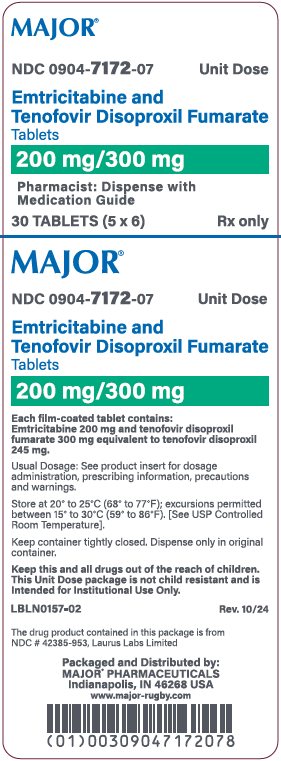
(disoproxil · DailyMed)
LAMIVUDINE-TENOFOVIR 300MG/300MG TABLET
LAMIVUDINE-TENOFOVIR DISOPROXIL FUMARATE
What it does
Disoproxil is a medication used to treat certain viral infections, particularly those caused by the hepatitis B virus.
Commonly used for: hepatitis B infection, viral hepatitis
Read more in plain English ↓Plain-language summary for general understanding - not medical advice. Always follow your pharmacist/doctor.
Ask about this medicine
Answers come only from this medicine's registration record, BNF monograph and interaction data - not medical advice.
Medicine sourcing is available in Kenya only. We don't sell or dispense medicines - licensed pharmacies do.
Sourcing - Kenya onlyRegistration & product details
Source: Pharmacy and Medicines Regulatory Authority · fetched 2026-04-21 17:37:38 · updated 2026-09-29 04:33:03
About this medicine
Disoproxil is a medication used to treat certain viral infections, particularly those caused by the hepatitis B virus.
What it treats
- hepatitis B infection
- viral hepatitis
How it works
Disoproxil works by preventing the virus from multiplying in the body, helping to control the infection.
Who it's for
This medicine is for adults and children who have hepatitis B.
AI-assisted summary grounded in BNF data - general information only, not medical advice. Always confirm with your pharmacist or doctor.
Clinical monograph: disoproxil
Disoproxil is a nucleotide reverse transcriptase inhibitor (NRTI) used primarily in the treatment of HIV-1 infection and chronic hepatitis B virus (HBV) infection. It is commonly administered as the fumarate salt, tenofovir disoproxil fumarate (TDF), which enhances its bioavailability. Disoproxil is notable for its role in antiretroviral therapy, often utilized in combination with other antiretroviral agents to achieve viral suppression.
Indications
- HIV-1 infection
- Chronic hepatitis B virus (HBV) infection
Dosage
Children: Refer to the BNF for
Adults: Refer to the relevant clinical guidelines or BNF for the appropriate dosing recommendations.
Mechanism of action
Disoproxil is converted intracellularly to its active form, tenofovir diphosphate. This active metabolite competes with natural deoxyadenosine triphosphate (dATP) for incorporation into viral DNA by the viral reverse transcriptase enzyme. Once incorporated, it leads to chain termination, thereby inhibiting viral replication. Additionally, tenofovir diphosphate interferes with the activity of HIV reverse transcriptase and HBV polymerase, further contributing to its antiviral effects.
Pharmacodynamics
Disoproxil exhibits a dose-dependent decrease in HIV-1 viral load and improves CD4 cell counts in patients. Its antiviral activity is primarily against HIV-1 and HBV, with a mechanism that does not exhibit cross-resistance with other classes of antiretroviral drugs. The drug has a long half-life, allowing for once-daily dosing, which improves adherence in patients. It is effective in both naïve and treatment-experienced patients.
Pharmacokinetics
Disoproxil is absorbed following oral administration; its bioavailability is approximately 25% when taken without food. The drug is extensively distributed in the body, with a volume of distribution of about 1.3 L/kg. It undergoes renal clearance, with about 70% of the drug eliminated unchanged in the urine. The elimination half-life of disoproxil is around 17 hours, allowing for once-daily dosing. It is not significantly metabolized by the liver, which reduces the risk of drug-drug interactions associated with hepatic metabolism.
Contra-indications
- Hypersensitivity to disoproxil or any component of the formulation
- Severe renal impairment
Adverse effects
- Nausea
- Diarrhea
- Headache
- Fatigue
- Renal toxicity
- Liver function abnormalities
- Bone mineral density loss
- Lactic acidosis
Interactions
- Potential interactions with nephrotoxic drugs
- May interact with other antiviral agents
- Can affect the metabolism of drugs that are substrates of CYP450 enzymes
Precautions
- Monitor renal function regularly during therapy
- Assess bone mineral density before and during treatment
- Use with caution in patients with a history of pancreatitis
- Evaluate liver function before initiation and during treatment
Pregnancy
Disoproxil should be used during pregnancy only if the potential benefit justifies the potential risk to the fetus. Limited data on human use.
Breast-feeding
Disoproxil is excreted in breast milk. A decision should be made to discontinue breastfeeding or discontinue the drug, taking into account the importance of the drug to the mother.
Storage
Store at room temperature, away from moisture and heat. Keep out of reach of children.
Formulations
- Oral tablets
- Oral solution
AI-synthesized from BNF references - general information only, not a substitute for professional medical advice or the current BNF. Verify doses with a pharmacist.
This drug in other countries
The same active ingredient registered across other registries we cover - including different brands.
- ---TENOFOVIR DISOPROXIL FUMERATE TABLETS. · Simba Pharmaceuticals
- ---Tenofovir Disoproxil fumerate tablets. · Aurobindo Pharma Limited Unit Iii
- ACRIPTEGA · Surgilinks
- AVIRODAY · Sun Pharma
- AVONZA · Surgilinks
- DELSTRIGO FILM-COATED TABLET · Imperial Managed Solutions
- ACRIPTEGA · Mylan Laboratories
- ACRIPTEGA · Mylan Laboratories Ltd
- AURO– EMTRICITABINE/ TENOFOVIR DISOPROXIL FUMARATE · Aurobindo Pharma
- DOLUTEGRAVIR , LAMIVUDINE & TENOFOVIR DISOPROXIL FUMARATE · Aurobindo Pharma
- DOLUTEGRAVIR , LAMIVUDINE & TENOFOVIR DISOPROXIL FUMARATE · Aurobindo Pharma Limited
- DOLUTEGRAVIR , LAMIVUDINE & TENOFOVIR DISOPROXIL FUMARATE · Aurobindo Pharma Limited
- ACRIPTEGA TABLETS (Each film-coated tablet contains Dolutegravir/Lamivudine/Tenofovir Disoproxil Fumarate 50mg/300mg/300mg) · Mylan Laboratories
- DOLUTEGRAVIR/ LAMIVUDINE/ TENOFOVIR TABLETS · Micro Labs
- DOLUTEGRAVIR/LAMIVUDINE/TENOFOVIR DISOPROXIL FUMARATE TABLETS (Each tablet contains Dolutegravir/Lamivudine/Tenofovir Disoproxil Fumarate 500mg/300mg/300mg ) · Cipla
- Dolutegravir/Lamivudine/Tenofovir Disoproxil Fumarate · Sun Pharmaceutical Industries
- EMTRICITABINE/TENOFOVIR DISOPROXIL FUMARATE TABLETS · Hetero Labs
- TEFOLAV TABLETS (Each film-coated tablet contains Tenofovir Disoproxil Fumarate 300mg) · Bharat Parenterals