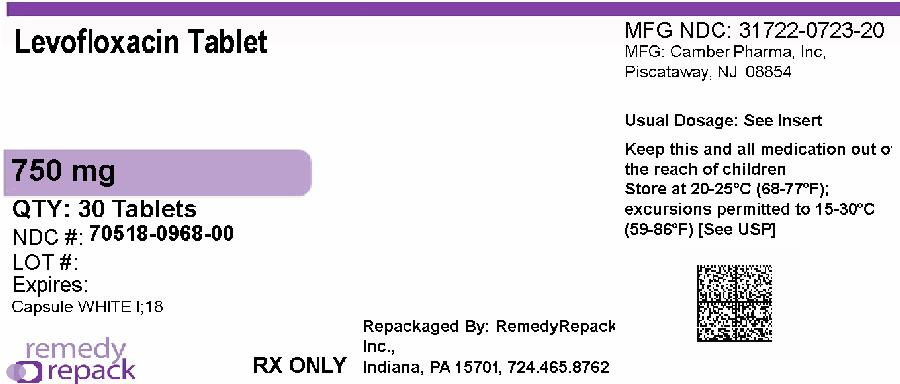
(levofloxacin · DailyMed)
LEVOSTAL-O
LEVOFLOXACIN 250 MG & ORNIDAZOLE 500 MG TABLETS
What it does
Levofloxacin is an antibiotic that helps treat infections caused by bacteria.
Commonly used for: bacterial infections, pneumonia, urinary tract infections, skin infections
Read more in plain English ↓Plain-language summary for general understanding - not medical advice. Always follow your pharmacist/doctor.
Ask about this medicine
Answers come only from this medicine's registration record, BNF monograph and interaction data - not medical advice.
Hard to find? We help patients in Kenya source rare medicines. We don't sell or dispense medicines - licensed pharmacies do.
Source this medicineRegistration & product details
Source: Pharmacy and Poisons Board · fetched 2026-01-28 20:14:15 · updated 2026-08-03 04:14:35
Drug Interactions
6Severe (1)
Quinolones - decreases absorption
Strontiumispredictedtodecreasetheabsorptionof quinolones.Avoid.oTheoretical
Unknown (5)
Quinolones - decreases exposure
Lanthanum moderately decreases the exposure to quinolones. Quinolones should be taken 2 hours before or 4 hours after lanthanum.
Quinolones - increases exposure
Leflunomideispredictedtoincreasetheexposuretoquinolones (ciprofloxacin).oTheoretical
Quinolones - decreases exposure
Sucralfate decreases the exposure to quinolones. Separate administration by 2 hours.
Quinolones - decreases exposure
Zinc is predicted to decrease the exposure to quinolones. Separate administration by 2 hours. Rabeprazole → see proton pump inhibitors Rabies immunoglobulin → see immunoglobulins Rabies vaccine
Quinolones - increases exposure
Teriflunomideispredictedtoincreasetheexposureto quinolones(ciprofloxacin).oTheoretical https://www.facebook.c (Books-Courses-Medic
Data from BNF 85 (British National Formulary). This is not a substitute for professional medical advice. Matched via: class
About levofloxacin
Levofloxacin is an antibiotic that helps treat infections caused by bacteria.
What it treats
- bacterial infections
- pneumonia
- urinary tract infections
- skin infections
How it works
It works by stopping the growth of bacteria, helping the body to fight off the infection.
Who it's for
Levofloxacin is for adults and children who need treatment for certain bacterial infections.
Drug class
Quinolones
AI-assisted summary grounded in BNF data - general information only, not medical advice. Always confirm with your pharmacist or doctor.
About ornidazole
Ornidazole is an antibiotic used to treat infections caused by certain types of bacteria and parasites.
What it treats
- bacterial infections
- parasitic infections
How it works
Ornidazole works by killing the germs that cause infections.
Who it's for
Ornidazole is for adults and children who have specific infections caused by bacteria or parasites.
AI-assisted summary grounded in BNF data - general information only, not medical advice. Always confirm with your pharmacist or doctor.
Clinical monograph: Levofloxacin
BNF-referencedLevofloxacin is a fluoroquinolone antibiotic used to treat a range of bacterial infections. It works by inhibiting bacterial enzymes critical for DNA replication, leading to cell death. Levofloxacin is effective against both aerobic gram-positive and gram-negative bacteria, and may have activity against some anaerobes. It is particularly useful for respiratory and urinary tract infections, as well as for chronic pulmonary infections associated with cystic fibrosis.
Indications
- Bacterial infections
- Acute exacerbation of chronic obstructive pulmonary disease
- Community-acquired pneumonia
- Hospital-acquired pneumonia
- Urinary tract infections
- Complicated urinary tract infections
- Prostatitis
- Chronic pulmonary infections due to Pseudomonas aeruginosa
- Helicobacter pylori eradication (in combination with other drugs)
Dosage
Adults: 500 mg once daily for 5-14 days depending on the infection type and severity; for intravenous infusion, 500 mg to be given over at least 60 minutes.
Mechanism of action
Levofloxacin exerts its antimicrobial activity through the inhibition of two key bacterial enzymes: DNA gyrase and topoisomerase IV. DNA gyrase introduces negative supercoils into DNA during replication, while topoisomerase IV is essential for unlinking newly replicated chromosomes, allowing cell division. By inhibiting these enzymes, levofloxacin blocks DNA replication, resulting in cell death.
Pharmacodynamics
Levofloxacin is bactericidal and inhibits bacterial DNA replication. It has a longer duration of action than many other antibiotics, allowing for less frequent dosing. The drug may cause QTc-interval prolongation, necessitating caution in patients with risk factors for this condition. Levofloxacin shows in vitro activity against various bacterial pathogens, and while resistance can develop, it typically arises from mutations in target enzymes or drug efflux mechanisms.
Pharmacokinetics
Levofloxacin is well absorbed following oral administration, with peak plasma concentrations occurring within 1-2 hours. It has a volume of distribution of approximately 100 L and is approximately 30-40% protein bound. The drug is primarily excreted unchanged in the urine, with a half-life of about 6-8 hours, allowing for once or twice daily dosing.
Contra-indications
- Hypersensitivity to levofloxacin or other fluoroquinolones
- History of tendon disorders related to fluoroquinolone use
- Patients with a history of myasthenia gravis
Adverse effects
- Nausea
- Diarrhea
- Headache
- Dizziness
- QT interval prolongation
- Tendon rupture
- Clostridioides difficile-associated diarrhea
- Nephritis tubulointerstitial
Interactions
- Concurrent use with other drugs that prolong the QT interval
- Antacids, sucralfate, metal cations (e.g. magnesium, aluminum, calcium) can reduce absorption
- NSAIDs may increase the risk of CNS stimulation
- Warfarin may have increased anticoagulant effects
Precautions
- Use cautiously in patients with a history of seizures or CNS disorders
- Monitor for signs of tendon damage
- Consider risks in patients with electrolyte disturbances
- Use with caution in patients with renal impairment
Pregnancy
Manufacturer advises use only if potential benefit outweighs risk.
Breast-feeding
Manufacturer advises caution; levofloxacin may be excreted in breast milk.
Storage
Store at room temperature, away from moisture and heat. Protect from light.
Formulations
- 500 mg tablet for oral use
- Solution for intravenous infusion
- Nebuliser solution
- Eye drops
AI-synthesized from BNF references - general information only, not a substitute for professional medical advice or the current BNF. Verify doses with a pharmacist.
Clinical monograph: ornidazole
BNF-referencedOrnidazole is an antiprotozoal and antibacterial agent primarily used to treat infections caused by anaerobic bacteria and certain protozoa. It is a nitroimidazole derivative that exhibits activity against a range of microorganisms, making it useful in the treatment of conditions such as bacterial vaginosis and amoebiasis. Ornidazole is typically administered orally and is well-absorbed from the gastrointestinal tract.
Indications
- Bacterial vaginosis
- Amoebiasis
- Giardiasis
- Trichomoniasis
- Infections caused by anaerobic bacteria
Dosage
Children: Dosing in children is determined based on weight and the specific indication. Refer to the BNF for Children for appropriate dosing guidelines.
Adults: The usual adult dose is 1.5 g orally once daily for 5 days for bacterial vaginosis or 1 g orally once daily for 3 days for amoebiasis. Refer to the BNF for specific indications and adjustments.
Mechanism of action
Ornidazole exerts its antimicrobial effects through the reduction of its nitro group by anaerobic bacteria and protozoa, resulting in the formation of reactive intermediates that interact with microbial DNA. This leads to the disruption of DNA synthesis and ultimately causes cell death. The drug's activity is primarily directed towards anaerobic organisms, including certain protozoa.
Pharmacodynamics
Ornidazole demonstrates a concentration-dependent bactericidal effect against susceptible organisms. Its activity is influenced by the reduction potential of the nitro group, which is crucial for its antimicrobial action. Ornidazole has a broad spectrum of activity, particularly against anaerobes and protozoa, and has been shown to be effective in both in vitro and in vivo models of infection.
Pharmacokinetics
Ornidazole is rapidly and completely absorbed following oral administration, achieving peak plasma concentrations within 1 to 3 hours. It is widely distributed throughout the body, including the central nervous system. The drug is metabolized mainly in the liver, with a half-life of approximately 8 to 10 hours. Excretion occurs primarily through the urine, with a small fraction eliminated unchanged.
Contra-indications
- Hypersensitivity to ornidazole or any of its components
- History of neurological disorders, particularly seizures
Adverse effects
- Nausea
- Vomiting
- Headache
- Dizziness
- Dry mouth
- Metallic taste
- Peripheral neuropathy
Interactions
- Alcohol: Concurrent use may lead to disulfiram-like reactions including flushing, tachycardia, and vomiting
- Anticoagulants: May enhance the effects of warfarin and other anticoagulants
- Other neurotoxic agents: Increased risk of neurological side effects
Precautions
- Use with caution in patients with a history of seizures
- Monitor liver function in patients with hepatic impairment
- Discontinue if neurological symptoms occur
Pregnancy
Ornidazole is not recommended during pregnancy unless the benefit outweighs the risk, particularly in the first trimester.
Breast-feeding
Ornidazole is excreted in breast milk, caution is advised when administering to nursing mothers.
Storage
Store in a cool, dry place away from direct sunlight. Keep out of reach of children.
Formulations
- Tablets: 500 mg
- Infusion: 100 mg/100 mL
AI-synthesized from BNF references - general information only, not a substitute for professional medical advice or the current BNF. Verify doses with a pharmacist.
Molecular reference: Levofloxacin
PubChem CID 149096Molecular formula: C18H20FN3O4
Mechanism of action
Levofloxacin, like other fluoroquinolone antibiotics, exerts its antimicrobial activity via the inhibition of two key bacterial enzymes: DNA gyrase and topoisomerase IV. Both targets are type II topoisomerases, but have unique functions within the bacterial cell. DNA gyrase is an enzyme found only in bacteria that introduces negative supercoils into DNA during replication - this helps to relieve torsional strain caused by the introduction of positive supercoils during replication, and these negative supercoils are essential for chromosome condensation and the promotion of transcription initiation. It is comprised of four subunits (two A subunits and two B subunits) of which the A subunits appear to be the target of fluoroquinolone antibiotics. Bacterial topoisomerase IV, in addition to contributing to the relaxation of positive supercoils, is essential at the terminal stages of DNA replication and functions to “unlink” newly replicated chromosomes to allow for the completion of cell division. Inhibition of these enzymes by levofloxacin likely occurs via complexation with the topoisomerase enzymes. The end result is a blockade of DNA replication, thus inhibiting cell division and resulting in cell death. Levofloxacin is the L-isomer of the racemate, ofloxacin, a quinolone antimicrobial agent. The antibacterial activity of ofloxacin resides primarily in the L-isomer. The mechanism of action of levofloxacin and other fluoroquinolone antimicrobials involves inhibition of bacterial topoisomerase IV and DNA gyrase (both of which are type II topoisomerases), enzymes required for DNA replication, transcription, repair and recombination. Fluoroquinolones prolong the QT interval by blocking voltage-gated potassium channels, especially the rapid component of the delayed rectifier potassium current I(Kr), expressed by HERG (the human ether-a-go-go-related gene). According to the available case reports and clinical studies, moxifloxacin carries the greatest risk of QT prolongation from all available quinolones in clinical practice and it should be used with caution in patients with predisposing factors for Torsades de pointes (TdP).
Pharmacodynamics
Levofloxacin is bactericidal and exerts its antimicrobial effects via inhibition of bacterial DNA replication. It has a relatively long duration of action in comparison with other antibiotics that allows for once or twice daily dosing. Levofloxacin is associated with QTc-interval prolongation and should be used with caution in patients with other risk factors for prolongation (e.g. hypokalemia, concomitant medications). Levofloxacin has demonstrated _in vitro_ activity against a number of aerobic gram-positive and gram-negative bacteria and may carry some activity against certain species of anaerobic bacteria and other pathogens such as _Chlamydia_ and _Legionella_. Resistance to levofloxacin may develop, and is generally due to mutations in DNA gyrase or topoisomerase IV, or via alterations to drug efflux. Cross-resistance may occur between levofloxacin and other fluoroquinolones, but is unlikely to develop between levofloxacin and other antibiotic classes (e.g. macrolides) due to significant differences in chemical structure and mechanism of action. As antimicrobial susceptibility patterns are geographically distinct, local antibiograms should be consulted to ensure adequate coverage of relevant pathogens prior to use.
Source: PubChem (NCBI) · pathways from PathBank, Reactome, WikiPathways & PharmGKB.
Molecular reference: ornidazole
PubChem CID 28061Molecular formula: C7H10ClN3O3
Source: PubChem (NCBI) · pathways from PathBank, Reactome, WikiPathways & PharmGKB.
This drug in other countries
The same active ingredient registered across other registries we cover - including different brands.
- ARFLOX_OZ 200/500MG TABLET
- ASTRALEVOFLOXA 500MG TABLET
- GLEVO-250 250MG TABLET
- GLEVO-500 500MG TABLET
- LEVIMIK 500MG TABLETS
- LEVIN 500MG TABLET
- AXALEVO INFUSION (Each 100ml contains Levofloxacin Hemihydrate 500mg) · Axa Parenterals
- EVOCACH TABLETS · Cachet Pharmaceuticals
- FONFLOX 500MG TABLET · Laborate Pharmaceuticals
- GLEVO TABLETS · Glenmark Pharmaceuticals
- INFILE TABLETS ( Levofloxacin USP 750 mg) · Msn Lab
- INFILE 500mg TABLETS · Msn Lab