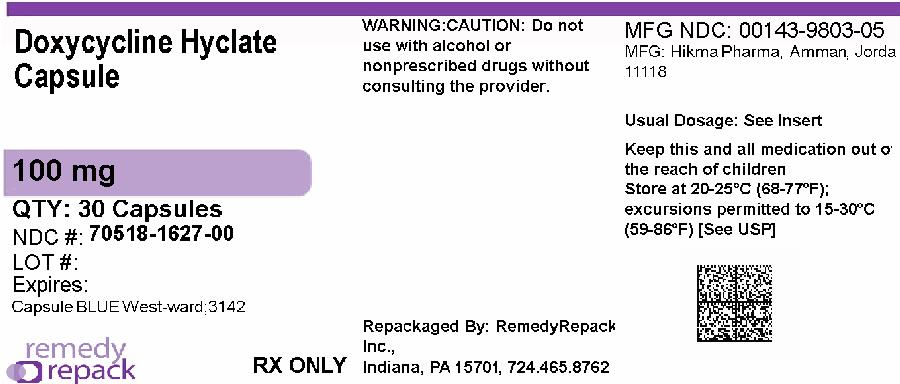
(doxycycline · DailyMed)
MEDDOXY
Colloidal anhydrous silica. 1.324 mg/6 mL,Doxycycline Hyclate equivalent to Doxycycline 100 mg,Empty Hard Gelatin Capsule Shells of Size "2" Colour Blue/ Blue -- -,Lactose 148.703 mg/6 mL,Magnesium Stearate BP 1.324 mg/6 mL,Purified talc 3.333 mg/6 mL
What it does
Blue is a medication used to treat various health conditions. It works by targeting specific processes in the body to provide relief.
Commonly used for: general health issues, pain relief
Read more in plain English ↓Plain-language summary for general understanding - not medical advice. Always follow your pharmacist/doctor.
Ask about this medicine
Answers come only from this medicine's registration record, BNF monograph and interaction data - not medical advice.
Medicine sourcing is available in Kenya only. We don't sell or dispense medicines - licensed pharmacies do.
Sourcing - Kenya onlyRegistration & product details
Source: Tanzania Medicines and Medical Devices Authority · fetched 2026-03-11 23:40:01 · updated 2026-10-19 03:00:44
Drug Interactions
11Pharmacodynamic Warnings
Doxycycline appears in TABLE 1: Drugs that cause hepatotoxicity
Severe (1)
Tetracyclines - decreases absorption
Strontium is predicted to decrease the absorption of tetracyclines. Avoid. Theoretical Sucralfate
Moderate (5)
Doxycycline - decreases concentration
Fosphenytoin is predicted to decrease the concentration of tetracyclines (doxycycline). Adjust dose.
Doxycycline - decreases exposure
Rifampicin modestly decreases the exposure to tetracyclines (doxycycline). Adjust dose.
Lithium - increases risk of lithium toxicity
Tetracyclines are predicted to increase the risk of lithium toxicity when given with lithium. Avoid or adjust dose.
Tetracyclines - decreases concentration
Fosphenytoin is predicted to decrease the concentration of tetracyclines (doxycycline). Adjust dose.
Tetracyclines - decreases exposure
Rifampicin modestly decreases the exposure to tetracyclines (doxycycline). Adjust dose.
Unknown (5)
Ciclosporin - increases concentration
Doxycyclineispredictedtoincreasetheconcentrationof ciclosporin.rTheoretical
Tetracyclines - decreases exposure
Mitotane is predicted to decrease the exposure to tetracyclines (eravacycline). Adjust eravacycline dose, p. 625.
Tetracyclines - decreases exposure
Rifampicin is predicted to decrease the exposure to tetracyclines (eravacycline). Adjust eravacycline dose, p. 625.
Tetracyclines - decreases exposure
St John's wort is predicted to decrease the exposure to tetracyclines (eravacycline). Adjust eravacycline dose, p. 625.
Tetracyclines - decreases absorption
Oralzincispredictedtodecreasetheabsorptionof tetracyclines.Separateadministrationby2to3hours. oTheoretical https://www.facebook.c (Books-Courses-Medic
Data from BNF 85 (British National Formulary). This is not a substitute for professional medical advice. Matched via: class
About blue
Blue is a medication used to treat various health conditions. It works by targeting specific processes in the body to provide relief.
What it treats
- general health issues
- pain relief
How it works
Blue works by affecting certain chemicals in the body to help alleviate symptoms.
Who it's for
Blue is suitable for adults and children with the prescribed conditions.
AI-assisted summary grounded in BNF data - general information only, not medical advice. Always confirm with your pharmacist or doctor.
About colloidal
Colloidal solutions are often used in various medical treatments and can help improve the delivery of certain medications.
What it treats
- supporting hydration
- helping with nutrient absorption
- improving medication effectiveness
How it works
Colloidal solutions contain small particles that can help carry and deliver substances in the body more effectively.
Who it's for
Adults and children who need assistance with hydration or nutrient delivery.
AI-assisted summary grounded in BNF data - general information only, not medical advice. Always confirm with your pharmacist or doctor.
About colour
This medicine is used to change the color of certain products.
What it treats
- to color food
- to tint cosmetics
- to dye textiles
How it works
It adds color to products, making them visually appealing.
Who it's for
This product is suitable for anyone needing to add color to food, cosmetics, or textiles.
AI-assisted summary grounded in BNF data - general information only, not medical advice. Always confirm with your pharmacist or doctor.
About doxycycline
Doxycycline is an antibiotic used to treat various infections.
What it treats
- bacterial infections
- acne
- respiratory infections
- malaria prevention
How it works
It works by stopping the growth of bacteria.
Who it's for
It is for adults and children who need treatment for bacterial infections.
Drug class
Tetracyclines
Cautions
- • Be cautious if taking other medications that can harm the liver.
AI-assisted summary grounded in BNF data - general information only, not medical advice. Always confirm with your pharmacist or doctor.
About empty
This medication is not classified or specified with any known interactions or cautions.
How it works
No specific mechanism of action is provided.
Who it's for
This medication is not indicated for any specific condition.
AI-assisted summary grounded in BNF data - general information only, not medical advice. Always confirm with your pharmacist or doctor.
About gelatin
Gelatin is a substance often used in various food products and supplements. It is derived from animal collagen and is commonly used to help improve joint health and support digestion.
What it treats
- joint pain
- digestive health
- skin elasticity
How it works
Gelatin helps to provide structure to the body, supporting joints, skin, and digestive tract by providing essential proteins.
Who it's for
Gelatin is suitable for people looking to support their joint health, improve skin appearance, or enhance digestion.
AI-assisted summary grounded in BNF data - general information only, not medical advice. Always confirm with your pharmacist or doctor.
About hard
Hard is a medicinal ingredient used to help with various health conditions.
How it works
Hard works by interacting with specific body systems to provide relief or treatment for certain conditions.
Who it's for
Hard is suitable for individuals experiencing the conditions it is meant to treat.
AI-assisted summary grounded in BNF data - general information only, not medical advice. Always confirm with your pharmacist or doctor.
About hyclate
Hyclate is a medication that may be used for various conditions, providing relief and support in treatment.
What it treats
- stomach cramps
- irritable bowel syndrome (IBS)
How it works
Hyclate helps to relax the muscles in the stomach and intestines, which reduces pain and discomfort.
Who it's for
This medication is generally for adults and children experiencing stomach or bowel issues.
AI-assisted summary grounded in BNF data - general information only, not medical advice. Always confirm with your pharmacist or doctor.
About lactose
Lactose is a sugar found in milk and dairy products. It is often used as an excipient in medications.
What it treats
- lactose intolerance
- as a filler in tablets and capsules
How it works
Lactose helps improve the texture and stability of medications and is sometimes used as a sweetener.
Who it's for
Individuals who require lactose as part of their medication or those who consume dairy products.
Cautions
- • May cause digestive issues in people with lactose intolerance.
AI-assisted summary grounded in BNF data - general information only, not medical advice. Always confirm with your pharmacist or doctor.
About purified
Purified ingredients are often used in various medicines to ensure safety and effectiveness by removing impurities.
What it treats
- various medical conditions
How it works
Purified ingredients help in delivering the intended effects of the medicine without the risk of contaminants.
Who it's for
People who need medications with safe and effective ingredients.
AI-assisted summary grounded in BNF data - general information only, not medical advice. Always confirm with your pharmacist or doctor.
About shells
Shells are natural substances that can be used for various health-related purposes.
What it treats
- nutritional support
- calcium supplement
How it works
Shells provide essential minerals, particularly calcium, which is important for bone health and other bodily functions.
Who it's for
Anyone looking to increase their calcium intake for better bone health.
AI-assisted summary grounded in BNF data - general information only, not medical advice. Always confirm with your pharmacist or doctor.
About silica
Silica is a natural substance that can be found in various forms and is often used to help with digestion and absorb excess moisture.
What it treats
- digestive issues
- absorption of moisture
How it works
Silica helps improve digestion by supporting the body's ability to break down food and absorb nutrients.
Who it's for
Silica may be suitable for adults experiencing digestive discomfort or needing help with moisture control.
AI-assisted summary grounded in BNF data - general information only, not medical advice. Always confirm with your pharmacist or doctor.
About size
Size is a medication used to treat various health conditions, although specific details about its class and interactions are not provided.
How it works
The exact mechanism of how Size works is not detailed.
Who it's for
Size is prescribed for individuals needing treatment for certain health issues, but specific conditions are not mentioned.
AI-assisted summary grounded in BNF data - general information only, not medical advice. Always confirm with your pharmacist or doctor.
About talc
Talc is a mineral used primarily to absorb moisture and reduce friction. It is commonly found in various personal care products.
What it treats
- skin irritation
- diaper rash
- chafing
- sweating
How it works
Talc works by absorbing moisture and providing a smooth surface, which helps to prevent irritation and discomfort on the skin.
Who it's for
Talc is suitable for anyone needing relief from moisture-related skin issues, including babies and adults.
Cautions
- • Avoid using on broken or irritated skin.
- • Keep away from the eyes and mouth.
AI-assisted summary grounded in BNF data - general information only, not medical advice. Always confirm with your pharmacist or doctor.
Clinical monograph: Doxycycline
BNF-referencedDoxycycline is a broad-spectrum tetracycline antibiotic effective against a variety of bacterial infections. It acts by inhibiting protein synthesis in susceptible bacteria, thereby halting their growth and replication. It is commonly used for treating infections such as chlamydia, rickettsia, and mycoplasma, and is also indicated for acne and certain periodontal diseases.
Indications
- Bacterial infections
- Acne
- Destructive (refractory) periodontal disease
- Exacerbations of chronic bronchitis
- Leptospirosis
- Chlamydia infections
- Rickettsial infections
- Mycoplasma infections
- Acute necrotising ulcerative gingivitis
Dosage
Children: For children aged 12–17 years, initially 200 mg daily in 1–2 divided doses for the
Adults: Initially 200 mg daily in 1–2 divided doses for the first day, then maintenance 100 mg daily.
Mechanism of action
Doxycycline exerts its antibacterial effects by binding to the 30S ribosomal subunit of bacterial ribosomes, inhibiting the binding of aminoacyl-tRNA to the mRNA-ribosome complex. This inhibition of protein synthesis is crucial for bacterial growth and is the primary mechanism by which doxycycline exhibits its antimicrobial activity. It also impacts cellular metabolism and has been associated with non-genotoxic carcinogenic effects.
Pharmacodynamics
Doxycycline has a broad spectrum of activity against Gram-positive, Gram-negative bacteria, and some protozoa. Its bacteriostatic action is particularly effective against certain resistant strains, including MRSA. The drug's efficacy may vary based on the sensitivity of the bacteria, and resistance can develop through various mechanisms, such as efflux pumps and ribosomal protection.
Pharmacokinetics
Doxycycline is well absorbed from the gastrointestinal tract, with peak plasma concentrations typically reached within 2 hours after oral administration. It has a high volume of distribution and is approximately 90% protein-bound. The drug is metabolized in the liver and excreted primarily in feces, with a smaller fraction eliminated in urine. The half-life of doxycycline is approximately 18 to 22 hours, allowing for once or twice daily dosing in most cases.
Contra-indications
- Pregnancy
- Breastfeeding
- Hypersensitivity to doxycycline or other tetracyclines
- Myasthenia gravis
- Severe hepatic impairment
Adverse effects
- Photosensitivity
- Dizziness
- Headache
- Nausea
- Vomiting
- Diarrhoea
- Angioedema
- Skin reactions
- Pseudomembranous enterocolitis
- Tooth discolouration
- Intracranial hypertension
- Thrombocytopenia
- Stevens-Johnson syndrome
- Pancreatitis
Interactions
- Fosphenytoin (decreases concentration)
- Rifampicin (decreases exposure)
- Ciclosporin (unknown effect on concentration)
- Antacids containing aluminium or magnesium (reduce absorption)
- Iron supplements (reduce absorption)
- Warfarin (may enhance anticoagulant effect)
Precautions
- Use with caution in renal impairment
- May cause increased intracranial pressure
- Risk of superinfection (e.g., fungal infections)
- Avoid exposure to sunlight or sun lamps
- Monitor liver function in patients receiving prolonged therapy
Pregnancy
Should not be given to pregnant women; effects on skeletal development have been documented in the first trimester in animal studies. Administration during the second or third trimester may cause discoloration of the child's teeth, and maternal hepatotoxicity has been reported with large parenteral doses.
Breast-feeding
Should not be given to women who are breastfeeding; absorption may lead to discoloration of teeth in the infant.
Storage
Store in a cool, dry place away from light. Keep out of reach of children.
Formulations
- Tablets
- Capsules
- Oral suspension
- Oral solution
AI-synthesized from BNF references - general information only, not a substitute for professional medical advice or the current BNF. Verify doses with a pharmacist.
Clinical monograph: Gelatin
BNF-referencedGelatin is a plasma substitute derived from protein obtained from plasma, serum, or normal placentas, with at least 95% of the protein being albumin. It is used to restore blood volume in patients with low blood volume conditions such as hypovolemic shock, burns, and during cardiopulmonary bypass procedures. Gelatin solutions can be isotonic, containing 3.5-5% protein, or concentrated, containing 15-25% protein.
Indications
- Low blood volume
- Hypovolemic shock
- Burns
- Cardiopulmonary bypass
Dosage
Children: Initially 10-20 mL per kilogram. Adjust according to the patient's condition and response, using 3.5-4% solution. Use under specialist supervision to mitigate the risk of fluid overload.
Adults: Dose according to requirements, typically administered intravenously. Consult product literature for specific dosing guidance.
Mechanism of action
Gelatin acts as a plasma expander by increasing the oncotic pressure in the vascular compartment, which helps to retain fluid within the bloodstream and restore circulating blood volume. This mechanism aids in maintaining blood pressure and improving tissue perfusion.
Pharmacodynamics
Gelatin solutions increase blood volume and improve hemodynamic stability in patients experiencing hypovolemic conditions. By drawing water into the vascular space, they help to counteract the effects of low blood volume, such as hypotension and compromised organ perfusion.
Pharmacokinetics
Gelatin is administered intravenously, and its effects can be observed relatively quickly. The half-life and the metabolic clearance depend on the formulation and concentration of the solution. Gelatin is gradually metabolized by macrophages and eliminated by the renal system. Close monitoring of fluid balance is essential, particularly in patients with cardiac or renal impairment.
Contra-indications
- Severe liver disease
- History of circulatory disease
- Severe cardiac disease
Adverse effects
- Fever
- Flushing
- Nausea
- Urticaria
- Rare or very rare shock
Interactions
- Calcium salts
Precautions
- Monitor cardiovascular and respiratory function
- Correct dehydration when administering
- Administer slowly to avoid rapid rise in blood pressure and cardiac failure
- Increased capillary permeability
Pregnancy
Consult product literature for specific guidance regarding use in pregnancy.
Breast-feeding
Consult product literature for specific guidance regarding use in breastfeeding.
Storage
Store at controlled room temperature, protect from light. Refer to product-specific storage instructions.
Formulations
- 5% solution for infusion
- 20% solution for infusion
- Concentrated solution (15-25% protein)
- Isotonic solution (3.5-5% protein)
AI-synthesized from BNF references - general information only, not a substitute for professional medical advice or the current BNF. Verify doses with a pharmacist.
Clinical monograph: blue
Blue, also known as methylene blue, is a synthetic dye that has been used for various therapeutic purposes, including the treatment of methemoglobinemia, a condition where hemoglobin is oxidized and unable to carry oxygen effectively. Additionally, it has applications in treating certain infections and as a surgical marker.
Indications
- Methemoglobinemia
- Urinary tract infections
- Surgical marking
- Treatment of certain types of cyanide poisoning
Dosage
Children: Refer to the BNF for Children for appropriate pediatric dosing information.
Adults: Refer to the relevant clinical guidelines or the BNF for specific dosing recommendations.
Mechanism of action
Methylene blue acts as a reducing agent, converting methemoglobin back to its functional form, hemoglobin. This is primarily achieved through its action as an electron donor, facilitating the reduction of ferric iron (Fe3+) in hemoglobin to ferrous iron (Fe2+), thereby restoring its oxygen-carrying capacity. It also exhibits antimicrobial properties through its ability to generate reactive oxygen species when exposed to light, which can inhibit bacterial growth.
Pharmacodynamics
The pharmacodynamics of methylene blue involve its role in enhancing oxygen delivery in patients suffering from methemoglobinemia. By converting methemoglobin back to hemoglobin, it effectively increases the amount of hemoglobin available for oxygen transport. The drug also shows effects on the vascular system, where it can induce vasodilation and influence blood pressure.
Pharmacokinetics
Methylene blue is rapidly absorbed after intravenous administration, with peak plasma concentrations occurring within 1 to 3 hours. It is extensively distributed in body tissues and fluids, including the liver, kidneys, and lungs. The drug undergoes hepatic metabolism, primarily through the cytochrome P450 system, and is excreted mainly through urine. The half-life ranges from 5 to 24 hours, depending on the dosage and individual patient factors.
Pregnancy
Consult healthcare provider before use, as safety in pregnancy is not established.
Breast-feeding
Consult healthcare provider before use, as safety during breastfeeding is not established.
Storage
Store in a cool, dry place away from direct sunlight.
AI-synthesized from BNF references - general information only, not a substitute for professional medical advice or the current BNF. Verify doses with a pharmacist.
Clinical monograph: colloidal
Colloidal solutions are mixtures in which small particles are dispersed throughout a continuous medium. They can be used in various medical applications, including as intravenous fluids for volume expansion and as drug delivery systems. Colloidal solutions can improve the solubility and stability of drugs, enhancing their therapeutic effects.
Indications
- Hypovolemic shock
- Severe burns
- Postoperative fluid replacement
- Sepsis
- Trauma management
Dosage
Children: Refer to established guidelines for specific dosing, as it varies based on the type of colloidal solution used and the clinical condition being treated.
Adults: Refer to established guidelines for specific dosing, as it varies based on the type of colloidal solution used and the clinical condition being treated.
Mechanism of action
Colloidal solutions work by maintaining oncotic pressure in the blood, thus helping to retain fluid within the vascular system. This is primarily due to the large molecular weight of the colloidal particles, which cannot easily pass through capillary walls. The presence of colloids in the blood helps to draw water into the circulation, increasing blood volume and improving tissue perfusion.
Pharmacodynamics
The pharmacodynamics of colloidal solutions are centered on their ability to exert osmotic pressure, which helps maintain blood volume and pressure. This effect is particularly important in conditions such as hypovolemia and shock, where fluid replacement is necessary to restore hemodynamic stability. The efficacy of colloidal solutions can vary depending on the type of colloid used, as well as the underlying clinical condition being treated.
Pharmacokinetics
Colloidal solutions are typically administered intravenously and their pharmacokinetics can vary based on the specific formulation. Generally, colloids are distributed throughout the vascular compartment and have a longer duration of action compared to crystalloids, as they remain in circulation longer. The elimination of colloids is primarily through the reticuloendothelial system, where they are metabolized or eliminated by the liver and spleen. Factors such as particle size and composition can influence their distribution and clearance.
Adverse effects
- Allergic reactions
- Injection site reactions
- Nausea
- Vomiting
- Headache
- Fever
Precautions
- Use with caution in patients with known allergies to any component of the formulation
- Monitor for signs of hypersensitivity during administration
- Consider volume overload in patients with cardiac or renal impairment
Pregnancy
The safety of colloidal solutions during pregnancy has not been established. Use only if the potential benefit justifies the potential risk to the fetus.
Breast-feeding
It is not known whether colloidal solutions are excreted in human milk. Caution should be exercised when administering to breastfeeding mothers.
Storage
Store at room temperature, protect from light, and do not freeze. Keep out of reach of children.
Formulations
- Colloidal silver
- Colloidal gold
- Colloidal iron
- Other metal colloids
AI-synthesized from BNF references - general information only, not a substitute for professional medical advice or the current BNF. Verify doses with a pharmacist.
Clinical monograph: colour
BNF-referencedColour is a compound with the molecular formula C13H18N2O, commonly recognized for its application in various industries, including pharmaceuticals and food. Its properties can vary based on its specific formulation and context of use. It is important to consult detailed sources for information regarding its use in clinical settings.
Mechanism of action
The precise mechanism of action is not well-documented in the provided resources. However, compounds with similar molecular structures often interact with biological pathways through modulation of neurotransmitter systems or receptor activity.
Pharmacodynamics
Pharmacodynamics for compounds like Colour typically involve interactions at the cellular level, influencing physiological responses through receptor binding and modulation of signaling pathways. The specific effects and potency would depend on the context of use and formulation.
Pharmacokinetics
Information on the pharmacokinetics of Colour, including absorption, distribution, metabolism, and excretion, is not provided in the available resources. Generally, pharmacokinetic properties will vary significantly based on formulation and route of administration.
Pregnancy
Safety in pregnancy has not been established. Use only if the benefits outweigh the risks.
Breast-feeding
Caution is advised. There are no adequate studies in breastfeeding women.
Storage
Store in a cool, dry place, away from light. Keep out of reach of children.
AI-synthesized from BNF references - general information only, not a substitute for professional medical advice or the current BNF. Verify doses with a pharmacist.
Clinical monograph: empty
BNF-referencedParitaprevir is an antiviral medication primarily used in the treatment of chronic hepatitis C virus (HCV) infection. It functions as a potent inhibitor of the NS3/4A serine protease, which is crucial for the viral life cycle. By blocking this enzyme, paritaprevir effectively disrupts the replication and assembly of the virus, thereby aiding in the management of HCV infection.
Indications
- Chronic hepatitis C virus infection
- Genotype 1 HCV infection
Dosage
Children: Refer to BNF for Children for specific dosing information tailored to paediatric patients.
Adults: Refer to BNF for specific dosing information based on the clinical scenario.
Mechanism of action
Paritaprevir inhibits the NS3/4A serine protease of the Hepatitis C Virus (HCV). This enzyme is responsible for cleaving the viral polypeptide into essential structural and nonstructural proteins necessary for the assembly of mature virus. By inhibiting NS3/4A, paritaprevir prevents viral replication and function.
Pharmacodynamics
At concentrations significantly above therapeutic levels, paritaprevir and its combination with ombitasvir do not prolong the QTc interval to a clinically relevant extent. This suggests a favorable safety profile concerning cardiac effects at therapeutic doses.
Pharmacokinetics
Paritaprevir is absorbed effectively after oral administration, with its pharmacokinetic profile characterized by a peak plasma concentration occurring within a few hours post-dose. It is extensively metabolized in the liver, primarily via CYP3A4, and is eliminated mainly through fecal excretion. The half-life of paritaprevir allows for once-daily dosing when used in combination therapies.
Pregnancy
The safety of paritaprevir in pregnancy has not been established. Use only if the potential benefit justifies the potential risk to the fetus.
Breast-feeding
It is unknown if paritaprevir is excreted in human milk. Caution is advised when administered to breastfeeding women.
Storage
Store at room temperature, away from moisture and heat. Keep out of reach of children.
AI-synthesized from BNF references - general information only, not a substitute for professional medical advice or the current BNF. Verify doses with a pharmacist.
Clinical monograph: hard
Hard, commonly referred to in various contexts, can refer to a range of substances or drugs depending on the specific context. In pharmacology, it is crucial to specify the drug in question for accurate information. Generally, the term may allude to substances that exhibit a strong, potent effect on the body, leading to significant pharmacological actions. The effects can vary widely based on the specific compound in question, its classification, and its intended medical use.
Dosage
Children: Refer to specific pediatric dosing guidelines based on the identified drug, as 'hard' does not provide sufficient information.
Adults: Refer to specific drug information for dosing guidelines, as 'hard' does not specify a particular medication.
Mechanism of action
The mechanism of action for drugs termed 'hard' must be specified for accurate information, as this phrase does not designate a specific compound. Mechanisms may involve receptor interaction, enzyme inhibition, or modulation of biochemical pathways, depending on the drug in question. For example, opioid analgesics work primarily by binding to mu-opioid receptors in the central nervous system, leading to analgesic effects.
Pharmacodynamics
Pharmacodynamics refers to the effects of a drug on the body and its mechanisms of action. The pharmacodynamics of any drug classified as 'hard' would depend on its specific pharmacological profile, including its efficacy, potency, and the nature of its therapeutic effects. For instance, in the case of opioids, pharmacodynamic effects include pain relief, sedation, and potential respiratory depression.
Pharmacokinetics
Pharmacokinetics involves the absorption, distribution, metabolism, and excretion (ADME) of a drug. The pharmacokinetics of a substance termed 'hard' would vary significantly based on the specific drug. For many medications, absorption may occur via oral or parenteral routes, distribution may involve binding to plasma proteins, metabolism may occur in the liver, and excretion is typically renal. Each of these parameters is critical for understanding the drug's action and potential side effects.
Pregnancy
Consult a healthcare professional before use, as safety has not been established.
Breast-feeding
Consult a healthcare professional before use, as safety has not been established.
Storage
Store in a cool, dry place, away from direct sunlight.
AI-synthesized from BNF references - general information only, not a substitute for professional medical advice or the current BNF. Verify doses with a pharmacist.
Clinical monograph: hyclate
Hyclate, often referring to hyoscine hydrobromide, is a medication primarily used for its anticholinergic properties. It is effective in treating motion sickness, nausea, and vomiting, as well as in the management of muscle spasms in the gastrointestinal tract. Hyoscine works by blocking the action of acetylcholine at muscarinic receptors in the body, leading to decreased secretions and reduced gastrointestinal motility.
Indications
- Motion sickness
- Nausea and vomiting
- Gastrointestinal spasms
- Preoperative sedation
Dosage
Children: Refer to the BNF for Children for specific dosing recommendations based on the child's age, weight, and condition being treated.
Adults: Refer to the appropriate clinical guidelines or BNF for specific dosing recommendations based on the condition being treated and patient factors.
Mechanism of action
Hyclate exerts its effects by antagonizing muscarinic acetylcholine receptors, which are found throughout the central and peripheral nervous systems. This inhibition leads to a decrease in acetylcholine-induced effects, particularly in the gastrointestinal system and vestibular apparatus, thus alleviating symptoms of nausea and motion sickness.
Pharmacodynamics
The pharmacodynamic effects of hyoscine include reduced gastrointestinal motility, decreased secretions, and a sedative effect on the central nervous system. Its antimuscarinic activity can result in side effects such as dry mouth, blurred vision, constipation, and drowsiness, depending on the dose and individual patient response.
Pharmacokinetics
Hyclate is well-absorbed from the gastrointestinal tract, and its peak plasma concentrations are typically reached within 2 hours after oral administration. The drug is widely distributed throughout the body, including the central nervous system where it crosses the blood-brain barrier. Hyoscine is metabolized in the liver and excreted primarily through the urine. The half-life of hyoscine is approximately 3 to 5 hours, but this can vary based on the formulation and route of administration.
Contra-indications
- Hypersensitivity to hyoscyamine or any of the excipients
- Glaucoma
- Myasthenia gravis
- Severe ulcerative colitis
- Tachycardia
Adverse effects
- Dry mouth
- Blurred vision
- Constipation
- Urinary retention
- Dizziness
- Confusion
- Nausea
- Vomiting
Interactions
- Anticholinergic agents may enhance effects
- Opioids may increase risk of constipation
- Antidepressants may increase anticholinergic effects
- Antihistamines may have additive sedative effects
Precautions
- Use with caution in patients with prostate enlargement
- May exacerbate conditions like heart disease or hypertension
- Caution in elderly patients due to increased sensitivity
Pregnancy
Consult the prescribing information; safety during pregnancy is not established.
Breast-feeding
Consult a healthcare provider; may inhibit lactation.
Storage
Store at room temperature, away from moisture and heat.
Formulations
- Oral tablets
- Injection solution
- Extended-release capsules
AI-synthesized from BNF references - general information only, not a substitute for professional medical advice or the current BNF. Verify doses with a pharmacist.
Clinical monograph: lactose
BNF-referencedLactose is a disaccharide sugar composed of galactose and glucose, primarily found in milk and dairy products. It serves as a source of energy and is metabolized by the enzyme lactase. In individuals with lactase deficiency, lactose can lead to gastrointestinal symptoms such as bloating, diarrhea, and abdominal pain.
Indications
- Lactose intolerance
- As a filler or excipient in pharmaceutical formulations
Dosage
Children: Refer to the BNF for Children for specific dosing information based on age and clinical context.
Adults: Refer to the BNF for specific dosing information based on clinical context.
Mechanism of action
Lactose is metabolized in the intestine by the enzyme lactase into its constituent monosaccharides, glucose and galactose. In individuals with lactase deficiency, unabsorbed lactose passes into the colon, where it is fermented by bacteria, leading to gas production and osmotic effects that contribute to diarrhea.
Pharmacodynamics
The pharmacodynamics of lactose are primarily related to its effects on gastrointestinal function. In healthy individuals, lactose is effectively broken down into glucose and galactose, which are absorbed and utilized for energy. In individuals with lactose intolerance, the unabsorbed lactose can cause osmotic diarrhea and colonic fermentation, leading to discomfort and symptoms associated with lactose intolerance.
Pharmacokinetics
Lactose is not absorbed in the gastrointestinal tract until it is hydrolyzed into glucose and galactose by lactase. The absorption of glucose and galactose occurs in the small intestine. The half-life is not applicable as lactose is not typically administered as a medication but is rather ingested as a natural component of food. Its metabolism primarily occurs in the intestine.
Adverse effects
- Bloating
- Diarrhea
- Abdominal pain
- Flatulence
Precautions
- Use with caution in patients with lactose intolerance.
- Consider potential for gastrointestinal upset in sensitive individuals.
Pregnancy
Lactose is generally considered safe for use during pregnancy. However, consult a healthcare professional for individual advice.
Breast-feeding
Lactose is safe to use while breastfeeding, as it is a natural sugar present in breast milk.
Storage
Store in a cool, dry place, away from direct sunlight.
Formulations
- Powder
- Granules
- Tablets
- Syrup
AI-synthesized from BNF references - general information only, not a substitute for professional medical advice or the current BNF. Verify doses with a pharmacist.
Clinical monograph: purified
Purified refers to a substance that has been processed to remove impurities, contaminants, or unwanted substances, resulting in a more concentrated and effective form of the original compound. In pharmacology, purified compounds are often used to enhance therapeutic efficacy and reduce adverse effects. The purification process can apply to a variety of substances, including drugs, biological products, and chemical compounds.
Dosage
Children: Refer to specific drug formulations and product labels as purified substances can vary widely in their use and dosing.
Adults: Refer to specific drug formulations and product labels as purified substances can vary widely in their use and dosing.
Mechanism of action
The mechanism of action for purified compounds varies widely depending on the specific substance. Generally, purified drugs exert their effects by interacting with specific biological targets, such as receptors, enzymes, or ion channels, leading to a desired therapeutic effect. This interaction can involve binding to receptors to activate or inhibit signaling pathways, modulating enzymatic activity, or altering physiological processes.
Pharmacodynamics
Pharmacodynamics describes the effects of a drug on the body and the relationship between drug concentration and effect. For purified drugs, this can involve dose-response relationships and the time course of their action. The purified form often enhances potency and reduces variability in response among patients, which can lead to more predictable therapeutic outcomes. The overall effect is determined by the drug's affinity for its target, the efficacy of the drug-receptor interaction, and the downstream signaling pathways activated as a result of this interaction.
Pharmacokinetics
Pharmacokinetics involves the absorption, distribution, metabolism, and excretion (ADME) of a drug. For purified substances, absorption can be more efficient due to the absence of impurities that may affect solubility or stability. Distribution may also be enhanced, leading to higher bioavailability. Metabolism can be influenced by the structure of the purified compound, as it may be metabolized more readily by liver enzymes. Excretion typically occurs through the kidneys or liver, depending on the molecular characteristics of the purified drug.
Pregnancy
Consult with a healthcare professional, as the safety of purified forms of medications during pregnancy may vary depending on the specific substance.
Breast-feeding
Consult with a healthcare professional, as the safety of purified forms of medications during breastfeeding may vary depending on the specific substance.
Storage
Store in a cool, dry place, away from light and moisture, and keep out of reach of children.
AI-synthesized from BNF references - general information only, not a substitute for professional medical advice or the current BNF. Verify doses with a pharmacist.
Clinical monograph: shells
Shells, in a pharmacological context, refer to various formulations that may encapsulate active ingredients for delivery. They can be used in drug delivery systems to protect sensitive compounds from degradation, control the release of medications, or enhance bioavailability. The term 'shells' can also refer to specific dosage forms such as capsules, which consist of a shell surrounding a drug substance, thus providing a convenient and effective means of administering medication.
Indications
- Drug delivery
- Controlled release of medications
- Protection of sensitive compounds
Dosage
Children: Dosage for paediatric patients is also dependent on the specific active ingredient within the shell. Refer to the BNF for Children for appropriate dosing information.
Adults: Dosage depends on the specific formulation and active ingredient contained within the shell. Refer to the specific drug monograph for dosing recommendations.
Mechanism of action
The mechanism of action of shells depends on the specific active ingredients they contain. Typically, the shell serves as a barrier that controls the release of the drug, enabling it to reach the desired site of action. This can involve various pathways, including diffusion through the shell material, enzymatic degradation, or dissolution in the gastrointestinal tract.
Pharmacodynamics
Pharmacodynamics of shell formulations is related to their ability to modulate the release profile of the encapsulated drug. This can result in altered onset of action, duration of effect, and therapeutic efficacy. The properties of the shell material can influence these dynamics, including factors such as thickness, permeability, and solubility in biological fluids.
Pharmacokinetics
Pharmacokinetics of shell-based drug formulations involves the absorption, distribution, metabolism, and excretion of the active ingredient following its release from the shell. The release rate can be affected by the shell's composition and the physicochemical properties of the drug. Typically, the drug is absorbed in the gastrointestinal tract, distributed throughout the body, metabolized primarily by the liver, and excreted via urine or feces.
Pregnancy
Not enough information available to assess safety in pregnancy. Consult healthcare provider.
Breast-feeding
Not enough information available to assess safety during breastfeeding. Consult healthcare provider.
Storage
Store in a cool, dry place away from direct sunlight.
AI-synthesized from BNF references - general information only, not a substitute for professional medical advice or the current BNF. Verify doses with a pharmacist.
Clinical monograph: silica
BNF-referencedSilica, primarily in the form of silicon dioxide (SiO2), is a naturally occurring mineral found in various forms, including crystalline and amorphous structures. It is widely used in various industries, including construction, manufacturing, and as a food additive. Silica is known for its high melting point and chemical stability. In clinical contexts, exposure to crystalline silica has been linked to respiratory diseases such as silicosis and lung cancer due to its cytotoxic effects on lung cells. The different forms of silica exhibit varying degrees of biological activity, with crystalline silica being more hazardous than amorphous types.
Indications
- Silicosis
- Chronic obstructive pulmonary disease (COPD)
- Lung cancer associated with silica exposure
Dosage
Adults: Silica is not administered as a drug, but rather
Mechanism of action
Silica, particularly crystalline forms like quartz and cristobalite, can induce cytotoxicity and morphological transformation in cells. The cytotoxic effects are attributed to the presence of silanol groups and trace iron on the silica surface, which can generate reactive oxygen species. These interactions lead to cellular damage and transformation, suggesting multiple molecular mechanisms underlying silica's biological effects. The activity is sensitive to the silica's surface structure and composition, indicating that the biological response is a phenomenon originating from the silica's surface characteristics.
Pharmacodynamics
Silica's pharmacodynamic effects are largely related to its cytotoxic and transforming properties, particularly in lung tissue. The inhalation of crystalline silica can lead to the activation of inflammatory pathways, oxidative stress, and apoptosis in alveolar macrophages and epithelial cells. This can result in chronic inflammation, fibrosis, and ultimately, diseases such as silicosis and lung cancer. The degree of these effects varies based on the type of silica, its crystalline structure, and the presence of surface modifications.
Pharmacokinetics
The pharmacokinetics of silica is complex as it is not absorbed systemically when inhaled or ingested. Instead, inhaled silica particles can deposit in the alveolar region of the lungs, where they may persist for long periods. The body responds to silica exposure through inflammatory processes, and macrophages attempt to phagocytize silica particles. However, the persistence of these particles can lead to chronic lung conditions. Clearance mechanisms are inefficient, leading to prolonged retention in lung tissue.
Adverse effects
- Cytotoxicity
- Morphological transformation of cells
- Respiratory issues
- Silicosis
- Lung cancer
Precautions
- Use caution in occupational settings with silica dust exposure
- Regular monitoring of lung function in exposed individuals
Pregnancy
There is insufficient data on the effects of silica on pregnancy. It is advised to minimize exposure.
Breast-feeding
Limited data available; caution is advised due to potential respiratory effects.
Storage
Store in a cool, dry place, away from moisture and incompatible materials.
Formulations
- Crystalline silica
- Amorphous silica (diatomaceous earth)
- Silica gel
AI-synthesized from BNF references - general information only, not a substitute for professional medical advice or the current BNF. Verify doses with a pharmacist.
Clinical monograph: size
Size is a term that typically refers to the physical dimensions or magnitude of an object or entity, but in pharmacological contexts, it may relate to dosage forms, concentrations, or the scale of drug effects. The specific context of 'size' in pharmacology is not well-defined, and as such, it is essential to consider the specific drug or compound in question for accurate information.
Dosage
Children: Refer to the specific drug's prescribing information for paediatric dosing guidelines.
Adults: Refer to the specific drug's prescribing information for adult dosing guidelines.
Mechanism of action
The mechanism of action would depend on the specific drug referred to by 'size'. Generally, drugs exert their effects through interaction with biological targets such as receptors, enzymes, or ion channels, leading to a physiological response.
Pharmacodynamics
Pharmacodynamics refers to the effects of the drug on the body, including the relationship between drug concentration and effect. This can involve receptor binding, signal transduction, and the resulting biological effects. Specific dynamics would vary based on the drug in question.
Pharmacokinetics
Pharmacokinetics describes the absorption, distribution, metabolism, and excretion (ADME) of a drug. Factors such as bioavailability, volume of distribution, half-life, and clearance would vary significantly based on the specific drug being considered.
Pregnancy
Safety in pregnancy has not been established. Use only if the potential benefit justifies the potential risk to the fetus.
Breast-feeding
Use with caution, as it is not known whether it is excreted in human milk.
Storage
Store in a cool, dry place away from direct sunlight.
AI-synthesized from BNF references - general information only, not a substitute for professional medical advice or the current BNF. Verify doses with a pharmacist.
Clinical monograph: talc
BNF-referencedTalc is a mineral composed of magnesium, silicon, and oxygen, commonly used in various pharmaceutical applications due to its excellent absorptive properties. It is often employed as an excipient in drug formulations and as a bulking agent in tablets and powders. Talc is also utilized in some medical procedures, such as pleurodesis, to prevent the recurrence of pleural effusions.
Indications
- Used as an excipient in drug formulations
- Pleurodesis for the management of recurrent pleural effusions
Dosage
Children: Refer to specific guidelines for paediatric use, as dosing may differ based on age and clinical condition.
Adults: Refer to specific guidelines for the appropriate dosage in pleurodesis and other applications, as it may vary based on clinical context.
Mechanism of action
Talc exhibits very good absorptive properties, allowing it to absorb moisture and other substances effectively. This characteristic is particularly useful in pharmaceutical formulations, where it may enhance the stability and texture of the drug product.
Pharmacodynamics
Talc's primary pharmacodynamic effect is its ability to act as an inert filler and bulking agent in pharmaceutical preparations. It does not have any intrinsic pharmacological activity but serves to improve the physical properties of formulations, such as flowability and compressibility.
Pharmacokinetics
Talc is not absorbed systemically when used as an excipient or in medical procedures. Its effects are local, and it remains in the site of application, where it functions primarily as a mechanical agent. The pharmacokinetics of talc in the context of its use in pleurodesis involves its ability to promote adhesion of the pleural surfaces, thereby preventing fluid accumulation.
Pregnancy
Talc is classified as a substance with minimal systemic absorption, but safety during pregnancy has not been well established. Consult relevant guidelines.
Breast-feeding
Talc is not expected to be absorbed in significant amounts; however, caution is advised and consult guidelines.
Storage
Store in a cool, dry place, away from direct sunlight.
AI-synthesized from BNF references - general information only, not a substitute for professional medical advice or the current BNF. Verify doses with a pharmacist.
Molecular reference: Doxycycline
PubChem CID 54671203Molecular formula: C22H24N2O8
Biological pathways
Source: PubChem (NCBI) · pathways from PathBank, Reactome, WikiPathways & PharmGKB.
Molecular reference: colour
PubChem CID 21786582Molecular formula: C13H18N2O
Source: PubChem (NCBI) · pathways from PathBank, Reactome, WikiPathways & PharmGKB.
Molecular reference: empty
PubChem CID 45110509Molecular formula: C40H43N7O7S
Mechanism of action
Paritaprevir is a potent inhibitor of the NS3/4A serine protease of Hepatitis C Virus (HCV). Following viral replication of HCV genetic material and translation into a single polypeptide, Nonstructural Protein 3 (NS3) and its activating cofactor Nonstructural Protein 4A (NS4A) are responsible for cleaving it into the following structural and nonstructural proteins required for assembly into mature virus: NS3, NS4A, NS4B, NS5A, and NS5B. By inhibiting viral protease NS3/4A, paritaprevir therefore prevents viral replication and function.
Pharmacodynamics
At concentrations approximately 6 and 1.8 times the therapeutic concentrations of paritaprevir and ombitasvir, the combination did not prolong QTc to any clinically relevant extent.
Source: PubChem (NCBI) · pathways from PathBank, Reactome, WikiPathways & PharmGKB.
Molecular reference: lactose
PubChem CID 6134Molecular formula: C12H22O11
Source: PubChem (NCBI) · pathways from PathBank, Reactome, WikiPathways & PharmGKB.
Molecular reference: silica
PubChem CID 24261Molecular formula: O2Si
Mechanism of action
...Some quartz and cristobalite dusts (crystalline) as well as the diatomaceous earths (amorphous), but not the pyrogenic amorphous silica, were cytotoxic and induced morphological transformation of SHE cells in a concentration-dependent manner. The ranking in cytotoxicity was different from that in transforming potency, suggesting two separate molecular mechanisms for the two effects. The cytotoxic and transforming potencies were different from one dust to another, even among the same structural silicas. The type of crystalline structure (quartz vs cristobalite) and the crystalline vs biogenic amorphous form did not correlate with cytotoxic or transforming potency of silica dusts. Comparison of cellular effects induced by original and surface modified samples revealed that several surface functionalities modulate cytotoxic and transforming potencies. The cytotoxic effects appeared to be related to the distribution and abundance of silanol groups and to the presence of trace amounts of iron on the silica surface. Silica particles with fractured surfaces and/or iron-active sites, able to generate reactive oxygen species, induced SHE cell transformation. The results show that the activity of silica at the cellular level is sensitive to the composition and structure of surface functionalities and confirm that the biological response to silica is a surface originated phenomenon. In vivo exposure of rat lungs to crystalline silica either by intratracheal instillation or by inhalation results in an increase in mRNA levels for inducible nitric oxide synthase (iNOS) in bronchoalveolar lavage cells (BALC), elevated nitric oxide (.NO) production by BALC, and an increase in .NO-dependent chemiluminescence (CL) from alveolar macrophages (AM). Induction of iNOS message occurs in both AM and polymorphonuclear leukocytes (PMN) harvested from silica-exposed lungs but is not significantly elevated in lavaged lung tissue. This review presents characteristics of simple and complicated coal workers' pneumoconiosis (CWP) as well as pathologic indices of acute and chronic silicosis by summarizing results of in vitro, animal, and human investigations. These results support four basic mechanisms in the etiology of CWP and silicosis: a) direct cytotoxicity of coal dust or silica, resulting in lung cell damage, release of lipases and proteases, and eventual lung scarring; b) activation of oxidant production by pulmonary phagocytes, which overwhelms the antioxidant defenses and leads to lipid peroxidation, protein nitrosation, cell injury, and lung scarring; c) activation of mediator release from alveolar macrophages and epithelial cells, which leads to recruitment of polymorphonuclear leukocytes and macrophages, resulting in the production of proinflammatory cytokines and reactive species and in further lung injury and scarring; d) secretion of growth factors from alveolar macrophages and epithelial cells, stimulating fibroblast proliferation and eventual scarring. Results of in vitro and animal studies provide a basis for proposing these mechanisms for the initiation and progression of pneumoconiosis. Data obtained from exposed workers lend support to these mechanisms. /The authors/ reported previously that freshly fractured silica (FFSi) induces activator protein-1 (AP-1) activation through extracellular signal-regulated protein kinases (ERKs) and p38 kinase pathways. In the present study, the biologic activities of FFSi and aged silica (ASi) were compared by measuring their effects on the AP-1 activation and phosphorylation of ERKs and p38 kinase. The roles of reactive oxygen species (ROS) in this silica-induced AP-1 activation were also investigated. FFSi-induced AP-1 activation was four times higher than that of ASi in JB6 cells. FFSi also caused greater phosphorylation of ERKs and p38 kinase than ASi. FFSi generated more ROS than ASi when incubated with the cells as measured by electron spin resonance (ESR). Studies using ROS-sensitive dyes and
Source: PubChem (NCBI) · pathways from PathBank, Reactome, WikiPathways & PharmGKB.
Molecular reference: talc
PubChem CID 165411828Molecular formula: H2Mg3O12Si4
Mechanism of action
It has very good absorptive properties.
Source: PubChem (NCBI) · pathways from PathBank, Reactome, WikiPathways & PharmGKB.
This drug in other countries
The same active ingredient registered across other registries we cover - including different brands.
- AJ WELLNESS VITALWOMAN 45+ CAPSULES · Renown Pharmaceuticals
- BEEHIVE BALSAM SYRUP · Ayrton Saunders
- CENTRE TYLODOXINE FORTE WSP (Each gram contains Tylosin Tartrate 75mg/ Doxycycline Hyclate 50mg/ Bromhexine hydrochloride 8mg/ Vitamin A 8000iu/ Vitamin B1 4mg/ Vitamin B2 4mg/ Vitamin B6 2mg/ Vitamin B12 10mcg/ Vitamin C 30mg/ Vitamin D3 2000iu/ Vitamin E 4mg/Nicotinic Acid 20mg) · Aether Centre Biology
- CENTRE- ERYSTREP SOLUBLE POWDER · Aether Centre Biology
- CENTRE-NEODOX SOLUBLE POWDER (Each 1g contains Neomycin sulphate/ Doxycycline hydrochloride 200mg/100mg) · Aether Centre Biology
- CENTRE-TIAMDOX WATER SOLUBLE POWDER · Aether Center Biology
- ABHAYRAB · Surgipharm
- ALLDOX · Medox Pharmaceuticals
- ARTHRELLA OINTMENT · Surgilinks
- ARTHRELLA TABLET · Surgilinks
- ASDOXIN · Opera Pharma
- AVDOXI 100 · Zain Pharma Limited
- BEVAC® · Biological E. Limited
- CARBAMAZEPINE TABLETS 200MG · Medreich Limited
- COTRIMOL 400/80 · Ipca Labotratories Ltd
- CP-GLIMEPIRIDE 2 · Acme Formulation Pvt. Ltd
- EMPIGET TABLET 10MG · Getz Pharma Private Limited
- EMPIGET TABLET 25MG · Getz Pharma Private Limited