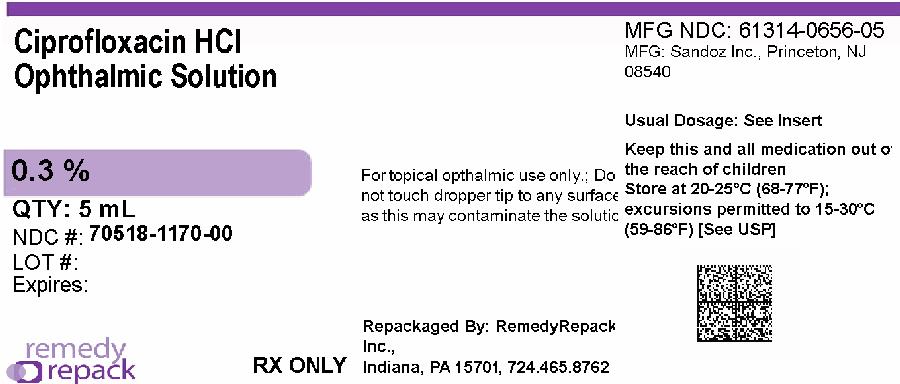
(ciprofloxacin · DailyMed)
ONCINE-500
CIPROFLOXACIN
What it does
Ciprofloxacin is an antibiotic used to treat various bacterial infections.
Commonly used for: bacterial infections of the lungs (pneumonia), urinary tract infections (UTIs), skin infections, gastrointestinal infections
Read more in plain English ↓Plain-language summary for general understanding - not medical advice. Always follow your pharmacist/doctor.
Ask about this medicine
Answers come only from this medicine's registration record, BNF monograph and interaction data - not medical advice.
Hard to find? We help patients in Kenya source rare medicines. We don't sell or dispense medicines - licensed pharmacies do.
Source this medicineRegistration & product details
Source: Pharmacy and Poisons Board · fetched 2026-07-16 02:04:55 · updated 2026-09-15 02:06:05
Drug Interactions
41Severe (2)
Quinolones - decreases absorption
Strontiumispredictedtodecreasetheabsorptionof quinolones.Avoid.oTheoretical
Tizanidine - increases exposure
Ciprofloxacin increases the exposure to tizanidine. Avoid.
Moderate (16)
Aminophylline - increases exposure
Ciprofloxacin is predicted to increase the exposure to aminophylline. Adjust dose.
Antiepileptics - affects concentration
Ciprofloxacin affects the concentration of antiepileptics (fosphenytoin, phenytoin). Monitor concentration and adjust dose.
Antipsychotics, Second Generation - increases concentration
Ciprofloxacin increases the concentration of antipsychotics, second generation (clozapine). Monitor adverse effects and adjust dose.
Antipsychotics, Second Generation - increases exposure
Ciprofloxacin is predicted to increase the exposure to antipsychotics, second generation (olanzapine). Adjust dose.
Clozapine - increases concentration
Ciprofloxacin increases the concentration of antipsychotics, second generation (clozapine). Monitor adverse effects and adjust dose.
Unknown (23)
Agomelatine - increases exposure
Ciprofloxacin is predicted to increase the exposure to agomelatine.
Anaesthetics,local - increases exposure
Ciprofloxacin is predicted to increase the exposure to anaesthetics, local (ropivacaine).
Anagrelide - increases exposure
Ciprofloxacinispredictedtoincreasetheexposureto anagrelide.oTheoretical
Antiarrhythmics - increases exposure
Ciprofloxacin slightly increases the exposure to antiarrhythmics (lidocaine).
Chlorpromazine - increases exposure
Ciprofloxacin is predicted to increase the exposure to phenothiazines (chlorpromazine).
Data from BNF 85 (British National Formulary). This is not a substitute for professional medical advice. Matched via: class
About this medicine
Ciprofloxacin is an antibiotic used to treat various bacterial infections.
What it treats
- bacterial infections of the lungs (pneumonia)
- urinary tract infections (UTIs)
- skin infections
- gastrointestinal infections
How it works
It works by stopping the growth of bacteria in the body.
Who it's for
Ciprofloxacin is for adults and children who need treatment for bacterial infections.
Drug class
Quinolones
AI-assisted summary grounded in BNF data - general information only, not medical advice. Always confirm with your pharmacist or doctor.
Clinical monograph: Ciprofloxacin
BNF-referencedCiprofloxacin is a broad-spectrum antibiotic belonging to the fluoroquinolone class, effective against a wide range of both Gram-negative and Gram-positive bacteria. It works primarily by inhibiting bacterial DNA gyrase and topoisomerase IV, enzymes crucial for DNA replication and transcription. This inhibition leads to the death of susceptible bacteria, making ciprofloxacin a valuable option in treating various bacterial infections, including urinary tract infections, respiratory infections, and skin infections.
Indications
- Bacterial infections
- Urinary tract infections
- Respiratory tract infections
- Skin and soft tissue infections
- Acute pyelonephritis
- Severe diabetic foot infections
- Anthrax (treatment and post-exposure prophylaxis)
- Disseminated gonococcal infection (unlicensed)
Mechanism of action
Ciprofloxacin acts on bacterial topoisomerase II (DNA gyrase) and topoisomerase IV. It binds to the alpha subunits of DNA gyrase, preventing the supercoiling of bacterial DNA, which is essential for DNA replication. This inhibition leads to bacterial cell death. Ciprofloxacin exhibits bactericidal activity during both logarithmic and stationary growth phases, particularly against organisms like Escherichia coli and Pseudomonas aeruginosa.
Pharmacodynamics
Ciprofloxacin is characterized by its potent activity against many Gram-negative and some Gram-positive bacteria, achieved through its mechanism of action on DNA gyrase and topoisomerase IV. It binds with significantly higher affinity to bacterial DNA gyrase compared to mammalian enzymes, thus minimizing potential side effects. There is no cross-resistance between ciprofloxacin and other antibiotic classes, which enhances its use in cases of antibiotic resistance. Additionally, ciprofloxacin is under investigation for potential effects against malaria, cancers, and AIDS.
Pharmacokinetics
Ciprofloxacin is rapidly absorbed after oral administration, with bioavailability around 70-80%. It is widely distributed in body tissues and fluids, including the lungs, liver, kidneys, and prostate. The drug undergoes hepatic metabolism and is primarily excreted via the kidneys, with a half-life of about 4 hours. Dosing adjustments may be necessary in renal impairment. Ciprofloxacin's pharmacokinetic profile supports its efficacy in treating systemic infections.
Contra-indications
- Hypersensitivity to ciprofloxacin or other quinolones
- Concurrent use with tizanidine
Adverse effects
- Nausea
- Diarrhea
- Headache
- Dizziness
- Tendon rupture
- QT interval prolongation
- Photosensitivity
- Rash
- Superinfection
Interactions
- Severe: ciprofloxacin + tizanidine (increases exposure)
- Moderate: ciprofloxacin + aminophylline (increases exposure)
- Moderate: ciprofloxacin + antiepileptics (affects concentration)
- Moderate: ciprofloxacin + fosphenytoin (affects concentration)
- Moderate: ciprofloxacin + phenytoin (affects concentration)
- Moderate: ciprofloxacin + antipsychotics (increases concentration)
- Moderate: ciprofloxacin + clozapine (increases concentration)
- Moderate: ciprofloxacin + olanzapine (increases exposure)
- Moderate: ciprofloxacin + dopaminereceptor agonists (increases exposure)
Precautions
- Risk of arthropathy in children
- History of tendon disorders
- Concurrent use of drugs that prolong the QT interval
- Ensure adequate hydration to prevent crystalluria
- Monitor for signs of superinfection
Pregnancy
Avoid in pregnancy due to potential risk of arthropathy in animal studies; safer alternatives should be considered.
Breast-feeding
Ciprofloxacin is excreted in breast milk; caution is advised when administered to nursing mothers.
Storage
Store at room temperature, away from moisture and heat. Protect from light.
Formulations
- Oral tablet: 250 mg, 500 mg, 750 mg
- Intravenous infusion: 400 mg/200 mL
- Eye drops: concentration may vary
AI-synthesized from BNF references - general information only, not a substitute for professional medical advice or the current BNF. Verify doses with a pharmacist.
Molecular reference: Ciprofloxacin
PubChem CID 2764Molecular formula: C17H18FN3O3
Mechanism of action
Ciprofloxacin acts on bacterial topoisomerase II (DNA gyrase) and topoisomerase IV. Ciprofloxacin's targeting of the alpha subunits of DNA gyrase prevents it from supercoiling the bacterial DNA which prevents DNA replication. The mechanism by which ciprofloxacin's inhibition of DNA gyrase or topoisomerase IV results in death in susceptible organisms has not been fully determined. Unlike beta-lactam anti-infectives, which are most active against susceptible bacteria when they are in the logarithmic phase of growth, studies using Escherichia coli and Pseudomonas aeruginosa indicate that ciprofloxacin can be bactericidal during both logarithmic and stationary phases of growth; this effect does not appear to occur with gram-positive bacteria (e.g., Staphylococcus aureus). In vitro studies indicate that ciprofloxacin concentrations that approximate the minimum inhibitory concentration (MIC) of the drug induce filamentation in susceptible organisms; high concentrations of the drug result in enlarged or elongated cells that may not be extensively filamented. Although the bactericidal effect of some fluoroquinolones (e.g., norfloxacin) evidently requires competent RNA and protein synthesis in the bacterial cell, and concurrent use of anti-infectives that affect protein synthesis (e.g., chloramphenicol, tetracyclines) or RNA synthesis (e.g., rifampin) inhibit the in vitro bactericidal activity of these drugs, the bactericidal effect of ciprofloxacin is only partially reduced in the presence of these anti-infectives. This suggests that ciprofloxacin has an additional mechanism of action that is independent of RNA and protein synthesis. Ciprofloxacin usually is bactericidal in action. Like other fluoroquinolone anti-infectives, ciprofloxacin inhibits DNA synthesis in susceptible organisms via inhibition of the enzymatic activities of 2 members of the DNA topoisomerase class of enzymes, DNA gyrase and topoisomerase IV. DNA gyrase and topoisomerase IV have distinct essential roles in bacterial DNA replication. DNA gyrase, a type II DNA topoisomerase, was the first identified quinolone target; DNA gyrase is a tetramer composed of 2 GyrA and 2 GyrB subunits. DNA gyrase introduces negative superhelical twists in DNA, an activity important for initiation of DNA replication. DNA gyrase also facilitates DNA replication by removing positive super helical twists. Topoisomerase IV, another type II DNA topoisomerase, is composed of 2 ParC and 2 ParE subunits. DNA gyrase and topoisomerase IV are structurally related; ParC is homologous to GyrA and ParE is homologous to GyrB. Topoisomerase IV acts at the terminal states of DNA replication by allowing for separation of interlinked daughter chromosomes so that segregation into daughter cells can occur. Fluoroquinolones inhibit these topoisomerase enzymes by stabilizing either the DNA-DNA gyrase complex or the DNA-topoismerase IV complex; these stabilized complexes block movement of the DNA replication fork and thereby inhibit DNA replication resulting in cell death. ... Ciprofloxacin is cytotoxic to a variety of cultured mammalian cell lines at concn that deplete cells of mtDNA. The IC50 values for ciprofloxacin varied from 40-80 ug/ml depending on the cell line tested. Cytotoxicity required continuous exposure of cells to drug for 2-4 days, which corresponded to approx three or four cell doublings. Shorter times of drug exposure did not cause significant cytotoxicity. In addition, cells became drug resistant when they were grown under conditions that bypassed the need for mitochondrial respiration. Resistance was not due to a decr in cellular drug accumulation, ... /indicating/ that ciprofloxacin cytotoxicity is caused by the loss of mtDNA encoded functions. Analysis of mtDNA from ciprofloxacin treated cells revealed the presence of site specific, double stranded DNA breaks. ... Exonuclease protection studies indicated that the 5'-, but not the 3', ends of the drug induced DNA breaks were tightly assoc
Pharmacodynamics
Ciprofloxacin is a second generation fluoroquinolone that is active against many Gram negative and Gram positive bacteria. It produces its action through inhibition of bacterial DNA gyrase and topoisomerase IV. Ciprofloxacin binds to bacterial DNA gyrase with 100 times the affinity of mammalian DNA gyrase. There is no cross resistance between fluoroquinolones and other classes of antibiotics, so it may be of clinical value when other antibiotics are no longer effective. Ciprofloxain and its derivatives are also being investigated for its action against malaria, cancers, and AIDS.
Biological pathways
Source: PubChem (NCBI) · pathways from PathBank, Reactome, WikiPathways & PharmGKB.
This drug in other countries
The same active ingredient registered across other registries we cover - including different brands.
- ABYMED-500 TABLETS (Each tablet contains Ciprofloxacin 500mg) · Socomed Pharmaceuticals
- AFRICIP SOLUTION FOR INFUSION · Aishwarya Lifesciences
- ALCIPRO INFUSION · Atlantic Life Science
- ASCOT CIPROFLOXACIN 0.3%w/v EYE/EAR DROPS · Pharmax India
- ASCOT CIPROFLOXACIN EAR/EYE DROPS (Each bottle contains Ciprofloxacin Hydrochloride 0.3%w/v) · Pharmax India
- AXACIP INFUSION · Axa Parenterals