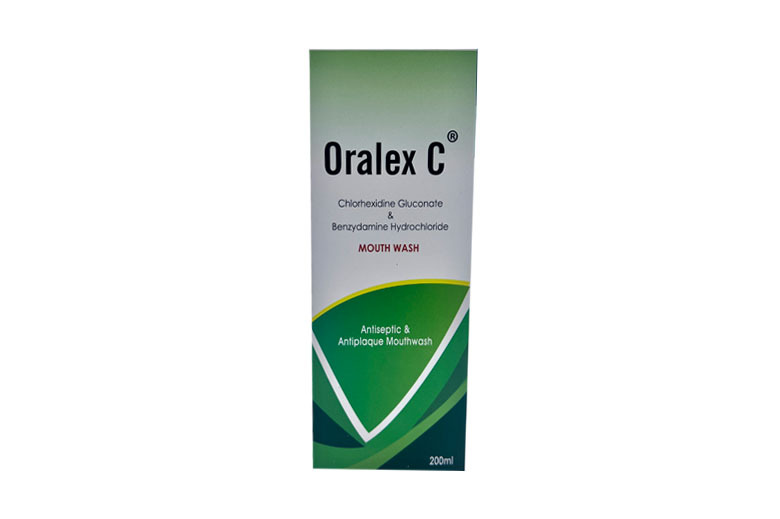
ORALEX C
CHLORHEXEDINE GLUCONATE AND BENZYDAMINE HYDROCHLORIDE MOUTH WASH
What it does
Benzydamine is a medication often used to relieve pain and inflammation.
Commonly used for: sore throat, mouth ulcers, painful gums, inflammation
Read more in plain English ↓Plain-language summary for general understanding - not medical advice. Always follow your pharmacist/doctor.
Ask about this medicine
Answers come only from this medicine's registration record, BNF monograph and interaction data - not medical advice.
Hard to find? We help patients in Kenya source rare medicines. We don't sell or dispense medicines - licensed pharmacies do.
Source this medicineRegistration & product details
Source: Pharmacy and Poisons Board · fetched 2026-01-28 19:50:32 · updated 2026-09-01 02:30:47
About benzydamine
Benzydamine is a medication often used to relieve pain and inflammation.
What it treats
- sore throat
- mouth ulcers
- painful gums
- inflammation
How it works
It reduces pain and swelling by acting on the tissues in the area.
Who it's for
Adults and children who need relief from pain or inflammation in the mouth or throat.
Cautions
- • Be careful if you are taking other medications that affect blood clotting.
AI-assisted summary grounded in BNF data - general information only, not medical advice. Always confirm with your pharmacist or doctor.
About chlorhexedine
Chlorhexidine is an antiseptic used to prevent infection in wounds and to help maintain oral hygiene.
What it treats
- prevention of infection in cuts and wounds
- oral hygiene (mouthwash for gum disease)
How it works
Chlorhexidine kills harmful bacteria and helps to prevent infections.
Who it's for
It is suitable for adults and children for cleaning wounds and maintaining oral health.
AI-assisted summary grounded in BNF data - general information only, not medical advice. Always confirm with your pharmacist or doctor.
About mouth
Mouth preparations are used to treat various oral conditions and maintain oral hygiene.
What it treats
- oral infections
- mouth ulcers
- bad breath
- gum disease
How it works
These preparations help clean the mouth, soothe irritation, and fight infections.
Who it's for
Suitable for anyone needing relief from oral discomfort or aiming to improve oral health.
AI-assisted summary grounded in BNF data - general information only, not medical advice. Always confirm with your pharmacist or doctor.
About wash
Wash is a product used for cleaning and hygiene purposes.
What it treats
- skin cleansing
- general hygiene
- removal of dirt and germs
How it works
Wash helps to remove dirt, bacteria, and other impurities from the skin, keeping it clean and healthy.
Who it's for
Wash can be used by anyone looking to maintain personal hygiene.
AI-assisted summary grounded in BNF data - general information only, not medical advice. Always confirm with your pharmacist or doctor.
Clinical monograph: Benzydaminehydrochloride
BNF-referencedBenzydamine hydrochloride is a non-steroidal anti-inflammatory drug with local analgesic properties, primarily used for the treatment of painful inflammatory conditions in the oropharynx.
Indications
- Painful inflammatory conditions of the oropharynx
- Oral ulceration and inflammation
- Anaesthesia of mucous membranes
Dosage
Children: For children aged 1 month to 5 years: 1-3 sprays every 1.5-3 hours, dependent on body weight and condition; refer to the BNF for Children for precise dosing.
Adults: Refer to the BNF for specific dosing recommendations.
Mechanism of action
Benzydamine hydrochloride exerts its effects by inhibiting the synthesis of prostaglandins, which are mediators of inflammation and pain. It also possesses local anesthetic properties, providing relief from pain upon application to mucous membranes.
Pharmacodynamics
Benzydamine demonstrates anti-inflammatory, analgesic, and local anesthetic effects. It reduces pain and inflammation in the oropharynx, making it beneficial for various inflammatory conditions.
Pharmacokinetics
Benzydamine is rapidly absorbed when administered topically. It is distributed throughout the body, crosses the placenta, and is present in breast milk in small amounts. The drug undergoes hepatic metabolism and is excreted primarily in urine. Caution is advised in patients with hepatic and renal impairment due to potential accumulation.
Contra-indications
- Hypersensitivity to benzydamine or any component of the formulation
Adverse effects
- Oral disorders
- Photosensitivity reaction
- Skin reactions
- Angioedema
Interactions
- Caution with antiarrhythmics
- Caution with NSAIDs
Precautions
- Can damage plastic cuffs of endotracheal tubes
- Caution in hepatic impairment
- Caution in renal impairment
Pregnancy
Crosses the placenta but not known to be harmful in animal studies-use if benefit outweighs risk.
Breast-feeding
Present in milk but amount too small to be harmful.
Storage
Store at room temperature, away from moisture and heat.
Formulations
- Oromucosal Spray 0.15% (sugar-free)
- Mouthwash 0.15% (sugar-free)
AI-synthesized from BNF references - general information only, not a substitute for professional medical advice or the current BNF. Verify doses with a pharmacist.
Clinical monograph: benzydamine
BNF-referencedBenzydamine is a non-steroidal anti-inflammatory drug (NSAID) primarily used for its local anesthetic and analgesic effects, particularly in the treatment of conditions affecting the mouth and throat. It exhibits anti-inflammatory properties, reducing edema and granuloma formation, while also providing relief from pain associated with inflammatory conditions. The drug is typically administered topically, allowing for localized action with minimal systemic absorption and side effects.
Indications
- Sore throat
- Mouth ulcers
- Inflammatory conditions of the oral cavity
- Pain relief in conditions causing inflammation in the throat and mouth
Dosage
Children: Refer to the BNF for Children for appropriate dosing information based on the child's age
Adults: The dosage depends on the formulation and the condition being treated. Refer to the specific product information or the BNF for detailed dosing guidelines.
Mechanism of action
Benzydamine acts by inhibiting the synthesis of pro-inflammatory cytokines, such as tumor necrosis factor-alpha (TNF-α) and interleukin-1β (IL-1β), while exerting minimal effects on other pro-inflammatory and anti-inflammatory cytokines. It is a weak inhibitor of prostaglandin synthesis, primarily affecting cyclooxygenase (COX) and lipoxygenase enzyme activity at high concentrations. Additionally, benzydamine is believed to inhibit the oxidative burst of neutrophils and stabilize lysosomes, contributing to its anti-inflammatory and analgesic effects. Its local anesthetic action is attributed to its ability to stabilize neuronal membranes.
Pharmacodynamics
Benzydamine provides local anesthetic and analgesic effects, focusing on the local mechanisms of inflammation such as pain and edema. It is absorbed through the oral mucosa and intact skin, binding selectively to inflamed tissues to exert its effects. The drug typically reaches peak plasma concentration within 2 to 4 hours, enhancing its localized therapeutic efficacy while minimizing systemic adverse effects.
Pharmacokinetics
Benzydamine is primarily administered topically, resulting in limited systemic absorption. Once applied, it accumulates in inflamed tissues, allowing for effective local action. The pharmacokinetic profile indicates that peak concentrations are achieved within 2 to 4 hours post-application, although specific systemic absorption metrics are not extensively characterized due to its localized use.
Adverse effects
- local irritation
- burning sensation
- dryness of the mouth
- nausea
- dizziness
Precautions
- Caution in patients with hypersensitivity to benzydamine or other NSAIDs
- Use with caution in patients with asthma or history of allergic reactions
Pregnancy
Benzydamine should be used in pregnancy only if the potential benefit justifies the potential risk to the fetus. Consult healthcare provider before use.
Breast-feeding
It is unknown whether benzydamine is excreted in human milk. Caution is advised when administering to breastfeeding women.
Storage
Store at room temperature, away from light and moisture. Do not freeze.
Formulations
- oral rinse
- topical gel
- spray
AI-synthesized from BNF references - general information only, not a substitute for professional medical advice or the current BNF. Verify doses with a pharmacist.
Clinical monograph: chlorhexedine
Chlorhexidine is an antiseptic agent used for skin disinfection, oral hygiene, and as a solution for irrigation in surgical procedures. It is effective against a wide range of gram-positive and gram-negative bacteria, fungi, and some viruses. Chlorhexidine is commonly found in various formulations, including mouthwashes, gels, and surgical scrubs, making it versatile for both clinical and home use.
Indications
- Preoperative skin disinfection
- Postoperative wound care
- Oral antiseptic for gingivitis and periodontitis
- Treatment of skin infections
- Irrigation of surgical wounds
Dosage
Children: Refer to BNF for Children for appropriate dosages based on age and condition.
Adults: Refer to specific product guidelines and BNF for appropriate dosages based on condition and formulation.
Mechanism of action
Chlorhexidine works by disrupting the cell membranes of microbes, leading to cell lysis. It binds to negatively charged bacterial cell walls, causing leakage of intracellular components and ultimately resulting in cell death. Its effectiveness is due to its ability to remain active on surfaces and tissues, providing prolonged antimicrobial action.
Pharmacodynamics
Chlorhexidine exhibits a rapid bactericidal effect, with activity increasing with concentration and exposure time. It is particularly effective against gram-positive cocci and some gram-negative rods, as well as fungi. Its residual activity allows it to remain effective even after initial application, making it beneficial for long-term use in certain applications, such as oral rinses.
Pharmacokinetics
Chlorhexidine is poorly absorbed through the gastrointestinal tract when ingested and primarily acts locally at the site of application. When used topically, the absorption through the skin is minimal. The elimination half-life varies depending on the formulation and application, but it is generally short, with the compound being excreted in urine. Its pharmacokinetic profile allows for frequent application without significant systemic effects.
Contra-indications
- Hypersensitivity to chlorhexidine or any of its components
- Ototoxicity when used in the ear canal
Adverse effects
- Skin irritation
- Allergic reactions
- Staining of teeth
- Altered taste sensation
- Dryness of the mouth
- Esophageal ulceration (when used as a mouthwash)
Interactions
- Chlorhexidine may inactivate certain anionic agents, including some soaps and detergents
- Concurrent use with antiseptic agents containing anionic surfactants may lead to reduced efficacy
Precautions
- Avoid contact with the eyes and ears
- Use cautiously in patients with a history of hypersensitivity to chlorhexidine or related compounds
- Prolonged use may lead to the development of resistant microorganisms
Pregnancy
Chlorhexidine is generally regarded as safe for use during pregnancy, but should be used only if clearly needed.
Breast-feeding
Chlorhexidine is considered safe during breastfeeding, but it is recommended to rinse the mouth after use to minimize exposure to the infant.
Storage
Store in a cool, dry place away from direct sunlight. Keep out of reach of children.
Formulations
- Topical solutions (0.5% to 4% concentration)
- Mouthwash (0.12% to 0.2% concentration)
- Gels
- Surgical scrubs
AI-synthesized from BNF references - general information only, not a substitute for professional medical advice or the current BNF. Verify doses with a pharmacist.
Clinical monograph: mouth
Mouth refers to the oral cavity, which is the entry point for food and air in the human body. It plays a vital role in digestion and is involved in speech and sensory functions. The mouth contains various structures, including the lips, cheeks, gums, teeth, tongue, and palate, each contributing to its functions. The health of the mouth is crucial for overall health, as oral diseases can affect nutritional intake and general wellbeing.
Indications
- Oral health maintenance
- Nutritional intake
- Speech production
- Prevention of oral diseases
- Administration of medications
Dosage
Children: Refer to specific medications for dosing guidelines as the mouth itself does not have a dosing regimen.
Adults: Refer to specific medications for dosing guidelines as the mouth itself does not have a dosing regimen.
Mechanism of action
The mouth itself does not have a pharmacological mechanism of action, but it is involved in the mechanical breakdown of food through mastication and the enzymatic breakdown of carbohydrates by saliva. Saliva contains enzymes like amylase, which begins the digestion of starches. Additionally, the mouth is a crucial site for the absorption of certain medications and nutrients.
Pharmacodynamics
Pharmacodynamics in the context of the mouth involves the interaction of substances, including drugs, with the tissues and secretions in the oral cavity. The pH, enzymatic activity, and presence of mucosal barriers affect drug absorption and efficacy. The oral mucosa has a rich blood supply, which can facilitate rapid systemic absorption of certain medications administered sublingually or buccally.
Pharmacokinetics
Pharmacokinetics related to the mouth involves the absorption, distribution, metabolism, and excretion of drugs administered via the oral route. Drugs can be absorbed through the mucosal membranes in the mouth, leading to rapid onset of action. Factors such as saliva production, the presence of food, and the formulation of the drug (e.g., tablet, liquid) can influence the pharmacokinetic profile.
Pregnancy
The safety of mouth-related medications or treatments during pregnancy varies widely depending on the specific substance or therapy being used. Consult specific guidelines for each drug.
Breast-feeding
The safety of mouth-related medications or treatments during breastfeeding varies depending on the specific substance or therapy. Consult specific guidelines for each drug.
Storage
Store medications related to oral health in a cool, dry place away from direct sunlight, and keep out of reach of children.
AI-synthesized from BNF references - general information only, not a substitute for professional medical advice or the current BNF. Verify doses with a pharmacist.
Clinical monograph: wash
Wash refers to a general practice of cleansing or rinsing a part of the body, often the skin, with water or other solutions. In clinical settings, it is an essential practice for maintaining hygiene, preventing infections, and preparing the skin for medical procedures. Washes can include antiseptic solutions, saline, or soap and water, depending on the context of use.
Indications
- Preoperative skin preparation
- Wound cleansing
- Hygiene maintenance
- Infection prevention
- Treatment of skin conditions (e.g., acne, dermatitis)
Dosage
Children: Use as directed for the child’s age and condition, ensuring gentle application and rinsing. Consult specific product instructions and guidelines for paediatric use.
Adults: Use as directed, typically involving application of the wash to the affected area, followed by thorough rinsing with water. Consult specific product instructions for detailed use.
Mechanism of action
Washes primarily work by physically removing dirt, debris, and microorganisms from the skin's surface. Antiseptic washes contain active ingredients that can disrupt microbial cell membranes, denature proteins, or interfere with metabolic processes, thus reducing bacterial load.
Pharmacodynamics
The effectiveness of a wash depends on the concentration of the active ingredients, the type of microorganisms present, and the duration of contact. For antiseptic washes, mechanisms may include bactericidal or bacteriostatic effects, depending on the nature of the surfactants or antiseptics used.
Pharmacokinetics
As a topical application, washes have minimal systemic absorption. Their effects are localized, and they work primarily at the site of application. The duration of effect can vary based on the formulation and the presence of residual active ingredients on the skin.
Pregnancy
Safety during pregnancy has not been established. Use with caution and consult a healthcare professional.
Breast-feeding
Consult a healthcare professional before use, as safety during breastfeeding has not been established.
Storage
Store in a cool, dry place away from direct sunlight. Ensure the cap is tightly closed when not in use.
AI-synthesized from BNF references - general information only, not a substitute for professional medical advice or the current BNF. Verify doses with a pharmacist.
Molecular reference: benzydamine
PubChem CID 12555Molecular formula: C19H23N3O
Mechanism of action
Despite being categorized as a non-steroidal anti-inflammatory drug (NSAID), benzydamine demonstrates various mechanisms of action that differ from those of traditional aspirin-like NSAIDs. In particular, benzydamine predominantly acts by inhibiting the synthesis of pro inflammatory cytokines like tumour necrosis factor-alpha (TNF-α) and interleukin-1β (IL-1β) without largely affecting other pro inflammatory cytokines (ie. such as IL-6 and IL-8) or anti-inflammatory cytokines (ie. like IL-10 or IL-1 receptor antagonist). Moreover, benzydamine is largely a weak inhibitor of prostaglandin synthesis as it has been shown to effectively inhibit cyclooxygenase (COX) and lipoxygenase enzyme activity only at concentrations of 1mM or greater. Considering most contemporary usages of benzydamine are topical applications that are generally not well absorbed through the skin and/or non-specialized mucosae, benzydamine does not often achieve the kind of absorption or blood concentrations necessary to cause any extraneous distant systemic effects or COX inhibition, allowing it to localize its action. Additionally, it is also hypothesized that benzydamine is capable of inhibiting the oxidative burst of neutrophils and membrane stabilization. These actions are exhibited by the substance’s ability to inhibit the release of granules from neutrophils and to stabilize lysosomes. Furthermore, benzydamine is capable of a local anaesthetic effect that may be related to its capability for inhibiting the release of inflammatory mediators like substance P and calcitonin gene related peptide from sensory nerve endings. Since substance P is capable of causing the release of histamine from mast cells, benzydamine’s prevention of substance P release further contributes to an anti-inflammatory effect. Benzydamine also demonstrates a non-specific antibacterial activity against various bacterial strains that are resistant to broad-spectrum antibiotics such as ampicillin, chloramphenicol, and tetracycline at concentrations of about 3 mmol/L. Combinatorial use of benzydamine and other antibiotics like tetracycline and chloramphenicol are also synergistic against antibiotic resistant strains of *Staphylococcus aureus* and *Pseudomonas aeruginosa*.
Pharmacodynamics
Benzydamine is a non-steroidal anti-inflammatory drug (NSAID) designed to elicit local anesthetic and analgesic effects mainly for the mouth and throat. It specifically acts on the local mechanisms of inflammation such as pain, oedema, or granuloma. Typically applied topically, the drug demonstrates anti-inflammatory activity reducing oedema as well as exudate and granuloma formation. Moreover, benzydamine exhibits analgesic properties and local anaesthetic activity if pain is caused by an inflammatory condition. Benzydamine can be absorbed into the oral mucosa and intact skin. Once absorbed in the local area of pain or inflammation, benzydamine binds selectively to local inflamed tissues, usually allowing it to act with few adverse systemic effects. On average a period of 2 to 4 hours is necessary for the substance to reach peak plasma concentration. Benzydamine can be synthesized with the reaction of the N-benzyl derivative from methyl anthranilate with nitrous acid to give N-nitoso derivative. This is next reduced by sodium thiosulfate to give transient hydrazine. This hydrazine can then undergo spontaneous internal hydrazide formation. Treating this resultant enolate with 3-chloro-1-dimethylamkino propane ultimately yields benzydamine.
Source: PubChem (NCBI) · pathways from PathBank, Reactome, WikiPathways & PharmGKB.
This drug in other countries
The same active ingredient registered across other registries we cover - including different brands.