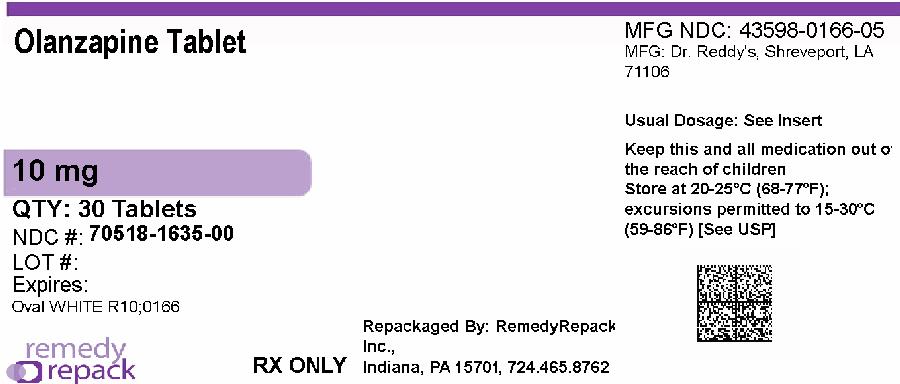
(olanzapine · DailyMed)
Orozapin 10 Tablets
Olanzapine 10mg 10mg mg
What it does
Olanzapine is an antipsychotic medication used to treat mental health conditions.
Commonly used for: schizophrenia, bipolar disorder
Read more in plain English ↓Plain-language summary for general understanding - not medical advice. Always follow your pharmacist/doctor.
Ask about this medicine
Answers come only from this medicine's registration record, BNF monograph and interaction data - not medical advice.
Medicine sourcing is available in Kenya only. We don't sell or dispense medicines - licensed pharmacies do.
Sourcing - Kenya onlyRegistration & product details
Source: Zambia Medicines Regulatory Authority · fetched 2026-03-12 00:02:12 · updated 2026-09-24 03:33:57
Drug Interactions
16Pharmacodynamic Warnings
Olanzapine appears in TABLE 8: Drugs that cause hypotension
Olanzapine appears in TABLE 11: Drugs with CNS depressant effects
Moderate (12)
Olanzapine - decreases exposure
Carbamazepine potentially decreases the exposure to antipsychotics, second generation (olanzapine). Monitor and adjust dose.
Olanzapine - decreases exposure
Phenytoinispredictedtodecreasetheexposureto antipsychotics,secondgeneration(olanzapine).Monitorand adjustdose.oStudy 1xidneppA|snoitcaretnI A1 com/codemedicalapps/ cal Applications)
Olanzapine - decreases exposure
Leflunomide is predicted to decrease the exposure to olanzapine. Monitor and adjust dose.
Olanzapine - increases exposure
Mexiletine is predicted to increase the exposure to olanzapine. Adjust dose.
Olanzapine - increases exposure
Osilodrosstat is predicted to increase the exposure to olanzapine. Adjust dose.
Unknown (4)
Antipsychotics - additive effect
Antipsychotics,secondgeneration(clozapine)cancause constipation,ascanantipsychotics,secondgeneration (olanzapine,quetiapine);concurrentusemightincreasethe riskofdevelopingintestinalobstruction.rAnecdo
Levodopa - decreases effects
Olanzapine decreases the effects of levodopa. Avoid or monitor worsening parkinsonian symptoms. Also see TABLE 8 p. 1518
Olanzapine - increases risk of adverse effects
Valproate increases the risk of adverse effects when given with antipsychotics, second generation (olanzapine).
Olanzapine - increases exposure
Axitinib is predicted to increase the exposure to antipsychotics, second generation (clozapine, olanzapine).
Data from BNF 85 (British National Formulary). This is not a substitute for professional medical advice. Matched via: exact
About this medicine
Olanzapine is an antipsychotic medication used to treat mental health conditions.
What it treats
- schizophrenia
- bipolar disorder
How it works
Olanzapine helps to balance chemicals in the brain that affect mood and thoughts.
Who it's for
This medication is for adults and some adolescents experiencing severe mental health issues.
Drug class
Antipsychotics
Cautions
- • Be careful if taking medications that lower blood pressure.
- • Avoid using with drugs that can make you sleepy or affect your central nervous system.
AI-assisted summary grounded in BNF data - general information only, not medical advice. Always confirm with your pharmacist or doctor.
Clinical monograph: Olanzapine
BNF-referencedOlanzapine is an atypical antipsychotic primarily used for the treatment of schizophrenia and bipolar disorder. It works by antagonizing multiple neurotransmitter receptors, including dopamine and serotonin receptors, which helps in managing psychotic symptoms and mood stabilization. Its broad receptor profile contributes to both efficacy and a lower incidence of certain side effects compared to typical antipsychotics.
Indications
- Schizophrenia
- Bipolar disorder
- Acute manic episodes associated with bipolar I disorder
- Prevention of recurrence in bipolar disorder
Dosage
Children: Refer to the BNF for Children for specific dosing information, as it varies based on
Adults: Initial dose of 10 mg daily, adjusted according to response; the usual dose ranges from 5 to 20 mg daily, with a maximum dose of 20 mg daily after reassessment.
Mechanism of action
Olanzapine exerts its effects by antagonizing several neuronal receptors in the brain, including dopamine receptors (D1, D2, D3, and D4) and serotonin receptors (5HT2A, 5HT2C, 5HT3, and 5HT6). The primary mechanism is the blockade of dopamine D2 receptors in the mesolimbic pathway, which reduces dopaminergic activity associated with psychotic symptoms. Additionally, its antagonism at serotonin receptors is proposed to reduce adverse effects and enhance therapeutic outcomes.
Pharmacodynamics
Olanzapine's action at the dopamine D2 receptor is associated with alleviating positive symptoms of schizophrenia, such as hallucinations and delusions. Its effect on serotonin 5HT2A receptors contributes to the reduction of negative symptoms, including anhedonia and poor motivation. Clinical trials have demonstrated its effectiveness in reducing symptoms of schizophrenia and managing acute manic episodes in bipolar disorder.
Pharmacokinetics
Olanzapine is well-absorbed after oral administration but undergoes extensive first-pass metabolism. It has a half-life of approximately 21 to 54 hours, allowing for once-daily dosing. The drug is primarily metabolized by the liver via cytochrome P450 enzymes, particularly CYP1A2. Excretion occurs mainly through urine and feces. The pharmacokinetic profile may be altered in individuals with hepatic impairment, necessitating dose adjustments.
Contra-indications
- Hypersensitivity to olanzapine or any of its ingredients
- Severe hepatic impairment
- Concurrent use of certain medications that may significantly increase olanzapine exposure
Adverse effects
- Anxiety
- Drooling
- Gastrointestinal discomfort
- Musculoskeletal stiffness
- Nausea
- Oculogyric crisis
- Oral disorders
- Pain
- Pruritus
- Psychiatric disorders
- Sleep disorders
- Appetite decreased
- Dysarthria
- Dysuria
- Gait abnormality
- Hot flush
- Hyperhidrosis
- Hypertension
- Hyponatremia
- Joint stiffness
- Myalgia
- Nasopharyngitis
- Blurred vision
- Angioedema
- Eosinophilia
- Rhabdomyolysis
- Anemia
- Angina pectoris
- Atrioventricular block
- Breast abnormalities
- Diarrhea
- Dysmenorrhea
- Dysphagia
- Renal failure
- Stevens-Johnson syndrome
- Suicidal behavior
- Vertigo
Interactions
- Carbamazepine: Moderate (decreases exposure)
- Phenytoin: Moderate (decreases exposure)
- Leflunomide: Moderate (decreases exposure)
- Mexiletine: Moderate (increases exposure)
- Osilodrostat: Moderate (increases exposure)
- Rucaparib: Moderate (increases exposure)
- Teriflunomide: Moderate (decreases exposure)
- Vemurafenib: Moderate (increases exposure)
- Ritonavir: Moderate (decreases exposure)
- Ciprofloxacin: Moderate (increases exposure)
Precautions
- Use with caution in patients with hepatic impairment
- Monitoring for metabolic effects such as weight gain, dyslipidemia, and glucose intolerance
- Consider lower initial doses and gradual dose increases in females, elderly, and non-smokers due to slower metabolism
AI-synthesized from BNF references - general information only, not a substitute for professional medical advice or the current BNF. Verify doses with a pharmacist.
Molecular reference: Olanzapine
PubChem CID 135398745Molecular formula: C17H20N4S
Mechanism of action
The activity of olanzapine is achieved by the antagonism of multiple neuronal receptors including the dopamine receptor D1, D2, D3 and D4 in the brain, the serotonin receptors 5HT2A, 5HT2C, 5HT3 and 5HT6, the alpha-1 adrenergic receptor, the histamine receptor H1 and multiple muscarinic receptors. As abovementioned, olanzapine presents a wide profile of targets, however, its antagonistic effect towards the dopamine D2 receptor in the mesolimbic pathway is key as it blocks dopamine from having a potential action at the post-synaptic receptor. The binding of olanzapine to the dopamine D2 receptors is easily dissociable and hence, it allows for a certain degree of dopamine neurotransmission. On the other hand, olanzapine acts in the serotonin 5HT2A receptors in the frontal cortex in a similar manner than the reported on dopamine D2 receptors. This determined effect allows for a decrease in adverse effects. The mechanism of action of olanzapine, as with other drugs having efficacy in schizophrenia, is unknown. However, it has been proposed that this drug's efficacy in schizophrenia is mediated through a combination of dopamine and serotonin type 2 (5HT2) antagonism. The mechanism of action of olanzapine in the treatment of acute manic or mixed episodes associated with bipolar I disorder is unknown.
Pharmacodynamics
The effect of olanzapine in the D2 receptor is reported to produce the positive effects of this drug such as a decrease in hallucinations, delusions, disorganized speech, disorganized thought, and disorganized behavior. On the other hand, its effect on the serotonin 5HT2A receptor prevents the onset of anhedonia, flat affect, alogia, avolition and poor attention. Based on the specific mechanism of action, olanzapine presents a higher affinity for the dopamine D2 receptor when compared to the rest of the dopamine receptor isotypes. This characteristic significantly reduces the presence of side effects. Clinical trials for the original use of olanzapine demonstrated significant effectiveness in the treatment of schizophrenia and bipolar disorder in adults and acute manic or mixed episodes associated with bipolar disorder in adolescents. The effect of olanzapine on dopamine and serotonin receptors has been suggested to reduce chemotherapy-induced nausea and vomiting as those receptors are suggested to be involved in this process. For this effect, several clinical trials have been conducted and it has been shown that olanzapine can produce a significant increase in total control of nausea and vomiting. In a high-level study of the effect of olanzapine for this condition, a complete response on the delay phase was observed in 84% of the individual and control of emesis of over 80% despite the phase.
Source: PubChem (NCBI) · pathways from PathBank, Reactome, WikiPathways & PharmGKB.
This drug in other countries
The same active ingredient registered across other registries we cover - including different brands.
- CALMOOD 10MG FILM COATED TABLETS · Cosmos
- CALMOOD 5MG FILM COATED TABLETS · Cosmos
- CO-DEPRICAP CAPSULE 3/25 MG · Harleys
- DEPREX 10 TABLET · Ace Pharmaceuticals
- DEPREX 5 TABLET · Ace Pharmaceuticals
- M - OLANZAPINE 5MG TABLETS · Sai Pharmaceuticals
- OLANDUS · Zydus Lifesciences
- OLANDUS 5 · Cadila Healthcare
- OLANGEM OD 10
- OLANGEM OD 5 · Aurobindo Pharma
- Olandus 10 · Zydus Lifesciences
- Oleanz 10 · Sun Pharmaceuticals
- O-PIN 10 TABLET · Oa & J Pharmaceuticals
- O-PIN 5 TABLET · Oa & J Pharmaceuticals
- O-PIN TABLETS ( Olanzapine USP 5mg) · Oa&j Phamaceuticals Ltd
- OLANZAPINE 10MG TABLETS · Lyms Lifesciences
- OLANZAPINE 5MG TABLETS · Lyms Lifesciences
- OLANZAPINE TABLETS (Each film coated tablet contains Olanzapine USP 10mg) · Centurion Laboratories