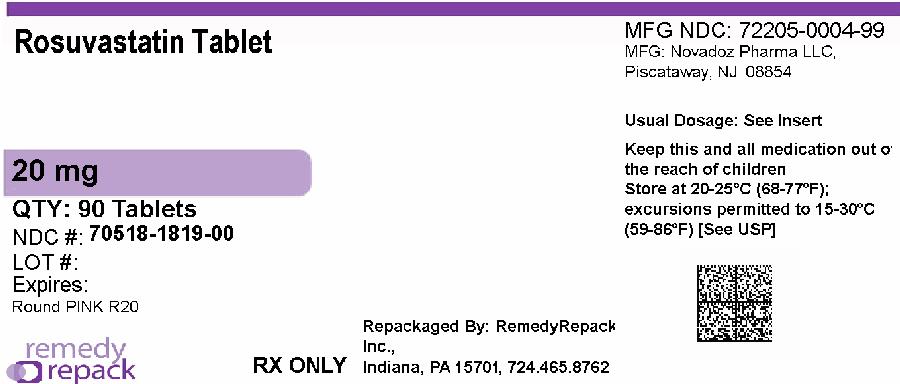
(rosuvastatin · DailyMed)
ROVASTIN-F 5/160 TABLETS
FENOFIBRATE BP & ROSUVASTATIN CALCIUM
What it does
Fenofibrate is a medication used to lower cholesterol and fat levels in the blood.
Commonly used for: high cholesterol (hyperlipidemia), high triglycerides
Read more in plain English ↓Plain-language summary for general understanding - not medical advice. Always follow your pharmacist/doctor.
Ask about this medicine
Answers come only from this medicine's registration record, BNF monograph and interaction data - not medical advice.
Hard to find? We help patients in Kenya source rare medicines. We don't sell or dispense medicines - licensed pharmacies do.
Source this medicineRegistration & product details
Source: Pharmacy and Poisons Board · fetched 2026-01-28 20:34:05 · updated 2026-07-26 11:24:47
Drug Interactions
105Pharmacodynamic Warnings
Rosuvastatin appears in TABLE 1: Drugs that cause hepatotoxicity
Severe (10)
Pravastatin - increases risk of rhabdomyolysis
Fenofibrate is predicted to increase the risk of rhabdomyolysis when given with statins (pravastatin). Avoid.
Rosuvastatin - increases exposure
Darolutamide is predicted to increase the exposure to statins (atorvastatin, fluvastatin, rosuvastatin). Avoid.
Rosuvastatin - increases exposure
Ciclosporin markedly increases the exposure to statins (rosuvastatin). Avoid.
Rosuvastatin - increases exposure
Letermovir is predicted to increase the exposure to statins (rosuvastatin, simvastatin). Avoid.
Rosuvastatin - increases exposure
Tedizolid is predicted to increase the exposure to statins (atorvastatin, fluvastatin, rosuvastatin). Avoid.
Rosuvastatin - increases exposure
Voxilaprevir with sofosbuvir and velpatasvir markedly increases the exposure to rosuvastatin. Avoid.
Statins - increases exposure
Darolutamide is predicted to increase the exposure to statins (atorvastatin, fluvastatin, rosuvastatin). Avoid.
Statins - increases exposure
Posaconazole is predicted to increase the exposure to statins (atorvastatin). Avoid.
Statins - increases exposure
Tedizolid is predicted to increase the exposure to statins (atorvastatin, fluvastatin, rosuvastatin). Avoid.
Statins - increases exposure
Voxilaprevir with sofosbuvir and velpatasvir markedly increases the exposure to statins (rosuvastatin). Avoid.
Moderate (28)
Fluvastatin - increases risk of rhabdomyolysis
Fenofibrate is predicted to increase the risk of rhabdomyolysis when given with statins (fluvastatin). Use with caution and adjust fenofibrate dose, p. 218.
Rosuvastatin - increases exposure
Dronedarone slightly increases the exposure to statins (rosuvastatin). Adjust dose.
Rosuvastatin - increases exposure
Leflunomide is predicted to increase the exposure to statins (rosuvastatin). Adjust dose. Also see TABLE 1 p. 1517
Rosuvastatin - increases exposure
Roxadustat is predicted to increase the exposure to statins (atorvastatin, pravastatin, rosuvastatin, simvastatin). Monitor adverse effects and adjust dose.
Statins - increases risk of rhabdomyolysis
Fenofibrate is predicted to increase the risk of rhabdomyolysis when given with statins (fluvastatin). Use with caution and adjust fenofibrate dose, p. 218.
Unknown (67)
Daptomycin - increases risk of rhabdomyolysis
Statins are predicted to increase the risk of rhabdomyolysis when given with daptomycin. Daratumumab → see monoclonal antibodies Darbepoetin alfa → see TABLE 5 p. 1518 (thromboembolism), TABLE 16 p. 1
Daptomycin - increases risk of rhabdomyolysis e
Statins are predicted to increase the risk of rhabdomyolysis when given with daptomycin.
Rosuvastatin - decreases exposure
Apalutamide slightly decreases the exposure to statins (rosuvastatin).
Rosuvastatin - decreases exposure
Eslicarbazepine decreases the exposure to statins (rosuvastatin).
Rosuvastatin - increases exposure
Isavuconazole is predicted to increase the exposure to statins (fluvastatin, rosuvastatin).
Data from BNF 85 (British National Formulary). This is not a substitute for professional medical advice. Matched via: exact
About fenofibrate
Fenofibrate is a medication used to lower cholesterol and fat levels in the blood.
What it treats
- high cholesterol (hyperlipidemia)
- high triglycerides
How it works
It helps reduce the amount of fat in the blood by increasing the breakdown of fats and decreasing their production in the liver.
Who it's for
This medicine is for adults who have high cholesterol or triglycerides that may not be controlled by diet alone.
AI-assisted summary grounded in BNF data - general information only, not medical advice. Always confirm with your pharmacist or doctor.
About rosuvastatin
Rosuvastatin is a medication that helps lower cholesterol levels in the blood.
What it treats
- high cholesterol (hyperlipidemia)
- prevention of heart disease
How it works
It works by blocking a substance your body needs to make cholesterol, thus reducing the amount of cholesterol in the blood.
Who it's for
This medication is for adults who need help managing their cholesterol levels.
Drug class
Statins
Cautions
- • Avoid using if you are taking medications that can harm the liver.
AI-assisted summary grounded in BNF data - general information only, not medical advice. Always confirm with your pharmacist or doctor.
Clinical monograph: Fenofibrate
BNF-referencedFenofibrate is a synthetic fibrate used primarily for the treatment of hyperlipidaemia, particularly in patients with high serum triglyceride levels. It functions by activating peroxisome proliferator-activated receptor alpha (PPARα), which enhances lipolysis, reduces triglycerides, and has variable effects on LDL cholesterol. Fenofibrate is indicated for patients who cannot tolerate statins or as an adjunct therapy in severe cases of hypertriglyceridaemia.
Indications
- Mixed hyperlipidaemia
- Severe hypertriglyceridaemia
- Familial hypercholesterolaemia (under expert advice)
Dosage
Children: For children aged 4–14 years, the dosage is one 67 mg capsule per 20 kg body weight daily, with a maximum of four 67 mg capsules per day
Adults: Initially 200 mg daily, increased if necessary to a maximum of 267 mg daily, or 100 mg to 160 mg daily depending on the formulation and patient needs.
Mechanism of action
Fenofibrate activates PPARα, a nuclear receptor that regulates gene transcription involved in lipid metabolism. This activation increases lipolysis, enhances the activity of lipoprotein lipase, and reduces apoprotein C-III levels. The resultant effect is an alteration in lipid homeostasis, leading to decreased triglyceride levels and improved lipid profiles. Fenofibrate also exhibits anti-inflammatory properties by suppressing the production of inflammatory cytokines.
Pharmacodynamics
Fenofibrate is effective in treating primary hypercholesterolemia, mixed dyslipidemia, and severe hypertriglyceridemia. Its long half-life of 19-27 hours allows for once-daily dosing, making it convenient for patients. The therapeutic index is wide, but caution is advised due to the risks of rhabdomyolysis and myopathy, especially when used with statins.
Pharmacokinetics
Fenofibrate is absorbed after oral administration, with peak plasma concentrations occurring approximately 4-5 hours post-dose. It is extensively protein-bound and undergoes metabolism in the liver, converting to its active form. The elimination half-life is between 19 to 27 hours, and it is primarily excreted via urine. Dose adjustments may be necessary in cases of renal impairment.
Contra-indications
- Gall bladder disease
- Severe hepatic impairment
- Concurrent use of a statin in patients with risk factors for myopathy
- Hypoalbuminaemia
- Nephrotic syndrome
- Photosensitivity to fibrates
Adverse effects
- Alopecia
- Diarrhoea
- Dizziness
- Drowsiness
- Fatigue
- Gastrointestinal discomfort
- Headache
- Myalgia
- Nausea
- Skin reactions
- Vertigo
- Rhabdomyolysis
- Pancreatitis
- Hepatic disorders
- Sexual dysfunction
- Fatigue
- Interstitial lung disease
Interactions
- Fenofibrate + statins (increased risk of rhabdomyolysis)
- Fenofibrate + pravastatin (severe interaction, increases risk of rhabdomyolysis)
- Fenofibrate + fluvastatin (moderate interaction, increases risk of rhabdomyolysis)
- Fenofibrate + ketoprofen (photosensitivity)
Precautions
- Correct hypothyroidism before initiating treatment
- Monitor liver function and creatine kinase when fibrates are used in combination with a statin
- Use caution in patients with risk factors for myopathy or severe hypertriglyceridaemia
Pregnancy
Manufacturers advise avoiding use due to potential toxicity based on animal studies.
Breast-feeding
Manufacturer advises avoiding use as fenofibrate is present in milk in animal studies.
Storage
Store in a cool, dry place, away from direct sunlight.
Formulations
- Modified-release tablets (200 mg)
- Tablets (100 mg)
- Micronised capsules (67 mg)
- Micronised capsules (200 mg)
- Micronised capsules (267 mg)
AI-synthesized from BNF references - general information only, not a substitute for professional medical advice or the current BNF. Verify doses with a pharmacist.
Clinical monograph: Rosuvastatin
BNF-referencedRosuvastatin is a synthetic statin medication used primarily as an antilipemic agent to lower cholesterol levels in the blood. It is particularly effective in reducing low-density lipoprotein cholesterol (LDL-C) and triglycerides while increasing high-density lipoprotein cholesterol (HDL-C). Rosuvastatin works by inhibiting the enzyme HMG-CoA reductase, leading to decreased hepatic cholesterol synthesis and increased clearance of LDL from the bloodstream. This mechanism contributes to its role in managing hyperlipidaemia and reducing cardiovascular risk.
Mechanism of action
Rosuvastatin acts as a competitive inhibitor of HMG-CoA reductase, the enzyme responsible for converting HMG-CoA to mevalonate, a crucial step in cholesterol biosynthesis. By inhibiting this enzyme, rosuvastatin decreases hepatic cholesterol levels, which in turn upregulates the expression of hepatic LDL receptors, enhancing the uptake of LDL cholesterol from the circulation. Additionally, it reduces the hepatic synthesis of very low-density lipoprotein (VLDL). Beyond its lipid-lowering effects, rosuvastatin exhibits pleiotropic effects, improving endothelial function, stabilizing atherosclerotic plaques, reducing oxidative stress and inflammation, and inhibiting thrombogenic responses.
Pharmacodynamics
Rosuvastatin effectively lowers total cholesterol, LDL-C, apolipoprotein B (apoB), and triglycerides while raising HDL-C levels. High levels of LDL-C and triglycerides, along with low HDL-C, are associated with an increased risk of atherosclerosis and cardiovascular disease (CVD). By improving the total cholesterol to HDL-C ratio, rosuvastatin reduces the risk of cardiovascular morbidity and mortality. Statins, including rosuvastatin, are considered cost-effective in managing CVD due to their significant impact on reducing LDL levels and overall cardiovascular risk.
Pharmacokinetics
Rosuvastatin is rapidly absorbed after oral administration, with peak plasma concentrations typically occurring within 3 to 5 hours. It has a bioavailability of approximately 20%, and its absorption is not significantly affected by food. The drug is primarily metabolized in the liver, and about 90% of the administered dose is excreted in the faeces, with the remainder eliminated via urine. The half-life of rosuvastatin is approximately 19 hours, allowing for once-daily dosing. Renal impairment may
Contra-indications
- Active liver disease
- Pregnancy
- Known hypersensitivity to rosuvastatin or any excipients
Adverse effects
- Muscle weakness
- Myopathy
- Rhabdomyolysis
- Abnormal liver function tests
- Gastrointestinal disturbances
- Headache
- Dizziness
- Allergic reactions including angioedema
Interactions
- Ciclosporin increases exposure
- Darolutamide increases exposure
- Letermovir increases exposure
- Tedizolid increases exposure
- Voxilaprevir with sofosbuvir and velpatasvir markedly increases exposure
- Dronedarone moderately increases exposure
- Leflunomide moderately increases exposure
- Roxadustat moderately increases exposure
- Apalutamide decreases exposure
- Eslicarbazepine decreases exposure
Precautions
- Monitor liver function tests prior to and during treatment
- Use with caution in patients with a history of muscle disorders
- Caution in patients with renal impairment
- Consider alternative therapy for patients with a history of statin intolerance
Pregnancy
Manufacturer advises against use during pregnancy due to potential harm to the fetus.
Breast-feeding
Manufacturer advises avoiding use during breastfeeding, as small amounts may be present in breast milk.
Storage
Store in a cool, dry place below 30°C. Protect from light.
Formulations
- Tablets: 5 mg, 10 mg, 20 mg, 40 mg
- Oral suspension
- Oral solution
AI-synthesized from BNF references - general information only, not a substitute for professional medical advice or the current BNF. Verify doses with a pharmacist.
Molecular reference: Fenofibrate
PubChem CID 3339Molecular formula: C20H21ClO4
Mechanism of action
Fenofibrate activates peroxisome proliferator activated receptor alpha (PPARα), increasing lipolysis, activating lipoprotein lipase, and reducing apoprotein C-III. PPARα is a nuclear receptor and its activation alters lipid, glucose, and amino acid homeostasis. Activation of PPARα activates transcription of gene transcription and translation that generates peroxisomes filled with hydrogen peroxide, reactive oxygen species, and hydroxyl radicals that also participate in lipolysis. This mechanism of increased lipid metabolism is also associated with increased oxidative stress on the liver. In rare cases this stress can lead to cirrhosis and chronic active hepatitis. Fenofibrate is a synthetic ligand for the nuclear receptor peroxisome proliferator-activated receptor (PPAR) alpha and has been widely used in the treatment of metabolic disorders, especially hyperlipemia, due to its lipid-lowering effect. The molecular mechanism of lipid-lowering is relatively well defined: an activated PPARalpha forms a PPAR-RXR heterodimer and this regulates the transcription of genes involved in energy metabolism by binding to PPAR response elements in their promoter regions, so-called "trans-activation". In addition, fenofibrate also has anti-inflammatory and anti-athrogenic effects in vascular endothelial and smooth muscle cells. /There is/ limited information about the anti-inflammatory mechanism of fenofibrate; however, "trans-repression" which suppresses production of inflammatory cytokines and adhesion molecules probably contributes to this mechanism. Furthermore, there are reports that fenofibrate affects endothelial cells in a PPARalpha-independent manner. In order to identify PPARalpha-dependently and PPARalpha-independently regulated transcripts, ... microarray data from human endothelial cells treated with fenofibrate, and with and without siRNA-mediated knock-down of PPARalpha /were obtained/. ... Dynamic Bayesian transcriptome networks /were used/ to reveal PPARalpha-dependent and -independent pathways. Transcriptome network analysis identified growth differentiation factor 15 (GDF15) as a hub gene having PPARalpha-independently regulated transcripts as its direct downstream children. This result suggests that GDF15 may be PPARalpha-independent master-regulator of fenofibrate action in human endothelial cells. The effects of fenofibric acid seen in clinical practice have been explained in vivo in transgenic mice and in vitro in human hepatocyte cultures by the activation of peroxisome proliferator activated receptor a (PPARa). Through this mechanism, fenofibrate increases lipolysis and elimination of triglyceride-rich particles from plasma by activating lipoprotein lipase and reducing production of apoprotein C-III (an inhibitor of lipoprotein lipase activity). The resulting fall in triglycerides produces an alteration in the size and composition of LDL from small, dense particles (which are thought to be atherogenic due to their susceptibility to oxidation), to large buoyant particles. These larger particles have a greater affinity for cholesterol receptors and are catabolized rapidly. Activation of PPARa also induces an increase in the synthesis of apoproteins A-I, A-II and HDL-cholesterol. ... /This study/ investigated whether fenofibrate affects serum levels of retinol-binding protein-4 (RBP4), an adipocytokine that has recently been shown to link obesity and insulin resistance. Fenofibrate treatment significantly decreased serum RBP4 levels of dyslipidemic patients, which correlated with reduced body weight and increased insulin sensitivity. ... the effect of fenofibrate on RBP4 expression in obese rats /were also examined/. Fenofibrate greatly decreased RBP4 mRNA levels in adipose tissue but not in the liver, which correlated with decreased serum RBP4 levels and increased insulin sensitivity in obese rats. Consistent with a direct effect on RBP4 expression, fenofibrate treatment significantly reduced the mRNA expression levels
Pharmacodynamics
Fenofibrate is a fibrate that activates peroxisome proliferator activated receptor alpha (PPARα) to alter lipid metabolism and treat primary hypercholesterolemia, mixed dyslipidemia, and severe hypertriglyceridemia. Fenofibrate requires once daily dosing and has a half life of 19-27 hours so its duration of action is long. Fenofibrate capsules are given at a dose of 50-150mg daily so the therapeutic index is wide. Patients should be counselled about the risk of rhabdomyolysis, myopathy, and cholelithiasis when taking fibrates.
Source: PubChem (NCBI) · pathways from PathBank, Reactome, WikiPathways & PharmGKB.
Molecular reference: Rosuvastatin
PubChem CID 446157Molecular formula: C22H28FN3O6S
Mechanism of action
Rosuvastatin is a statin medication and a competitive inhibitor of the enzyme HMG-CoA (3-hydroxy-3-methylglutaryl coenzyme A) reductase, which catalyzes the conversion of HMG-CoA to mevalonate, an early rate-limiting step in cholesterol biosynthesis. Rosuvastatin acts primarily in the liver, where decreased hepatic cholesterol concentrations stimulate the upregulation of hepatic low density lipoprotein (LDL) receptors which increases hepatic uptake of LDL. Rosuvastatin also inhibits hepatic synthesis of very low density lipoprotein (VLDL). The overall effect is a decrease in plasma LDL and VLDL. In vitro and in vivo animal studies also demonstrate that rosuvastatin exerts vasculoprotective effects independent of its lipid-lowering properties, also known as the pleiotropic effects of statins. This includes improvement in endothelial function, enhanced stability of atherosclerotic plaques, reduced oxidative stress and inflammation, and inhibition of the thrombogenic response. Statins have also been found to bind allosterically to β2 integrin function-associated antigen-1 (LFA-1), which plays an important role in leukocyte trafficking and in T cell activation. Rosuvastatin exerts an anti-inflammatory effect on rat mesenteric microvascular endothelium by attenuating leukocyte rolling, adherence and transmigration. The drug also modulates nitric oxide synthase (NOS) expression and reduces ischemic-reperfusion injuries in rat hearts. Rosuvastatin increases the bioavailability of nitric oxide by upregulating NOS and by increasing the stability of NOS through post-transcriptional polyadenylation. It is unclear as to how rosuvastatin brings about these effects though they may be due to decreased concentrations of mevalonic acid. Crestor is a selective and competitive inhibitor of HMG-CoA reductase, the rate-limiting enzyme that converts 3-hydroxy-3-methylglutaryl coenzyme A to mevalonate, a precursor of cholesterol. In vivo studies in animals, and in vitro studies in cultured animal and human cells have shown rosuvastatin to have a high uptake into, and selectivity for, action in the liver, the target organ for cholesterol lowering. In in vivo and in vitro studies, rosuvastatin produces its lipid-modifying effects in two ways. First, it increases the number of hepatic LDL receptors on the cell-surface to enhance uptake and catabolism of LDL. Second, rosuvastatin inhibits hepatic synthesis of VLDL, which reduces the total number of VLDL and LDL particles.
Pharmacodynamics
Rosuvastatin is a synthetic, enantiomerically pure antilipemic agent. It is used to lower total cholesterol, low density lipoprotein-cholesterol (LDL-C), apolipoprotein B (apoB), non-high density lipoprotein-cholesterol (non-HDL-C), and trigleride (TG) plasma concentrations while increasing HDL-C concentrations. High LDL-C, low HDL-C and high TG concentrations in the plasma are associated with increased risk of atherosclerosis and cardiovascular disease. The total cholesterol to HDL-C ratio is a strong predictor of coronary artery disease and high ratios are associated with higher risk of disease. Increased levels of HDL-C are associated with lower cardiovascular risk. By decreasing LDL-C and TG and increasing HDL-C, rosuvastatin reduces the risk of cardiovascular morbidity and mortality. Elevated cholesterol levels, and in particular, elevated low-density lipoprotein (LDL) levels, are an important risk factor for the development of CVD. Use of statins to target and reduce LDL levels has been shown in a number of landmark studies to significantly reduce the risk of development of CVD and all-cause mortality. Statins are considered a cost-effective treatment option for CVD due to their evidence of reducing all-cause mortality including fatal and non-fatal CVD as well as the need for surgical revascularization or angioplasty following a heart attack. Evidence has shown that even for low-risk individuals (with <10% risk of a major vascular event occurring within 5 years) statins cause a 20%-22% relative reduction in major cardiovascular events (heart attack, stroke, coronary revascularization, and coronary death) for every 1 mmol/L reduction in LDL without any significant side effects or risks. **Skeletal Muscle Effects** Cases of myopathy and rhabdomyolysis with acute renal failure secondary to myoglobinuria have been reported with HMG-CoA reductase inhibitors, including rosuvastatin. These risks can occur at any dose level, but are increased at the highest dose (40 mg). Rosuvastatin should be prescribed with caution in patients with predisposing factors for myopathy (e.g., age ≥ 65 years, inadequately treated hypothyroidism, renal impairment). The risk of myopathy during treatment with rosuvastatin may be increased with concurrent administration of some other lipid-lowering therapies (such as [fenofibrate] or [niacin]), [gemfibrozil], [cyclosporine], [atazanavir]/[ritonavir], [lopinavir]/ritonavir, or [simeprevir]. Cases of myopathy, including rhabdomyolysis, have been reported with HMG-CoA reductase inhibitors, including rosuvastatin, coadministered with [colchicine], and caution should therefore be exercised when prescribing these two medications together. Real-world data from observational studies has suggested that 10-15% of people taking statins may experience muscle aches at some point during treatment. **Liver Enzyme Abnormalities** Increases in serum transaminases have been reported with HMG-CoA reductase inhibitors, including rosuvastatin. In most cases, the elevations were transient and resolved or improved on continued therapy or after a brief interruption in therapy. There were two cases of jaundice, for which a relationship to rosuvastatin therapy could not be determined, which resolved after discontinuation of therapy. There were no cases of liver failure or irreversible liver disease in these trials. **Endocrine Effects** Increases in HbA1c and fasting serum glucose levels have been reported with HMG-CoA reductase inhibitors, including rosuvastatin calcium tablets. Based on clinical trial data with rosuvastatin, in some instances these increases may exceed the threshold for the diagnosis of diabetes mellitus. An in vitro study found that [atorvastatin], [pravastatin], [rosuvastatin], and [pitavastatin] exhibited a dose-dependent cytotoxic effect on human pancreas islet β cells, with reductions in cell viability of 32, 41, 34 and 29%, respectively, versus control]. Moreover, insulin secretion rates wer
Biological pathways
Source: PubChem (NCBI) · pathways from PathBank, Reactome, WikiPathways & PharmGKB.
This drug in other countries
The same active ingredient registered across other registries we cover - including different brands.
- AUGREST 10MG TABLETS · Marine Medicare
- AURITZ TABLETS · Msn Lab
- AURITZ TABLETS · Msn Lab
- CRESTOR 5MG TABLETS(Each film-coated tablet contains Rosuvastatin calcium ) · Ipr Pharmaceuticals
- CRESTOR 5MG TABLET · Ipr Pharmaceuticals
- CRESTOR FILM COATED TABLETS (Each film coated tablet Rosuvastatin Calcium 10mg) · AstraZeneca
- DIPILOR_10 10MG TABLET
- DIPILOR_5 5MG TABLET
- FIBROTIN 160MG TABLET
- LDNIL_10 10MG TABLET
- LDNIL_20 20MG TABLET
- ROSAVE_10 10MG TABLET
- CRESTAT TABLET 10 · Ccl Pharmaceuticals
- CRESTAT TABLET 20 · Ccl Pharmaceuticals
- CRESTOR 10 MG · Ipr Pharmaceuticals
- CRESTOR 20 MG · Ipr Pharmaceuticals
- CRESTOR 5MG · Ipr Pharmaceuticals
- LDNIL 20 · Msn Laboratories