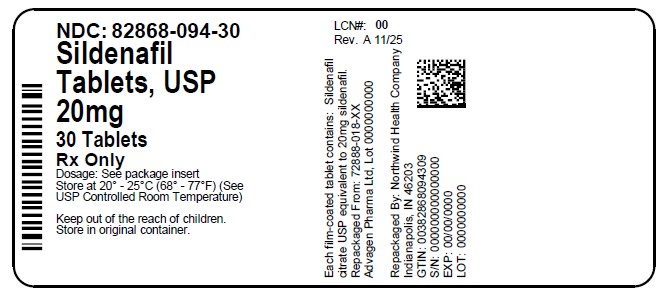
(sildenafil · DailyMed)
SEEDIOS 100
SILDENAFIL CITRATE USP
What it does
Sildenafil is a medicine used to treat erectile dysfunction (impotence) and pulmonary arterial hypertension (high blood pressure in the lungs).
Commonly used for: erectile dysfunction, pulmonary arterial hypertension
Read more in plain English ↓Plain-language summary for general understanding - not medical advice. Always follow your pharmacist/doctor.
Ask about this medicine
Answers come only from this medicine's registration record, BNF monograph and interaction data - not medical advice.
Hard to find? We help patients in Kenya source rare medicines. We don't sell or dispense medicines - licensed pharmacies do.
Source this medicineRegistration & product details
Source: Pharmacy and Poisons Board · fetched 2026-01-28 19:45:55 · updated 2026-08-03 02:54:58
Drug Interactions
8Pharmacodynamic Warnings
Sildenafil appears in TABLE 8: Drugs that cause hypotension
Sildenafil appears in TABLE 9: Drugs that prolong the QT interval
Moderate (5)
Sildenafil - increases exposure
Antifungals, azoles (fluconazole, isavuconazole, posaconazole) are predicted to increase the exposure to sildenafil. Monitor or adjust sildenafil dose with moderate CYP3A4 inhibitors, p. 891. Also see
Sildenafil - increases exposure
Crizotinib is predicted to increase the exposure to sildenafil. Monitor or adjust sildenafil dose with moderate CYP3A4 inhibitors, p. 891. Also see TABLE 9 p. 1519
Sildenafil - increases exposure
Imatinib is predicted to increase the exposure to sildenafil. Monitor or adjust sildenafil dose with moderate CYP3A4 inhibitors, p. 891.
Sildenafil - increases exposure
Letermovir is predicted to increase the exposure to sildenafil. Monitor or adjust sildenafil dose with moderate CYP3A4 inhibitors, p. 891.
Sildenafil - increases exposure
Nilotinib is predicted to increase the exposure to sildenafil. Monitor or adjust sildenafil dose with moderate CYP3A4 inhibitors, p. 891. Also see TABLE 9 p. 1519.
Unknown (3)
Sildenafil - increases exposure
Cobicistat is predicted to increase the exposure to sildenafil. Avoid potent CYP3A4 inhibitors or adjust sildenafil dose, p. 891.
Sildenafil - increases exposure
Idelalisib is predicted to increase the exposure to sildenafil. Avoid potent CYP3A4 inhibitors or adjust sildenafil dose, p. 891.
Sildenafil - increases exposure
Ribociclibispredictedtoincreasetheexposuretosildenafil. Avoid.oTheoretical →AlsoseeTABLE9p.1519
Data from BNF 85 (British National Formulary). This is not a substitute for professional medical advice. Matched via: exact
About this medicine
Sildenafil is a medicine used to treat erectile dysfunction (impotence) and pulmonary arterial hypertension (high blood pressure in the lungs).
What it treats
- erectile dysfunction
- pulmonary arterial hypertension
How it works
Sildenafil helps improve blood flow to specific areas of the body, making it easier to achieve and maintain an erection, or reducing high blood pressure in the lungs.
Who it's for
This medication is for adult men with erectile dysfunction and for adults with pulmonary arterial hypertension.
Cautions
- • Avoid using with other medicines that lower blood pressure.
- • Use caution if taking drugs that can affect heart rhythm.
AI-assisted summary grounded in BNF data - general information only, not medical advice. Always confirm with your pharmacist or doctor.
Clinical monograph: Sildenafil
BNF-referencedSildenafil is a phosphodiesterase type 5 (PDE5) inhibitor used primarily for the treatment of erectile dysfunction and pulmonary arterial hypertension. It enhances erectile function by increasing blood flow to the penis upon sexual stimulation. In pulmonary hypertension, it relaxes pulmonary and systemic arterial vascular smooth muscle. Sildenafil has a favorable pharmacological profile, making it a widely utilized therapy in these conditions.
Indications
- Erectile dysfunction
- Pulmonary arterial hypertension
Dosage
Children: Not licensed for use in children; therefore, specific dosing is not provided.
Adults: For erectile dysfunction, the initial dose is 50 mg taken approximately 1 hour before sexual activity, with adjustments possible based on efficacy and tolerability (maximum of 100 mg). For pulmonary arterial hypertension, the recommended dose is 20 mg three times a day.
Mechanism of action
Sildenafil works by selectively inhibiting phosphodiesterase type 5 (PDE5), an enzyme that degrades cyclic guanosine monophosphate (cGMP) in the corpus cavernosum of the penis. During sexual stimulation, nitric oxide (NO) is released, which activates guanylate cyclase, leading to increased cGMP levels. This results in smooth muscle relaxation and increased blood flow, facilitating an erection. In pulmonary vasculature, sildenafil enhances cGMP levels, promoting vasodilation.
Pharmacodynamics
Sildenafil exhibits high selectivity for PDE5, being approximately 10-times more potent than for PDE6, which is involved in retinal function, and significantly more selective over other phosphodiesterases. This selectivity minimizes adverse effects related to vision. Clinical studies demonstrate that sildenafil improves erectile function significantly in response to sexual stimulation, with effects generally observed within 60 minutes post-administration, lasting for several hours.
Pharmacokinetics
Sildenafil is rapidly absorbed, with peak plasma concentrations occurring within 30 to 120 minutes after oral administration. Its bioavailability is approximately 40%, and it is extensively metabolized in the liver, primarily by CYP3A4 and CYP2C9 enzymes. The elimination half-life is about 4 hours, and it is excreted mainly in the urine as metabolites. Renal impairment may affect its clearance, necessitating dose adjustments in patients with significant renal dysfunction.
Contra-indications
- Hereditary degenerative retinal disorders
- History of non-arteritic anterior ischaemic optic neuropathy
- Recent history of myocardial infarction
- Recent history of stroke
- Systolic blood pressure below 90 mmHg
- Active peptic ulceration
- Anatomical deformation of the penis
- Severe cardiovascular disease
- Severe hepatic impairment
- Predisposition to priapism
Adverse effects
- Headaches
- Nasal complaints
- Asthenia
- Dizziness
- Drowsiness
- Dyspnoea
- Gastrointestinal discomfort
- Muscle complaints
- Nausea
- Palpitations
- Vision blurred
- Vomiting
- Angina pectoris
- Chest pain
- Diarrhoea
- Dry mouth
- Emotional disorder
- Genital pruritus
- Gout
- Haematuria
- Hypertension
- Increased risk of infection
- Influenza-like illness
- Insomnia
- Peripheral oedema
- Rash
- Seasonal allergy
- Tachycardia
- Urinary frequency
- Increased weight
Interactions
- Moderate interactions with antifungals (azoles) that increase exposure
- Moderate interactions with crizotinib, imatinib, letermovir, nilotinib that increase exposure
- Unknown interactions with cobicistat, idelalisib, ribociclib that may increase exposure
- Caution advised with concurrent use of moderate or potent inhibitors of CYP3A4
Precautions
- Careful monitoring in elderly patients and those with severe heart failure
- Caution in patients with anatomical deformation of the penis
- Consideration for active peptic ulceration and bleeding disorders
- Use of effective contraception required during administration
- Pregnancy tests advised for women of childbearing potential
- Caution in patients with cardiovascular disease
Pregnancy
Avoid; teratogenic in animal studies.
Breast-feeding
Manufacturer advises
AI-synthesized from BNF references - general information only, not a substitute for professional medical advice or the current BNF. Verify doses with a pharmacist.
Molecular reference: Sildenafil
PubChem CID 135398744Molecular formula: C22H30N6O4S
Mechanism of action
Sildenafil is an oral therapy for erectile dysfunction. In the natural setting, i.e. with sexual stimulation, it restores impaired erectile function by increasing blood flow to the penis. The physiological mechanism responsible for the erection of the penis involves the release of nitric oxide (NO) in the corpus cavernosum during sexual stimulation. Nitric oxide then activates the enzyme guanylate cyclase, which results in increased levels of cyclic guanosine monophosphate (cGMP), producing smooth muscle relaxation in the corpus cavernosum and allowing inflow of blood. Sildenafil is a potent and selective inhibitor of cGMP specific phosphodiesterase type 5 (PDE5) in the corpus cavernosum, where PDE5 is responsible for degradation of cGMP. Sildenafil has a peripheral site of action on erections. Sildenafil has no direct relaxant effect on isolated human corpus cavernosum but potently enhances the relaxant effect of NO on this tissue. When the NO/cGMP pathway is activated, as occurs with sexual stimulation, inhibition of PDE5 by sildenafil results in increased corpus cavernosum levels of cGMP. Therefore sexual stimulation is required in order for sildenafil to produce its intended beneficial pharmacological effects. Moreover, apart from the presence of PDE5 in the corpus cavernosum of the penis, PDE5 is also present in the pulmonary vasculature. Sildenafil, therefore, increases cGMP within pulmonary vascular smooth muscle cells resulting in relaxation. In patients with pulmonary arterial hypertension, this can lead to vasodilation of the pulmonary vascular bed and, to a lesser degree, vasodilatation in the systemic circulation. Sildenafil is a selective inhibitor of phosphodiesterase type 5 (PDE5), an enzyme responsible for degrading cyclic guanosine monophosphate (cGMP) in the corpus cavernosum. By diminishing the effect of PDE5, sildenafil facilitates the effect of nitric oxide during sexual stimulation; cGMP levels increase, smooth muscle relaxes, and blood flows into the corpus cavernosum, producing an erection. Without sexual stimulation, sildenafil has no effect on erections. It has been extensively demonstrated that hydrogen sulfide (H2S) is implicated is several physiological and pathological conditions. In particular, it has been shown that H2S causes relaxation in human penile tissues and inhibits phosphodiesterase (PDE) activity in vessels. Beside sildenafil increases H2S generation in human bladder and tadalafil in myocardial tissues. Therefore, /the/ aim /of the study/ was to demonstrate the link between H2S and PDE-5 in mice corpus cavernosum tissues. ... The effects of sildenafil (10 uM, 0.5 hr); PDE-5 inhibitor, on H2S production as well as the H2S -induced relaxations in mice penile tissues /was investigated/. Penile tissues from CD1 mouse corpus cavernosum (MCC) were used. Functional studies were performed by myograph in Krebs solution. Western blot analysis was performed in order to evaluate CBS and CSE expression and methylene blue assay for measurement of H2S levels. In order to investigate functional significance of H2S on sildenafil-induced augmentation of endothelial relaxation in MCC the sildenafil effect was evaluated on acetylcholine (ACh), L-cysteine and NaHS-induced relaxations in presence or not of CSE enzyme inhibitor PPG (10 uM, 0.5 hr). In order to achieve this issue the H2S production in MCC tissues was also evaluated by incubating the penile tissue with sildenafil in presence or absence of the CSE inhibitor PPG (10 uM, 0.5 hr) Both CBS and CSE were expressed in MCC and the enzymes efficiently converted L-cysteine into H2S. Further /it was shown/ that sildenafil caused a significant increase in H2S production and this augmentation was reversed by CSE inhibition. /It was/ found that sildenafil induced an increase in both ACh and L-cysteine-induced relaxations and these augmentations reversed by CSE inhibitor PPG in MCC pre-contracted with phenylephrine (3.10-5M). Beside sildenafil did not sign
Pharmacodynamics
In vitro studies have shown that sildenafil is selective for phosphodiesterase-5 (PDE5). Its effect is more potent on PDE5 than on other known phosphodiesterases. In particular, there is a 10-times selectivity over PDE6 which is involved in the phototransduction pathway in the retina. There is an 80-times selectivity over PDE1, and over 700-times over PDE 2, 3, 4, 7, 8, 9, 10 and 11. And finally, sildenafil has greater than 4,000-times selectivity for PDE5 over PDE3, the cAMP-specific phosphodiesterase isoform involved in the control of cardiac contractility. In eight double-blind, placebo-controlled crossover studies of patients with either organic or psychogenic erectile dysfunction, sexual stimulation resulted in improved erections, as assessed by an objective measurement of hardness and duration of erections (via the use of RigiScan®), after sildenafil administration compared with placebo. Most studies assessed the efficacy of sildenafil approximately 60 minutes post-dose. The erectile response, as assessed by RigiScan®, generally increased with increasing sildenafil dose and plasma concentration. The time course of effect was examined in one study, showing an effect for up to 4 hours but the response was diminished compared to 2 hours. Sildenafil causes mild and transient decreases in systemic blood pressure which, in the majority of cases, do not translate into clinical effects. After chronic dosing of 80 mg, three times a day to patients with systemic hypertension the mean change from baseline in systolic and diastolic blood pressure was a decrease of 9.4 mmHg and 9.1 mmHg respectively. After chronic dosing of 80 mg, three times a day to patients with pulmonary arterial hypertension lesser effects in blood pressure reduction were observed (a reduction in both systolic and diastolic pressure of 2 mmHg) . At the recommended dose of 20 mg three times a day no reductions in systolic or diastolic pressure were seen. Single oral doses of sildenafil up to 100 mg in healthy volunteers produced no clinically relevant effects on ECG. After chronic dosing of 80 mg three times a day to patients with pulmonary arterial hypertension no clinically relevant effects on the ECG were reported either. In a study of the hemodynamic effects of a single oral 100 mg dose of sildenafil in 14 patients with severe coronary artery disease (CAD) (> 70 % stenosis of at least one coronary artery), the mean resting systolic and diastolic blood pressures decreased by 7 % and 6 % respectively compared to baseline. Mean pulmonary systolic blood pressure decreased by 9%. Sildenafil showed no effect on cardiac output and did not impair blood flow through the stenosed coronary arteries. Mild and transient differences in color discrimination (blue/green) were detected in some subjects using the Farnsworth-Munsell 100 hue test at 1 hour following a 100 mg dose, with no effects evident after 2 hours post-dose. The postulated mechanism for this change in color discrimination is related to inhibition of PDE6, which is involved in the phototransduction cascade of the retina. Sildenafil has no effect on visual acuity or contrast sensitivity. In a small size placebo-controlled study of patients with documented early age-related macular degeneration (n = 9), sildenafil (single dose, 100 mg) demonstrated no significant changes in visual tests conducted (which included visual acuity, Amsler grid, color discrimination simulated traffic light, and the Humphrey perimeter and photostress test).
Biological pathways
Source: PubChem (NCBI) · pathways from PathBank, Reactome, WikiPathways & PharmGKB.
This drug in other countries
The same active ingredient registered across other registries we cover - including different brands.
- BASEBOOM ORAL JELLY · Base Pharmacy
- BLUMOON 100 TABLETS · Ronak Exim
- BLUMOON 50 TABLETS · Ronak Exim
- BORADEN TABLETS ( Sildenafil Citrate 100mg) · Addii Biotech
- COMIT-50 TABLETS · Bliss Gvs Pharma
- CONTAGRA 100 FILM COATED TABLETS (Each film-coated tablet contains Sildenafil Citrate 100mg) · Impulse Pharma