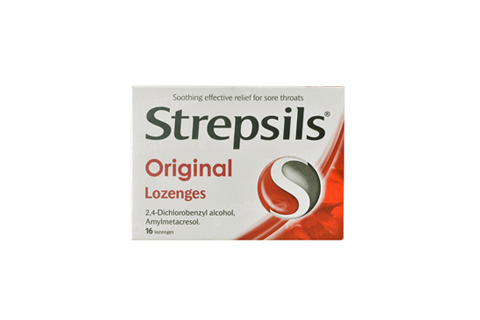
STREPSILS ORIGINAL
AMYLMETACRESOL & DICHLOROBENZL
What it does
Amylmetacresol is a medication primarily used to soothe sore throats.
Commonly used for: sore throat, pharyngitis
Read more in plain English ↓Plain-language summary for general understanding - not medical advice. Always follow your pharmacist/doctor.
Ask about this medicine
Answers come only from this medicine's registration record, BNF monograph and interaction data - not medical advice.
Hard to find? We help patients in Kenya source rare medicines. We don't sell or dispense medicines - licensed pharmacies do.
Source this medicineRegistration & product details
Source: Pharmacy and Poisons Board · fetched 2026-01-28 21:47:57 · updated 2026-03-23 04:33:02
About amylmetacresol
Amylmetacresol is a medication primarily used to soothe sore throats.
What it treats
- sore throat
- pharyngitis
How it works
It works by numbing the throat area to relieve pain and discomfort.
Who it's for
This medication is suitable for adults and children who are experiencing a sore throat.
AI-assisted summary grounded in BNF data - general information only, not medical advice. Always confirm with your pharmacist or doctor.
About dichlorobenzl
Dichlorobenzl is a chemical compound used in various applications but its specific medicinal uses are not provided.
How it works
The exact mechanism of how dichlorobenzl works is not specified, but it generally interacts with biological systems in a way that can influence certain conditions.
Who it's for
Dichlorobenzl is typically used in industrial or chemical applications and may not be intended for direct medicinal use in patients.
AI-assisted summary grounded in BNF data - general information only, not medical advice. Always confirm with your pharmacist or doctor.
Clinical monograph: amylmetacresol
BNF-referencedAmylmetacresol is an antiseptic agent with antibacterial and antiviral properties, commonly used in throat lozenges to alleviate sore throat symptoms. It is known for its virucidal action, which helps reduce the infectivity of viruses in the throat and cough droplets, thereby minimizing the risk of transmission.
Indications
- Sore throat
- Throat irritation
- Symptomatic relief of throat infections
Dosage
Children: Refer to the BNF for Children for specific paediatric dosing guidance.
Adults: Refer to the BNF for specific dosing recommendations.
Mechanism of action
The mechanism of virucidal action is not fully elucidated; however, it is suggested that denaturation of external protein spikes, a pH-induced rearrangement of the tertiary structure of attachment proteins, or a selective effect on viral lipid membranes and protein-lipid interaction is responsible for this action. Amylmetacresol also blocks voltage-gated Na channels in a local anesthetic-like manner.
Pharmacodynamics
Amylmetacresol throat lozenges markedly reduce the infectivity of certain infectious viruses in the throat and in cough droplets, thus reducing opportunities for person-to-person transmission. Additionally, it relieves symptoms of sore throat and irritation of the throat by inhibiting the inflammatory and pain mediators involved in the inflammation of the mouth and throat mucous membranes.
Adverse effects
- Allergic reactions
- Local irritation
- Nausea
- Vomiting
Precautions
- Use with caution in individuals with known allergies to local anesthetics.
- Not recommended for prolonged use.
Pregnancy
Safety in pregnancy has not been established, consult healthcare provider before use.
Breast-feeding
Consult healthcare provider before use during breastfeeding.
Storage
Store in a cool, dry place, away from direct sunlight.
Formulations
- Throat lozenges containing amylmetacresol
AI-synthesized from BNF references - general information only, not a substitute for professional medical advice or the current BNF. Verify doses with a pharmacist.
Clinical monograph: dichlorobenzl
Dichlorobenzene is a chlorinated aromatic hydrocarbon that exists in three isomeric forms: ortho-, meta-, and para-dichlorobenzene. It is primarily used as an industrial solvent, in the production of pesticides, and as a fumigant. Exposure to dichlorobenzene can occur through inhalation, ingestion, or dermal contact, and it may have toxic effects on the liver and kidneys.
Indications
- Industrial solvent
- Pesticide production
- Fumigant
Dosage
Children: Refer to specific guidelines and safety data sheets for industrial and clinical applications.
Adults: Refer to specific guidelines and safety data sheets for industrial and clinical applications.
Mechanism of action
Dichlorobenzene acts as a solvent and has potential effects on various biological pathways by interacting with cell membranes and proteins. Its toxic effects are thought to be related to its capacity to form reactive metabolites that can lead to oxidative stress and damage cellular components.
Pharmacodynamics
Dichlorobenzene exhibits dose-dependent toxicity. Its effects include irritation of the respiratory tract, skin, and eyes, as well as potential central nervous system depression at high exposures. Long-term exposure can lead to more severe health effects, including liver and kidney damage.
Pharmacokinetics
Dichlorobenzene is rapidly absorbed via inhalation and gastrointestinal routes. It is distributed widely in body tissues, with a higher affinity for adipose tissue. Metabolism primarily occurs in the liver through cytochrome P450 enzymes, leading to the formation of various metabolites. Excretion is mainly via urine, with a half-life that varies based on the route of exposure and individual metabolism.
Pregnancy
Safety during pregnancy has not been established. Use only if the potential benefit justifies the potential risk to the fetus.
Breast-feeding
It is not known whether dichlorobenzl is excreted in human milk. Caution should be exercised when administering to nursing mothers.
Storage
Store in a cool, dry place, away from direct sunlight and moisture. Keep out of reach of children.
AI-synthesized from BNF references - general information only, not a substitute for professional medical advice or the current BNF. Verify doses with a pharmacist.
Molecular reference: amylmetacresol
PubChem CID 14759Molecular formula: C12H18O
Mechanism of action
The mechanism of virucidal action is not fully elucidated, however it is suggested that denaturation of external protein spikes, a pH-induced rearrangement of the tertiary structure of attachment proteins, or a selective effect on viral lipid membranes/protein–lipid interaction is responsible for this action. Amylmetacresol is an antibacterial and antiviral agent, and blocks voltage-gated Na channels in a local anesthetic-like manner.
Pharmacodynamics
The mixture of amylmetacresol throat lozenge medications markedly reduces the infectivity of certain infectious viruses in the throat and in cough droplets, thus reducing opportunities for person-to-person transmission. In addition, it relieves symptoms of sore throat/irritation of the throat,. Amylmetacresol is thought to inhibit the inflammatory and pain mediators that are involved in the inflammation of the mouth and throat mucous membranes, as well as the sore throat.
Source: PubChem (NCBI) · pathways from PathBank, Reactome, WikiPathways & PharmGKB.
This drug in other countries
The same active ingredient registered across other registries we cover - including different brands.
- GORPILS HONEY MENTHOL EUCALYPTUS THROAT LOZENGES · Gepach International
- GORPILS LEMON THROAT LOZNEGS ( Amylmetacresol BP and 2,4 Dichlorobenzyl alcohol 0.6 mg/ 1.2mg) · Gepach International
- GORPILS ORANGE THROAT LOZENGES · Gepach International
- SSS THROAT LOZENGES HONEY AND LEMON LOZENGES · Lavina Pharmaceuticals
- SSS THROAT LOZENGES-ORANGE WITH VITAMIN C · Lavina Pharmaceuticals
- SSS THROAT LOZENGES-STRAWBERRY · Lavina Pharmaceuticals