(nystatin · DailyMed)
TERGYNAN
Metronidazole, Neomycin sulfate and Nystatin
What it does
Metronidazole is an antibiotic used to treat infections caused by bacteria and certain parasites.
Commonly used for: bacterial infections, parasitic infections, certain gastrointestinal infections
Read more in plain English ↓Plain-language summary for general understanding - not medical advice. Always follow your pharmacist/doctor.
Ask about this medicine
Answers come only from this medicine's registration record, BNF monograph and interaction data - not medical advice.
Hard to find? We help patients in Kenya source rare medicines. We don't sell or dispense medicines - licensed pharmacies do.
Source this medicineRegistration & product details
Source: Pharmacy and Poisons Board · fetched 2026-03-01 02:02:39 · updated 2026-09-06 02:02:51
Drug Interactions
14Pharmacodynamic Warnings
Neomycin appears in TABLE 2: Drugs that cause nephrotoxicity
Metronidazole appears in TABLE 12: Drugs that cause peripheral neuropathy
Neomycin appears in TABLE 19: Drugs that cause ototoxicity
Neomycin appears in TABLE 20: Drugs with neuromuscular blocking effects
Severe (2)
Agalsidasealfa - decreases effects
Aminoglycosidesarepredictedtodecreasetheeffectsof agalsidasealfa.Avoid.oTheoretical
Agalsidasebeta - decreases effects
Aminoglycosidesarepredictedtodecreasetheeffectsof agalsidasebeta.Avoid.oTheoretical
Moderate (2)
Coumarins - increases anticoagulant effect
Metronidazole increases the anticoagulant effect of coumarins. Monitor INR and adjust dose.
Lithium - increases concentration
Metronidazole is predicted to increase the concentration of lithium. Avoid or adjust dose.
Unknown (10)
Alkylating Agents - increases risk of toxicity
Metronidazole increases the risk of toxicity when given with alkylating agents (busulfan).
Aminoglycosides - decreases exposure
Miconazole potentially decreases the exposure to aminoglycosides (tobramycin).
Busulfan - increases risk of toxicity
Metronidazole increases the risk of toxicity when given with busulfan.
Capecitabine - increases risk of capecitabine toxicity
Metronidazole is predicted to increase the risk of capecitabine toxicity when given with capecitabine. Theoretical Caplacizumab
Digoxin - decreases absorption
Neomycin decreases the absorption of digoxin.
Fluorouracil - increases risk of toxicity
Metronidazole increases the risk of toxicity when given with fluorouracil. Fluoxetine → see SSRIs Flupentixol → see TABLE 8 p. 1518 (hypotension), TABLE 11 p. 1519 (CNS depressant effects)
Neostigmine - decreases effects
Aminoglycosidesarepredictedtodecreasetheeffectsof neostigmine.oTheoretical
Neratinib - decreases concentration
Aminoglycosides are predicted to decrease the effects of neostigmine. Theoretical Nepafenac → see NSAIDs Neratinib → see TABLE 1 p. 1517 (hepatotoxicity) FOOD AND LIFESTYLE Avoid pomegranate, and pome
Pyridostigmine - decreases effects
Aminoglycosidesarepredictedtodecreasetheeffectsof pyridostigmine.oTheoretical
Sorafenib - decreases exposure
Neomycin moderately decreases the exposure to sorafenib. Neostigmine → see TABLE 6 p. 1518 (bradycardia)
Data from BNF 85 (British National Formulary). This is not a substitute for professional medical advice. Matched via: class
About metronidazole
Metronidazole is an antibiotic used to treat infections caused by bacteria and certain parasites.
What it treats
- bacterial infections
- parasitic infections
- certain gastrointestinal infections
How it works
It works by stopping the growth of bacteria and parasites, helping the body to fight off the infection.
Who it's for
It is prescribed for people with specific infections as determined by a healthcare professional.
Cautions
- • Be cautious if taking other medications that can cause nerve damage.
AI-assisted summary grounded in BNF data - general information only, not medical advice. Always confirm with your pharmacist or doctor.
About neomycin
Neomycin is an antibiotic used to treat infections caused by certain bacteria.
What it treats
- bacterial infections
- skin infections
- ear infections
How it works
Neomycin works by stopping the growth of bacteria.
Who it's for
Neomycin is for people who have bacterial infections that are sensitive to this antibiotic.
Drug class
Aminoglycosides
Cautions
- • Be careful if you are taking other medications that can harm the kidneys.
- • Avoid use with drugs that may cause hearing problems.
- • Use caution with medications that can affect muscle function.
AI-assisted summary grounded in BNF data - general information only, not medical advice. Always confirm with your pharmacist or doctor.
About nystatin
Nystatin is an antifungal medicine used to treat infections caused by fungi.
What it treats
- fungal infections
- thrush (oral candidiasis)
- fungal skin infections
How it works
Nystatin works by stopping the growth of fungus, helping to clear up the infection.
Who it's for
Nystatin is suitable for adults and children who have fungal infections.
AI-assisted summary grounded in BNF data - general information only, not medical advice. Always confirm with your pharmacist or doctor.
Clinical monograph: Nystatin
BNF-referencedNystatin is a polyene antifungal agent primarily used to treat fungal infections, particularly those caused by Candida species. It is effective against oral and perioral candidiasis and is administered orally. Nystatin works by binding to sterols in the fungal cell membrane, leading to increased permeability and cell death. It is not active against bacteria or viruses and is available in forms such as oral suspension and tablets.
Indications
- Oral candidiasis
- Perioral fungal infections
- Oropharyngeal candidiasis
Dosage
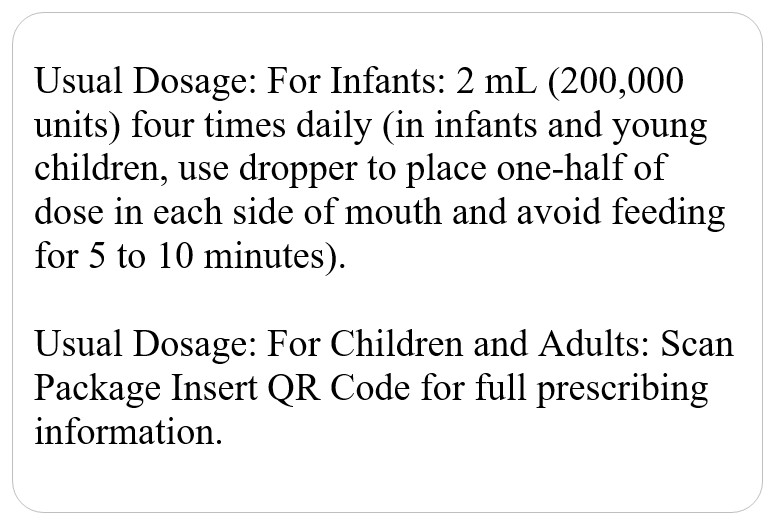
Children: 100,000 units by mouth 4 times a day, usually for 7 days, continued for 48 hours after lesions have resolved.
Adults: 100,000 units by mouth 4 times a day, usually for 7 days, continued for 48 hours after lesions have resolved.
Mechanism of action
Nystatin is a channel-forming ionophore that binds to ergosterol, a sterol found in fungal cell membranes, creating membrane-spanning pores. This disrupts the membrane's integrity, resulting in the leakage of intracellular components and loss of electrochemical gradients essential for cell function, leading to cell death.
Pharmacodynamics
Nystatin exhibits both fungistatic and fungicidal activity against a wide range of yeasts and yeast-like fungi, particularly _Candida albicans_. Resistance is minimal with _Candida albicans_ but may develop in other _Candida_ species. It is ineffective against bacteria, protozoa, or viruses and has significant systemic toxicity, limiting its use to topical and oral applications.
Pharmacokinetics
Nystatin is poorly absorbed from the gastrointestinal tract, which allows it to exert its effects locally within the gut and oral cavity. Because of its limited systemic absorption, it is primarily used for local treatment of fungal infections. The drug is not metabolized systemically and is excreted unchanged in the feces.
Contra-indications
- Infants with impaired swallowing
- Acute porphyrias
Adverse effects
- Abdominal distress
- Angioedema
- Diarrhoea
- Face oedema
- Nausea
- Sensitisation
- Skin reactions
- Stevens-Johnson syndrome
- Vomiting
Precautions
- Caution in patients with acute porphyrias
- Use with care in patients with a history of hypersensitivity to nystatin or other polyene antifungals
Pregnancy
Nystatin is generally considered safe in pregnancy; however, it should be used only if clearly needed and prescribed by a healthcare provider.
Breast-feeding
Nystatin is excreted in breast milk but is considered safe for use during breastfeeding as it is poorly absorbed systemically.
Storage
Store at room temperature, away from direct sunlight and moisture. Keep out of reach of children.
Formulations
- Nystatin oral suspension 100,000 units/ml
- Nystatin tablets
- Nystatin capsules
AI-synthesized from BNF references - general information only, not a substitute for professional medical advice or the current BNF. Verify doses with a pharmacist.
Clinical monograph: Metronidazole
BNF-referencedMetronidazole is an antimicrobial agent belonging to the nitroimidazole class, with potent activity against anaerobic bacteria and certain protozoa. It is utilized in the treatment of various infections, including those caused by anaerobes and protozoal infections such as amebiasis, trichomoniasis, and giardiasis.
Indications
- Amebiasis
- Trichomoniasis
- Giardiasis
- Anaerobic bacterial infections
- Bacterial vaginosis
- Clostridium difficile infection
Dosage
Children: For children aged 1 month to 11 years, 7.5 mg/kg every 8 hours for 7 days (maximum dose 400 mg). For children aged 12-17 years, 400 mg every 8 hours for 7 days.
Adults: 1 g three times a day for 3 days, then 1 g twice daily for a total treatment duration of 7 days. In cases of Clostridium difficile infection, treatment may extend to 10 days.
Mechanism of action
The exact mechanism of action of metronidazole is not fully established. However, it is believed that anaerobic bacteria and protozoa reduce metronidazole to reactive intermediates that bind to DNA and inhibit nucleic acid synthesis, leading to cell death. Metronidazole is selectively activated in anaerobic conditions, making it effective against obligate anaerobes.
Pharmacodynamics
Metronidazole exhibits both antibacterial and antiprotozoal activities, effectively treating infections caused by anaerobic bacteria. It demonstrates significant antibacterial activity against most obligate anaerobes but is less effective against facultative anaerobes and obligate aerobes. The drug's cytotoxic effects result from DNA strand damage in susceptible microorganisms, which can lead to cell death. Caution is advised due to the potential for peripheral neuropathy and convulsions, especially at higher doses.
Pharmacokinetics
Metronidazole is well absorbed following oral administration and is distributed widely throughout the body, including the central nervous system. It undergoes hepatic metabolism, primarily through oxidation and conjugation, and is excreted mainly in urine. The pharmacokinetic profile may vary in patients with hepatic impairment, and dosage adjustments may be necessary.
Adverse effects
- Peripheral neuropathy
- Convulsions
- Nausea
- Vomiting
- Diarrhea
- Headache
- Dizziness
- Abdominal cramps
- Metallic taste
- Skin rash
Interactions
- Metronidazole + Coumarins: Increases anticoagulant effect
- Metronidazole + Lithium: Increases concentration
- Metronidazole + Busulfan: Increases risk of toxicity (unknown)
- Metronidazole + Capecitabine: Increases risk of capecitabine toxicity (unknown)
- Metronidazole + Fluorouracil: Increases risk of toxicity (unknown)
- Metronidazole + Alkylating agents: Increases risk of toxicity (unknown)
Precautions
- Caution in patients with history of neurological disorders
- Monitor for signs of peripheral neuropathy
- Use with caution in patients with hepatic impairment
- Avoid excessive alcohol consumption during treatment
Pregnancy
No information available; manufacturer advises avoidance unless essential.
Breast-feeding
Amount in milk probably too small to be harmful.
Storage
Store in a cool, dry place, away from light. Keep out of reach of children.
Formulations
- Metronidazole 0.75% gel
- Metronidazole 0.75% cream
- Metronidazole powder and solvent for nebuliser solution
- Metronidazole injection
- Metronidazole oral tablets (various strengths)
AI-synthesized from BNF references - general information only, not a substitute for professional medical advice or the current BNF. Verify doses with a pharmacist.
Clinical monograph: Neomycinsulfate
BNF-referencedNeomycin sulfate is an aminoglycoside antibiotic used primarily for its effectiveness against a wide range of gram-negative bacterial infections. It is often employed in topical formulations but can also be used systemically for bowel sterilization before surgical procedures and in the treatment of hepatic coma. The drug acts by inhibiting bacterial protein synthesis, thus halting bacterial growth and replication.
Indications
- Bowel sterilization before surgery
- Hepatic coma
- Topical infections caused by susceptible organisms
Dosage
Children: Refer to the BNF for Children for appropriate dosing information.
Adults: By mouth: 1 g every 1 hour for 4 hours, then 1 g every 4 hours for 2–3 days. For hepatic coma: Up to 4 g daily in divided doses usually for 5–7 days.
Mechanism of action
Neomycin sulfate binds to the 30S ribosomal subunit of bacteria, leading to the misreading of mRNA and the inhibition of protein synthesis. This disrupts the production of essential proteins needed for bacterial growth and function, ultimately resulting in cell death.
Pharmacodynamics
Neomycin demonstrates bactericidal activity against susceptible bacteria. Its efficacy is enhanced in alkaline environments, which is why it is often used in combination with other agents for surgical prophylaxis. The drug is primarily effective against a range of gram-negative organisms, including Escherichia coli and Klebsiella species, but also has some activity against gram-positive organisms.
Pharmacokinetics
Neomycin is poorly absorbed from the gastrointestinal tract, and its systemic absorption is minimal when administered orally. In cases of systemic use, such as intramuscular or intravenous administration, neomycin is distributed widely in the body but is primarily excreted unchanged in the urine. The elimination half-life varies but is generally around 2 to 3 hours in individuals with normal renal function. Monitoring of serum concentrations is essential to prevent toxicity, especially in patients with renal impairment.
Adverse effects
- neurotoxicity
- ototoxicity
- nephrotoxicity
- allergic reactions
- skin rashes
- hearing loss
Interactions
- other nephrotoxic drugs
- loop diuretics
- neuromuscular blocking agents
Precautions
- monitor renal function
- use cautiously in patients with hearing impairment
- avoid concurrent use with other ototoxic medications
- ensure adequate hydration
Pregnancy
Safety in pregnancy has not been established. Use only if the potential benefit justifies the potential risk to the fetus.
Breast-feeding
Use caution; neomycin can be absorbed systemically and may affect the nursing infant.
Storage
Store at room temperature, away from light and moisture. Keep out of reach of children.
Formulations
- oral tablets
- topical ointments
- injectable solutions
AI-synthesized from BNF references - general information only, not a substitute for professional medical advice or the current BNF. Verify doses with a pharmacist.
Clinical monograph: neomycin
BNF-referencedNeomycin is an aminoglycoside antibiotic that is primarily used to treat infections caused by aerobic bacteria. It acts by binding to the 30S ribosomal subunit of bacteria, leading to the misreading of mRNA and disrupting protein synthesis. Neomycin is effective against a range of gram-positive and gram-negative bacteria, including strains of Escherichia coli and Klebsiella species. It is also utilized in specific clinical situations such as hepatic coma to reduce ammonia-producing bacteria in the colon, thereby improving neurologic symptoms.
Indications
- Bacterial infections caused by aerobic organisms
- Topical treatment of skin infections
Mechanism of action
Neomycin binds to specific proteins and 16S rRNA within the 30S ribosomal subunit of susceptible bacteria. This binding interferes with the decoding site, causing misreading of mRNA and leading to the incorporation of incorrect amino acids into polypeptides. As a result, nonfunctional or toxic peptides are produced, and polysomes are disrupted into nonfunctional monosomes. Neomycin's bactericidal action is characterized by its ability to irreversibly bind to the 30S ribosomal subunit, thereby inhibiting bacterial protein synthesis.
Pharmacodynamics
Neomycin is primarily active against aerobic bacteria and is not effective against fungi, viruses, or most anaerobic bacteria. It mediates its bactericidal effects by inhibiting protein synthesis, which suppresses bacterial growth and survival. Following oral administration, neomycin exhibits a duration of bactericidal activity lasting between 48 to 72 hours. It is particularly useful in treating infections caused by strains of E. coli and Klebsiella, and it also acts to reduce colonic bacterial populations in patients with hepatic coma.
Pharmacokinetics
Neomycin is poorly absorbed from the gastrointestinal tract when taken orally, which limits its systemic availability and enhances its utility in targeting colonic bacteria. It is generally not used parenterally due to its potential for nephrotoxicity and ototoxicity. The duration of action following oral administration can last from 48 to 72 hours, and it is primarily excreted unchanged in the urine. Caution should be exercised when using neomycin in patients with renal impairment, as the risk of toxicity increases.
Adverse effects
- Nephrotoxicity
- Ototoxicity
- Allergic reactions
- Diarrhea
- Nausea
- Vomiting
Interactions
- neomycin+digoxin: Unknown (decreases absorption)
- neomycin+sorafenib: Unknown (decreases exposure)
Precautions
- Use with caution in patients with renal impairment
- Monitor renal function during therapy
- Evaluate hearing function in long-term use
Pregnancy
Neomycin is classified as category D; it should be used only if the potential benefit justifies the potential risk to the fetus.
Breast-feeding
Neomycin is excreted in breast milk; caution should be exercised when administered to nursing mothers.
Storage
Store in a cool, dry place away from light. Keep out of reach of children.
Formulations
- Topical ointment
- Cream
- Eye drops
- Oral tablets
AI-synthesized from BNF references - general information only, not a substitute for professional medical advice or the current BNF. Verify doses with a pharmacist.
Molecular reference: Metronidazole
PubChem CID 4173Molecular formula: C6H9N3O3
Mechanism of action
The exact mechanism of action of metronidazole has not been fully established, however, it is possible that an intermediate in the reduction of metronidazole which is only made by anaerobic bacteria and protozoa, binds deoxyribonucleic acid and electron-transport proteins of organisms, blocking nucleic acid synthesis. After administration, metronidazole enters cells by passive diffusion. Following this, ferredoxin or flavodoxin reduce its nitro group to nitro radicals. The redox potential of the electron transport portions of anaerobic or microaerophilic microorganisms renders metronidazole selective to these organisms, which cause nitro group reduction, leading to the production of toxic metabolites. These include N-(2-hydroxyethyl) oxamic acid and acetamide, which may damage DNA of replicating organisms. Microbicidal; active against most obligate anaerobic bacteria and protozoa by undergoing intracellular chemical reduction via mechanisms unique to anaerobic metabolism. Reduced metronidazole, which is cytotoxic but short-lived, interacts with DNA to cause loss of helical structure, strand breakage, and resultant inhibition of nucleic acid synthesis and cell death. Metronidazole is bactericidal, amebicidal, and trichomonacidal in action. The exact mechanism of action of the drug has not been fully elucidated. Metronidazole is un-ionized at physiologic pH and is readily taken up by anaerobic organisms or cells. In susceptible organisms or cells, metronidazole is reduced by low-redox-potential electron transport proteins (e.g., nitroreductases such as ferredoxin) to unidentified polar product(s) which lack the nitro group. The reduction product(s) appears to be responsible for the cytotoxic and antimicrobial effects of the drug which include disruption of DNA and inhibition of nucleic acid synthesis. Metronidazole is equally effective against dividing and nondividing cells. In in vivo studies in rats given metronidazole in dosages of 2-4 mg/100 g of body weight, the drug reportedly inhibited the development of formalin-induced edema in the rat paw. In vitro in neutrophils, metronidazole has a dose-dependent inhibitory effect on generation of hydrogen peroxide and hydroxyl radicals, oxidants that may cause tissue injury at the site of inflammation. This antioxidant effect appears to be caused by a direct effect on neutrophil function and may contribute to the drug's anti-inflammatory effect in vivo. Results of in vitro studies using leukocytes obtained from patients with Crohn's disease indicate that exposing the cells to metronidazole concentrations of 10 or 50 mcg/mL improved both spontaneous and induced leukocyte migration in cells that previously exhibited reduced migration; the drug had no effect on leukocytes obtained from healthy adults or patients with Crohn's disease when the cells exhibited normal migration prior to exposure to the drug. This effect on leukocyte migration also was observed in vivo in adults with Crohn's disease who received a single 400-mg dose of metronidazole. It has been suggested that metronidazole may increase leukocyte migration by a direct effect on the leukocytes, possibly by causing the release of surface-bound immune complexes from the cell surface.
Pharmacodynamics
Metronidazole treats amebiasis, trichomoniasis, and giardiasis, exerting both antibacterial and antiprotozoal activities. Metronidazole is an effective treatment for some anaerobic bacterial infections. Metronidazole has shown antibacterial activity against the majority of obligate anaerobes, however, during in vitro studies, it does not demonstrate significant action against facultative anaerobes or obligate aerobes. The nitro group reduction of metronidazole by anaerobic organisms is likely responsible for the drug's antimicrobial cytotoxic effects, causing DNA strand damage to microbes. A note on convulsions and neuropathy and carcinogenesis It is important to be aware of the risk of peripheral neuropathy and convulsions associated with metronidazole, especially at higher doses. If convulsions or numbness of an extremity occur, discontinue the drug immediately. Metronidazole has been found to be carcinogenic in mice and rats. The relevance to this effect in humans is unknown. It is advisable to only administer metronidazole when clinically necessary and only for its approved indications.
Source: PubChem (NCBI) · pathways from PathBank, Reactome, WikiPathways & PharmGKB.
Molecular reference: Nystatin
PubChem CID 6433272Molecular formula: C47H75NO17
Mechanism of action
Nystatin is a channel-forming ionophore, meaning it exerts its therapeutic effect via formation of a membrane-spanning pore in the fungal plasma membrane. The formation of this pore results in a change in membrane permeability that allows for leakage of intracellular contents and the subsequent disruption of electrochemical gradients necessary for proper cell function. Selectivity for fungal cells over mammalian cells is due to nystatin’s greater binding affinity for ergosterol, a key sterol found in fungal cell walls, as opposed to its mammalian counterpart, cholesterol. Nystatin exerts its antifungal activity by binding to sterols in the fungal cell membrane. The drug is not active against organisms (e.g., bacteria) that do not contain sterols in their cell membrane. As a result of this binding, the membrane is no longer able to function as a selective barrier, and potassium and other cellular constituents are lost. ... /Antimicrobial/ agents that act directly on the cell membrane of the microorganism, affecting permeability and leading to leakage of intracellular compounds; these include ... the polyene antifungal agents nystatin ... which bind to cell-wall sterols ...
Pharmacodynamics
Nystatin is an antifungal that is both fungistatic and fungicidal in vitro against a wide variety of yeasts and yeast-like fungi. It exerts its antifungal effects via disruption of the fungal cell membrane. Resistance to nystatin is minimal in _Candida albicans_, but tends to develop in other species of _Candida_. Nystatin carries no significant activity against bacteria, protozoa, or viruses. It carries significant systemic toxicity and is currently unavailable in a formula appropriate for systemic use - its efficacy is currently restricted, therefore, to topical, oral, and gastrointestinal infections.
Source: PubChem (NCBI) · pathways from PathBank, Reactome, WikiPathways & PharmGKB.
Molecular reference: neomycin
PubChem CID 8378Molecular formula: C23H46N6O13
Mechanism of action
Framycetin binds to specific 30S-subunit proteins and 16S rRNA, four nucleotides of 16S rRNA and a single amino acid of protein S12. This interferes with decoding site in the vicinity of nucleotide 1400 in 16S rRNA of 30S subunit. This region interacts with the wobble base in the anticodon of tRNA. This leads to interference with the initiation complex, misreading of mRNA so incorrect amino acids are inserted into the polypeptide leading to nonfunctional or toxic peptides and the breakup of polysomes into nonfunctional monosomes. Like other aminoglycoside antibiotic drugs, neomycin inhibits bacterial ribosomes by binding to the 30S ribosomal subunit of susceptible bacteria and disrupting the translational machinery of bacterial protein synthesis. Bacterial translation is normally initiated by the mRNA binding to the 30S ribosomal subunit and subsequent binding with 50S subunit for elongation. Aminoglycosides are usually bactericidal in action. Although the exact mechanism of action has not been fully elucidated, the drugs appear to inhibit protein synthesis in susceptible bacteria by irreversibly binding to 30S ribosomal subunits. /Aminoglycosides/ A class of angiogenesis inhibitor has emerged from our mechanistic study of the action of angiogenin, a potent angiogenic factor. Neomycin, an aminoglycoside antibiotic, inhibits nuclear translocation of human angiogenin in human endothelial cells, an essential step for angiogenin-induced angiogenesis. The phospholipase C-inhibiting activity of neomycin appears to be involved, because U-73122, another phospholipase C inhibitor, has a similar effect. In contrast, genistein, oxophenylarsine, and staurosporine, inhibitors of tyrosine kinase, phosphotyrosine phosphatase, and protein kinase C, respectively, do not inhibit nuclear translocation of angiogenin. Neomycin inhibits angiogenin-induced proliferation of human endothelial cells in a dose-dependent manner. At 50 microM, neomycin abolishes angiogenin-induced proliferation but does not affect the basal level of proliferation and cell viability. Other aminoglycoside antibiotics, including gentamicin, streptomycin, kanamycin, amikacin, and paromomycin, have no effect on angiogenin-induced cell proliferation. Most importantly, neomycin completely inhibits angiogenin-induced angiogenesis in the chicken chorioallantoic membrane at a dose as low as 20 ng per egg. These results suggest that neomycin and its analogs are a class of agents that may be developed for anti-angiogenin therapy. ... Aminoglycosides are aminocyclitols that kill bacteria by inhibiting protein synthesis as they bind to the 16S rRNA and by disrupting the integrity of bacterial cell membrane. Aminoglycoside resistance mechanisms include: (a) the deactivation of aminoglycosides by N-acetylation, adenylylation or O-phosphorylation, (b) the reduction of the intracellular concentration of aminoglycosides by changes in outer membrane permeability, decreased inner membrane transport, active efflux, and drug trapping, (c) the alteration of the 30S ribosomal subunit target by mutation, and (d) methylation of the aminoglycoside binding site. ... /Aminoglycosides/
Pharmacodynamics
Framycetin is used for the treatment of bacterial eye infections such as conjunctivitis. Framycetin is an antibiotic. It is not active against fungi, viruses and most kinds of anaerobic bacteria. Framycetin works by binding to the bacterial 30S ribosomal subunit, causing misreading of t-RNA, leaving the bacterium unable to synthesize proteins vital to its growth. Framycetin is useful primarily in infections involving aerobic bacteria bacteria. Neomycin mediates its bactericidal action by inhibiting bacterial protein synthesis, thereby suppressing the growth and survival of susceptible bacteria. Following oral administration, the duration of bactericidal activity of neomycin ranged from 48 to 72 hours. By decreasing colonic bacteria that produce ammonia, neomycin was shown to be effective as an adjunctive therapy in hepatic coma to improve neurologic symptoms. Neomycin is active against both gram positive and gram negative organisms, including the major _E. coli_ species resident in the colon as well as the enteropathogenic forms of _E. coli_. It is also active against _Klebsiella_-_Enterobacter_ group. Resistant strains of _E. coli_, _Klebsiella_ and _Proteus spp_. may emerge from neomycin therapy. Neomycin has no antifungal activity and has some activity against some protozoa.
Biological pathways
Source: PubChem (NCBI) · pathways from PathBank, Reactome, WikiPathways & PharmGKB.
This drug in other countries
The same active ingredient registered across other registries we cover - including different brands.
- ADACT CREAM (Each gram contains Clotrimazole / Betamethasone Dipropionate / Neomycin Sulphate 1%w/w/0.025%w/w/0.5%w/w) · Rednex Phramaceuticals Pvt. Ltd
- AFRIGYL INFUSION · Aishwarya Lifesciences
- ALMETRO INFUSION · Atlantic Life Science
- AMIDERM PLUS TRIPLE ACTION CREAM · Kremoint Pharma
- AXAGYL INJECTION (Each 100ml contains Metronidazole 500mg) · Axa Parenterals
- AXAGYL INJECTION (Each 100ml contains Metronidazole 500mg) · Axa Parenterals