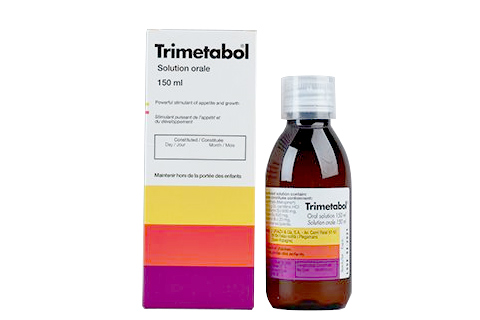
TRIMETABOL
1. CYPROHEPTADINE ACEFYLLINATE
What it does
Acefyllinate is a medication used to help open the airways in your lungs.
Commonly used for: asthma, chronic obstructive pulmonary disease (COPD)
Read more in plain English ↓Plain-language summary for general understanding - not medical advice. Always follow your pharmacist/doctor.
Ask about this medicine
Answers come only from this medicine's registration record, BNF monograph and interaction data - not medical advice.
Hard to find? We help patients in Kenya source rare medicines. We don't sell or dispense medicines - licensed pharmacies do.
Source this medicineRegistration & product details
Source: Pharmacy and Poisons Board · fetched 2026-01-28 21:46:12 · updated 2026-03-23 04:31:17
Drug Interactions
2Pharmacodynamic Warnings
Cyproheptadine appears in TABLE 10: Drugs with antimuscarinic effects
Cyproheptadine appears in TABLE 11: Drugs with CNS depressant effects
Severe (1)
Metyrapone - decreases effects
Cyproheptadine decreases the effects of metyrapone. Avoid.
Unknown (1)
Fenfluramine - decreases efficacy
Cyproheptadinemightdecreasetheefficacyoffenfluramine. rTheoretical
Data from BNF 85 (British National Formulary). This is not a substitute for professional medical advice. Matched via: exact
About acefyllinate
Acefyllinate is a medication used to help open the airways in your lungs.
What it treats
- asthma
- chronic obstructive pulmonary disease (COPD)
How it works
It works by relaxing the muscles around the airways, making it easier to breathe.
Who it's for
This medication is suitable for people with breathing difficulties due to asthma or COPD.
AI-assisted summary grounded in BNF data - general information only, not medical advice. Always confirm with your pharmacist or doctor.
About cyproheptadine
Cyproheptadine is a sedating antihistamine used to relieve allergy symptoms and other conditions.
What it treats
- allergic reactions
- hay fever (allergic rhinitis)
- sneezing
- runny nose
- itchy eyes
- appetite stimulation
How it works
It works by blocking histamine, a substance in the body that causes allergic symptoms.
Who it's for
It is suitable for adults and children who need relief from allergies or increased appetite.
Drug class
Antihistamines, sedating
Cautions
- • Avoid using with medications that have similar effects on the body, like those that cause dry mouth or blurred vision.
- • Be cautious if you're taking medications that make you sleepy or affect your central nervous system.
AI-assisted summary grounded in BNF data - general information only, not medical advice. Always confirm with your pharmacist or doctor.
Clinical monograph: Cyproheptadinehydrochloride
BNF-referencedCyproheptadine hydrochloride is a first-generation antihistamine with anticholinergic and sedative properties. It is primarily used for the symptomatic relief of allergic conditions, including hay fever and urticaria, and is known to stimulate appetite, making it useful in certain clinical contexts such as weight gain in undernourished patients.
Indications
- Allergic conditions
- Hay fever
- Urticaria
- Pruritus
- Appetite stimulation
Dosage
Children: For children aged 6 months to 5 years, the dose is 5-15 mg daily in divided doses, adjusted according to weight, with a maximum of 2 mg/kg per day. For children aged 6-17 years weighing up to 40 kg, the initial dose is 15-25 mg daily in divided doses, adjusted as necessary to a maximum of 2 mg/kg per day. For those weighing 40 kg and above, the initial dose is 15-25 mg daily in divided doses, increased if necessary to 50-100 mg daily.
Adults: Initially, 25 mg daily, taken at night; may be increased if necessary to 25 mg 3-4 times a day. Maximum dose is 32 mg per day.
Mechanism of action
Cyproheptadine acts as a competitive antagonist at histamine H1 receptors, thereby inhibiting the action of histamine, which is responsible for allergic symptoms. Additionally, it may also block serotonin receptors, contributing to its appetite-stimulating effects.
Pharmacodynamics
The drug exhibits sedative effects by crossing the blood-brain barrier, leading to central nervous system depression. It can also produce anticholinergic effects, such as dry mouth and urinary retention, due to its action on muscarinic receptors. The sedative properties can impair the performance of skilled tasks and may be potentiated by alcohol consumption.
Pharmacokinetics
Cyproheptadine is well-absorbed from the gastrointestinal tract and undergoes hepatic metabolism. Its elimination half-life is approximately 8-12 hours, and it is excreted primarily in urine. The onset of action is typically within 1-2 hours, with effects lasting for several hours.
Contra-indications
- Acute porphyrias
- Prolonged QT-interval
- Risk factors for QT prolongation
Adverse effects
- Drowsiness
- Dizziness
- Dry mouth
- Nausea
- Constipation
- Headache
- Palpitations
- Tachycardia
- Fatigue
- Irritability
- Paradoxical excitability
- Tremor
Interactions
- Antihistamines
- Sedating agents
- Alcohol
Precautions
- Use with caution in the elderly
- Patients with epilepsy
- Prostatic hypertrophy
- Pyloroduodenal obstruction
- Susceptibility to angle-closure glaucoma
- Urinary retention
Pregnancy
Most manufacturers of antihistamines advise avoiding their use during pregnancy; however, there is no evidence of teratogenicity. Use in the latter part of the third trimester may cause adverse effects in neonates.
Breast-feeding
Most antihistamines are present in breast milk in varying amounts; although not known to be harmful, most manufacturers advise avoiding their use in mothers who are breastfeeding.
Storage
Store in a cool, dry place away from direct sunlight. Keep out of reach of children.
Formulations
- Oral suspension
- Tablets (4 mg)
AI-synthesized from BNF references - general information only, not a substitute for professional medical advice or the current BNF. Verify doses with a pharmacist.
Clinical monograph: acefyllinate
Acefyllinate is a xanthine derivative that exhibits bronchodilator properties. It is primarily used in the management of respiratory conditions such as asthma and chronic obstructive pulmonary disease (COPD). The drug acts by relaxing the bronchial smooth muscle, thereby improving airflow and reducing respiratory distress.
Indications
- Asthma
- Chronic obstructive pulmonary disease (COPD)
- Bronchospasm associated with respiratory conditions
Dosage
Children: Refer to the BNF for Children for specific dosing recommendations.
Adults: Refer to the BNF for specific dosing recommendations.
Mechanism of action
Acefyllinate works by inhibiting phosphodiesterase, leading to an increase in intracellular cyclic AMP (cAMP) levels. This process results in the relaxation of bronchial smooth muscle and bronchodilation. Additionally, it may have anti-inflammatory effects, contributing to its therapeutic benefits in respiratory diseases.
Pharmacodynamics
The pharmacodynamics of acefyllinate involve its ability to enhance bronchial airflow and reduce airway resistance. It exhibits a dose-dependent response, where increased doses can lead to improved bronchodilation. The onset of action typically occurs within 15 to 30 minutes, and the effects can last for several hours, making it suitable for both acute and chronic management of bronchospasm.
Pharmacokinetics
Acefyllinate is absorbed rapidly from the gastrointestinal tract, with peak plasma concentrations occurring within 1 to 2 hours post-administration. It is metabolized primarily in the liver, and its metabolites are excreted primarily through the kidneys. The elimination half-life ranges from 5 to 6 hours, which may vary based on individual patient factors such as age and renal function.
Contra-indications
- Hypersensitivity to acefyllinate or other xanthines
- Severe cardiac disorders
- Peptic ulcer disease
Adverse effects
- Nausea
- Vomiting
- Insomnia
- Headache
- Tachycardia
- Palpitations
- Gastrointestinal disturbances
- Nervousness
Interactions
- May enhance the effects of other stimulants
- Concurrent use with certain antibiotics may increase plasma levels
- Use with caution in patients taking beta-adrenergic agonists
Precautions
- Use with caution in patients with cardiovascular disease
- Monitor serum levels in patients with liver impairment
- Avoid abrupt withdrawal in patients on long-term therapy
Pregnancy
There are limited studies on the use of acefyllinate in pregnancy. It should only be used if the potential benefit justifies the potential risk to the fetus.
Breast-feeding
It is not known whether acefyllinate is excreted in human milk. Caution is advised when administering to breastfeeding women.
Storage
Store in a cool, dry place, away from direct sunlight. Keep out of reach of children.
Formulations
- Oral tablets
- Syrup
AI-synthesized from BNF references - general information only, not a substitute for professional medical advice or the current BNF. Verify doses with a pharmacist.
Clinical monograph: cyproheptadine
BNF-referencedCyproheptadine is a sedating antihistamine that primarily acts as a competitive antagonist at H1 histamine receptors and serotonin receptors. It is used clinically for its antihistaminic and antiserotonin effects, contributing to its ability to stimulate appetite and manage allergic reactions. Additionally, cyproheptadine exhibits weak anticholinergic properties and moderate central depressant effects.
Indications
- Allergic rhinitis
- Allergic conjunctivitis
- Urticaria
- Angioedema
- Anaphylaxis (as adjunct therapy)
- Appetite stimulation in certain conditions
Dosage
Children: Refer to BNF for Children for appropriate pediatric dosing, as it varies by age and condition. Generally, doses may start at 0.25 mg/kg for younger children, but specific guidelines should be
Adults: The usual adult dose for allergic conditions is 4 mg three times daily, which may be increased to a maximum of 12 mg per day as needed. For appetite stimulation, the starting dose is often 4 mg taken once or twice daily.
Mechanism of action
Cyproheptadine exerts its effects by competing with free histamine and serotonin for binding at their respective receptors. Its action as an H1 blocker is complemented by its antagonism of serotonin at 5-HT2A receptors, particularly influencing the appetite center in the hypothalamus. This dual action accounts for its appetite-stimulating properties and mitigates several pharmacodynamic effects of serotonin.
Pharmacodynamics
Cyproheptadine antagonizes several effects of serotonin and histamine, including bronchoconstriction and vasodepression. Its efficacy in combatting histamine-mediated effects has been established, although the details regarding its role in preventing anaphylactic shock remain unclear, likely linked to its anti-serotonergic activity. The drug's sedative properties arise from its central nervous system effects.
Pharmacokinetics
Cyproheptadine is well-absorbed after oral administration. It is metabolized in the liver, with a variable half-life and is primarily excreted in urine. The onset of action typically occurs within one to two hours, and the duration of action can last up to 12 hours. The pharmacokinetic profile may be influenced by individual metabolic variations.
Adverse effects
- Drowsiness
- Dizziness
- Dry mouth
- Constipation
- Blurred vision
- Increased appetite
Interactions
- cyproheptadine+metyrapone: Severe (decreases effects)
- cyproheptadine+fenfluramine: Unknown (decreases efficacy)
Precautions
- Caution in patients with glaucoma
- Caution in patients with prostate hypertrophy
- Use with caution in elderly patients due to increased sensitivity
Pregnancy
Cyproheptadine should only be used during pregnancy if the potential benefit justifies the potential risk to the fetus. Limited data are available on its safety.
Breast-feeding
Cyproheptadine is excreted in breast milk. Caution is advised when administered to breastfeeding mothers.
Storage
Store at room temperature, away from moisture and heat. Keep out of reach of children.
Formulations
- Tablets
- Syrup
AI-synthesized from BNF references - general information only, not a substitute for professional medical advice or the current BNF. Verify doses with a pharmacist.
Molecular reference: cyproheptadine
PubChem CID 2913Molecular formula: C21H21N
Mechanism of action
Cyproheptadine appears to exert its antihistamine and antiserotonin effects by competing with free histamine and serotonin for binding at their respective receptors. Antagonism of serotonin on the appetite center of the hypothalamus may account for cyproheptadine's ability to stimulate the appetite. CYPROHEPTADINE...IS A SEROTONIN & HISTAMINE ANTAGONIST... ... It is an effective H1 blocker. Cyproheptadine also has prominent 5-H blocking activity on smooth muscle by virtue of its binding to 5-HT2A receptors. ... It has weak anticholinergic activity and possess mild central depressant properties.
Pharmacodynamics
Cyproheptadine has been observed to antagonize several pharmacodynamic effects of serotonin in laboratory animals, including bronchoconstriction and vasodepression, and has demonstrated similar efficacy in antagonizing histamine-mediated effects. The reason for its efficacy in preventing anaphylactic shock has not been elucidated, but appears to be related to its anti-serotonergic effects.
Biological pathways
Source: PubChem (NCBI) · pathways from PathBank, Reactome, WikiPathways & PharmGKB.
This drug in other countries
The same active ingredient registered across other registries we cover - including different brands.
- ABYCO SYRUP (Clear syrupy liquid contains Cyproheptadine HCL BP/Thiamine HCL (Vitamin B1) BP/Riboflavin (Vitamin B2) (as a Riboflavin 5 phosphate sodium)/Pyridoxine HCL (Vitamin B6) BP/Cyanocobalamin (Vitamin B12) BP/D-Panthenol (Dexpanthenol) USP 2mg/5mg/2.2mg/5mg/5mg/25mg) · Socomed Pharma
- ABYCO CAPSULES ORAL (Each film-coated tablet contains Cyproheptadine Hydrochloride Eq/Cyproheptadine HCl Anhydrous/Thiamine Hydrochloride (Vitamin B1)/Riboflavin (Vitamin B2)/Pyridoxine Hydrochloride (Vitamin B6)/Cyanocobalamin (Vitamin B12) /Calcium Pantothenate 4mg/2mg/2.2mg/1.5mg/1mcg/5mg) · Socomed Pharma
- ABYTONE FORTE CAPSULES (Each hard gelatin capsule contains Cyproheptadine HCL (Anhydrous) BP/Vitamin A (as palmitate) BP/Vitamin D3 BP/Thiamine Hydrochloride BP/Riboflavin BP/Cyanocobalamin BP/Niacinamide BP/Calcium Pantothenate BP/Calcium Lactate BP 4mg/2500IU/200IU/2mg/1mcg/25mg/5mg/100mg/) · Socomed Pharma
- ABYTONE FORTE SYRUP (Each 15 ml contains Cyproheptadine 2mg/5mg/2.2mg/5mg/5mg/25mg/) · Socomed Pharma
- ABYTONE SYRUP (Each 5ml contains Cyproheptadine HCL (Anhydrous) / Vitamin B1 / Vitamin B2 / Vitamin B6 / D-panthenol / Vitamin B3 – 2.0mg / 2.0mg / 2.0mg / 0.75mg / 2.5mg / 22.5 mg Cyproheptadine HCL (Anhydrous) / Vitamin B1 / Vitamin B2 / Vitamin B6 / D-panthenol / Vitamin B3 2.0mg / 2.0mg / 2.0mg / 0.75mg / 2.5mg / 22.5 mg) · Socomed Pharmaceuticals
- ABYVITA CAPSULES (Each capsule contains Cyproheptadine hydrochloride/Thiamine hydrochloride/ Riboflavin/ Pyridoxine hydrochloride/ Cyanocobalamin/ Calcium pantothenate – 4mg/ 2mg/ 2.2mg/ 1.5mg/ 1mcg/ 5mg Cyproheptadine Hydrochloride/Thiamine Hydrochloride (Vitamin B1)/Riboflavin (Vitamin B2)/Pyridoxine Hydrochloride (Vitamin B6)/Cynocobalamin (Vitamin B12)/Calcium Pantothenate 4mg/ 2mg/ 2.2mg/ 1.5mg/ 1mcg/ 5mg) · Socomed Pharmceuticals Pvt Limited