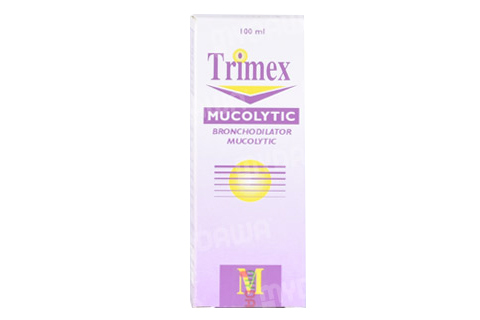
TRIMEX MUCOLYTIC
BROMHEXINE HCL BP SALBUTAMOL GUAFENESIN BP
What it does
Bromhexine is a medicine that helps to clear mucus from the airways, making it easier to breathe.
Commonly used for: chest congestion, mucus build-up in the lungs, chronic bronchitis
Read more in plain English ↓Plain-language summary for general understanding - not medical advice. Always follow your pharmacist/doctor.
Ask about this medicine
Answers come only from this medicine's registration record, BNF monograph and interaction data - not medical advice.
Hard to find? We help patients in Kenya source rare medicines. We don't sell or dispense medicines - licensed pharmacies do.
Source this medicineRegistration & product details
Source: Pharmacy and Poisons Board · fetched 2026-01-28 21:49:53 · updated 2026-03-23 04:34:59
About bromhexine
Bromhexine is a medicine that helps to clear mucus from the airways, making it easier to breathe.
What it treats
- chest congestion
- mucus build-up in the lungs
- chronic bronchitis
How it works
Bromhexine works by thinning the mucus in the airways, which helps to loosen it and makes it easier to cough up.
Who it's for
Bromhexine is suitable for adults and children who have trouble clearing mucus from their lungs.
AI-assisted summary grounded in BNF data - general information only, not medical advice. Always confirm with your pharmacist or doctor.
About guafenesin
Guaifenesin is a medication that helps relieve coughs and chest congestion by thinning mucus in the airways.
What it treats
- cough
- chest congestion
- respiratory infections
How it works
It works by making the mucus in your airways thinner and easier to cough up.
Who it's for
It is suitable for adults and children who have a productive cough with mucus.
AI-assisted summary grounded in BNF data - general information only, not medical advice. Always confirm with your pharmacist or doctor.
About salbutamol
Salbutamol is a medication used to help open up the airways in the lungs, making it easier to breathe.
What it treats
- asthma
- chronic obstructive pulmonary disease (COPD)
- exercise-induced bronchospasm
How it works
Salbutamol relaxes the muscles in the airways, allowing them to widen and improve airflow.
Who it's for
This medicine is for people who have breathing difficulties due to asthma or other lung conditions.
Cautions
- • Be cautious if taking other medications that can lower potassium levels in the blood.
AI-assisted summary grounded in BNF data - general information only, not medical advice. Always confirm with your pharmacist or doctor.
Clinical monograph: Salbutamol
BNF-referencedSalbutamol is a moderately selective beta-2 adrenergic receptor agonist used primarily as a bronchodilator for the treatment of asthma and other obstructive airway diseases. It acts by relaxing the smooth muscles of the airways, leading to dilation and improved airflow, making it an effective rescue medication for acute bronchospasm.
Indications
- Asthma
- Chronic obstructive pulmonary disease (COPD)
- Exercise-induced bronchospasm
- Other conditions associated with reversible airways obstruction
Dosage
Children: Child 5–11 years: 2.5 mg via nebulisation or 50 micrograms by inhalation; Child 12–17 years: 5 mg via nebulisation or
Adults: 500 micrograms every 4 hours if required, or 50 micrograms by inhalation twice daily, with possible increase to 100 micrograms twice daily in more severe cases.
Mechanism of action
Salbutamol preferentially binds to beta-2 adrenergic receptors, stimulating adenyl cyclase and increasing intracellular cyclic AMP. This results in protein kinase A activation, which inhibits myosin phosphorylation and reduces intracellular calcium concentrations, leading to smooth muscle relaxation in the airways. Additionally, increased cyclic AMP inhibits the release of inflammatory mediators from mast cells.
Pharmacodynamics
Salbutamol is known for its bronchodilatory effects, particularly in asthma and chronic obstructive pulmonary disease (COPD). It selectively stimulates beta-2 receptors, which are predominantly located in bronchial smooth muscle. The drug is effective in providing rapid relief from bronchospasm and has been shown to prevent exercise-induced bronchospasm. The R-isomer of salbutamol is primarily responsible for its therapeutic effects, while the S-isomer may contribute to side effects. Salbutamol may also induce metabolic effects, such as hyperglycemia.
Pharmacokinetics
Salbutamol is administered via inhalation, with onset of action typically occurring within minutes. Its duration of action is around 4 to 6 hours for the immediate-release formulation. The drug undergoes hepatic metabolism and is excreted primarily in urine. Its pharmacokinetic profile can vary based on the route of administration, with inhalation providing faster and more localized effects compared to oral or parenteral routes.
Adverse effects
- Tremors
- Nervousness
- Palpitations
- Tachycardia
- Headache
- Dizziness
- Nausea
- Hypokalemia
- Increased blood glucose levels
Interactions
- Other beta-agonists
- Beta-blockers
- Diuretics
- Monoamine oxidase inhibitors (MAOIs)
- Thyroid hormones
- Caffeine
Precautions
- Use with caution in patients with cardiovascular disorders
- Hypertension
- Hyperthyroidism
- Diabetes mellitus
- Seizure disorders
- Pregnancy and breastfeeding
Pregnancy
Inhaled drugs for asthma can be taken as normal during pregnancy.
Breast-feeding
Inhaled drugs for asthma can be taken as normal during breastfeeding.
Storage
Store below 25 degrees Celsius. Protect from light and moisture.
Formulations
- Inhalation aerosol
- Inhalation solution
- Inhalation powder
AI-synthesized from BNF references - general information only, not a substitute for professional medical advice or the current BNF. Verify doses with a pharmacist.
Clinical monograph: bromhexine
BNF-referencedBromhexine is a mucolytic agent used primarily in the management of respiratory conditions characterized by excessive or thick mucus production. It works by reducing mucus viscosity, enhancing mucociliary clearance, and facilitating the expulsion of secretions from the respiratory tract. Given its pharmacological properties, bromhexine is particularly beneficial in conditions such as chronic bronchitis, asthma, and other respiratory ailments where mucus clearance is compromised.
Indications
- Chronic bronchitis
- Asthma
- Bronchiectasis
- Pneumonia
- Respiratory tract infections with productive cough
Dosage
Children: Refer to the BNF for Children for specific paediatric dosing recommendations.
Adults: Refer to the BNF for specific dosing information.
Mechanism of action
Bromhexine aids in mucus clearance by reducing the viscosity of mucus and activating the ciliary epithelium, allowing secretions to be expelled from the respiratory tract. Additionally, bromhexine has been shown to inhibit the transmembrane serine protease 2 receptor (TMPRSS2), which plays a crucial role in viral respiratory diseases. This inhibition may help in preventing or treating various respiratory illnesses, including COVID-19, by blocking viral entry into cells.
Pharmacodynamics
Bromhexine thins airway secretions, thus improving breathing and alleviating discomfort associated with thick mucus in the airways. Its action is particularly beneficial in respiratory disorders where mucus obstruction is a significant issue.
Pharmacokinetics
Bromhexine is well absorbed after oral administration, with peak plasma concentrations typically reached within 1 to 2 hours. It is metabolized in the liver, primarily to ambroxol, which is its active metabolite. The elimination half-life of bromhexine is approximately 8 to 12 hours, and it is excreted mainly through urine. The pharmacokinetics can be influenced by factors such as liver function and concurrent medications.
Adverse effects
- Gastrointestinal disturbances
- Nausea
- Vomiting
- Diarrhea
- Allergic reactions
Precautions
- Use with caution in patients with peptic ulcer disease
- Monitor patients with asthma or bronchospastic conditions
Pregnancy
Bromhexine should be used during pregnancy only if clearly needed and after careful consideration of the potential benefits and risks.
Breast-feeding
Bromhexine is excreted in breast milk; caution should be exercised when administering to nursing mothers.
Storage
Store in a cool, dry place away from direct sunlight. Keep out of reach of children.
Formulations
- Tablets
- Syrup
- Solution for inhalation
AI-synthesized from BNF references - general information only, not a substitute for professional medical advice or the current BNF. Verify doses with a pharmacist.
Clinical monograph: guafenesin
Guaifenesin is an expectorant commonly used to relieve cough and chest congestion associated with respiratory tract infections and conditions such as bronchitis or the common cold. It works by thinning and loosening mucus in the airways, making it easier to cough out through the mouth.
Indications
- Cough associated with the common cold
- Bronchitis
- Respiratory tract infections
- Chest congestion
Dosage
Children: Pediatric dosing of guaifenesin should be determined based on product-specific guidelines or consult a healthcare provider, as it may vary depending on the child's age and weight.
Adults: For adults, the typical dosage of guaifenesin varies by formulation, but it is generally recommended to follow the specific product guidelines or consult a healthcare provider for appropriate dosing.
Mechanism of action
Guaifenesin acts by increasing the volume and reducing the viscosity of secretions in the tracheobronchial tree and increasing the efficiency of mucociliary mechanism. This facilitates the clearance of mucus from the airways, thereby alleviating cough and congestion.
Pharmacodynamics
Guaifenesin exhibits expectorant effects, enhancing mucus secretion in the respiratory tract. The resulting increase in respiratory tract secretions leads to improved mucosal hydration, reduced mucus viscosity, and increased clearance of secretions via ciliary action. This ultimately results in symptomatic relief from cough and facilitates easier breathing.
Pharmacokinetics
Guaifenesin is rapidly absorbed from the gastrointestinal tract, with peak plasma concentrations generally occurring within 1 to 2 hours after oral administration. The drug is metabolized primarily in the liver, and its half-life is approximately 1 hour. Excretion occurs primarily via the kidneys, with metabolites being eliminated in urine.
Adverse effects
- Nausea
- Vomiting
- Dizziness
- Headache
- Rash
- Diarrhea
Interactions
- May enhance the effects of other cough and cold medications
- Potential interaction with alcohol, which can increase side effects
Precautions
- Use with caution in patients with chronic cough due to asthma or emphysema
- Caution in patients with a history of gastrointestinal disorders
Pregnancy
Guaifenesin is classified as category C. It should only be used if the potential benefits justify the potential risks to the fetus.
Breast-feeding
Guaifenesin is excreted in breast milk. Caution is advised when administered to nursing mothers.
Storage
Store at room temperature, away from moisture and heat. Keep out of reach of children.
Formulations
- Oral tablets
- Oral syrup
- Oral granules
AI-synthesized from BNF references - general information only, not a substitute for professional medical advice or the current BNF. Verify doses with a pharmacist.
Molecular reference: bromhexine
PubChem CID 2442Molecular formula: C14H20Br2N2
Mechanism of action
Inflammation of the airways, increased mucus secretion, and altered mucociliary clearance are the hallmarks of various diseases of the respiratory tract. Mucus clearance is necessary for lung health; bromhexine aids in mucus clearance by reducing the viscosity of mucus and activating the ciliary epithelium, allowing secretions to be expelled from the respiratory tract. Recent have studies have demonstrated that bromhexine inhibits the transmembrane serine protease 2 receptor (TMPRSS2) in humans. Activation of TMPRSS2 plays an important role in viral respiratory diseases such as influenza A and Middle East Respiratory Syndrome (MERS). Inhibition of receptor activation and viral entry by bromhexine may be effective in preventing or treating various respiratory illnesses, including COVID-19. In vitro studies have suggested the action of ambroxol (a metabolite of bromhexine) on the angiogensin-converting enzyme receptor 2 (ACE2), prevents entry of the viral envelope-anchored spike glycoprotein of SARS-Cov-2 into alveolar cells or increases the secretion of surfactant, preventing viral entry.
Pharmacodynamics
Bromhexine thins airway secretions, improving breathing and discomfort associated with thick mucus in airways associated with a variety of respiratory conditions.
Source: PubChem (NCBI) · pathways from PathBank, Reactome, WikiPathways & PharmGKB.
Molecular reference: Salbutamol
PubChem CID 2083Molecular formula: C13H21NO3
Mechanism of action
In vitro studies and in vivo pharmacologic studies have shown that salbutamol has a preferential effect on beta2-adrenergic receptors compared with isoproterenol. Although beta2 adrenoceptors are the predominant adrenergic receptors in bronchial smooth muscle and beta1 adrenoceptors are the predominant receptors in the heart, there are also beta2-adrenoceptors in the human heart comprising 10% to 50% of the total beta-adrenoceptors. The precise function of these receptors has not been established, but their presence raises the possibility that even selective beta2-agonists may have cardiac effects. Activation of beta2-adrenergic receptors on airway smooth muscle leads to the activation of adenyl cyclase and to an increase in the intracellular concentration of cyclic-3′,5′-adenosine monophosphate (cyclic AMP). This increase of cyclic AMP leads to the activation of protein kinase A, which inhibits the phosphorylation of myosin and lowers intracellular ionic calcium concentrations, resulting in relaxation. Salbutamol relaxes the smooth muscles of all airways, from the trachea to the terminal bronchioles. Salbutamol acts as a functional antagonist to relax the airway irrespective of the spasmogen involved, thus protecting against all bronchoconstrictor challenges. Increased cyclic AMP concentrations are also associated with the inhibition of release of mediators from mast cells in the airway. Salbutamol has been shown in most controlled clinical trials to have more effect on the respiratory tract, in the form of bronchial smooth muscle relaxation, than isoproterenol at comparable doses while producing fewer cardiovascular effects. Controlled clinical studies and other clinical experience have shown that inhaled albuterol, like other beta-adrenergic agonist drugs, can produce a significant cardiovascular effect in some patients, as measured by pulse rate, blood pressure, symptoms, and/or electrocardiographic changes. A measurable decrease in airway resistance is typically observed within 5 to 15 minutes after inhalation of salbutamol. The maximum improvement in pulmonary function usually occurs 60 to 90 minutes after salbutamol treatment, and significant bronchodilator activity has been observed to persist for 3 to 6 hours. Adrenergic bronchodilators act by stimulating beta2-adrenergic receptors in the lungs to relax bronchial smooth muscle, thereby relieving bronchospasm. /Adrenergic bronchodilators/ Primarily stimulates beta2-adrenergic receptors, with some minor beta1-adrenergic activity. In vitro studies and in vivo pharmacologic studies have demonstrated that albuterol has a preferential effect on beta2-adrenergic receptors compared with isoproterenol. While it is recognized that beta2-adrenergic receptors are the predominant receptors in bronchial smooth muscle, date indicate that there is a population of beta2-receptors in the human heart existing in a concentration between 10% and 50% of cardiac beta-adrenergic receptors. The precise function of these receptors has not been established. Activation of beta2-adrenergic receptors on airway smooth muscle leads to the activation of adenylcyclase and to an increase in the intracellular concentration of cyclic-3',5'-adenosine monophosphate (cyclic AMP). This increase of cyclic AMP leads to the activation of protein kinase A, which inhibits the phosphorylation of myosin and lowers intracellular ionic calcium concentrations, resulting in relaxation. Albuterol relaxes the smooth muscles of all airways, from the trachea to the terminal bronchioles. Albuterol acts as a functional antagonist to relax the airway irrespective of the spasmogen involved, this protecting against all bronchoconstrictor challenges. Increased cyclic AMP concentrations are also associated with the inhibition of release of mediators from most cells in the airway.
Pharmacodynamics
Salbutamol (INN) or albuterol (USAN), a moderately selective beta(2)-receptor agonist similar in structure to terbutaline, is widely used as a bronchodilator to manage asthma and other chronic obstructive airway diseases. The R-isomer, levalbuterol, is responsible for bronchodilation while the S-isomer increases bronchial reactivity. The R-enantiomer is available and sold in its pure form as levalbuterol and subsequently may produce fewer side-effects with only the R-enantiomer present - although this has not been formally demonstrated. After oral and parenteral administration, stimulation of the beta receptors in the body, both beta-1 and beta-2, occurs because (a) beta-2 selectivity is not absolute, and (b) higher concentrations of salbutamol occur in the regions of these receptors with these modes of administration. This results in the beta-1 effect of cardiac stimulation, though not so much as with isoprenaline, and beta-2 effects of peripheral vasodilatation and hypotension, skeletal muscle tremor, and uterine muscle relaxation. Metabolic effects such as hyperinsulinemia and hyperglycemia also may occur, although it is not known whether these effects are mediated by beta-1 or beta-2 receptors. The serum potassium levels have a tendency to fall.
Biological pathways
Source: PubChem (NCBI) · pathways from PathBank, Reactome, WikiPathways & PharmGKB.
This drug in other countries
The same active ingredient registered across other registries we cover - including different brands.
- AEROCORT(CFC FREE) 50/100MCG INHALER
- ASBUTOL_4_ 4MG TABLET
- ASCORIL COMBINATION PRODUCT SYRUP
- ASMANOL 2MG/5ML SYRUP
- ASMANOL 4MG TABLET
- ASTHALIN (CFC FREE) 100MCG/ACTUATION AEROSOL (PRESSURISED) INHALATION
- ADULT MALIN PLUS COUGH · M&g Pharmaceuticals
- ASCOREX EXPECTORANT · Glenmark Pharmaceuticals
- ASPANOL PRODUCTIVE COUGH SYRUP SYRUP (Each 5ml contains Guaifenesin BP/ Bromhexine Hydrochloride BP/ Phenylephrine Hydrochloride BP 100mg/4mg/30mg) · Kinapharma
- ASTHALEX SYRUP · Ciron Drugs And Phamaceuticals Pvt Limited N-118
- BLUKOF ADULT CHESTY COUGH SYRUP · Prowill Pharmaceuticals
- BRONCHOLIN 2MG/5ML TABLETS · Letap Pharmaceuticals