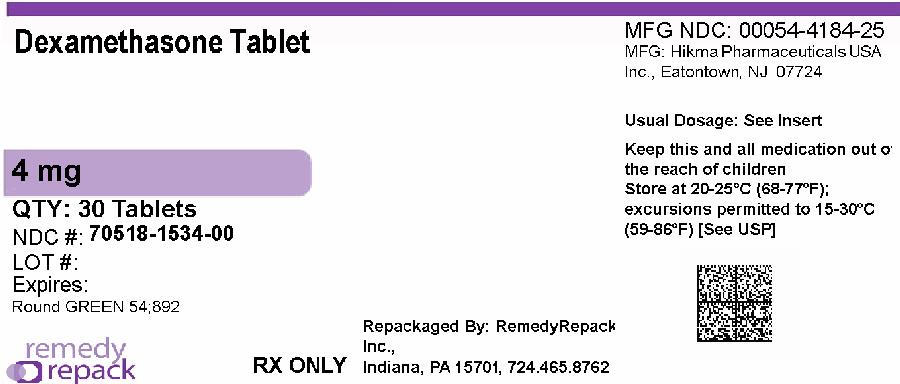
(dexamethasone · DailyMed)
Vendexine Syrup
Chlorpheniramine maleate 2 mg,Dexamethasone 0.5 mg
What it does
Chlorpheniramine is a sedating antihistamine used to relieve allergy symptoms.
Commonly used for: allergies, hay fever (allergic rhinitis), common cold symptoms
Read more in plain English ↓Plain-language summary for general understanding - not medical advice. Always follow your pharmacist/doctor.
Ask about this medicine
Answers come only from this medicine's registration record, BNF monograph and interaction data - not medical advice.
Medicine sourcing is available in Kenya only. We don't sell or dispense medicines - licensed pharmacies do.
Sourcing - Kenya onlyRegistration & product details
Source: Zambia Medicines Regulatory Authority · fetched 2026-08-27 09:58:46 · updated 2026-10-19 03:40:31
Drug Interactions
48Pharmacodynamic Warnings
Dexamethasone appears in TABLE 17: Drugs that reduce serum potassium
Severe (2)
Avapritinib - decreases exposure
Dexamethasoneispredictedtodecreasetheexposureto avapritinib.Avoid.rTheoretical
Mifamurtide - decreases efficacy
Corticosteroidsarepredictedtodecreasetheefficacyof mifamurtide.Avoid.rTheoretical
Moderate (24)
Corticosteroids - increases exposure
Dronedarone is predicted to increase the exposure to corticosteroids (methylprednisolone). Monitor and adjust dose.
Corticosteroids - increases concentration
Miconazole is predicted to increase the concentration of corticosteroids (methylprednisolone). Monitor and adjust dose.
Corticosteroids - increases exposure
Antifungals, azoles (fluconazole, isavuconazole, posaconazole) are predicted to increase the exposure to corticosteroids (methylprednisolone). Monitor and adjust dose.
Corticosteroids - decreases exposure
Cenobamate is predicted to decrease the exposure to corticosteroids (fluticasone). Adjust dose.
Corticosteroids - decreases efficacy
Mifepristone is predicted to decrease the efficacy of corticosteroids. Use with caution and adjust dose.
Unknown (22)
Aspirin - decreases concentration
Corticosteroids are predicted to decrease the concentration of aspirin (high-dose) and aspirin (high-dose) increases the risk of gastrointestinal bleeding when given with corticosteroids.
Caspofungin - decreases concentration
Dexamethasone is predicted to decrease the concentration of caspofungin. Adjust caspofungin dose, p. 654.
Choline Salicylate - decreases concentration
Corticosteroids are predicted to decrease the concentration of cholinesalicylate. Ciclesonide → see corticosteroids Ciclosporin → see TABLE 2 p. 1517 (nephrotoxicity), TABLE 16 p. 1521 (increased seru
Corticosteroids - increases exposure
Cobicistat is predicted to increase the exposure to corticosteroids (beclometasone) (risk with beclometasone is likely to be lower than with other corticosteroids).
Corticosteroids - increases risk of gastrointestinal perforation
Erlotinib is predicted to increase the risk of gastrointestinal perforation when given with corticosteroids.
Data from BNF 85 (British National Formulary). This is not a substitute for professional medical advice. Matched via: exact
About chlorpheniramine
Chlorpheniramine is a sedating antihistamine used to relieve allergy symptoms.
What it treats
- allergies
- hay fever (allergic rhinitis)
- common cold symptoms
How it works
It reduces the effects of natural substances in the body that cause allergy symptoms.
Who it's for
It is suitable for adults and children experiencing allergic reactions.
Drug class
Antihistamines, sedating
AI-assisted summary grounded in BNF data - general information only, not medical advice. Always confirm with your pharmacist or doctor.
About dexamethasone
Dexamethasone is a corticosteroid used to treat various conditions by reducing inflammation and suppressing the immune system.
What it treats
- inflammation
- allergic reactions
- certain cancers
- autoimmune diseases (e.g., lupus)
- skin conditions (e.g., eczema)
How it works
It works by mimicking the effects of hormones produced by the adrenal glands, helping to decrease inflammation and control the immune response.
Who it's for
It is prescribed for adults and children with specific health issues that require inflammation control or immune suppression.
Drug class
Corticosteroids
Cautions
- • Be cautious if taking medications that lower potassium levels.
AI-assisted summary grounded in BNF data - general information only, not medical advice. Always confirm with your pharmacist or doctor.
Clinical monograph: chlorpheniramine
BNF-referencedChlorpheniramine is a sedating antihistamine belonging to the alkylamine class, primarily used for the relief of allergic symptoms. It is effective in alleviating conditions such as allergic rhinitis and urticaria by blocking the action of histamine at the H1 receptor. Chlorpheniramine is known for its anticholinergic properties, providing a drying effect on nasal mucosa and reducing symptoms associated with upper respiratory allergies.
Indications
- Allergic rhinitis (hay fever)
- Urticaria (hives)
- Allergic conjunctivitis
- Common cold symptoms
Dosage
Children: For children aged 6-12 years, the dose is typically 2 mg every 4 to 6 hours, not exceeding 12 mg per day. For children under
Adults: The usual adult dose for chlorpheniramine is 4 mg every 4 to 6 hours, not to exceed 24 mg per day.
Mechanism of action
Chlorpheniramine binds to the histamine H1 receptor, preventing endogenous histamine from exerting its effects. This leads to temporary relief from symptoms such as sneezing, pruritus, and increased vascular permeability associated with allergic reactions. The drug competes with histamine for H1-receptor sites on effector cells, thus antagonizing most of the pharmacological effects of histamine, including its actions on smooth muscle and vascular permeability.
Pharmacodynamics
In allergic reactions, allergens trigger the degranulation of mast cells and basophils, leading to the release of histamine. Chlorpheniramine, as an H1 antagonist, competes for receptor binding, effectively blocking histamine-induced effects, such as itching, vasodilation, and bronchoconstriction. This results in relief from symptoms like sneezing, watery eyes, and nasal discharge.
Pharmacokinetics
Chlorpheniramine is well absorbed from the gastrointestinal tract. It undergoes hepatic metabolism and its effects can last for several hours. The onset of action is typically observed within 1 to 2 hours following oral administration, with peak effects occurring around 2 to 6 hours. The drug is eliminated primarily through urine, with a half-life ranging from 12 to 15 hours, though this can vary based on individual factors.
Contra-indications
- Hypersensitivity to chlorpheniramine or any component of the formulation
- Acute asthma attacks
- Severe hypertension
- Narrow-angle glaucoma
- Prostatic hypertrophy
Adverse effects
- Drowsiness
- Dizziness
- Dry mouth
- Blurred vision
- Constipation
- Urinary retention
- Confusion
- Headache
Interactions
- Alcohol
- CNS depressants
- MAO inhibitors
- Anticholinergic agents
- Beta-blockers
Precautions
- Use with caution in patients with cardiovascular disease
- Caution in patients with liver or kidney impairment
- Avoid in elderly patients due to increased risk of sedation and anticholinergic effects
- May impair the ability to drive or operate machinery
Pregnancy
Chlorpheniramine should be used in pregnancy only if clearly needed. Consult medical professionals for guidance.
Breast-feeding
Chlorpheniramine is excreted in breast milk. Caution is advised when administering to nursing mothers.
Storage
Store at room temperature, away from moisture and heat. Keep out of reach of children.
Formulations
- Tablets
- Syrup
- Oral suspension
AI-synthesized from BNF references - general information only, not a substitute for professional medical advice or the current BNF. Verify doses with a pharmacist.
Clinical monograph: Dexamethasone
BNF-referencedDexamethasone is a synthetic corticosteroid with potent anti-inflammatory and immunosuppressive properties. It has predominantly glucocorticoid activity and is used to treat various inflammatory and allergic conditions. Its mechanisms include decreasing vasodilation and permeability of capillaries, inhibiting leukocyte migration, and altering gene expression related to inflammation. Dexamethasone is administered orally or via injection, and it is important to manage dosing carefully to avoid potential side effects.
Indications
- Suppression of inflammatory and allergic disorders
- Adjunctive treatment of suspected bacterial meningitis
- Reduction of peri- and neonatal morbidity and mortality in preterm birth
- Management of severe croup
- Congenital adrenal hyperplasia
- COVID-19 requiring supplemental oxygen
Dosage
Adults: For adults, the typical dosing varies by condition
Mechanism of action
Dexamethasone binds to the glucocorticoid receptor, leading to changes in gene expression that result in decreased inflammatory and immune responses. It inhibits phospholipase A2, reducing the formation of pro-inflammatory mediators, and promotes anti-inflammatory genes like interleukin-10. The drug also inhibits neutrophil apoptosis and demargination, contributing to its anti-inflammatory effects. Its glucocorticoid activity results in significant immunosuppression at higher doses.
Pharmacodynamics
Dexamethasone's pharmacodynamics involve the modulation of inflammatory responses through glucocorticoid receptor binding. It inhibits pro-inflammatory signals while promoting anti-inflammatory signals. The duration of action varies based on the administration route, and careful dosing is required to avoid suppression of the hypothalamic-pituitary-adrenal axis and increased infection risk. The drug has a wide therapeutic window, allowing for higher doses than the body's natural production.
Pharmacokinetics
Dexamethasone is well-absorbed after oral administration, with peak plasma concentrations typically occurring within 1-2 hours. It is extensively metabolized in the liver, primarily through hepatic cytochrome P450 enzymes. The elimination half-life ranges from 3 to 4 hours, although it may be longer in certain populations. The drug is excreted mainly in urine as metabolites. The pharmacokinetics can be affected by factors such as liver function and co-administered medications.
Contra-indications
- Systemic fungal infections
- Hypersensitivity to dexamethasone or any component of the formulation
- Active tuberculosis
- Cautious use in patients with peptic ulcer disease
Adverse effects
- Oedema
- Hypotension
- Increased susceptibility to infections
- Mood changes
- Cushing's syndrome
- Hyperglycemia
- Gastrointestinal perforation
- Osteoporosis
- Adrenal suppression
Interactions
- Severe interaction with avapritinib (decreases exposure)
- Moderate interaction with mitotane (decreases exposure)
- Moderate interaction with monoclonal antibodies (decreases exposure)
- Moderate interaction with tocilizumab (decreases exposure)
- Moderate interaction with aprepitant (increases exposure)
- Moderate interaction with netupitant (increases exposure)
- Moderate interaction with rifampicin (decreases exposure)
- Unknown interaction with cobicistat (increases exposure)
- Unknown interaction with caspofungin (decreases concentration)
- Unknown interaction with idelalisib (increases exposure)
Precautions
- Use with caution in patients with a history of tuberculosis
- Monitor for signs of infection due to immunosuppressive effects
- Consider dose adjustments in hepatic impairment
- Taper dosage to avoid withdrawal symptoms after prolonged use
- Monitor blood glucose levels in diabetic patients
Pregnancy
Dexamethasone is classified as a pregnancy category C drug. It should only be used if the potential benefit justifies the potential risk to the fetus.
Breast-feeding
Dexamethasone is excreted in breast milk. Caution is advised when administering to breastfeeding women, and the risks versus benefits should be considered.
Storage
Store at room temperature (15-30 degrees Celsius), protect from light, and keep out of reach of children.
Formulations
- Tablet (6 mg)
- Solution for injection (3.3 mg/1 ml)
- Dexamethasone sodium phosphate solution for injection (6.6 mg/2 ml)
AI-synthesized from BNF references - general information only, not a substitute for professional medical advice or the current BNF. Verify doses with a pharmacist.
Molecular reference: chlorpheniramine
PubChem CID 2725Molecular formula: C16H19ClN2
Mechanism of action
Chlorpheniramine binds to the histamine H1 receptor. This blocks the action of endogenous histamine, which subsequently leads to temporary relief of the negative symptoms brought on by histamine. Antihistamines used in the treatment of allergy act by competing with histamine for H1-receptor sites on effector cells. They thereby prevent, but do not reverse, responses mediated by histamine alone. Antihistamines antagonize, in varying degrees, most of the pharmacological effects of histamine, including urticaria and pruritus. Also, the anticholinergic actions of most antihistamines provide a drying effect on the nasal mucosa. /Antihistamines/ H1 antagonists inhibit most responses of smooth muscle to histamine. Antagonism of the constrictor action of histamine on respiratory smooth muscle is easily shown in vivo and in vitro. /Histamine Antagonists: H1 Antagonists/ H1 antagonists strongly block the action of histamine that results in increased permeability and formation of edema and wheal. /Histamine Antagonists: H1 Antagonists/ Within the vascular tree, the H1 antagonists inhibit both the vasoconstrictor effects of histamine and, to a degree, the more rapid vasodilator effects that are mediated by H1 receptors on endothelial cells. Residual vasodilatation reflects the involvement of H2 receptors on smooth muscle and can be suppressed only by the concurrent administration of an H2 antagonist. Effects of the histamine antagonists on histamine induced changes in systemic blood pressure parallel these vascular effects. /Histamine Antagonists: H1 Antagonists/ Many of the H1 antagonists tend to inhibit responses to acetylcholine that are mediated by muscarinic receptors. These atropine like actions are sufficiently prominent in some of the drugs to be manifest during clinical usage ... . /Histamine Antagonists: H1 Antagonists/
Pharmacodynamics
In allergic reactions an allergen interacts with and cross-links surface IgE antibodies on mast cells and basophils. Once the mast cell-antibody-antigen complex is formed, a complex series of events occurs that eventually leads to cell-degranulation and the release of histamine (and other chemical mediators) from the mast cell or basophil. Once released, histamine can react with local or widespread tissues through histamine receptors. Histamine, acting on H<sub>1</sub>-receptors, produces pruritis, vasodilatation, hypotension, flushing, headache, tachycardia, and bronchoconstriction. Histamine also increases vascular permeability and potentiates pain. Chlorpheniramine, is a histamine H1 antagonist (or more correctly, an inverse histamine agonist) of the alkylamine class. It competes with histamine for the normal H<sub>1</sub>-receptor sites on effector cells of the gastrointestinal tract, blood vessels and respiratory tract. It provides effective, temporary relief of sneezing, watery and itchy eyes, and runny nose due to hay fever and other upper respiratory allergies.
Biological pathways
Source: PubChem (NCBI) · pathways from PathBank, Reactome, WikiPathways & PharmGKB.
Molecular reference: Dexamethasone
PubChem CID 5743Molecular formula: C22H29FO5
Mechanism of action
The short term effects of corticosteroids are decreased vasodilation and permeability of capillaries, as well as decreased leukocyte migration to sites of inflammation. Corticosteroids binding to the glucocorticoid receptor mediates changes in gene expression that lead to multiple downstream effects over hours to days. Glucocorticoids inhibit neutrophil apoptosis and demargination; they inhibit phospholipase A2, which decreases the formation of arachidonic acid derivatives; they inhibit NF-Kappa B and other inflammatory transcription factors; they promote anti-inflammatory genes like interleukin-10. Lower doses of corticosteroids provide an anti-inflammatory effect, while higher doses are immunosuppressive. High doses of glucocorticoids for an extended period bind to the mineralocorticoid receptor, raising sodium levels and decreasing potassium levels. Corticosteroids diffuse across cell membranes and complex with specific cytoplasmic receptors. These complexes then enter the cell nucleus, bind to DNA, and stimulate transcription of mRNA and subsequent protein synthesis of enzymes ultimately responsible for anti-inflammatory effects of topical application of corticosteroids to the eye. In high concentrations which may be achieved after topical application, corticosteroids may exert direct membrane effects. Corticosteroids decrease cellular and fibrinous exudation and tissue infiltration, inhibit fibroblastic and collagen-forming activity, retard epithelial regeneration, diminish postinflammatory neovascularization and reduce toward normal levels the excessive permeability of inflamed capillaries. /Corticosteroids (Otic)/ Glucocorticoids are capable of suppressing the inflammatory process through numerous pathways. They interact with specific intracellular receptor proteins in target tissues to alter the expression of corticosteroid-responsive genes. Glucocorticoid-specific receptors in the cell cytoplasm bind with steroid ligands to form hormone-receptor complexes that eventually translocate to the cell nucleus. There these complexes bind to specific DNA sequences and alter their expression. The complexes may induce the transcription of mRNA leading to synthesis of new proteins. Such proteins include lipocortin, a protein known to inhibit PLA2a and thereby block the synthesis of prostaglandins, leukotrienes, and PAF. Glucocorticoids also inhibit the production of other mediators including AA metabolites such as COX, cytokines, the interleukins, adhesion molecules, and enzymes such as collagenase. /Glucocorticoids/ Corticosteroids diffuse across cell membranes and complex with specific cytoplasmic receptors. These complexes then enter the cell nucleus, bind to DNA (chromatin), and stimulate transcription of messenger RNA (mRNA) and subsequent protein synthesis of various inhibitory enzymes responsible for the anti-inflammatory effects of topical corticosteroids. These anti-inflammatory effects include inhibition of early processes such as edema, fibrin deposition, capillary dilatation, movement of phagocttes into the area, and phagocytic activities. Later processes, such as capillary production, collagen deposition, and keloid formation also are inhibited by corticosteroids. The overall actions of topical corticosteroids are catabolic. /Corticosteroids (topical)/
Pharmacodynamics
Corticosteroids bind to the glucocorticoid receptor, inhibiting pro-inflammatory signals, and promoting anti-inflammatory signals. Dexamethasone's duration of action varies depending on the route. Corticosteroids have a wide therapeutic window as patients may require doses that are multiples of what the body naturally produces. Patients taking corticosteroids should be counselled regarding the risk of hypothalamic-pituitary-adrenal axis suppression and increased susceptibility to infections.
Biological pathways
Source: PubChem (NCBI) · pathways from PathBank, Reactome, WikiPathways & PharmGKB.
This drug in other countries
The same active ingredient registered across other registries we cover - including different brands.
- ABYCOLD SYRUP (Each 5ml contains Paracetamol/ Phenylephrine hydrochloride/ Chlorpheniramine maleate – 125mg/2.5mg/ 1mg Paracetamol/Phenylephrine Hydrochloride/Chlorpheniramine Maleate 125mg/2.5mg/ 1mg) · Socomed Pharmceuticals Pvt Limited
- ABYCOLD PLUS TABLETS · Socomed Pharma
- ABYCOLD-X TABLETS · Socomed Pharma
- ABYMOL FORTE CAPSULES (Each hard gelatin capsule contains Paracetamol/ Diclofenac sodium/ Caffeine Paracetamol/Phenylephrine Hydrochloride/Chlorpheniramine Maleate 325mg/50mg/30mg) · Socomed Pharmceuticals Pvt Limited
- AMIDOL COLD & FLU TABLETS (Each tablet contains Paracetamol/ Caffeine/ Phenylephrine Hydrochloride/ Chlorpheniramine Maleate 500mg/30mg/5mg/2mg) · Shalina Laboratories
- APFLU SYRUP · Cadila Pharmaceutical