acarbose brands
1 registered brand containing acarbose in Kenya.
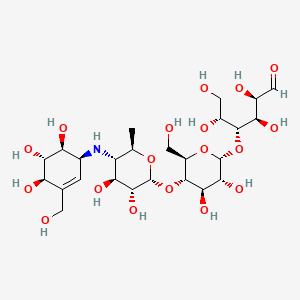
2D structure
Acarbose
PubChem CID 9811704Molecular formula: C25H43NO18
Alpha-glucosidase enzymes are located in the brush-border of the intestinal mucosa and serve to metabolize oligo-, tri-, and disaccharides (e.g. sucrose) into smaller monosaccharides (e.g. glucose, fructose) which are more readily absorbed. These work in conjunction with pancreatic alpha-amylase, an enzyme found in the intestinal lumen that hydrolyzes complex starches to oligosaccharides. Acarbose is a complex oligosaccharide that competitively and reversibly inhibits both pancreatic alpha-amylase and membrane-bound alpha-glucosidases - of the alpha-glucosidases, inhibitory potency appears to follow a rank order of glucoamylase > sucrase > maltase > isomaltase. By preventing the metabolism and subsequent absorption of dietary carbohydrates, acarbose reduces postprandial blood glucose and insulin levels. In contrast to sulfonylureas, acarbose does not enhance insulin secretion. The antihyperglycemic action of acarbose results from a competitive, reversible inhibition of pancreatic alpha-amylase and membrane-bound intestinal alpha-glucoside hydrolase enzymes. Pancreatic alpha-amylase hydrolyzes complex starches to oligosaccharides in the lumen of the small intestine, while the membrane-bound intestinal alpha-glucosidases hydrolyze oligosaccharides, trisaccharides, and disaccharides to glucose and other monosaccharides in the brush border of the small intestine. In diabetic patients, this enzyme inhibition results in a delayed glucose absorption and a lowering of postprandial hyperglycemia. Because its mechanism of action is different, the effect of acarbose to enhance glycemic control is additive to that of sulfonylureas, insulin or metformin when used in combination. In addition, acarbose diminishes the insulinotropic and weight-increasing effects of sulfonylureas. Acarbose has no inhibitory activity against lactase and consequently would not be expected to induce lactose intolerance. Acarbose represents a pharmacological approach to achieving the metabolic benefits of a slower carbohydrate absorption in diabetes, by acting as a potent, competitive inhibitor of intestinal alpha-glucosidases. Acarbose molecules attach to the carbohydrate binding sites of alpha-glucosidases, with an affinity constant that is much higher than that of the normal substrate. Because of the reversible nature of the inhibitor-enzyme interaction, the conversion of oligosaccharides to monosaccharides is only delayed rather than completely blocked. Acarbose has the structural features of a tetrasaccharide and does not cross the enterocytes after ingestion. Thus, its pharmacokinetic properties are well suited to the pharmacological action directed exclusively towards the intestinal glucosidases. ... The aim of the present study was to reveal the possible involvement of thyroid hormones in the antihyperglycaemic and antiperoxidative effects of acarbose. The effects of acarbose on changes in serum concentration of thyroid hormones, insulin and glucose in dexamethasone-induced type 2 diabetic mice were investigated. Simultaneously, changes in lipid peroxidation (LPO), reduced glutathione (GSH) content and the activity of associated endogenous anti-oxidant enzymes, such as superoxide dismuatase (SOD) and catalase (CAT), were investigated in renal and cardiac tissues, which are commonly affected in diabetes mellitus. Although administration of dexamethasone (1.0 mg/kg, i.m., for 22 days) caused hyperglycaemia with a parallel increase in serum insulin and tissue LPO, it decreased thyroid hormone concentrations and the activity of SOD and CAT. When dexamethasone-induced hyperglycemic mice were treated with acarbose (10 mg/kg per day, p.o., for 15 days), levels of thyroid hormones were increased and most of the abnormalities, including serum insulin and glucose levels, tissue LPO, SOD and CAT activity and GSH content, were reversed. These findings suggest the involvement of thyroid hormones in the mode of action of acarbose in amelioration of type 2 diabetes mell
Source: PubChem (NCBI) · compound 9811704