acetylcysteine brands
4 registered brands containing acetylcysteine in Kenya.
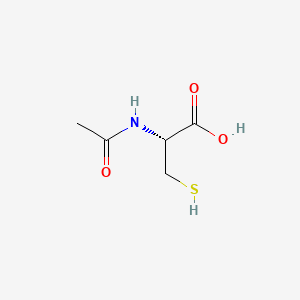
2D structure
Acetylcysteine
PubChem CID 12035Molecular formula: C5H9NO3S
A number of possible mechanisms for the mucolytic activity of acetylcysteine have been proposed. Acetylcysteine's sulfhydryl groups may hydrolize disulfide bonds within mucin, breaking down the oligomers, and making the mucin less viscous. Acetylcysteine has also been shown to reduce mucin secretion in rat models. It is an antioxidant in its own right but is also deacetylated to cysteine, which participates in the synthesis of the antioxidant glutathione. The antioxidant activity may also alter intracellular redox reactions, decreasing phosphorylation of EGFR and MAPK, which decrease transcription of the gene MUC5AC which produces mucin. In the case of acetaminophen overdoses, a portion of the drug is metabolized by CYP2E1 to form the potentially toxic metabolite N-acetyl-p-benzoquinone imine (NAPQI). The amount of NAPQI produced in an overdose saturates and depletes glutathione stores. The free NAPQI promiscuously binds to proteins in hepatocytes, leading to cellular necrosis. Acetylcysteine can directly conjugate NAPQI or provide cysteine for glutathione production and NAPQI conjugation. Acetylcysteine exerts its mucolytic action through its free sulfhydryl group, which opens the disulfide bonds and lower the viscosity of the mucus. This action increases with increasing pH and is most significant at pH 7 to 9. The mucolytic action of acetylcysteine is not affected by the presence of DNA. Acetylcysteine may protect against acetaminophen overdose-induced hepatotoxicity by maintaining or restoring hepatic concentrations of glutathione. Glutathione is required to inactivate an intermediate metabolite of acetaminophen that is thought to be hepatotoxic. In acetaminophen overdose, excessive quantities of this metabolite are formed because the primary metabolic (glucuronide and sulfate conjugation) pathways become saturated. Acetylcysteine may act by reducing the metabolite to the parent compound and/or by providing sulfhydryl for conjugation of the metabolite. Experimental evidence also suggests that a sulfhydryl-containing compound such as acetylcysteine may directly inactivate the metabolite.
Source: PubChem (NCBI) · compound 12035
| Product | Manufacturer | Status | Country |
|---|---|---|---|
| ACETYLCYSTEINE INJECTION 20% W/V |
Laborex Kenya | Registered | Kenya |
| AMINOSTERIL N-HEPA 8% CONTAINS PER 1L L-ISOLEUCINE 10,40 G L-LEUCINE 13,09 G L-LYSINE 6,69 G L-METHIONINE 1,10 G ACETYLCYSTEINE 0,77 G L-PHENYLALANINE 0,88 G L-THREONINE 4,40 G L-TRYPTOPHAN 0,70 G L-VALINE 10,08 G L-ARGININE10,72 G L-HISTIDINE 2,80 G L-ALANINE 4,64 G L-PROL |
Surgipharm | Registered | Kenya |
| NEPHROSTERIL 1000 ML CONTAIN: 5.10 G 10.30 G 10.01 G (=7.1 G L-LYSINE) 2.80 G 0.50 G (= 0.37 G L-CYSTEINE) 3.80 G 4.80 G 1.90 G 6.20 G 4.90 G 4.30 G 3.20 G 6.30 G 4.30 G 4.50 G 1.50 |
Surgipharm | Registered | Kenya |
| NEPHROSTERIL 1000 ML CONTAIN: 5.10 G 10.30 G 10.01 G (=7.1 G L-LYSINE) 2.80 G 0.50 G (= 0.37 G L-CYSTEINE) 3.80 G 4.80 G 1.90 G 6.20 G 4.90 G 4.30 G 3.20 G 6.30 G 4.30 G 4.50 G 1.50 |
Surgipharm | Registered | Kenya |