acic brands
1 registered brand containing acic in Kenya.
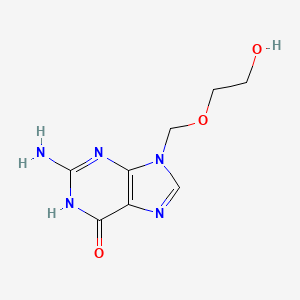
2D structure
Molecular formula: C8H11N5O3
Acyclovir is becomes acyclovir monophosphate due to the action of viral thymidine kinase. Acyclovir monophosphate is converted to the diphosphate form by guanylate kinase. Acyclovir diphosphate is converted to acyclovir triphosphate by nucleoside diphosphate kinase, pyruvate kinase, creatine kinase, phosphoglycerate kinase, succinyl-CoA synthetase, phosphoenolpyruvate carboxykinase and adenylosuccinate synthetase. Acyclovir triphosphate has higher affinity for viral DNA polymerase than cellular DNA polymerase and incorporates into the DNA where the missing 2' and 3' carbons causes DNA chain termination. In other cases acyclovir triphosphate competes so strongly for viral DNA polymerase that other bases cannot associate with the enzyme, inactivating it. Acyclovir is a synthetic purine nucleoside analogue with in vitro and in vivo inhibitory activity against herpes simplex virus types 1 (HSV-1), 2 (HSV-2), and varicella-zoster virus (VZV). The inhibitory activity of acyclovir is highly selective due to is affinity for the enzyme thymidine kinase (TK) encoded by HSV and VZV. This viral enzyme converts acyclovir into acyclovir monophosphate, a nucleotide analogue. The monophosphate is further converted into diphosphate by cellular guanylate kinase adn into triphosphate by a number of cellualr enzymes. In vitro, acyclovir triphosphate stops replication of herpes viral DNA. Acyclovir inhibits viral DNA synthesis ... . Its selectivity of action depends on interaction with two distinct viral proteins. Cellular uptake and initial phosphorylation are facilitated by HSV thymidine kinase. The affinity of acyclovir for HSV thymidine kinase is about 200-fold greater than for the mammalian enzyme. Cellular enzymes convert the monophosphate to acyclovir triphosphate, which is present in 40- to 100-fold higher concentrations in HSV-infected than in uninfected cells, and competes for endogenous deoxyguanosine triphosphate (dGTP). The immunosuppressive agent mycophenolate mofetil potentiates the antiherpes activity of acyclovir and related agents by depleting intracellular dGTP pools. Acyclovir triphosphate competitively inhibits viral DNA polymerases and, to a much smaller extent, cellular DNA polymerases. Acyclovir triphosphate also is incorporated into viral DNA, where it acts as a chain terminator because of the lack of 3'-hydroxyl group. By a mechanism termed suicide inactivation, the terminated DNA template containing acyclovir binds the enzyme and leads to irreversible inactivation of the DNA polymerase. The concentration of the endogenous neurotoxin quinolinic acid (QA) is increased in the central nervous system of mice with herpes simplex encephalitis. /The authors/ have previously shown that the antiherpetic agent acyclovir (AC) has the ability to reduce QA-induced neuronal damage in rat brain, by attenuating lipid peroxidation. The mechanism by which QA induces lipid peroxidation includes the enhancement of the iron (Fe)-mediated Fenton reaction and the generation of free radicals, such as the superoxide anion (O(2)(-)). Thus, the present study determined whether AC has the ability to reduce Fe(2+)-induced lipid peroxidation, O(2)(-) generation and QA-induced superoxide anion generation, and to bind free Fe. O(2)(-) and Fe(2+) are also cofactors of the enzymes, indoleamine-2,3-dioxygenase (IDO) and 3-hydroxyanthranilate-3,4-dioxygenase (3-HAO) respectively. These enzymes catalyse steps in the biosynthesis of QA; thus, the effect of AC on their activity was also investigated. AC significantly attenuates Fe(2+)-induced lipid peroxidation and O(2)(-) generation. AC reduces O(2)(-) generation in the presence of QA and strongly binds Fe(2+) and Fe(3+). It also reduces the activity of both IDO and 3-HAO, which could be attributed to the superoxide anion scavenging and iron binding properties, respectively, of this drug.
Source: PubChem (NCBI) · compound 135398513
| Product | Manufacturer | Status | Country |
|---|---|---|---|
| IODOHYDROCORT-S OINTMENT HYDROCORTISONE 1% SALICYLIC ACID 3% CLIOQUINOL 3% |
Viva Healthcare | Registered | Kenya |